11 Budgeting Habits That Help You Prepare for Hard Months
Hard months are not a possibility — they are a certainty. The car that needs repair at the worst possible time. The reduced hours or unexpected job change. The medical bill that was not in the plan. The heating system that fails in winter. These things do not arrive with warning and they do not arrive at convenient moments. What determines whether a hard month becomes a manageable setback or a financial crisis is almost entirely decided in the months before it arrives.
These 11 budgeting habits are built for the good months — the ones where there is a little room to prepare — so that the hard months, when they come, arrive to find something already in place. None of them require a high income. All of them require consistency and the honest recognition that preparing for difficulty while things are manageable is a significantly better use of resources than scrambling when they are not.

Build the Budgeting Habits That Keep Hard Months From Becoming Crises
Download the free Money Reset Workbook and get the practical tools to understand your real financial picture, build the savings buffer that hard months require, and develop the consistent budgeting habits that give you a plan before you need one.
Get the Free Workbook1. Build a dedicated emergency fund and treat it as untouchable for anything other than a genuine financial emergency.
The emergency fund is the single most impactful budgeting habit for surviving hard months because it is the difference between an unexpected expense being covered and an unexpected expense becoming new debt. Without it, every car repair, every medical bill, every appliance failure becomes a credit card charge that compounds at interest and extends the financial recovery period significantly. With it, the same expenses are handled, the month continues, and the fund is replenished over the following months.
The target for a starter emergency fund is a specific, modest, achievable amount — enough to cover one significant unexpected expense. Build it before accelerating any other financial goal. Once funded, protect it with discipline: it is for genuine emergencies only, not for planned expenses that were not planned for, and not for impulse purchases framed as emergencies after the fact. Replenish it promptly whenever it is used. The habit of having it and protecting it is as important as the fund itself.
2. Track your spending every month without exception — because you cannot prepare a budget for hard months without knowing what the normal months actually cost.
Preparing financially for hard months requires an accurate picture of what normal months actually cost — the real number, not the estimated one. Most people significantly underestimate their monthly spending in specific categories because the individual transactions feel small and the cumulative total is never actually added up. A month of honest tracked spending almost always reveals a different picture than the one that existed in the person’s head before they tracked it.
Track every transaction in every category for a full month before building any budget designed to prepare for difficult ones. Use a banking app with automatic categorization, a simple spreadsheet, or a notebook — whichever you will actually maintain. The goal is an accurate baseline, not a perfect system. Once you know what the normal month actually costs, you can build realistic plans for what the hard month will require and what buffer is genuinely needed to cover it.
“Preparing for hard months is not pessimism. It is the most optimistic financial act available — the decision to give your future self the options that your present self has the ability to create right now, before the difficulty arrives to remove them.”
3. Budget for irregular expenses monthly — by dividing their annual total by 12 and setting that amount aside each month — so they never arrive as surprises.
The expenses that most frequently derail budgets are not the regular monthly ones — those are planned for. They are the irregular ones: the annual insurance premium, the vehicle registration, the property tax bill, the holiday spending, the back-to-school expenses, the predictable but non-monthly costs that arrive with a full bill rather than a monthly installment. These are not emergencies. They are predictable. They feel like emergencies only to people who did not budget for them monthly when the budget had room.
List every irregular expense you expect in the next twelve months with its approximate cost. Add them up and divide by twelve. That monthly amount goes into a dedicated savings account each month, regardless of whether a bill is arriving that month. When the annual bill arrives, the money is already there. This habit alone eliminates one of the most common sources of financial disruption for people who have otherwise functional budgets.
4. Identify your bare-bones monthly number — the absolute minimum your household needs to function — and know it precisely before you ever need it.
The bare-bones monthly number is the total of only the genuinely non-negotiable expenses: housing, utilities, basic food, minimum debt payments, essential transportation, and nothing else. It is the number your household needs to survive a reduced-income month without defaulting on anything critical. Most people have never calculated it. When a hard month arrives and they need to know it urgently, they are calculating it under pressure with limited time and elevated stress — exactly the conditions that produce the least accurate results.
Calculate your bare-bones number now, in a calm month, when you have the time and the mental clarity to do it honestly. Write it down and keep it accessible. The gap between your normal monthly spending and your bare-bones number is your flexibility buffer — the maximum you could cut if you needed to. Knowing this number in advance converts a potential financial emergency into a known, planned scenario rather than an unknown crisis requiring immediate figuring-out.
5. Build a second savings layer beyond the emergency fund — a buffer account covering one to two months of essential expenses — for the hard months that last longer than one unexpected event.
The standard emergency fund advice is to save three to six months of expenses. That target is correct and it is often so large relative to current savings that it feels unreachable and gets abandoned. A more accessible approach is to build in layers: the starter emergency fund for single unexpected events, then a secondary buffer of one to two months of essential expenses for the hard months that are not single events — the job loss, the extended medical situation, the income disruption that lasts more than a few weeks.
Build the starter fund first. Then build the buffer. The buffer does not need to cover full monthly spending — only the bare-bones number calculated in the previous habit. One month of bare-bones expenses in a buffer account, funded in small increments over time, provides genuine stability during the kind of extended hard month that a starter emergency fund cannot cover alone.

Surround Yourself With What Keeps Your Financial Goals Moving Forward
Premier Print Works creates quality prints, mugs, and shirts for people who are doing the consistent, unglamorous work of building real financial resilience. Find what keeps your motivation and your momentum strong today.
Visit Premier Print Works6. Reduce your highest fixed monthly costs whenever the opportunity arises — because lower fixed costs mean a lower bare-bones number and a longer runway in hard months.
Fixed monthly costs — housing, insurance, subscriptions, loan payments — are the most impactful category for hard-month preparation because they determine the floor of what you need regardless of how much you cut discretionary spending. A household with low fixed costs can survive a significantly reduced income month more easily than one with high fixed costs and the same discretionary spending — because the minimum required is lower and the flexibility is greater.
When the opportunity arises — lease renewal, insurance policy anniversary, a debt paid off, a subscription outgrown — evaluate whether the fixed cost can be reduced or eliminated. A lower housing cost chosen at lease renewal, an insurance rate reduction found through annual comparison, a subscription cancelled after honest review of its use — each of these permanently lowers the monthly floor and permanently extends the runway in every future hard month. These improvements are most available during good months and most valuable during hard ones.
7. Maintain a small cash reserve separate from your emergency fund for the minor unexpected costs that would otherwise disrupt your monthly budget.
The emergency fund is for genuine emergencies. But between genuine emergencies and the normal month there is a category of small unexpected costs — a minor car repair, an unexpected medical co-pay, a household item that needs replacing — that are too small to justify drawing on the emergency fund but large enough to disrupt a tight monthly budget if they are not anticipated. A small cash reserve — a few hundred dollars kept in a dedicated account — handles these minor disruptions without touching the emergency fund or going into debt.
Build the cash reserve as a separate account from the emergency fund with a separate, modest target. Replenish it when it is used. Think of it as the shock absorber between the normal budget and the emergency fund — handling the small hits so the emergency fund remains intact for the significant ones. The habit of maintaining it means minor unexpected costs are genuinely minor rather than budget-disrupting events that send the month sideways.
8. Review your subscriptions and recurring charges quarterly and cancel anything you are not actively using.
Subscriptions are one of the most consistent sources of budget leakage because they charge automatically without requiring an active decision to spend. Once set up, they continue until actively cancelled — and the inertia of cancellation is often sufficient to keep them running well past the point where they are providing any genuine value. A quarterly review that requires each subscription to justify its continued cost against its actual recent use is one of the most reliable ways to recover recurring monthly spending without any ongoing sacrifice.
Set a quarterly calendar reminder to review every subscription and recurring charge in your banking and credit card statements. For each one, ask honestly: did I use this enough in the last three months to be worth the monthly cost? If not, cancel it. The recovered monthly amount from a single quarterly subscription audit is often more than people expect — because the accumulation of small monthly charges across many services adds up to a larger total than any individual charge suggests.
9. Automate your savings transfers so the preparation for hard months happens before you have the chance to spend the money on something else.
Savings that depend on a monthly conscious decision to transfer money — after all other spending has occurred — are savings that are most vulnerable to the months where spending is higher than expected and the transfer gets skipped. Automated transfers that happen on payday, before any other spending occurs, remove the decision from the equation. The savings happen consistently because they are not competing with the spending decisions that come after them.
Set up automatic transfers to your emergency fund, your buffer account, and your irregular expense account to occur on the day of each paycheck — or the day after, to ensure the funds have cleared. The amounts do not need to be large to build meaningful balances over time. Small consistent automated transfers, maintained through good months and bad, compound into the financial preparation that transforms hard months from crises into managed setbacks.
10. Do a monthly budget review to compare what you planned to spend against what you actually spent — and use the gap to inform next month’s preparation.
A budget that is set once and never reviewed is a budget that gradually loses its connection to reality as spending patterns shift, prices change, and the actual month diverges from the planned one. The monthly review — a brief, honest comparison of the planned budget against the actual spending — closes the feedback loop and keeps the budget accurate. The categories where actual spending consistently exceeds the budget are the categories where the budget needs adjustment, not more willpower.
Spend fifteen minutes at the end of each month reviewing the budget against the actual. Note where you were over and where you were under. Adjust the next month’s allocation based on what you learned. The monthly review also surfaces the months where the preparation for hard months — the emergency fund contribution, the buffer transfer, the irregular expense allocation — actually happened as planned and the months where it was skipped. That information, seen consistently, is what makes the preparation sustainable rather than intermittent.
11. Build a written financial plan for what you would do in a specific hard-month scenario — job loss, major medical expense, significant car or home repair — before that scenario arrives.
The decisions made under financial pressure are consistently worse than the decisions made in advance of it. When a hard month arrives without a plan, the responses are reactive: the first debt to fall behind, the first expense to cut, the first phone call to make, the first resource to access — all of these are figured out under stress, with reduced cognitive bandwidth, and often with less time than the situation requires. A written plan made in advance removes the figuring-out from the crisis and replaces it with execution of decisions already made.
Write a one-page financial contingency plan for the two or three most likely hard-month scenarios for your household. For each scenario: what is the first expense cut? What is the payment priority order? Who do you call first — creditor, employer, utility company? What resources are available — emergency fund, buffer account, assistance programs? Having the plan written does not make the hard month easy. It makes it significantly more manageable than the same month navigated without one.
“The budgeting habits built in the good months are the ones that determine the experience of the hard ones. What you do with the margin when it exists is what creates the options when it disappears.”
Explore Our Top Picks for a Better Life
We have gathered the best tools, resources, and products to help you build stronger budgeting habits, create real financial resilience, and face the hard months with a plan already in place rather than a crisis to solve in real time. All in one place, hand-picked just for you.
See Our Top Picks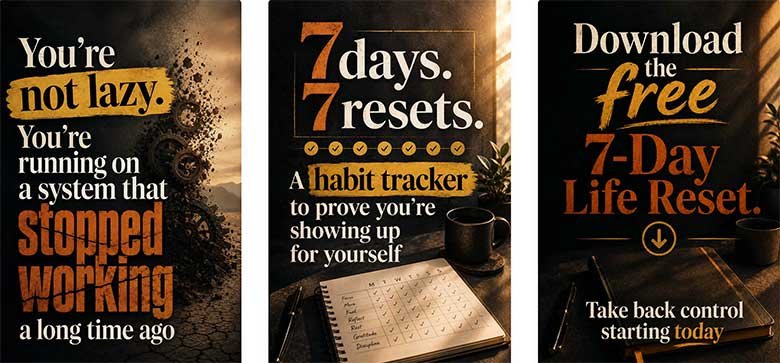
Reset Your Financial Habits and Build the Budget Foundation That Hard Months Require
The free 7-Day Life Reset gives you a simple daily plan to break old money habits, build the consistent budgeting practices that create real financial resilience, and start preparing for hard months before they arrive.
Get the Free Reset GuideReal Stories, Real Results
Kezia had experienced three financial crises in five years — not because her income was particularly low or her spending was particularly reckless, but because she had never built any preparation between herself and the inevitable unexpected. Each crisis arrived without warning and was handled through a combination of credit cards, borrowed money, and significant stress. After the third one she made a decision that felt small at the time: she would calculate her bare-bones monthly number and build one month of it in a separate savings account before doing anything else with the next several months of surplus. It took eight months. Nothing dramatic happened during those eight months. Then a hard month arrived — a car repair and a reduced income month in the same thirty days — that would previously have been a crisis. It was not. The buffer covered it. She replenished the buffer over the following four months and extended it to two months of bare-bones expenses. She said the most significant change was not the financial one. It was the psychological one. She had spent years living in a state of low-level financial anxiety that she had not fully recognized as anxiety until it was gone. The buffer had not made her wealthy. It had made her financially safe in a way she had not experienced as an adult before. That safety, she said, changed everything about how she approached her finances going forward.
Daniel had good budgeting intentions and a poor track record of following through on them. He could set a budget reliably. He could not reliably transfer money to savings when the time came — there was always a reason the current month was not the right month to start. The change that broke the pattern was automation. He set up an automatic transfer to his emergency fund account for the day after each payday. He did not touch the setting for six months. At the end of those six months, without any ongoing decision or discipline required, the fund had reached his starter emergency target. He had not felt the transfers because they had never arrived in his spending account to be felt. He extended the automation to his buffer account and his irregular expense account. A year later, a significant unexpected expense arrived that would previously have gone directly to a credit card. It was covered from the emergency fund, which was replenished automatically over the following months. He said the insight was simple and he wished he had acted on it earlier: the savings that required a monthly decision did not happen. The savings that were automated did. The difference between those two approaches was the entire gap between financial vulnerability and financial resilience.
Financial Resilience Is Built Habit by Habit in the Months Before It Is Needed
Every habit in this article does the same thing: it uses the relative ease of the current month to create options for the harder one that will eventually arrive. None of these habits require large amounts of money to implement. All of them require consistent application over enough months to build something real. The financial resilience that results is not dramatic from the outside — it is the quiet difference between a hard month that is managed and a hard month that becomes a crisis.
Pick two or three habits from this list that your current financial situation most needs and implement them this month. Download the free Money Reset Workbook to build the complete financial picture that gives every habit on this list accurate numbers to work from. Hard months are coming. The question is only whether they find something already prepared for them when they arrive.

Build the Financial Resilience That Makes Hard Months Manageable
The free Money Reset Workbook gives you the practical tools to build your bare-bones budget, set up your emergency savings layers, and develop the consistent monthly habits that ensure you are prepared for hard months before they arrive.
Download Free Now
Celebrate the Financial Resilience You Are Building Every Month
Premier Print Works makes quality prints, mugs, and shirts for people who are doing the steady, consistent work of building real financial stability. Browse the collection and find what keeps you focused on what you are building today.
Visit Premier Print WorksDisclaimer
The content on this page is for informational and educational purposes only. It is not professional financial, investment, or legal advice of any kind. Every financial situation is unique and individual results vary significantly. Please consult a qualified financial professional before making significant financial decisions. If you are experiencing significant financial hardship, nonprofit credit counseling services may be available at low or no cost in your area.
The stories of Kezia and Daniel are illustrative composite characters created to bring the content to life. They are not real people. Any resemblance to a real person is purely coincidental.
Some links on this page, including links to Premier Print Works and other resources, are affiliate links. If you make a purchase through one of these links, we may earn a small commission at no extra cost to you. We only recommend things we genuinely believe in.
If you are in crisis, please contact emergency services or a crisis helpline in your area immediately. You are not alone and help is available.
All content on A Self Help Hub is protected by copyright. It may not be copied, republished, or distributed without written permission from the author.