11 Budgeting Tips That Help You Stop Living Paycheck to Paycheck
Living paycheck to paycheck is not always a sign of low income. It is often a sign of a pattern — the accumulated effect of spending that fills to the available limit, of no buffer between the income that arrives and the obligations that consume it, of every unexpected expense arriving without anywhere to come from except the next paycheck or new debt. The pattern has a logic to it and it has a way out. The way out is not dramatic. It is built from specific habits applied consistently over the months it takes to create a gap between income and spending.
These 11 tips are for the person who is ready to break the cycle — not with a perfect financial plan but with the next right step, then the one after that. Each one moves the situation a little further from the edge. The distance from the edge is where financial breathing room lives and it is the most important financial improvement most people can make.

Build the Budget That Starts Breaking the Paycheck to Paycheck Cycle
Download the free Money Reset Workbook and get the practical tools to understand exactly where your money is going, identify where the gap can be created, and build the consistent budgeting habits that move you from the edge toward actual financial breathing room.
Get the Free Workbook1. Find out exactly how much you spend each month — not roughly, exactly — because you cannot create a gap between income and spending without knowing the real size of the current gap.
Most people living paycheck to paycheck have a general sense of their spending but not an accurate one. The general sense consistently underestimates in specific categories — food, subscriptions, impulse purchases — and produces the ongoing mystery of why there is never anything left at the end of the month when it feels like the spending was reasonable. The mystery dissolves when the actual numbers are assembled. Somewhere in those numbers is the explanation, and somewhere in the explanation is the opportunity.
Pull three months of bank and credit card statements and add up every category. Do not estimate — add the actual transactions. Total the food spending, the subscription spending, the shopping, the entertainment, the everything. The category that surprises you the most is almost always where the most accessible improvement lives. You cannot fix a leak you have not located. Find the exact numbers first, then work from there.
2. Create a small specific savings goal — a starter cushion of a modest but exact amount — and pursue only that goal until it is fully funded.
The most common reason people living paycheck to paycheck fail to build savings is that the savings goal feels too large relative to the available margin. Three to six months of expenses is the standard advice and it is genuinely useful as a long-term target — but as a starting goal for someone with nothing currently saved it produces paralysis rather than action. A small, specific, achievable first target — enough to cover one significant unexpected expense — is within reach for most people who have never managed to save before and produces the first experience of having something between themselves and the next financial emergency.
Name a specific, modest savings target and pursue only that until it is funded. Do not try to save for multiple goals at once while still in the paycheck to paycheck pattern — the margin is too thin for that to work. One goal, one account, one consistent transfer until the target is reached. When it is funded, the next goal. The sequential approach builds momentum that the multi-goal approach disperses before anything is accomplished.
“Breaking the paycheck to paycheck cycle does not require a high income or a dramatic financial change. It requires creating a small gap between what comes in and what goes out — and protecting that gap from the spending that was previously filling it before you had a chance to save it.”
3. Identify and cut one recurring expense you are paying for but not actively using — and redirect that money to your starter savings goal.
Recurring expenses are the most reliable source of recoverable money in most budgets because they are automatic — they happen without a conscious spending decision — and they accumulate across months and years without being re-evaluated. The streaming service watched only occasionally. The gym membership used sporadically. The subscription box that was exciting when it started and is now a habit rather than a joy. The software subscription for something used once and then forgotten. Each of these continues charging regardless of how much value it is currently delivering.
Review every recurring charge in your last two months of bank and credit card statements. For each one, ask honestly: did I use this enough in the last 60 days to be worth the monthly cost? If not, cancel it today. The recovered monthly amount, directed automatically to the savings goal, begins building the cushion immediately without requiring any reduction in active, enjoyed spending. Cancelling what you are not using is the most painless spending reduction available.
4. Transfer savings on the day you are paid — before any other spending happens — so the savings is not competing with spending decisions made later in the pay period.
The pattern of saving what is left after spending produces zero savings for most people because spending expands to fill the available income before the saving can happen. The reversal of this sequence — saving first, then spending what remains — is the single most reliable mechanism for actually building savings, because it removes the savings from the competition. Money that has already been transferred to a savings account before the spending begins is not available to be spent on other things. It is simply gone from the available pool.
Set up an automatic transfer to your savings account for the day of or the day after each paycheck. The amount does not need to be large to be effective — even a small consistent transfer builds the habit and the balance simultaneously. The specific amount matters less than the consistency and the timing. Pay yourself first. Spend what remains. The sequence is what makes the difference between savings that happen and savings that were always intended.
5. Reduce your single highest monthly fixed cost — housing, car payment, insurance — if a realistic option exists, because lowering a fixed cost produces permanent monthly savings with no ongoing effort required.
Fixed costs are the most impactful category for escaping the paycheck to paycheck pattern because they determine the floor of what you need regardless of behavior changes elsewhere. A housing cost that consumes an unsustainable proportion of income constrains every other financial decision until it changes. A car payment taken on at the limit of what seemed manageable leaves no room for the savings that would provide breathing room. A fixed cost reduced — through a housing change, a vehicle refinance or replacement, an insurance rate comparison — permanently lowers the monthly minimum and permanently increases the potential margin.
Look honestly at your highest fixed monthly cost and ask whether a realistic reduction is available. Not a comfortable change — a realistic one. A room to share instead of an apartment alone. A refinanced loan at a better rate. An insurance comparison that finds a meaningfully lower premium. These changes are difficult and sometimes they are not available in the current situation. When they are available, they produce the most durable improvement in the monthly financial picture of anything on this list.

Celebrate Every Step Away From the Financial Edge
Premier Print Works creates quality prints, mugs, and shirts for people who are doing the real, steady work of building financial stability and breaking the patterns that kept them living without a cushion. Find what keeps your momentum going today.
Visit Premier Print Works6. Cook more meals at home — specifically targeting the food spending that, for most paycheck to paycheck households, is the largest and most immediately reducible category.
Food spending is typically the largest controllable expense in a household budget and the one with the most accessible and immediate reduction potential. The gap between home cooking and restaurant, takeout, or delivery spending is one of the largest in any spending category — and for households spending significant portions of their food budget on prepared meals, the shift toward home cooking produces one of the most significant monthly recoveries available without requiring any change to income.
Identify what percentage of your food spending in the last month went to restaurants, takeout, and delivery combined. If it is more than a quarter of your total food budget, reducing it by half would produce a meaningful monthly recovery. Meal planning and batch cooking reduce both the cost and the friction of home cooking — when there is something good available at home, the temptation to order delivery is significantly lower. The money recovered from food spending shifts is among the most directly available for redirecting to savings.
7. Stop using credit cards for everyday spending until you have a cushion — because credit used to cover normal expenses adds interest to the cost of living and keeps the cycle running.
Credit cards used to cover everyday spending when income is insufficient to cover expenses are not a solution to the paycheck to paycheck pattern. They are a continuation of it at higher cost. Each balance that is not paid in full at the end of the month adds interest to the effective cost of every purchase — meaning the groceries and the gas and the dinner out cost more than their retail price once the interest charge arrives. Breaking the cycle requires stopping the new debt accumulation even before the existing debt is addressed.
If you are carrying a credit card balance from everyday spending, commit to using only what you have in cash or debit for the next 90 days. The spending constraint this creates — having to stay within the actual available income rather than borrowing to cover the gap — is uncomfortable and it is the beginning of the gap that breaks the cycle. The discomfort is the signal that the change is real. The alternative is continuing to pay interest on the cost of living, which makes the cycle progressively harder to escape.
8. Build a “found money” rule — any windfall, tax refund, or unexpected income goes directly to savings, not to spending — before the money has a chance to be absorbed.
Windfalls — tax refunds, bonuses, gifts of money, income from selling something — are one of the most consistently missed opportunities for people trying to break the paycheck to paycheck pattern. They arrive as a welcome surprise and depart quickly into spending that feels justified by their unexpected nature. The person who pre-decides what happens to any windfall before it arrives removes the in-the-moment decision that typically results in the money being spent rather than saved.
Decide right now what happens to the next windfall you receive, regardless of its amount. If it is below a threshold you define — a tax refund, a bonus, a cash gift — it goes directly to the starter savings goal. If it is above that threshold, a percentage goes to savings and a smaller percentage to something enjoyable. The pre-decision is what protects the windfall from the absorption that happens without it. The rule made in advance of the money arriving is the only rule that reliably applies when it does.
9. Track your spending in real time — checking your available budget balance before discretionary purchases rather than finding out at the end of the month what happened.
End-of-month budget reviews tell you what happened after the decisions were already made. Real-time tracking — knowing your available balance in each budget category before you make a discretionary purchase — gives you the information at the moment it can change the outcome. The question asked before the purchase is whether the budget has room for this. The question asked at the end of the month is why the budget did not have room. The first question produces better decisions. The second produces useful information that arrives too late to matter.
Build a simple mid-week spending check into your routine — not a full budget review, just a quick look at where the key discretionary categories stand relative to their weekly or monthly limits. The check takes two minutes and produces the real-time awareness that prevents the end-of-month surprise. For people living paycheck to paycheck, the surprise at the end of the month is often the mechanism that keeps the cycle running. Removing it removes one of the cycle’s most reliable engines.
10. Have one honest conversation about money with anyone whose financial decisions directly affect yours — because financial patterns shared between people cannot be changed by one person alone.
The paycheck to paycheck pattern in households where financial decisions are shared is not solvable by one person’s behavior change alone. If one partner is building a savings cushion while the other is spending from it, the cushion does not build. If shared expenses are not mutually understood and managed, the budget one person maintains is undermined by the decisions of the other. The financial conversation that feels difficult to have is almost always less difficult than the financial situation that continues without it.
If you share financial decisions with a partner, family member, or housemate, have one specific, forward-looking conversation about the shared financial goal: getting off the paycheck to paycheck cycle. Not a blame conversation — a direction conversation. What is the shared goal? What does each person commit to doing toward it? What is the one change each person will make this month? The shared commitment, even imperfect, is more effective than the individual effort made in silence.
11. Give yourself credit for each step forward — because breaking this pattern takes months, and the motivation to continue requires acknowledging the progress that makes the months bearable.
The paycheck to paycheck cycle is not broken in a week or a month. It is broken across the months during which the gap is gradually created, the cushion gradually built, the habits gradually established, and the financial experience gradually shifts from the anxiety of the edge to the steadiness of some distance from it. The motivation required to sustain that many months of changed behavior requires genuine acknowledgment of the progress being made — not false encouragement, honest recognition of what is actually improving.
Mark the milestones: the first month you did not add new credit card debt, the first time the savings account reached a target, the first unexpected expense that was covered without going into debt, the first paycheck where you did not spend every dollar before the next one arrived. Each of these is a real achievement. Treat them that way. The person who acknowledges their financial progress along the way is significantly more likely to reach the destination than the one who does not celebrate anything until the cycle is fully broken — which, without the acknowledgment, they may never quite believe has happened even when it has.
“The paycheck to paycheck cycle is broken the same way it was built — gradually, through the accumulation of small decisions made consistently over time. The decisions that built the pattern are replaced by ones that dismantle it. Neither set happens overnight. Both happen month by month.”
Explore Our Top Picks for a Better Life
We have gathered the best tools, resources, and products to help you build the budgeting habits that break the paycheck to paycheck cycle, create real financial breathing room, and build the kind of stable financial foundation that changes how money feels in your daily life. All in one place, hand-picked just for you.
See Our Top Picks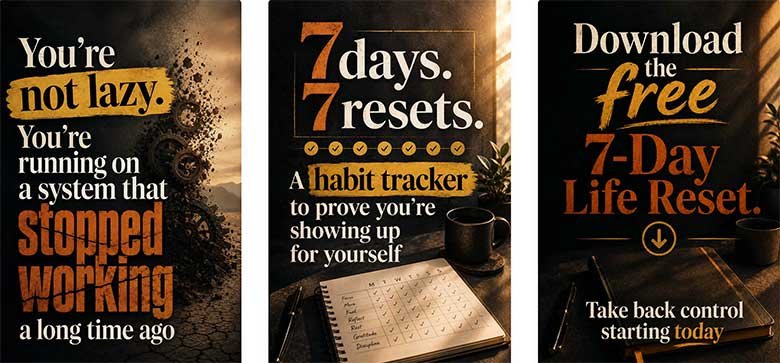
Reset Your Spending Habits and Start Breaking the Paycheck to Paycheck Cycle This Week
The free 7-Day Life Reset gives you a simple daily plan to identify what is keeping you in the cycle, break the habits that are maintaining it, and build the first consistent steps toward the financial breathing room that changes everything.
Get the Free Reset GuideReal Stories, Real Results
Kezia had been living paycheck to paycheck for six years. Not because she did not try to change it — she had tried multiple times, with genuine commitment, and the pattern had reasserted itself each time within a few months. The attempts had always started the same way: a burst of motivation, a detailed budget, a target savings amount that felt significant, and then the slow erosion of the plan as the unexpected arrived and the margin that was supposed to build the savings was consumed by the same expenses that had always consumed it. The attempt that worked was different in one way: she made the goal small enough to be achievable in 60 days. Not six months of expenses — sixty days of rent and utilities. One specific account. One automatic transfer on payday. No other financial goals until that one was funded. She funded it in 73 days. The goal had not been large. The experience of having reached it — of having something between herself and the next emergency for the first time she could remember — was significant enough that it changed her relationship with her own financial capacity in a way that no amount of motivation had previously managed. She kept going. The next goal was larger. She reached it too. She said the thing that had been missing in the earlier attempts was not discipline or intention. It was a goal small enough to be believed in while the pattern was still running.
Daniel found the turning point in a subscription audit he did on a Saturday afternoon out of mild curiosity. He had not expected to find much — he considered himself aware of what he was paying for. What he found was eleven recurring charges across his bank account and two credit cards, totaling a meaningful monthly amount, for services he had either forgotten about or was not actively using. He cancelled nine of them that afternoon. The monthly recovery was enough to fund a small automatic savings transfer and cover the minimum payment on the smallest of his credit card balances. He had not changed his income, had not made any dramatic lifestyle change, had not even started a formal budget. He had simply found money that was leaving automatically without producing any value and redirected it to something that would. He said the afternoon had been the most financially productive two hours of his adult life and had required less willpower than any of the elaborate systems he had previously tried to implement. Start with what is already leaving, he said. Stop what is not producing anything. The gap that creates is where the change begins.
Financial Breathing Room Is Built One Month at a Time From Exactly Where You Are
Every tip in this article is a step away from the edge — a specific action that creates a little more distance between your income and the spending that currently consumes all of it. None of them require dramatic change or perfect execution. All of them require consistent, patient application across the months it takes to move the financial situation meaningfully from where it is to where it needs to be.
Pick one tip from this list that is immediately actionable in your situation and do it today. Download the free Money Reset Workbook to build the complete financial picture that shows you exactly where the gap can be created — and exactly how much distance each change creates between you and the next financial edge. Breaking this cycle is possible. It starts with one specific step in one specific direction. Take it today.

Build the Financial Foundation That Breaks the Paycheck to Paycheck Cycle for Good
The free Money Reset Workbook gives you the practical tools to find exactly where the gap can be created in your budget, build the starter cushion that changes everything about how financial stress feels, and develop the consistent habits that keep you moving away from the edge month after month.
Download Free Now
Surround Yourself With What Keeps You Moving Toward Financial Stability
Premier Print Works makes quality prints, mugs, and shirts for people who are doing the steady, consistent work of building real financial breathing room. Browse the collection and find what keeps you focused on where you are headed today.
Visit Premier Print WorksDisclaimer
The content on this page is for informational and educational purposes only. It is not professional financial, investment, or legal advice of any kind. Every financial situation is unique and individual results vary significantly. Please consult a qualified financial professional before making significant financial decisions. If you are experiencing significant financial hardship, nonprofit credit counseling services may be available at low or no cost in your area.
The stories of Kezia and Daniel are illustrative composite characters created to bring the content to life. They are not real people. Any resemblance to a real person is purely coincidental.
Some links on this page, including links to Premier Print Works and other resources, are affiliate links. If you make a purchase through one of these links, we may earn a small commission at no extra cost to you. We only recommend things we genuinely believe in.
If you are in crisis, please contact emergency services or a crisis helpline in your area immediately. You are not alone and help is available.
All content on A Self Help Hub is protected by copyright. It may not be copied, republished, or distributed without written permission from the author.