11 Burnout Recovery Tips for Busy Professionals
Burnout is not just being tired. It is the feeling that you have given everything you have and there is nothing left. The work that used to excite you now feels heavy. The people you love feel like another thing on your to-do list. You know you need rest but you do not even know how to start.
These 11 tips are written for professionals who are running on empty right now. They are not about productivity or optimization. They are about recovery — real, honest, unglamorous recovery that actually works. You cannot pour from an empty cup. It is time to fill yours back up.

Start Recovering With a Simple Daily Practice
Download the free Self-Care Starter Kit and build a gentle daily routine that helps you rest, recharge, and feel more like yourself again.
Get the Free Starter Kit1. Give yourself permission to rest without earning it first because rest is not a reward — it is a requirement.
Most professionals believe they have to earn rest by finishing everything on their list first. The list never ends. So rest never comes. That belief is the engine of burnout. Rest is not something you earn. It is something your body and mind require to function — like food and water.
Start by giving yourself one hour today that belongs entirely to you. No productivity. No catching up. No optimization. Just rest. That hour is not wasted. It is the beginning of your recovery.
2. Stop adding to your to-do list and spend one week only completing what is already there.
When you are burned out, your task list is often part of the problem. New things keep getting added faster than old things get done and the gap between what you have to do and what you can do keeps growing. A one-week moratorium on new tasks gives you a chance to clear the backlog and breathe again.
For seven days, do not add anything new that is not truly urgent. Work only through what is already there. This is harder than it sounds but the mental relief of watching the list shrink instead of grow is significant.
“Burnout is not a sign that you are weak. It is a sign that you have been strong for too long without enough support. Recovery starts with honesty about what you need.”
3. Protect at least seven to eight hours of sleep every night as a non-negotiable part of your recovery.
Sleep is your brain’s primary recovery tool. During deep sleep your brain clears toxic waste products, consolidates memory, and repairs the damage done by stress. When you consistently sleep less than seven hours, your cognitive function, emotional regulation, and resilience all decline significantly.
Make sleep the first thing you protect — not the last thing you get to. Set a consistent bedtime. Put your phone in another room. Wind down for 30 minutes before you try to sleep. Recovery from burnout is almost impossible without consistent, quality sleep.
4. Remove one commitment from your schedule this week that you can genuinely live without right now.
Burnout often happens because your schedule is full of things you said yes to when you had more capacity than you have now. Some of those commitments need to go — at least temporarily. Look at your calendar and find one thing you can step back from, delegate, or cancel without major consequences.
It might be a committee you joined. A project you took on voluntarily. A social obligation you dread. Remove it kindly and without guilt. The space you create is not empty — it is recovery room your system desperately needs.
5. Spend time outside every day even if it is just a 15-minute walk with your phone left behind.
Nature has a measurable and well-documented calming effect on the stressed nervous system. Even short time outdoors lowers cortisol, reduces rumination, and restores the kind of easy, open attention that burnout depletes. You do not need a park or a trail. A sidewalk and some sky will do.
Make a daily outdoor walk non-negotiable during your recovery. Leave your phone behind or at least in your pocket. Look around. Breathe. Let your mind wander without directing it. This simple habit is one of the most consistently effective burnout interventions available to anyone for free.
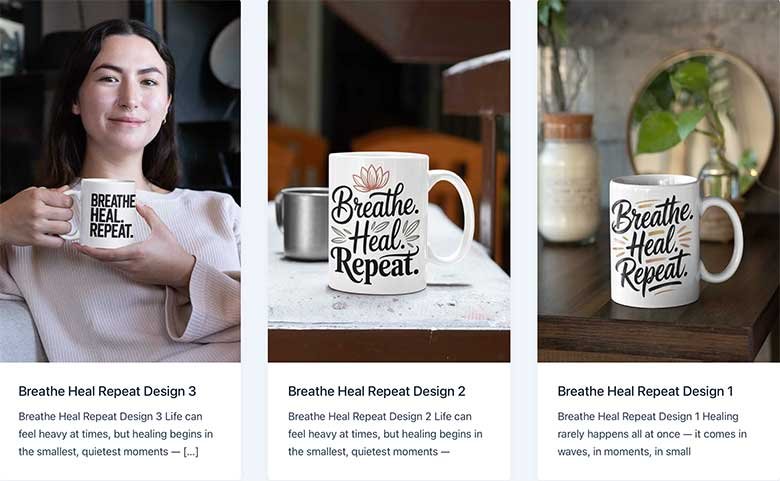
Make Your Space Feel Like a Place to Breathe Again
Premier Print Works creates quality mugs, shirts, and prints for people who are learning to slow down and take care of themselves. Find something that brings calm to your space today.
Visit Premier Print Works6. Set a hard stop time for work every day and enforce it as if your health depends on it — because it does.
Burnout is almost always the result of work without boundaries over an extended period. Recovery requires rebuilding those boundaries deliberately. Setting a hard stop time — and actually stopping — is one of the most important signals you can send to your nervous system that the emergency is over.
Pick a time. Set an alarm. When it goes off, stop working. Close the laptop. Put the phone down. Do something that has nothing to do with work. The emails will still be there tomorrow. Your health may not recover if you keep treating it as optional.
7. Talk to someone you trust about how you are really feeling instead of saying you are fine when you are not.
Burnout thrives in silence. When you keep telling everyone you are fine while running on empty inside, the gap between your real state and your presented state becomes exhausting on top of everything else. Saying the truth out loud to one person you trust is a form of relief that cannot be replaced by any other recovery technique.
You do not need to have a solution or a plan. You just need to say it honestly to someone safe. A friend, a partner, a mentor, a therapist. Name what is happening. Let someone else know. That act alone lightens the weight significantly.
8. Do one thing each day purely for enjoyment with no productive purpose attached to it at all.
Burnout often strips away the parts of life that make work feel worth doing. When everything you do serves a purpose, your sense of self narrows to your output. Doing something purely for enjoyment — reading a novel, cooking something new, listening to music, drawing, playing a game — reminds your brain that you are a person, not just a professional.
It does not need to be long. Even 20 minutes of something you do only because you enjoy it sends an important signal to your depleted system. Recovery happens in those moments as much as in sleep.

Rebuild Your Days One Small Habit at a Time
The free 9 Daily Habits guide gives you nine gentle morning practices to slowly rebuild your energy, reset your mindset, and start feeling like yourself again.
Get the Free Guide9. Reduce your caffeine intake and replace one coffee each day with water or herbal tea to support your nervous system.
When you are burned out your stress hormones are already elevated. High caffeine intake pushes them higher. The temporary focus boost caffeine provides comes at the cost of a nervous system that is already running too hot. Reducing it even slightly gives your body a better chance to downregulate and recover.
You do not have to quit coffee entirely. Just replace one cup a day — preferably the afternoon one — with water or a calming herbal tea. Notice over a few weeks whether your sleep improves, your anxiety softens, and your energy feels more even. Many people are surprised by the difference one small change makes.
10. Say no to at least one new commitment this week and practice the feeling of protecting your own capacity.
Recovery requires capacity. Capacity requires space. And space requires saying no to things that would fill it. For busy professionals this is often the hardest part of recovery because saying yes has been rewarded so consistently and for so long.
This week, when something new comes at you that is not truly urgent or aligned with your current recovery, say no. Simply and kindly. Notice how it feels. That feeling — a mix of guilt and relief — is the feeling of choosing yourself. With practice the relief grows and the guilt shrinks.
11. Be patient with yourself and understand that burnout recovery takes months not days — and that is completely normal.
Burnout does not resolve in a weekend. It took time to develop and it takes time to heal. Most professionals underestimate how deep the depletion goes because they were operating in it for so long they stopped noticing. Expecting to feel better in a week and feeling disappointed when you do not is its own form of self-pressure that slows recovery.
Give yourself months, not days. Track tiny improvements instead of waiting for a dramatic turnaround. A slightly better night of sleep. A moment of genuine laughter. A morning that felt less heavy than last week’s. These are signs of recovery. Acknowledge them. Keep going.
“Recovery is not the absence of exhaustion. It is the slow, steady return of the things that make you feel human — rest, joy, connection, and the quiet knowledge that you are going to be okay.”
Explore Our Top Picks for a Better Life
We have gathered the best tools, resources, and products to help you recover, recharge, and build a life that feels sustainable and good — even when your schedule is demanding. All in one place, hand-picked just for you.
See Our Top PicksReal Stories, Real Results
Kezia had not taken a real day off in fourteen months. She kept telling herself she just needed to get through the next deadline, finish the next project, clear the next backlog. Then one morning she sat down at her desk and could not make herself open her laptop. She just sat there. That was the moment she finally admitted she was burned out. She called her manager, took a week of leave she had not used in years, and did almost nothing productive for seven days. The guilt was intense at first. By day four something had softened. She came back not fixed but human again. She said the hardest part was accepting that stopping was not giving up. It was the only way through.
Daniel had always prided himself on being someone who could handle anything. Burnout felt like failure to him so he hid it — from his team, from his family, from himself. He kept pushing until the pushing stopped working entirely and his output dropped to almost nothing anyway. A trusted colleague finally asked him directly if he was okay. He said no for the first time in months. That conversation started everything. He set a 6pm hard stop, removed two committees he had joined voluntarily, and started taking 15-minute walks every afternoon. Three months later he said he felt more like himself than he had in almost two years. He said the turning point was not a dramatic fix. It was just finally telling the truth about what he needed.
Recovery Is Not the End of Ambition — It Is What Makes It Sustainable
Every tip in this article is about one thing — creating enough space for your system to heal so you can come back to the work you care about with something real left to give. Burnout does not mean you chose the wrong career or the wrong life. It means you pushed past your limits without enough recovery built in. The good news is that those limits can be rebuilt and those habits can change.
Pick one tip from this list and start it today. Not to be productive. Just to be kind to yourself. Download the free Self-Care Starter Kit to build a simple daily practice that supports your recovery one gentle step at a time. You deserve to feel well. Not eventually. Starting now.

Your Recovery Starts With How You Take Care of Yourself
The free Self-Care Starter Kit gives you simple, practical tools to build a gentle daily routine that supports your recovery and helps you feel more like yourself every day.
Download Free Now
Create a Space That Feels Like Rest
Premier Print Works makes quality mugs, shirts, and prints for people who are choosing to slow down and take better care of themselves. Browse the collection and find something that brings you peace.
Visit Premier Print WorksDisclaimer
The content on this page is for informational and inspirational purposes only. It is not professional mental health, medical, or personal advice of any kind. If you are experiencing severe burnout, anxiety, depression, or other mental health challenges, please seek support from a qualified mental health professional. Results vary from person to person.
The stories of Kezia and Daniel are illustrative composite characters created to bring the content to life. They are not real people. Any resemblance to a real person is purely coincidental.
Some links on this page, including links to Premier Print Works and other resources, are affiliate links. If you make a purchase through one of these links, we may earn a small commission at no extra cost to you. We only recommend things we genuinely believe in.
If you are in crisis, please contact emergency services or a crisis helpline in your area immediately. You are not alone and help is available.
All content on A Self Help Hub is protected by copyright. It may not be copied, republished, or distributed without written permission from the author.