11 Courage Quotes for People Starting Their Healing Journey
What does courage look like on the very first day of healing?
It rarely looks like what we imagine. It does not look like a grand speech or a sudden new attitude. More often, it looks like admitting that something hurts, getting up when you would rather stay under the covers, or making one phone call you have been dreading. Those small acts take real strength, even when nobody sees them.
The eleven quotes below are original reflections written for this site. Each one comes with a few honest thoughts and a small action for the day. They are meant to keep you company, with no rush and no instructions about how to feel. Take what helps, leave the rest, and go at your own pace. If your pain feels too heavy, please reach out to a doctor, a counselor, or someone you trust.

Begin Your Healing With Gentle, Practical Support
Download the free Self-Care Starter Kit and get simple, practical tools for caring for yourself at the start of your healing journey.
Get the Free Starter Kit1. Courage can look like admitting that you are hurting.
“It takes real courage to say, out loud or on paper, that something hurts.”
For a long time, you may have told yourself and others that you were fine. Saying the truth, even quietly, is a brave act. A big announcement is unnecessary. It can be a sentence in a notebook or a few words to someone you trust.
For many people, admitting pain makes room for relief to begin. You are allowed to say that something hurts.
You do not have to explain it perfectly. A simple, honest sentence is enough.
Write one honest sentence about how you are really feeling, and read it back to yourself.
2. The first step can be smaller than you think.
“The first step of healing is often smaller than you think, and it still counts.”
When you are overwhelmed, the first step toward healing can feel enormous. It does not have to be. It can be drinking a glass of water, taking a short walk, or putting on clean clothes. A small action tells your mind that you are still here and still trying.
Choose a step that feels almost too easy. If it feels doable, you are more likely to take it, and then another.
There is no prize for a bigger first step. A small one counts just as much.
Choose the smallest step you can think of, and take it today.
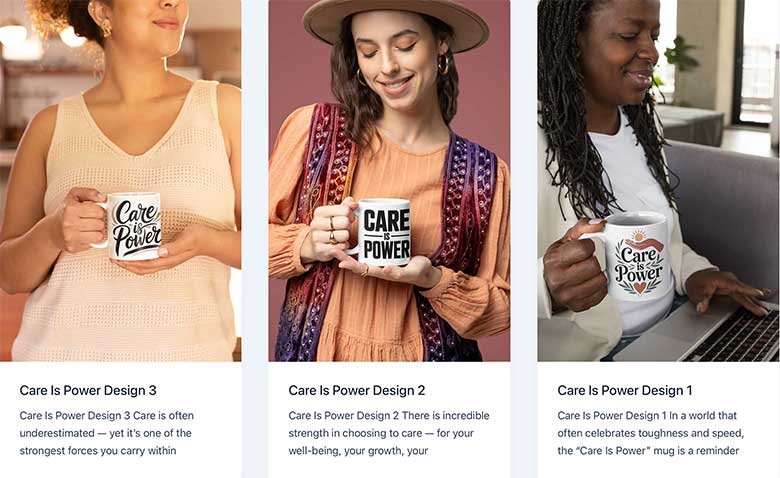
Keep a Word of Courage Where You Can See It
Premier Print Works creates quality prints, mugs, and shirts with gentle courage for healing journeys. Find a small reminder that you are allowed to begin.
Visit Premier Print Works3. Asking for help takes bravery, and it shows strength.
“Asking for help is one of the bravest things a person can do.”
Many people believe they should handle pain on their own. But healing often goes better with support. Asking a friend to listen, calling a counselor, or reaching out to a support group are all acts of courage.
You may worry about being a burden. Most people are glad to help when they are asked clearly. And professionals are there for exactly this purpose.
If you do not know where to begin, a family doctor can point you toward resources.
Name one person or service you could reach out to, and take the first step to contact them.
4. You are allowed to feel what you feel, without a deadline.
“My feelings do not need a deadline. I can take the time that I need.”
Many of us are told, directly or indirectly, to get over things quickly. But feelings have their own timing. Grief, anger, sadness, and confusion can come and go in waves, and you do not have to hurry them.
Giving yourself permission to feel, in safe ways and at a pace you can manage, can be a quiet form of courage. If your feelings feel too big, a counselor can help you carry them.
You are on your own timeline, and that timeline is allowed to be slow.
Give yourself permission to feel what you feel today, and write down that permission in a sentence.

Add Small Morning Habits While You Heal
The free 9 Daily Habits guide gives you nine simple morning practices that you can make as small as you need while you heal.
Get the Free Guide5. Resting is part of healing, and it can take courage to stop.
“Resting is part of how healing happens.”
Many people feel they must stay busy to avoid pain. Stopping can feel risky, because feelings may catch up. Yet rest is part of how we recover. Sleep, quiet time, and a slower pace give your body and mind a chance to heal.
It can take courage to let yourself rest without guilt. Start with small pauses, and notice how they feel.
If rest feels frightening or the feelings that arise feel too big, please reach out to a professional for support.
Schedule one short, protected rest today, and let it be without a goal.
6. Telling your story, even in pieces, can be an act of courage.
“I can tell my story in small pieces, at my own pace.”
Your story belongs to you. You can decide who to share it with, how much, and when. Sharing even a small part with someone safe can lift a weight. Writing it down privately is another way.
You do not have to tell everything at once. Healing can happen in small pieces. If your story involves trauma or abuse, a trained counselor can help you share it safely.
Choose a pace that feels manageable.
Choose one small piece of your story to share with a safe person or write in a notebook this week.
7. Setting a boundary can be a courageous step toward healing.
“Protecting my peace is part of my healing, and I am allowed to do it.”
Sometimes healing means protecting yourself from what keeps hurting you. That might be a person, a conversation, a place, or a habit. Setting a boundary can feel uncomfortable, especially if you are used to putting others first.
Start small. Use simple, kind words, such as “I am not able to talk about that right now.” You do not need to justify yourself at length.
If you feel unsafe, or if the situation involves abuse, please reach out to a trusted person or a local support service.
Choose one small boundary that would protect your peace, and write the words you would use.
8. Courage can mean keeping going on a day when nothing seems to be improving.
“Keeping going on a flat day is a quiet kind of courage.”
Healing rarely moves in a straight line. Some days feel better, and some feel like a step back. On the flat days, simply continuing can be brave. You may not see progress, and it can still be happening underneath.
Look for evidence of small changes. Did you eat today? Reach out to someone? Take a walk? These count.
A step back usually turns out to be a bend in the path. Many people find that the path loops before it moves forward.
On a flat day, write down three small things you did, and let them count.
9. It takes courage to hope again, a little at a time.
“I can let hope in slowly, a little at a time.”
After a hard time, hope can feel risky. You may worry about being disappointed. You can let hope come in small doses. Hope for one good hour. Hope for a better week. Hope for something small to look forward to.
Small hopes are enough. You do not have to believe everything will be fine. You only have to leave room for the possibility of better days.
Write down one thing you are looking forward to, however small.
Write down one small thing you are looking forward to this week.
10. Being gentle with yourself is brave, especially when you are used to being hard on yourself.
“I can be gentle with myself while I heal.”
Many of us are quick to blame ourselves for what happened or for how we are coping. Speaking to yourself kindly can feel strange or even undeserved. Yet kindness gives you a more stable place to heal from.
Try speaking to yourself as you would to a good friend going through the same thing. Notice how different it sounds.
Self-kindness takes practice, and it gets easier.
The next time you hear a harsh thought, rewrite it in the voice of a good friend.
11. You do not have to heal alone, and choosing company is courageous.
“I do not have to heal alone. Choosing company is an act of courage.”
Connection can be one of the strongest supports on a healing journey. Whether it is a friend, a family member, a counselor, or a group, being with people who listen can make a difference.
It can be hard to open up. Start with one person, and share a little. Let the relationship grow at its own pace.
If you do not have people nearby, many communities and online groups offer support. Choose carefully, and look for safe, respectful spaces.
Reach out to one person today, even with a short message, and let them know you are thinking of them.
Explore Our Top Picks for a Better Life
We have gathered the tools, resources, and products we think are genuinely worth your time, covering mindset, self-care, health, and home. All in one place, hand-picked to support the courage of beginning to heal.
See Our Top PicksReal Stories, Real Results
Let me share two examples I like to use. Kezia was in the first weeks after a painful loss, and she believed she was supposed to be strong and quiet. When she wrote one honest sentence about how she was feeling, something loosened. She told me it did not fix anything, but it was the first time she felt that she was telling the truth. She went on to call a counselor, which she had been dreading.
Daniel’s courage looked different. He had been working nonstop to avoid his feelings. He scheduled one short rest each day and told a close friend how he had been. He said that sitting still was harder than working, and the rest slowly became easier. Both of them said the same thing: small, brave acts were where their healing began.
Healing Often Begins With One Small Act of Courage
Picture the first day you let yourself say that something hurts, or the first time you reached for help. It may not have looked like much from the outside. Inside, it was a turning point. From there, healing could begin to find its way.
Choose one or two quotes from this list that speak to you, and try the small action beside them. Download the free Self-Care Starter Kit to give your days a gentle rhythm. You are allowed to begin, and you are allowed to go slowly.
Want Ready-Made Tools to Help You Put This Into Action?
Sometimes the fastest way forward is a tool that someone has already built. Browse our hand-picked resources and downloads, chosen to help you take the next step with less guesswork.
Browse Resources and Downloads
Ready to Take Your First Gentle Step?
The free Self-Care Starter Kit gives you simple, practical tools to care for yourself as your healing begins.
Download Free Now
Fill Your Space With Quiet Courage
Premier Print Works makes quality prints, mugs, and shirts for people starting to heal. Browse the collection and find what speaks to your journey today.
Visit Premier Print WorksDisclaimer
The content on this page is for informational and inspirational purposes only. It is not professional mental health or medical advice of any kind, and it is not a substitute for professional care. The quotes on this page are original reflections written for A Self Help Hub and are not attributed to any real person. If you are experiencing grief, trauma, abuse, persistent sadness, hopelessness, or thoughts of harming yourself, please reach out to a qualified healthcare or mental health professional, or contact a crisis line or emergency services in your area right away. Results and experiences vary significantly from person to person.
The stories of Kezia and Daniel are illustrative composite characters created to bring the content to life. They are not real people. Any resemblance to a real person is purely coincidental.
Some links on this page, including links to Premier Print Works and other resources, are affiliate links. If you make a purchase through one of these links, we may earn a small commission at no extra cost to you. We do not own, produce, or control any affiliate products, and we are not responsible for them — we only own and sell the products offered through our own store, Premier Print Works.
All content on A Self Help Hub is the property of Digital Marketing 215 LLC and is protected by copyright law. No part of this page may be copied, reproduced, republished, distributed, or transmitted in any form without prior written permission from the author.