11 Self Care Habits That Help You Protect Your Mental Energy
Here’s something that changed how I take breaks: not every break actually restores mental energy, even when it feels relaxing in the moment. Psychologists Stephen and Rachel Kaplan developed what’s called attention restoration theory, real, published research showing that the specific kind of focused mental effort we use all day, called directed attention, gets genuinely fatigued, and that certain kinds of breaks restore it considerably better than others.
These 11 habits are built around that real distinction, not just “take more breaks.”

Get the Kit That Supports This Kind of Real Recovery
Grab my free Self-Care Starter Kit. It’s a set of simple daily practices that support genuinely restorative mental energy.
Get the Free Kit1. Notice the real, specific signs that your directed attention is actually fatigued
Real signs, growing irritability, getting distracted more easily, a shrinking ability to focus, usually show up before you’re fully exhausted. Notice these honestly and early, rather than waiting until you’re completely drained.
Notice today the earliest, real sign that your own attention is starting to fatigue.
2. Take a real, brief break involving nature, even just a view of it
The Kaplans’ actual research, and later experimental work confirming it, found that even brief exposure to nature, a walk outside, or simply viewing natural scenes, measurably improved attention afterward. Something in real natural environments genuinely restores this specific kind of fatigue.
Take one real, brief break today involving nature, even just stepping near a window with a view of it.
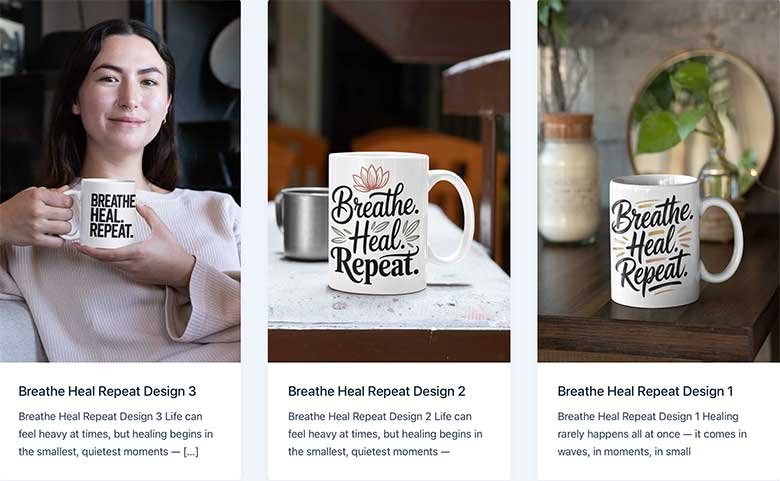
A Small Reminder to Protect Your Energy
I’ve got prints, mugs, and shirts at Premier Print Works for people building real, restorative daily habits. Take a look if a daily reminder would help.
Visit Premier Print Works3. Tell the difference between a genuinely restorative break and a merely distracting one
Scrolling a phone or watching an intense show can feel like a break, but it still demands real, active, directed attention, avoiding being hit by information, tracking a plot, rather than allowing it to actually rest. A genuinely restorative break involves what researchers call soft fascination, something gently interesting that doesn’t require effort, like watching clouds or a real, slow walk.
Notice today whether your next break is genuinely restorative or just a different kind of demanding.
“Not every break actually restores mental energy, even when it feels relaxing in the moment.”

Build the Daily Habits Behind Real Restoration
My free 9 Daily Habits guide gives you nine simple morning practices that support genuinely restorative daily energy.
Get the Free Guide4. Schedule a real micro-break before your attention is already fully depleted
Waiting until you’re completely drained to take a break means recovering from a considerably deeper hole. A short, real, scheduled break earlier, before full depletion, protects your mental energy considerably more efficiently.
Schedule one real micro-break today, before you actually reach full mental fatigue.
5. Pair your most demanding, real block of focused work with an immediate restorative break
The most directed-attention-heavy tasks, deep writing, close analysis, real problem-solving, deplete this resource the fastest. Follow that specific kind of task immediately with a real, restorative break, rather than moving straight into another demanding task.
Pair today’s most demanding task with a real, restorative break immediately afterward.
6. Deliberately change your physical space for a real, brief moment
One of the real, documented properties that makes a break restorative is what researchers call “being away,” a genuine sense of leaving the usual context, even briefly. Step into a different real room, or step outside, rather than staying in the exact same spot.
Change your physical space today for one real, brief moment during a demanding stretch of work.
7. Audit honestly which of your regular “breaks” are actually restorative
Many habitual breaks, checking notifications, browsing headlines, still quietly demand real, directed attention without most people realizing it. Audit your own regular breaks honestly, and notice which ones are genuinely restorative versus which just feel like one.
Audit today one regular break you take, and notice honestly whether it’s actually restorative.
8. Build brief, real outdoor time into a specific, consistent point in your day
Outdoor time that depends on remembering to do it tends to get skipped on busy days, exactly when it’s needed most. Attach it instead to a specific, real, existing point in your day, so it happens without relying on memory.
Attach a brief, real outdoor moment today to a specific, existing point in your daily routine.
9. Recognize when a full day of directed-attention tasks needs a longer, real restorative block
Some days are genuinely saturated with directed-attention demands, back-to-back meetings, close focus work, and small micro-breaks alone won’t be enough real recovery. Notice this honestly, and build in one longer, real restorative block instead.
Notice today whether your schedule needs one longer, real restorative block, not just small breaks.
10. Track your own real energy pattern across a few real days
A few days of honest, real tracking, noting when your focus genuinely fades, reveals your own specific pattern far better than guessing. Use that real, personal data to plan your actual breaks around it.
Track today, honestly, when your own real focus started to fade.
11. Identify which specific environments genuinely restore you, since this varies by person
While nature is the most studied real restorer, the exact environments and activities that genuinely work vary somewhat from person to person. Identify your own honest, specific version, rather than assuming one general formula fits you exactly.
Identify today one specific environment or activity that genuinely restores your own attention.
Explore Our Top Picks for a Better Life
I put together a list of tools and products I genuinely think are worth your time, covering mindset, self-care, health, and home.
See Our Top PicksTwo Breaks That Actually Restored Something
I know a woman named Kezia who used to spend every work break scrolling her phone, and would return to her desk feeling just as fatigued as before, sometimes worse. The week she swapped that for a genuine ten-minute walk outside instead, no phone, just walking, she said her focus afterward felt noticeably sharper, in a way scrolling had never actually delivered.
I also think about a guy named Daniel, who used to push through an entire day of back-to-back focused work with no real break at all, assuming stopping would just cost him time. The day he built in one real, brief nature-based break between his two hardest tasks, he said he got through the second one faster than he expected, not slower.
The Right Kind of Break Matters More Than the Length
Each habit here targets a specific, real kind of mental fatigue, and a specific, real kind of recovery, not just “resting more” in general. The nature-based break. The audit of which regular breaks actually restore. The longer block reserved for genuinely saturated days.
Try two or three of these this week, and notice honestly which breaks actually leave you sharper afterward. Get the free Self-Care Starter Kit to support this kind of real, daily recovery.
Want to Go Further?
I’m building out some deeper, paid resources for people who want more than a single article can cover. They’re not live yet, but you can see everything I currently have ready for you, free and otherwise, on my Top Picks page.
See What’s Available
Ready to Build Genuinely Restorative Habits?
My free Self-Care Starter Kit walks you through simple daily practices that support real, restorative mental energy.
Download Free Now
A Small Reminder to Protect Your Energy
Take a look at Premier Print Works for prints, mugs, and shirts made for people building real, restorative daily habits.
Visit Premier Print WorksDisclaimer
This page is for informational and inspirational purposes only. It is not professional coaching, therapy, or medical advice. The attention restoration theory referenced here comes from the real, published research of Stephen and Rachel Kaplan, with experimental confirmation by researchers including Marc Berman, John Jonides, and Stephen Kaplan, summarized here in plain language. Results and experiences vary from person to person.
Kezia and Daniel are made-up characters used to bring this content to life. They are not real people.
Some links on this page, including links to Premier Print Works, are affiliate links. If you buy something through one, we may earn a small commission at no extra cost to you. We only own and sell products through our own store, Premier Print Works.
All content on A Self Help Hub belongs to Digital Marketing 215 LLC and is protected by copyright law. No part of this page may be copied or reused without written permission.