12 Eco-Friendly Habits That Also Save Money
A reusable bag hangs on the doorknob. A jar of leftover soup sits in the fridge. The lights in the empty room are off. None of these feel like big choices, and yet each one is good for the planet and for the wallet.
Many people find that green living and frugal living overlap more than expected. Using less, wasting less, and reusing more tend to cost less too. These eco-friendly habits that save money can be a gentle place to start for anyone who cares about both. Plenty of eco-friendly habits that save money need no special gear at all.
Below are 12 simple habits to try. This guide shares general ideas only, and it is not advice. Start with one or two that feel easy, and add more when you are ready.
Track the Savings From Your Green Habits
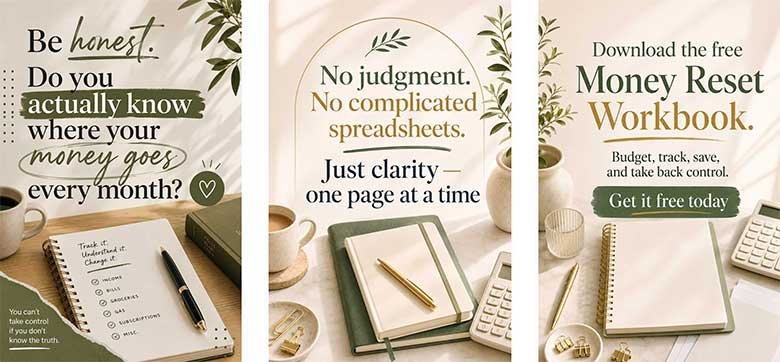
Download the free Money Reset Workbook and use it to see how small eco-friendly changes help your budget.
Get the Free Workbook1. Cut food waste with a plan
Food that goes in the trash is money lost. Planning meals, shopping with a list, and using leftovers can cut waste a lot.
A use-it-up shelf in the fridge, for food that needs eating soon, can help. Freezing bread, fruit, and cooked meals before they spoil can save them for later.
Cooked leftovers are best eaten within three to four days. For related reading, see preparing your pantry for a no-spend week.
Set up a use-it-up shelf in your fridge this week.
2. Carry a reusable bottle and mug
Bottled water and cafe drinks can add up. A refillable bottle and a travel mug can cut both waste and cost.
Filling them at home before leaving makes it easy. Many cafes also allow you to bring your own cup.
Over time, the savings can be larger than expected.
Put a reusable bottle in your bag for tomorrow.

Keep a Green Reminder in Plain Sight
Premier Print Works creates quality prints, mugs, and shirts for people who love the planet and a good deal.
Visit Premier Print Works3. Use cloth instead of paper
Paper towels and napkins are used once and thrown away. Cloth rags and napkins can be washed and reused many times.
Old t-shirts and towels make great cleaning rags. A small basket of cloths by the sink keeps them handy.
This simple swap can cut a regular grocery cost.
Cut an old t-shirt into rags and keep them by the sink.
“Caring for the planet and caring for your wallet often go hand in hand.”
4. Make simple cleaners at home
Baking soda, vinegar, and dish soap can handle many cleaning jobs. They are often cheaper than store sprays and come with less packaging.
Bleach is never mixed with vinegar or ammonia, since the fumes are harmful. Vinegar is best kept off natural stone like granite and marble. Another place to look is saving on spring cleaning supplies.
Labeling homemade cleaners clearly helps keep everyone safe.
Try one simple homemade cleaner for an easy job.

Write Down Your Green Habits
The free Money Reset Workbook gives you a page to list the habits you try and what they save.
Get the Free Workbook5. Wash clothes in cold water
Much of the energy used for laundry goes to heating water. Washing in cold water can save energy and is gentle on many fabrics.
Full loads also make better use of water and power. Checking care labels can help with any items that need warm water.
Clothes may also last longer, which saves money over time.
Switch your next few loads of laundry to cold water.
6. Air dry some laundry
Dryers use a lot of energy. A drying rack or a clothesline uses none.
Many people air dry a few items, like shirts and towels, even if they use the dryer for the rest. Clothes often keep their shape better too.
On sunny days, an outdoor line can dry clothes quickly.
Air dry one load of laundry this week.
7. Turn off and unplug
Lights, TVs, and chargers use power when left on. Turning them off and unplugging when not in use can trim the electric bill.
A power strip makes it easy to switch off several items at once. Looking at your electric bill can show how your use changes. You may also like reading your electric bill.
Small habits like these can add up over a month.
Plug your TV and gadgets into a power strip and switch it off at night.
8. Use less water
Shorter showers, fixing drips, and running the dishwasher only when full can save water. In many homes, saving hot water also saves energy.
A bucket in the shower can catch water while it warms up, ready for plants. Turning off the tap while brushing teeth is an easy habit.
Lower water use can mean lower bills.
Time your next shower and try to trim a minute or two.
9. Buy secondhand first
Buying used keeps items out of landfills and often costs much less. Thrift stores, yard sales, and online marketplaces can have great finds.
Clothes, furniture, books, and kitchen items are easy to find used. A smaller, well-chosen wardrobe can also cut waste. See also building a capsule wardrobe.
Used children’s items are worth checking for recalls, and used car seats are best avoided.
Check a secondhand shop before your next purchase.
10. Repair before replacing
Fixing a broken item keeps it in use and out of the trash. Sewing a seam, gluing a handle, or replacing a part can be cheaper than buying new.
Free videos and library books can teach simple repairs. Some towns have repair cafes where volunteers help.
Electrical and gas repairs are best left to a qualified professional.
Find one broken item at home and try to repair it.
11. Walk, bike, or share rides
Short trips by car use gas and add wear. Walking or biking for nearby errands can save money and feel good.
Carpooling or using transit for longer trips can cut costs too. Grouping errands into one trip helps when a car is the only choice.
Even a few car-free trips a week can make a difference.
Choose one short trip this week to walk or bike.
12. Grow a little food
Growing herbs or vegetables at home can cut grocery costs and packaging. A few pots on a windowsill or balcony can be enough.
Herbs like basil, mint, and green onions are easy to grow. Seeds are often cheap, and some libraries share them for free.
Composting food scraps, where it is allowed, can feed the plants for free too.
Plant one herb or vegetable in a pot this month.
Explore Our Top Picks for a Better Life
We have gathered the tools, resources, and products we think are genuinely worth your time, covering mindset, self-care, health, and home. All in one place, hand-picked to support the goals you are working toward.
See Our Top PicksReal Stories, Real Results
Let me share two examples I like to use. Amara wanted to be greener but thought it would cost more. She started with cloth rags, a reusable bottle, and cold water laundry. She told me that she was surprised to see her grocery and electric bills drop a little each month.
Joel hated throwing away food but did it every week. He set up a use-it-up shelf and started freezing extra bread and leftovers. He said that his trash got lighter and his grocery bill got smaller. Both of them said the same thing: being kind to the planet turned out to be kind to their budget too.
Small Green Habits Can Lead to Big Savings
Picture a home with less waste, lower bills, and simple habits that feel good. The trash can is lighter, and so is the budget.
Choose one habit from this list to try this week. Download the free Money Reset Workbook to track what you save. Small green steps can add up.
Want Ready-Made Tools to Help You Put This Into Action?
Sometimes the fastest way forward is a tool that someone has already built. Browse our hand-picked resources and downloads, chosen to help you take the next step with less guesswork.
Browse Resources and Downloads
Ready to Save Money and Waste Less?
The free Money Reset Workbook helps you see your numbers clearly, so every green habit counts.
Download Free Now
Reuse, Repair, and Remember
Premier Print Works makes quality prints, mugs, and shirts for eco-minded, thrifty people. Browse the collection today.
Visit Premier Print WorksDisclaimer
The content on this page is for informational and inspirational purposes only. It is not professional financial, investment, tax, legal, insurance, or estate planning advice. Prices, fees, utility rates, and account terms vary and change, and results vary widely from person to person. For cleaning, never mix bleach with vinegar or ammonia and follow product labels. Please follow food safety guidance, check used children’s items for recalls, and contact a qualified professional for electrical or gas repairs. Local rules on composting vary.
I am not a financial advisor, and I am not a licensed tax, legal, or investment professional. I share this information to help people learn about money and see new options. Please treat it as general information only, and talk with a qualified professional about your own situation before making financial decisions.
The stories of Amara and Joel are illustrative composite characters created to bring the content to life. They are not real people. Any resemblance to a real person is purely coincidental.
Some links on this page, including links to Premier Print Works and other resources, are affiliate links. If you make a purchase through one of these links, we may earn a small commission at no extra cost to you. We do not own, produce, or control any affiliate products, and we are not responsible for them — we only own and sell the products offered through our own store, Premier Print Works.
All content on A Self Help Hub is the property of Digital Marketing 215 LLC and is protected by copyright law. No part of this page may be copied, reproduced, republished, distributed, or transmitted in any form without prior written permission from the author.