13 Fresh Perspective Quotes That Help You Think About Life Differently
The way you think about your life is the most powerful variable in the life you actually build. Not the circumstances, not the opportunities, not the challenges, though all of these matter. The frame through which you interpret what is happening to you and what is possible for you shapes every decision you make, every risk you take or avoid, and every meaning you assign to the experiences that accumulate into a life.
These 13 fresh perspective quotes are not asking you to think positively. They are asking you to think more accurately, more openly, and more usefully, in ways that the default frame of daily life rarely encourages. Some of them will land immediately. Others will resist. The ones that resist most are usually the ones pointing at something the current frame has made invisible. Sit with those. Come back to them. Let them do what fresh perspective does when given enough time: change what you are able to see.
Free Download: The 9 Daily Habits Checklist
Fresh perspective grows from the daily habits that keep your thinking honest, open, and genuinely curious. The free 9 Daily Habits Checklist gives you nine proven daily practices that build the mental clarity and openness fresh perspective requires. Download it free today.
Get the Free Habits Checklist1. “The real voyage of discovery consists not in seeking new landscapes but in having new eyes.”
“The way you think about your life is the most powerful variable in the life you actually build. The frame through which you interpret what is possible shapes every decision, every risk, and every meaning you assign.”
Marcel Proust’s observation is one of the most compact and most truthful descriptions of what genuine perspective change actually is. The search for new circumstances, new locations, new relationships, new experiences as the source of a new relationship with life, frequently produces the same experience in a different setting. The same patterns, the same interpretations, the same underlying frame producing the same life in a new backdrop. The transformation is not in the landscape. It is in the eyes doing the looking. The new eyes are available without moving, without starting over, without dramatic external change. They require only the willingness to look at the familiar with different questions and the openness to see different answers than the ones the current frame provides.
2. “Every exit is an entry somewhere else.”
Tom Stoppard’s line from Rosencrantz and Guildenstern Are Dead reframes endings in a way that is both simple and genuinely clarifying. The end of a job is the beginning of the next chapter. The end of a relationship is the entry into a different version of the self. The end of a season that has been holding you in place is the door into the next one. The perspective shift available here is not false optimism about what has ended but an accurate recognition that endings and beginnings are the same event viewed from different sides of the door. The exit is real. The entry it opens is equally real. Both are available to be seen simultaneously if the frame is wide enough to hold them both at once.
3. “Life shrinks or expands in proportion to one’s courage.”
“Every exit is an entry somewhere else. The ending and the beginning are the same event viewed from different sides of the door. The frame that can hold both simultaneously is the more accurate and more useful one.”
Anaïs Nin’s observation provides one of the most practical frameworks available for understanding why the lives of two people with similar circumstances can look so different over time. The life that is organized around the avoidance of what frightens gradually contracts around the available safe territory. The life organized around engaging with what matters, even when it frightens, gradually expands into territory that the avoidance-organized life cannot reach. Courage is not one dramatic decision. It is the accumulation of small choices about whether to move toward or away from the things that are genuinely important. The life is always reflecting the sum of those choices. The perspective this provides is both clarifying and empowering: the size of the life is largely within your own influence.

Visit Premier Print Works
Keep the perspectives that shift how you think about your life visible in your daily space. Premier Print Works offers prints, mugs, and art for people who are building a more honest, open, and courageous relationship with their own life and its possibilities. Visit the shop today.
Visit Premier Print Works4. “Comparison is the thief of joy.”
This idea, attributed to Theodore Roosevelt, names with precision the specific mechanism through which the experience of one’s own life is most reliably diminished: measuring it against someone else’s. The comparison is always unfair because it compares the interior experience of your own life against the curated exterior presentation of someone else’s. Your full experience, including its difficulties, uncertainties, and private costs, against their highlights, achievements, and publicly visible successes. The fresh perspective available here is the recognition that the comparison itself is what creates the deficit, not the actual circumstances being compared. The life that is evaluated on its own terms, against its own values and its own direction, produces a completely different and more honest experience of what is actually there.
5. “The only way to make sense out of change is to plunge into it, move with it, and join the dance.”
Alan Watts’s observation about change addresses one of the most common forms of psychological suffering available in a fast-changing world: the resistance to change itself. The attempt to make life stay still, to hold circumstances in a particular configuration, to prevent the movement that life consistently produces anyway, costs enormous energy and produces enormous frustration because it is fighting against something as fundamental as time. The fresh perspective Watts offers is the reframe of change from threat to be managed into current to be joined. The dancer is not controlled by the music. They are in relationship with it. The relationship is possible only because the resistance has been released in favor of movement with what is actually happening.
6. “The unexamined life is not worth living.”
“The attempt to make life stay still costs enormous energy and produces enormous frustration because it fights against something as fundamental as time. The reframe from threat to current to be joined releases what was consuming the energy of resistance.”
Socrates’s proposition, from Plato’s Apology, is among the oldest and most enduring arguments for the examined life as the basis of a genuinely human one. The fresh perspective this offers is not a criticism of ordinary life. It is the invitation to bring conscious awareness to it: to ask, regularly and honestly, whether the life being lived reflects genuine values or inherited ones, genuine choices or defaulted ones, genuine meaning or assumed meaning. The examination is not the life. It is what keeps the life honest. The life that is never examined drifts, gradually and often imperceptibly, toward something that was never actually chosen. The examined life is the one with the possibility of being genuinely yours.
7. “Act as if what you do makes a difference. It does.”
“The life that is never examined drifts gradually toward something that was never actually chosen. The examination is what keeps the life honest and what keeps it genuinely yours.”
William James’s instruction is at once a challenge to the helplessness that difficult circumstances can produce and an accurate description of how influence actually works. The feeling that individual action is too small to matter is a feeling, not a fact. The action taken from the conviction that it matters produces different ripples than the inaction of the person who has decided their contribution is too small to count. Both perspectives are self-fulfilling in their own way. The fresh frame James offers is the choice to act from the conviction of consequence rather than the paralysis of insignificance. It does make a difference. Act as if it does. The acting will prove the truth of the premise.
8. “What you are is what you have been. What you’ll be is what you do now.”
This idea, attributed to the Buddha, offers a perspective on personal change that is both honest about the past and empowering about the present. What you currently are is the accumulation of everything that has been: the experiences, choices, conditions, and habits that have produced the person present in this moment. That is real and it cannot be changed by wishing. What you will become is determined by what you do with this moment, and this one, and the next one. The present is where the power lives. Not in the regret for the past or the hope for the future but in the specific choices available right now, which are building the next version of who you are with the same reliability that the past ones built the current version. What you do now is what you will be. Do it deliberately.
9. “Between stimulus and response there is a space. In that space is our power to choose our response.”
“What you currently are is the accumulation of everything that has been. What you will become is determined by what you do now. The present is where the power lives. Do what you do now deliberately.”
Viktor Frankl’s observation, drawn from his experience in Nazi concentration camps and developed in Man’s Search for Meaning, is the most direct available description of where human freedom actually lives. Not in the circumstances, which are often outside our control, but in the space between what happens and what we do about it. The cultivated awareness of that space is the practice of a lifetime and the source of the most profound and durable sense of freedom available to any person in any circumstances. The fresh perspective here is the recognition that the space exists, that it can be made larger through practice, and that in that space is the entirety of the meaningful choice available to a human being.
Free Download: The Self-Care Starter Kit
Fresh perspective grows from the daily self-care practices that keep your inner life clear and your thinking honest. The free Self-Care Starter Kit gives you simple daily practices for your mind and body that support the kind of open, grounded thinking these quotes invite. Download it free today.
Get the Free Self-Care Starter Kit10. “Your life is your message to the world. Make sure it’s inspiring.”
“The space between stimulus and response is where human freedom lives. It can be made larger through practice. In that space is the entirety of the meaningful choice available to a person in any circumstances.”
This idea, widely attributed to Lorrin L. Lee, reframes the life from something that happens to something that communicates. Every life is a message, whether intentional or not, about what is possible, what matters, and how a person can choose to move through the world. The fresh perspective this offers is the question: what is your life currently saying, and is it the message you intend? The examination of the gap between the message being sent by the life currently being lived and the message the person would choose to send, if the question were asked directly, is one of the most powerful perspective-shifting inquiries available. It locates agency where it actually lives: not in the circumstances but in the daily choices about how to inhabit them.
11. “We suffer more in imagination than in reality.”
Seneca’s observation, written two thousand years ago, is among the most practically accurate descriptions of the relationship between anticipatory anxiety and actual experience available in any literature. The feared conversation is almost always less devastating than imagined. The dreaded outcome is almost always more survivable than the catastrophizing mind suggests. The anticipated difficulty is consistently less overwhelming than the mental rehearsal of it. The fresh perspective this offers is the invitation to notice the gap between what is actually happening and what the mind is predicting will happen, and to bring genuine attention to whether the suffering belongs to the reality or to the imagination that has been running ahead of it. Much of what we suffer, most of it, is not the thing. It is the story about the thing told in advance.
12. “Not all those who wander are lost, and not all those who are lost are wandering.”
“We suffer more in imagination than in reality. Most of what we suffer is not the thing. It is the story about the thing told in advance, by the mind running ahead of what is actually happening.”
This expansion of Tolkien’s original observation adds something the original leaves implicit: that being lost is not the same as wandering aimlessly, and that some forms of genuine lostness are the stillness of not yet knowing rather than the movement of searching without direction. The person who is standing still in genuine uncertainty, who does not yet know which path to take, is not failing to wander. They are honestly lost in the way that precedes genuine discovery. The perspective this offers is the normalization of not-yet-knowing as a legitimate stage of any meaningful journey, rather than a failure to have arrived at direction. Not knowing yet is not the same as being unable to find the way. It is where the finding often begins.
13. “You can’t go back and change the beginning, but you can start where you are and change the ending.”
This idea, widely attributed to C.S. Lewis, is the fresh perspective that matters most when the past has been carrying the most weight in how the present is being experienced. The beginning is fixed. The ending is not. Whatever has come before, whatever decisions were made or unmade, whatever seasons have already been lived, the current moment is always a genuinely open starting point for what comes next. The past shapes the starting conditions but it does not determine the trajectory from here unless you allow it to. The fresh perspective in this truth is the recognition that the power available right now is real regardless of what came before, and that the ending being written from this moment forward is genuinely available to be different from the one the beginning seemed to be building toward. Start here. Change the ending from here.
How Daniel and Amara Each Found the Quote That Finally Shifted the Frame
Daniel had been thinking about a significant life situation through the same frame for so long that the frame itself had become invisible. He was not aware of thinking about it in a particular way. He was simply aware of the specific weight and flatness of the conclusion the frame consistently produced: this is how this is, and this is how it will remain. A conversation with a trusted friend who had been through a similar situation introduced him to Proust’s observation about new eyes rather than new landscapes. He had been looking for the situation to change. The frame he had been looking through had made the situation look immovable. He started asking different questions about the same situation. The situation did not change immediately. What changed was what he could see within it. The options that had been invisible from the previous frame became visible from the new one. Not dramatically. One at a time. He started acting from the new options. The situation changed. Not because the circumstances changed first but because the seeing changed first, and the changed seeing produced the changed action that produced the changed circumstances. The new eyes had done exactly what Proust suggested they would.
Amara’s quote was Seneca’s. She had been in an extended period of anticipatory anxiety about a conversation she knew she needed to have, a genuine thing she had been avoiding for months, and the avoidance had been sustained by the elaborate mental rehearsal of how badly the conversation would go. She had imagined the worst version of every possible response the other person could have. She had imagined the damage to the relationship. She had imagined her own incapacity to handle what the conversation might produce. All of this imagining had been more consuming than anything that had actually happened, because nothing had actually happened yet. The conversation had been entirely in her mind, entirely in the most catastrophic version her mind could construct. Reading Seneca, she recognized what she had been doing with unusual clarity. She had been suffering the conversation for months without having it. She had the conversation the following week. It was hard. It was nowhere near as hard as the version she had been experiencing in her imagination for months. The suffering she had already done was larger than the suffering the actual conversation produced. She has thought about Seneca every time she has caught herself catastrophizing since. The reminder reliably closes the gap between what she is suffering and what is actually happening.
The Life You Are Living Looks Different From a Different Frame. These Quotes Are the Frames.
The way you are currently thinking about your life is not the only way to think about it. It is the most practiced way, the most familiar way, the way that has been reinforced by every previous experience interpreted through the same lens. But it is not the only available frame, and it may not be the most accurate or the most useful one for where you are trying to go from here.
The thirteen quotes in this article offer thirteen different frames. Some will shift something for you today. Others will be waiting for the season when they are most needed. Come back to this list when the current frame stops producing the clarity that moving forward requires. The fresh perspective is always available. These quotes are where you find it.
Free Download: The 9 Daily Habits Checklist
Let these fresh perspective quotes be the reminder that the daily habits you build shape the lens through which you see everything. The free 9 Daily Habits Checklist gives you nine daily practices that build the inner clarity and openness these perspectives require. Download it free today.
Get the Free Habits ChecklistOur Top Picks for a Better Life
We have gathered our favorite tools, resources, and recommendations for people building fresh perspective, clearer thinking, and the daily habits that make seeing their life honestly and building it intentionally genuinely possible. Everything we trust enough to share, all in one place.
See Our Top Picks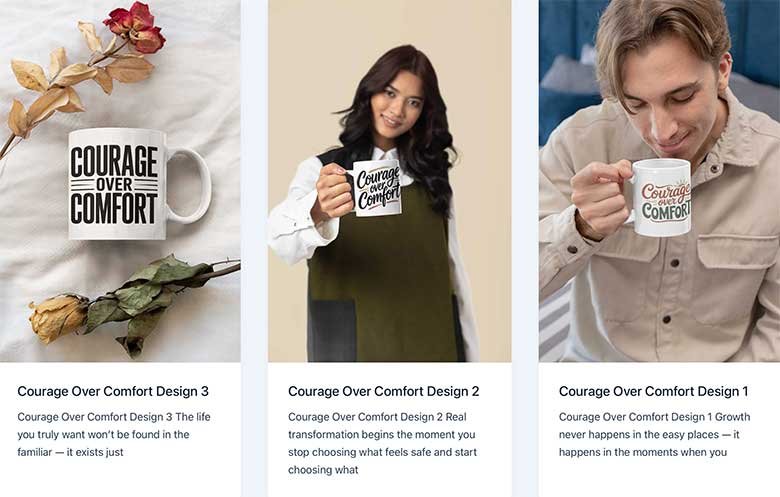
Fresh Thinking Reminders at Premier Print Works
Keep the perspectives that shift how you see your life visible in your daily space. Visit Premier Print Works for prints, mugs, and art for people who are building a clearer, more honest, more open relationship with the possibilities inside their own life.
Visit Premier Print WorksDisclaimer
The content on A Self Help Hub is for informational and inspirational purposes only. The fresh perspective quotes and personal stories in this article offer general support for everyday self-awareness, personal growth, and intentional living. They are not professional mental health advice, psychotherapy, medical advice, or any form of clinical treatment.
If you are dealing with significant depression, anxiety, grief, trauma, or other conditions affecting your daily functioning and mental health, please speak with a qualified mental health professional. General self-help content is not a substitute for professional care.
The stories and composite characters in this article, including Daniel and Amara, are illustrative. They are based on common experiences and created to make the content relatable. They are not real people. Any resemblance to a specific person is coincidental.
Some links on this site, including links to Premier Print Works, may be affiliate links. A Self Help Hub may earn a small commission at no extra cost to you. We only recommend things we genuinely believe in.
If you are in a mental health crisis or thinking about self-harm, please do not rely on this content for support. Contact emergency services or a crisis helpline right away. You deserve real help and it is available to you now.
All content on A Self Help Hub is copyrighted. You may not copy or republish it without written permission. By reading this article you agree to this disclaimer.