13 Growth Mindset Habits That Help You Start the Day Better
One morning I looked at a new project and thought, “I’m just not good at this.” I hadn’t even started. The thought was so quiet I barely noticed it, and it shaped my whole day.
Growth mindset is the idea that abilities can be developed through effort and good strategies. It has had its share of hype, so I wanted to see how it held up. In 2019, David Yeager, Carol Dweck, and a large team published a study in the journal Nature. They tested a short online growth mindset lesson, under an hour, with a nationally representative sample of secondary-school students in the United States. The lesson taught that intellectual abilities can be developed. It improved grades among lower-achieving students, and it increased enrollment in advanced math courses overall.
One detail stood out to me. The effect depended on the setting. The lesson changed grades when peer norms matched its message, meaning when the norms among classmates lined up with what the lesson taught. That’s a hint that our surroundings matter, not just our private thoughts.
Some cautions. The study was about students in school, and I’m borrowing the idea for grown-up mornings, which is my own guess. The grade improvement was for lower-achieving students, so it doesn’t promise the same for everyone. I think of growth mindset as a useful habit of thought, not a cure for anything. The 13 habits below are my own, built around that idea, and I’ll flag where the research ends.

Start With One Small Morning Habit
Grab my free 9 Daily Habits guide. It has nine morning practices you can pick from, and any one of them makes a good small first step.
Get the Free Guide1. Start the day by reminding yourself that abilities can grow
This is the core message of the lesson in the study: that intellectual abilities can be developed. You don’t need a long speech. One sentence is enough. “I can get better at this with practice.”
I say mine while I wait for the coffee. It takes five seconds. I can’t tell you it does what the lesson did for students, but it points my mind in a useful direction.
Try this: Pick one sentence about growing and say it out loud tomorrow morning.
2. Add the word “yet” to what you can’t do
“I can’t do this” is a closed door. “I can’t do this yet” leaves it open. It’s a tiny change in wording, and it changes what you expect next.
I remember catching myself saying “I’m bad at spreadsheets” one morning. I added “yet,” and the next thing I did was look up how to learn. That’s my own habit, not a study finding.
Try this: Next time you catch yourself saying “I can’t,” add “yet” at the end.
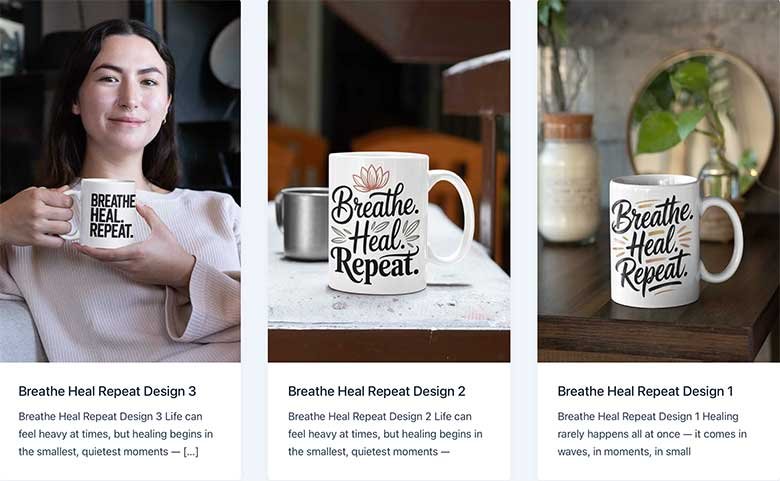
A Small Reminder That You Can Grow
I make prints, mugs, and shirts at Premier Print Works. Some people like a reminder where they can see it.
Visit Premier Print Works3. Name one skill you’re working on right now
When you know what you’re trying to get better at, your day has a thread running through it. Pick one skill. It could be public speaking, a new software tool, a language, or patience.
Write it on a sticky note. Looking at it each morning reminds you that you’re in the middle of growing, not standing still. That’s my idea.
Try this: Write the one skill you’re working on this month on a sticky note and put it where you’ll see it.
Your abilities aren’t fixed, and your mornings can remind you of that.
4. Pick one small stretch for today
Growth happens at the edge of what you can already do. So choose something just beyond your comfort zone. Speak up once in a meeting. Try the harder version of a task. Ask a question you’ve been holding back.
Keep it small enough to do today. A small stretch you finish teaches you more than a big one you avoid.
Try this: Decide on one small stretch for today and write it down.
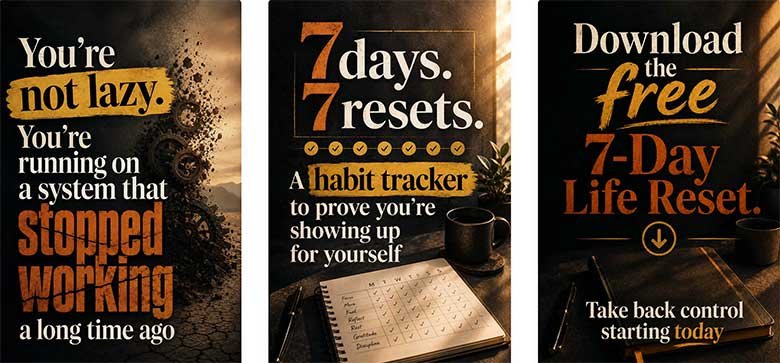
Take a Week to Notice Your Thinking
My free 7-Day Life Reset is a short week of reflection on your own routines. It’s a good place to start seeing what gets in your way.
Start the Free Reset5. Decide how you’ll respond if it gets hard
Hard moments are easier when you’ve planned for them. Before your day starts, decide what you’ll do when you get stuck. Take a breath, break the task into parts, or ask for help.
I write one line on my to-do list: “If stuck, ask or break it down.” It’s saved me from spinning my wheels many times. This is my own approach.
Try this: Write one sentence about what you’ll do if today’s stretch gets hard.
6. Look back at what you learned yesterday
Take thirty seconds to remember one thing you learned yesterday. A mistake that taught you something counts. A new fact counts too.
Seeing your own learning builds the habit of expecting more of it. It’s a quick way to start the day believing you’re still growing. I do this one from my own experience.
Try this: Write down one thing you learned yesterday, even a small one.
7. Call a dreaded task “practice”
Some tasks feel like tests, and tests feel risky. Practice feels safer. If you’re dreading a presentation, a hard conversation, or a new responsibility, try calling it practice.
I remember doing this before a talk I was nervous about. Thinking “this is practice” lowered the stakes in my head and let me focus on learning. That’s my own trick.
Try this: Pick one dreaded task today and call it practice in your mind.
8. Set an effort goal, not only an outcome goal
You can’t fully control results, but you can control effort. So set a goal about what you’ll do, not just what you’ll get. “Practice for twenty minutes” instead of “get good at this.”
Effort goals give you a win you can earn every day. They also keep you working on the right thing. This is my own approach.
Try this: Turn one of today’s goals into something you can do, like “twenty minutes of practice.”
9. Plan to ask for feedback once today
Growth needs information. Ask a colleague, a friend, or a mentor one specific question about how you’re doing. “How did that presentation land?” works better than “Was that okay?”
Asking can feel uncomfortable, and that’s normal. I’ve found one honest answer teaches me more than a week of guessing.
Try this: Decide who you’ll ask for feedback today, and what you’ll ask.
10. Notice the fixed-mindset voice and answer it
We all have a voice that says “you’re not good at this” or “don’t bother.” You don’t have to fight it. Just notice it, and answer back with something true. “I’m learning this.”
Naming the voice helps me a lot. When I hear it, I can think, “There’s that voice again,” and move on. That’s my own tool.
Try this: Write down one thing your fixed-mindset voice says, and write a true reply.
11. Choose surroundings that value learning
Remember the study’s finding: the lesson changed grades where peer norms matched its message. You can’t always choose your surroundings, but you can choose some of them. Pick the people you talk to, the podcasts you play, and the accounts you follow.
If your morning feed is full of people who mock effort, try changing it. This one comes directly from the research, though the study didn’t test it with adult feeds and habits.
Try this: Swap one morning input, like a podcast or a feed, for one that celebrates learning.
12. Think of one person who improved at something you want to learn
It’s easy to believe that some people are just naturally good at things. Remind yourself of someone who got better through practice. A friend who learned guitar at forty, a coworker who became a great speaker.
Real examples make growth feel possible. I keep a few in mind, and they help on days when I doubt myself. That’s my own habit.
Try this: Think of one person who improved at something, and remember how long it took them.
13. End your morning with a question to carry through the day
Before you start work, ask yourself, “What will I try today?” It turns the day into an experiment. You’re not trying to be perfect. You’re trying something.
Answer the question in one sentence. At night, look back and see what you tried, whether it worked or not. That counts as growth either way.
Try this: Write “What will I try today?” on a sticky note and answer it before you leave.
Explore Our Top Picks for a Better Life
I put together a list of tools and products I think are worth your time, covering mindset, self-care, health, and home.
See Our Top PicksTwo People Who Started the Day Differently
I know a woman named Amara who started every hard task with “I’m not good at this.” She began adding “yet,” and choosing one small stretch each morning. She told me the work didn’t get easier overnight, but she stopped feeling stuck before she began.
I also think about a guy named Joel who noticed his morning feed was full of people mocking anyone who tried something new. He swapped it for a group that shared their progress and mistakes. He told me that change was what finally made him willing to start learning again.
Picture a Morning That Expects You to Grow
Imagine waking up and, instead of bracing for a test, thinking about what you’ll learn. There’s a small stretch on your list, a plan for when it gets hard, and one question to carry with you. You might not get everything right. You’ll be building something.
Try one habit tomorrow morning. Add “yet” to a thing you can’t do. If you’d like more simple ways to start your day, get my free 9 Daily Habits guide.
Want to Go Further?
I’m building out some deeper, paid resources for people who want more than a single article can cover. They’re not live yet, but you can see everything I currently have ready for you, free and otherwise, on my Top Picks page.
See What’s Available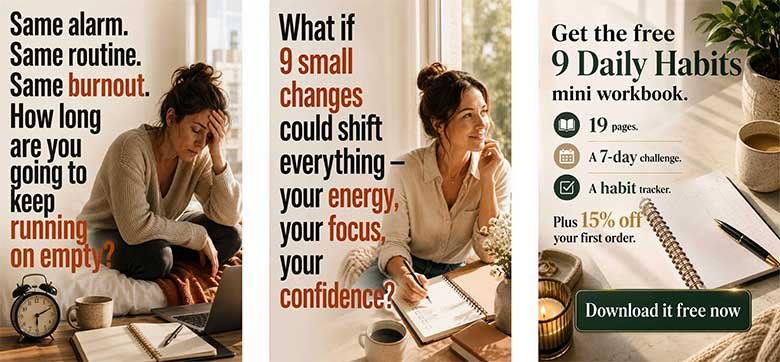
Ready to Start Tomorrow Differently?
Download my free 9 Daily Habits guide and pick one small habit to start tomorrow.
Download Free Now
A Small Reminder That You Can Grow
Take a look at Premier Print Works for prints, mugs, and shirts made for people who like a small daily reminder.
Visit Premier Print WorksDisclaimer
This page is for informational and inspirational purposes only. It is not professional therapy, coaching, or educational advice. The research referenced here comes from the published work of David S. Yeager, Paul Hanselman, Gregory M. Walton, Carol S. Dweck, and colleagues, “A national experiment reveals where a growth mindset improves achievement” (Nature, 2019), summarized here in plain language. It tested a short online lesson with secondary-school students and found improved grades among lower-achieving students, increased enrollment in advanced math overall, and stronger effects where peer norms matched the lesson’s message. It did not test morning habits, and applying it to adults is my own extension. The habits labeled as my own are based on my experience, not on research. Results vary from person to person.
Amara and Joel are made-up characters used to bring this content to life. They are not real people.
Some links on this page, including links to Premier Print Works, are affiliate links. If you buy something through one, we may earn a small commission at no extra cost to you. We only own and sell products through our own store, Premier Print Works.
All content on A Self Help Hub belongs to Digital Marketing 215 LLC and is protected by copyright law. No part of this page may be copied or reused without written permission.