13 Savings Strategy Habits That Help Young Adults Create Financial Peace
The early years of financial independence carry a specific kind of pressure — genuinely low margin for error, a savings foundation that does not exist yet, and often very little modeled guidance for how to actually start building one. The habits built during exactly this stretch tend to matter disproportionately, since they establish a savings foundation that everything built afterward will rest on.
The thirteen habits below are written specifically for that early stretch. Each one focuses on building a genuine savings foundation, starting from close to nothing, rather than assuming an existing base of savings or income already in place.
Build the Savings Foundation Behind Genuine Financial Peace
Download the free Money Reset Workbook and get a simple, step-by-step way to see where your money goes and build a genuine savings foundation from the ground up.
Get the Free Workbook1. Start with a genuinely small, automatic savings amount, since starting small and consistent beats waiting for a larger amount that never actually arrives.
Waiting to start saving until a larger, more meaningful amount feels available tends to delay saving indefinitely, since that larger amount rarely arrives on its own without the habit already being in place. A genuinely small, automatic amount, started immediately, builds both the actual savings and the underlying habit considerably sooner than waiting ever would.
Set up a genuinely small, automatic savings amount this week, even if it feels too small to matter yet.
2. Build a starter emergency fund before pursuing any other financial goal, since it protects every other goal from being derailed by an unplanned cost.
Other financial goals — investing, a specific purchase — pursued without a starter emergency fund in place remain genuinely vulnerable to being derailed entirely by an ordinary, unplanned expense, since there is nothing else in place to absorb it. A starter emergency fund, even a modest one, protects every other goal from this specific, common risk.
Build a starter emergency fund before actively pursuing any other financial goal, even a modest one to begin with.

Surround Yourself With What Supports Your Financial Peace
Premier Print Works creates quality prints, mugs, and shirts for people who are building the daily habits that support a genuine savings foundation early. Find what speaks to your journey today.
Visit Premier Print Works3. Save any raise or income increase before adjusting your spending to match it, protecting the gap that actually funds savings.
An income increase matched immediately by increased spending never actually widens the gap between income and expenses that genuine savings depends on, regardless of how much the income itself has grown. Directing at least a portion of any increase straight into savings, before spending adjusts to match it, protects this gap directly.
The next time your income increases, direct at least a portion of that increase straight into savings before your spending adjusts to match it.
“A savings habit started small and early tends to outbuild a bigger habit started late, simply because it had more time to compound.”

Get Clear on the Financial Foundation You Are Actually Building
The free 7-Day Life Reset gives you one short prompt a day for a week, helping you get honest about the savings foundation you actually want to build.
Start the Free Reset4. Learn the basics of an employer retirement match, if one is available, since leaving it unclaimed is genuinely leaving free money unclaimed.
An employer retirement match, if available, represents a genuine, immediate return that is easy to overlook or underuse simply from not fully understanding how it works, which means leaving it unclaimed is effectively leaving free money on the table. Understanding this specific benefit, and contributing enough to claim it fully, is one of the most efficient early savings moves generally available.
Look into whether your employer offers a retirement match this month, and confirm you are contributing enough to claim it fully.
5. Separate your savings into a distinct account from your everyday spending, reducing the temptation to treat savings as available spending money.
Savings held in the same account as everyday spending money remain genuinely tempting to dip into for non-emergency spending, simply because the money is visibly and easily accessible in the same place. A distinct, separate account creates a small but meaningful barrier that supports the savings actually staying saved.
Open a distinct savings account, separate from your everyday spending account, if you have not already done so.
6. Avoid comparing your current savings progress to older friends or family members at a genuinely different financial life stage.
Comparing your own early savings progress to someone considerably further along in their financial life — an older sibling, an established colleague — introduces a comparison that was never actually fair, given the genuinely different life stages and time horizons involved. Releasing this specific comparison protects early progress from being measured against an unfair standard.
The next time you compare your savings progress to someone at a different life stage, remind yourself that the comparison was never actually fair to begin with.
7. Build a simple, specific savings goal for something meaningful, giving the habit a concrete purpose beyond an abstract sense of “saving more.”
An abstract goal of “saving more,” with no specific purpose attached, tends to feel considerably less motivating than a specific, meaningful goal — a first apartment, a specific trip, a car — that gives the habit a concrete destination to work toward. A specific goal makes the ongoing habit feel purposeful rather than abstractly obligatory.
Build one specific, meaningful savings goal this month, giving your current savings habit a concrete purpose to work toward.
8. Track your net worth from the very beginning, even while it is small or negative, to build a habit of monitoring genuine progress early.
Tracking net worth is sometimes postponed until it feels like there is something substantial enough to track, but starting this habit early, even while the number is small or genuinely negative, builds the tracking habit itself well before it becomes urgent, and provides a genuine baseline to measure real progress against later.
Calculate and record your current net worth this month, regardless of how small or negative the number currently is.
9. Learn to distinguish a genuine financial emergency from an ordinary, foreseeable expense, protecting your emergency fund from being used too broadly.
An emergency fund used for ordinary, foreseeable expenses — routine maintenance, a predictable annual cost — rather than genuine emergencies, gets depleted for purposes it was never actually intended for, leaving less available for a genuine, unforeseen emergency when one eventually arrives. Learning this distinction protects the fund’s actual, intended purpose.
Review your recent use of any emergency savings, and honestly distinguish between genuine emergencies and ordinary, foreseeable expenses.
10. Build a habit of reviewing your savings progress monthly, since early feedback reinforces the habit before it has fully become automatic.
A savings habit not yet fully automatic benefits considerably from regular, early feedback, since seeing genuine progress reinforces continued effort during exactly the stretch the habit is still being established. Monthly review, even brief, provides this reinforcement consistently while the habit is still forming.
Build a monthly review of your savings progress into your routine, especially while the underlying habit is still becoming automatic.
11. Avoid taking on new financial obligations purely to match a peer group’s visible lifestyle, protecting your still-forming savings foundation.
A new financial obligation taken on primarily to match a peer group’s visible lifestyle — rather than out of genuine personal need or want — can meaningfully undermine a still-forming savings foundation before it has had time to properly establish itself. Protecting this early foundation from comparison-driven obligations supports its long-term stability.
Identify one financial obligation you may be considering primarily to match a peer group, and weigh it honestly against your own priorities instead.
12. Learn the basics of credit early, since a strong credit foundation built now genuinely affects options and costs for years to come.
Credit habits established early in financial independence have a disproportionate, long-term effect on future options and costs — loan terms, housing options — which makes understanding the basics early a genuinely high-leverage use of time compared to learning the same concepts considerably later. Building this foundation now compounds its benefit over the years ahead.
Spend some time this month learning the basics of how credit works, and build habits now that support a strong foundation going forward.
13. Revisit your savings strategy periodically, since what works during this early stretch may need to evolve as your income and life genuinely change.
A savings strategy built for an early, lower-income stretch can become genuinely outdated as income and circumstances change over time, continuing to be followed even after it has stopped reflecting what is actually optimal. Periodically revisiting the strategy keeps it aligned with your genuine current situation as it evolves.
Spend some time this year honestly reviewing whether your current savings strategy still fits your actual current situation, and adjust it as needed.
Explore Our Top Picks for a Better Life
We have gathered the tools, resources, and products we think are genuinely worth your money — covering finances, mindset, health, and home. All in one place, hand-picked with the same standard we apply to our own spending.
See Our Top PicksReal Stories, Real Results
Kezia had assumed for years that saving anything meaningful needed to wait until her income felt substantial enough to actually make a difference, which meant she had never actually started. Setting up a genuinely small, automatic amount, one that felt almost too small to matter, finally built both real savings and a real habit, years earlier than waiting for a bigger income ever would have allowed. She said the amount itself had felt insignificant at first. Having actually started had turned out to matter considerably more than the size of that first amount ever did.
Daniel had repeatedly compared his own early savings progress to an older colleague who was considerably further along in a genuinely different financial life stage, a comparison that had left him feeling discouraged more often than motivated. Recognizing that the comparison had never actually been fair to begin with let him finally measure his own progress against his own actual starting point instead. He said his progress had never really been as behind as the comparison had made it feel. The comparison itself had simply never made sense in the first place.
Early Financial Peace Is Built Habit by Habit, Not Income by Income
Each habit in this article builds a genuine savings foundation from close to nothing — the small automatic start, the protected raise, the separated account. None of these require an existing base of savings or a large income to begin.
Choose two or three habits that address where your own early savings foundation currently feels least established, and build them into your month. Download the free Money Reset Workbook to give this foundation a clear, simple structure to build from. A savings habit started small and early tends to outbuild a bigger one started late.
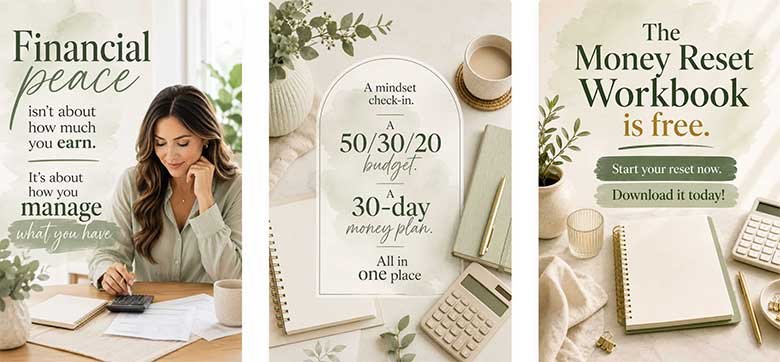
Ready to Build Your Own Early Savings Foundation?
The free Money Reset Workbook walks you through the same ideas in this article, step by step, with room to write down your own numbers and your own plan.
Download Free Now
Fill Your Space With What Supports Your Financial Peace
Premier Print Works makes quality prints, mugs, and shirts for people building a genuine savings foundation early in their financial life. Browse the collection and find what speaks to your journey today.
Visit Premier Print WorksDisclaimer
The content on this page is for informational and educational purposes only. It is not financial, investment, tax, insurance, legal, or estate planning advice, and should not be treated as a recommendation to buy, sell, or hold any product, security, or service. All investments carry risk, including the potential loss of principal, and past performance does not guarantee future results. Please speak with a qualified professional who is licensed in your state before making decisions about budgeting, saving, investing, debt, taxes, insurance, or estate planning. Results and experiences vary significantly from person to person.
The stories of Kezia and Daniel are illustrative composites created to bring the content to life. They are not real people. Any resemblance to a real person is purely coincidental.
Some links on this page, including links to Premier Print Works and other resources, are affiliate links. If you make a purchase through one of these links, we may earn a small commission at no extra cost to you. We do not own, produce, or control any affiliate products, and we are not responsible for them — we only own and sell the products offered through our own store, Premier Print Works.
All content on A Self Help Hub is the property of Digital Marketing 215 LLC and is protected by copyright law. No part of this page may be copied, reproduced, republished, distributed, or transmitted in any form without prior written permission from the author.