15 Confidence Tips That Help You Stop Hiding Your Strength
Dimming a genuine strength to keep someone else comfortable is a habit that frequently develops quietly, over a long stretch of time, until it stops feeling like a choice at all and simply becomes the default. It is rarely a single, dramatic decision to hide something — it is a long series of small, individually reasonable-seeming moments of holding back, added together.
The fifteen tips below are written for that specific habit. Each one supports letting a genuine strength be visible again, rather than continuing to shrink it for someone else’s comfort.

Build the Daily Habits Behind Genuine, Visible Confidence
Download the free 9 Daily Habits guide and get nine simple morning practices that build the daily foundation these confidence tips are meant to support.
Get the Free Guide1. Notice one specific instance where you recently minimized a genuine skill or achievement, and consider what actually prompted that minimizing.
A genuine skill or achievement, minimized reflexively in a specific recent instance, was minimized for some actual, identifiable reason — a fear of seeming arrogant, a habit of deflecting attention — that becomes considerably clearer once directly examined rather than left as an automatic, unexamined reflex. Identifying this specific instance and its actual prompt is the first step toward genuinely interrupting the pattern.
Identify one recent instance where you minimized a genuine skill or achievement, and consider honestly what actually prompted it.
2. Answer a direct question about your own skill or expertise honestly and specifically, rather than deflecting or downplaying automatically.
A direct question about a genuine skill or expertise, answered with automatic deflection or downplaying, denies both the asker and yourself an honest, accurate answer, replacing it instead with a reflexive habit that has little to do with the actual question being asked. Answering honestly and specifically, even when it feels uncomfortable, directly interrupts this automatic pattern.
The next time someone asks directly about a genuine skill of yours, answer honestly and specifically, rather than deflecting automatically.

Surround Yourself With What Supports Visible Confidence
Premier Print Works creates quality prints, mugs, and shirts for people who are building the daily habits that support genuine, visible confidence. Find what speaks to your journey today.
Visit Premier Print Works3. Accept a genuine compliment directly, with a simple thank you, rather than immediately redirecting the credit or minimizing it.
A genuine compliment, immediately redirected or minimized rather than simply accepted, denies the actual truth of the compliment and reinforces a reflexive habit of shrinking, even when the compliment was genuinely accurate and deserved. Accepting it directly, with a simple thank you, practices letting a genuine strength be acknowledged without automatically deflecting it.
The next time you receive a genuine compliment, accept it directly with a simple thank you, rather than redirecting or minimizing it.
“Hiding a genuine strength is rarely one dramatic decision. It is usually a long series of small, reasonable-seeming moments of holding back, added together.”

Get Clear on the Strength You Have Been Hiding
The free 7-Day Life Reset gives you one short prompt a day for a week, helping you get honest about a genuine strength you might be hiding.
Start the Free Reset4. Identify one specific relationship or environment where you consistently dim a genuine strength, and consider honestly why that dimming happens there specifically.
A genuine strength dimmed consistently within one specific relationship or environment, but genuinely expressed elsewhere, reveals something specific about that particular context worth examining directly, rather than assuming the dimming reflects something true about the strength itself. Identifying this specific context clarifies whether the dimming is genuinely warranted or simply habitual.
Identify one specific relationship or environment where you consistently dim a genuine strength, and examine honestly why that happens there.
5. Share an honest opinion in a group setting, even when it differs from what others have already said, rather than defaulting to agreement to avoid standing out.
An honest, differing opinion, withheld in a group setting specifically to avoid standing out, denies the group a genuine perspective and reinforces a habit of prioritizing others’ comfort over honest, direct expression. Sharing this honest opinion, even when it differs, practices letting genuine confidence be visible in a group context.
Share one honest, differing opinion in your next group setting, rather than defaulting to agreement to avoid standing out.
6. Take up physical or conversational space proportionate to your actual contribution, rather than habitually making yourself smaller than the situation genuinely calls for.
A habit of making oneself smaller — physically, conversationally — than a situation genuinely calls for, relative to an actual, genuine contribution, can become so automatic that it stops feeling like a choice at all. Taking up space proportionate to your actual contribution directly interrupts this automatic pattern of shrinking.
Practice taking up space proportionate to your actual contribution in your next conversation or meeting, rather than shrinking habitually.
7. Advocate directly for a genuine accomplishment during a review or evaluation, rather than assuming it will simply be noticed without being stated.
A genuine accomplishment, left unstated during a review or evaluation under the assumption it will simply be noticed on its own, is genuinely less likely to actually be recognized than the same accomplishment stated directly and specifically. Advocating for it directly practices letting a genuine strength be visible where it actually matters.
Advocate directly for one genuine accomplishment during your next review or evaluation, rather than assuming it will be noticed unstated.
8. Notice when you are downplaying your own expertise specifically to avoid making someone else feel less capable, and consider whether that protection is genuinely warranted.
Expertise downplayed specifically to avoid making someone else feel less capable, while sometimes genuinely thoughtful, can also become a reflexive, overextended habit that denies your own genuine competence considerably more often than the situation actually warrants. Examining this specific pattern reveals whether the protection is genuinely needed or has simply become automatic.
The next time you downplay your expertise to protect someone else’s comfort, consider honestly whether that protection is genuinely warranted.
9. Set a boundary around a specific request that genuinely does not align with your own priorities, rather than accommodating it purely to avoid appearing difficult.
A request accommodated purely to avoid appearing difficult, even when it genuinely does not align with your own priorities, reinforces a pattern of prioritizing others’ perception over your own genuine boundaries. Setting this boundary directly, even when it risks appearing difficult, practices letting genuine confidence guide the decision instead.
Set a boundary around one specific request that does not align with your priorities, rather than accommodating it to avoid appearing difficult.
10. Practice describing your own strengths in specific, concrete language, rather than in vague, hedged terms that soften the actual claim being made.
A genuine strength described in vague, hedged language — “I guess I’m okay at,” “sort of good with” — softens the actual, specific claim being made, even when the underlying strength is genuinely well-developed and specific. Practicing specific, concrete language about your own strengths directly reflects their actual, genuine level rather than a softened, hedged version.
Practice describing one genuine strength of yours in specific, concrete language today, rather than vague, hedged terms.
11. Notice whether you consistently let others take credit for a genuinely shared contribution, and practice claiming your actual share directly.
A genuinely shared contribution, consistently credited entirely to someone else rather than acknowledged as shared, reflects a pattern of hiding your own genuine role, even when that role was actually significant. Practicing direct acknowledgment of your actual share, without overstating it, restores an honest, accurate account of a genuinely shared effort.
Practice claiming your actual share of a genuinely shared contribution directly, rather than letting someone else take full credit.
12. Identify a specific mentor or role model who visibly demonstrates their own strength without apology, and notice what specifically you admire about that visibility.
A specific mentor or role model who visibly demonstrates genuine strength without apology or excessive hedging offers a concrete, observable model worth studying directly, revealing what genuine, unhidden confidence actually looks like in practice rather than in the abstract. Identifying what specifically you admire about their visibility clarifies what you are actually working toward.
Identify a specific person who visibly demonstrates their own strength without apology, and notice what specifically you admire about it.
13. Notice the specific physical sensations that accompany hiding a strength, since recognizing these sensations helps you catch the pattern earlier next time.
Hiding a genuine strength frequently produces specific, recognizable physical sensations — a tightening, a specific kind of tension — that, once identified directly, can serve as an early, useful signal the pattern is currently happening, allowing it to be interrupted earlier than it otherwise would be. Noticing these specific sensations directly supports catching the pattern sooner.
Notice the specific physical sensations that accompany your next instance of hiding a strength, and use them as an early signal going forward.
14. Practice letting a genuine strength be visible even when the outcome or reception is genuinely uncertain, rather than only when success feels guaranteed.
A genuine strength shown only when success feels essentially guaranteed remains genuinely hidden during exactly the situations where visibility actually matters most — the uncertain, higher-stakes ones. Practicing visibility specifically during genuine uncertainty, not only guaranteed success, builds the kind of confidence that actually holds up when it matters.
Practice letting a genuine strength be visible in one situation with a genuinely uncertain outcome this week, rather than waiting for guaranteed success.
15. Revisit your own specific patterns of hiding strength periodically, since a pattern loosened once can quietly return, especially in a new or unfamiliar environment.
A specific pattern of hiding genuine strength, loosened at one point, can quietly reestablish itself in a new or unfamiliar environment, without this return ever being consciously noticed unless deliberately checked. Periodically revisiting your own specific patterns catches this return before it becomes fully entrenched again in a new context.
Spend some time this month honestly reviewing your own patterns of hiding strength, especially in any new or unfamiliar environment.
Explore Our Top Picks for a Better Life
We have gathered the tools, resources, and products we think are genuinely worth your time — covering mindset, habits, health, and home. All in one place, hand-picked to support the confidence behind these tips.
See Our Top PicksReal Stories, Real Results
Kezia had always automatically deflected direct questions about her own genuine expertise, without ever noticing how consistent that pattern had actually become across nearly every conversation where the subject came up. Answering the next direct question honestly and specifically, rather than deflecting, revealed how considerably more accurate and how much less uncomfortable the honest answer actually felt than she had expected. She said the deflection had never felt like hiding at the time. Once she stopped doing it, she could finally see how much it actually had been.
Daniel had consistently let a colleague take full credit for a genuinely shared contribution, assuming that claiming his own share would seem self-serving or difficult. Practicing direct, accurate acknowledgment of his actual share the next time it came up revealed the honest version had never actually seemed self-serving to anyone but him. He said the credit itself had never really been the issue. His assumption about how claiming it would look had been.
Genuine Strength Does Not Need to Be Dimmed to Be Kind
Each tip in this article restores visibility to a specific, genuine strength — the accepted compliment, the claimed credit, the honest answer. None of these require becoming a different, harsher version of yourself.
Choose two or three tips that address where your own strength currently feels most hidden, and practice them this week. Download the free 9 Daily Habits guide to give this confidence a consistent daily foundation to build from. Hiding a genuine strength is rarely one dramatic decision. It is usually a long series of small, reasonable-seeming moments of holding back, added together.
Ready to Build the Habits Behind Genuinely Visible Confidence?
The free 9 Daily Habits guide walks you through nine simple morning practices that build the daily foundation these confidence tips are meant to support.
Download Free Now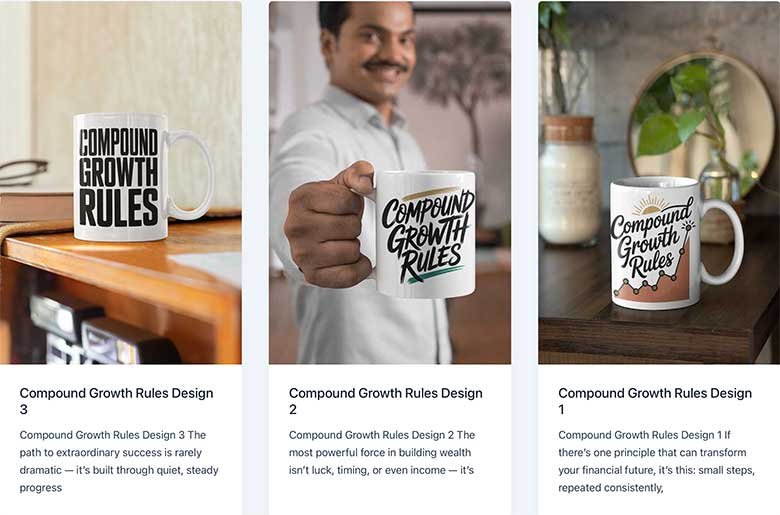
Fill Your Space With What Supports Visible Confidence
Premier Print Works makes quality prints, mugs, and shirts for people building genuine, unapologetic confidence. Browse the collection and find what speaks to your journey today.
Visit Premier Print WorksDisclaimer
The content on this page is for informational and inspirational purposes only. It is not professional coaching, mental health, or medical advice of any kind. If you are experiencing significant or persistent low self-esteem, anxiety, or other mental health challenges, please consider seeking support from a qualified mental health professional. Results and experiences vary significantly from person to person.
The stories of Kezia and Daniel are illustrative composite characters created to bring the content to life. They are not real people. Any resemblance to a real person is purely coincidental.
Some links on this page, including links to Premier Print Works and other resources, are affiliate links. If you make a purchase through one of these links, we may earn a small commission at no extra cost to you. We do not own, produce, or control any affiliate products, and we are not responsible for them — we only own and sell the products offered through our own store, Premier Print Works.
All content on A Self Help Hub is the property of Digital Marketing 215 LLC and is protected by copyright law. No part of this page may be copied, reproduced, republished, distributed, or transmitted in any form without prior written permission from the author.