15 Life Advice Lessons for People Healing in Sobriety
Healing in sobriety is not the undoing of the years before it. It is not the erasure of who you were or the pretending that the difficult seasons did not happen. It is the building of something genuinely new from the ground up, one honest day at a time, from the specific person you are now: more aware, more present to the real conditions of the life, and more willing than you may have ever been before to do the work that the life you actually want requires.
These 15 life advice lessons are for the person doing exactly that work. They are not the advice that minimizes the difficulty or pretends the healing is simpler than it is. They are the specific, honest truths that people who have healed in sobriety most consistently wish they had heard earlier and held more firmly through the seasons that most tested the holding of them.

Free Download: The Sober Survival Guide
Healing in sobriety is hard. The free Sober Survival Guide gives you the practical tools, honest guidance, and daily support framework to navigate the early days and the difficult seasons of the recovery journey. Download it free today.
Get the Free Sober Survival Guide1. The past does not have to be the blueprint for the future.
“Healing in sobriety is not the undoing of the years before it. It is the building of something genuinely new from the ground up, one honest day at a time, from the specific person you are now: more aware, more present, and more willing to do the work the life you want requires.”
One of the most consistent lies the addicted mind tells the recovering one is the lie of inevitability: the belief that the patterns of the past are the permanent definition of what is possible going forward. The history is real. The patterns are real. And neither of them is the blueprint for what the life built from sobriety looks like. The people who have done the most complete healing in sobriety are almost universally people who found the specific moment when they were able to genuinely separate the past-as-information from the past-as-destiny, and to begin building from the former without being bound by the latter. The past is the history. The building starts from here. These are different things.
2. Recovery is a practice, not an arrival.
The expectation that recovery produces a permanent stable state of not-wanting-the-substance is the expectation that most reliably produces the specific discouragement when the wanting returns, as it does, especially in the difficult seasons. Recovery is not the permanent cure of the desire. It is the daily, ongoing, practiced choice not to act on it. The lesson this offers is the reframing of the recovery from the destination to the practice: the practice does not end when the early crisis is over. It continues in the ordinary daily choices, the maintenance of the structures and the relationships that support it, and the honest acknowledgment when the wanting has returned at a level that requires additional support. The practice is ongoing. The person in long-term recovery is still practicing. The practice is the recovery.
3. You deserve the grace you would give to someone else going through this.
“Recovery is not the permanent cure of the desire. It is the daily, ongoing, practiced choice not to act on it. The practice does not end when the early crisis is over. The person in long-term recovery is still practicing. The practice is the recovery.”
The self-compassion deficit is among the most consistent and most damaging features of the early recovery experience: the specific harshness with which the recovering person treats themselves for the history of the addiction and for the imperfections of the recovery process itself. The life advice this lesson carries is the specific practice of applying the same grace to the self that would be readily and genuinely extended to a friend in the same situation. Not the enabling compassion that excuses the ongoing harm. The honest, specific, genuine compassion for the person doing the genuinely difficult work of healing from something that was genuinely difficult to develop and is genuinely difficult to recover from. You deserve that grace. It is not a reward for successful recovery. It is the condition that makes the recovery more possible.

Visit Premier Print Works
Keep the reminders of the healing and the life you are building in sobriety visible in your daily space. Premier Print Works offers prints, mugs, and art for people in recovery who want their environment to reflect the strength, direction, and genuine hope they are actively building. Visit the shop today.
Visit Premier Print Works4. The people in the rooms understand something about you that most people outside them cannot.
The specific quality of the connection available in recovery communities, the AA meeting, the NA group, the SMART Recovery group, the online sobriety community, is not replicable by the well-meaning support of people who have not been through the equivalent experience. The understanding that comes from the shared experience is different in kind from the understanding that comes from the best intentions without it. The life advice this lesson carries is the specific encouragement to seek out and maintain the community of people who understand from the inside rather than relying exclusively on the people who care deeply but understand from a distance. Both kinds of support matter. The community of the shared experience carries something that the other kind cannot provide. Stay in the rooms. The rooms hold something essential.
5. One day at a time is not a cliché. It is the most practical available wisdom about how recovery actually works.
The prospect of permanent sobriety, held as the single commitment to be made and maintained indefinitely, is a prospect whose weight has contributed to the ending of more than a few recovery attempts. The one-day-at-a-time wisdom addresses that specific weight with the most practically useful reframe available: the commitment is today. Not the rest of the life. Today. Tomorrow’s commitment is tomorrow’s. Today’s is manageable in a way that the whole rest of the life genuinely is not. The person who has been sober for ten years has been sober for ten years of todays, each one the specific manageable commitment that the permanent abstinence would have been unable to maintain. One day. This one. That is always enough to commit to.
6. Feelings are not facts, but they are information worth attending to.
“One day at a time is the most practically useful reframe available for the weight of the permanent commitment. Today is manageable. The rest of the life is not. The person sober for ten years has been sober for ten years of todays, each one the specific manageable commitment the permanent one could not maintain.”
The emotional landscape of early recovery is frequently one of the most disorienting features of it: the feelings that the substance had been managing or numbing arrive without the anesthetic for the first time in months or years, and the intensity of them can make the return to the substance feel like the only available relief. The life advice this lesson carries is the specific practice of distinguishing between the feeling as the experience and the feeling as the instruction: the feeling is real and worth attending to, and it is not the accurate prediction of reality it presents itself as in its most intense form. The craving is a feeling. It is not the fact that the use is inevitable. The fear is a feeling. It is not the fact that the feared thing will happen. Attend to the feelings honestly. Do not follow them as if they were facts.
7. The relapse is not the end of the recovery. The response to it is what matters.
For many people in recovery, the relapse, if it occurs, becomes the evidence that the recovery was never real, that the progress made was illusory, and that the starting over is the only option. The life advice this lesson carries is the specific reframe of the relapse from the ending to the event in the story of a recovery that continues: the response to the relapse, whether the immediate return to support and to the practices of the recovery, is the recovery. Not the perfect uninterrupted abstinence. The honest, specific, continued choosing to return to the recovery after the relapse. The shame that the relapse produces is the specific thing that makes the return most difficult. The knowledge that the recovery continues past the relapse is the specific thing that makes the return possible. The return is the recovery. The relapse does not end it unless the response allows it to.
8. The body needs the specific care the substance was taking from it.
The physical recovery from addiction is a real and specific physiological process that is not completed by the decision to stop using alone. The sleep that was disrupted needs the consistent restoration. The nutrition that was depleted needs the specific replenishment. The physical movement that was absent needs the gradual reintroduction. The nervous system that was chemically altered needs the time and the specific support that the genuine physiological return to baseline requires. The life advice this lesson carries is the specific attention to the body’s needs as a genuine component of the recovery rather than an afterthought to the psychological work: the body’s healing is the foundation from which the psychological and relational healing is most fully possible.
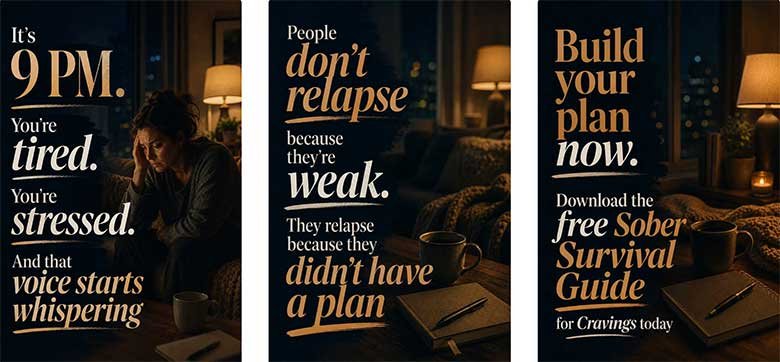
Free Download: The Sober Survival Guide
Let these life advice lessons be the reminder that healing in sobriety is hard and that the right tools make it more possible. The free Sober Survival Guide gives you the practical daily support framework the recovery journey requires. Download it free today.
Get the Free Sober Survival Guide9. The relationships most worth rebuilding will take time and consistent evidence.
“The relapse is not the end of the recovery. The response to it is what matters. The return to support and to the practices of the recovery after the relapse is the recovery. The shame that the relapse produces is the specific thing that makes the return hardest. Knowing the recovery continues past it makes the return possible.”
The damage that the addiction caused in the important relationships is not repaired by the announcement of the sobriety. It is repaired by the time and the consistent evidence of the changed behavior, accumulated over enough time that the people who were hurt have had the specific evidence required to trust the change that the words alone, however sincere, cannot establish. The life advice this lesson carries is the specific patience with the pace of the relational healing: the trust is not given to the announcement. It is rebuilt from the evidence. The evidence takes time to accumulate. The accumulation is the work. The work is worth the doing. The relationships most worth rebuilding are worth the time and the evidence the rebuilding requires.
10. You are allowed to be proud of the hard thing you are doing.
The specific culture of some recovery communities, and the specific habit of the recovering person themselves, can work against the genuine acknowledgment of the hard thing being done: the minimizing of the difficulty, the deflection of the genuine pride in the achievement, the treating of the sobriety as the baseline expectation rather than as the genuinely significant accomplishment it is for the person who has achieved it. The life advice this lesson carries is the specific permission to acknowledge the genuine difficulty of what is being done and to feel the genuine pride in the doing of it. The sobriety is hard. The healing is hard. The daily practice of the recovery is hard. The person doing those hard things has earned the specific self-regard that the honest acknowledgment of them produces. Be proud. The pride is not the arrogance. It is the honest recognition of genuine effort genuinely sustained.
11. Help is not weakness. It is the specific wisdom that this is too important to try alone.
The resistance to asking for help is one of the most consistent and most damaging features of the addictive experience: the combination of the shame, the pride, and the specific cultural messaging about self-sufficiency that makes seeking help feel like the failure it is not. The life advice this lesson carries is the specific reframing of the asking for help from the evidence of weakness to the evidence of the wisdom that some things are too important to try to manage without the support that makes the managing genuinely possible. The person who asks for help in sobriety is not the person who cannot manage alone. They are the person who has assessed the importance of the recovery clearly enough to bring the resources it genuinely requires to the managing of it.
12. The life on the other side of sobriety is not the same life minus the substance. It is genuinely different.
“The asking for help in recovery is not the evidence of weakness. It is the evidence of the wisdom that some things are too important to try to manage without the support that makes the managing genuinely possible. Help is not weakness. It is the specific wisdom the recovery requires.”
The anticipation of sobriety for many people is organized around the vision of the current life without the substance, which is often a vision of absence: the same relationships, the same work, the same daily structure, but without the thing that was consuming so much of it. The life advice this lesson carries is the truth that the experienced reality of sustained sobriety is not the same life minus the substance. It is the genuinely different life that the sobriety makes possible: the relationships available from the genuine presence, the work available from the genuine capability, the inner life available from the honest relationship with the actual experience of it that the substance was preventing. The life on the other side is genuinely different. Better in the ways that the difference makes possible. Worth the work of getting there.
13. The triggers do not disappear. The capacity to navigate them grows.
The expectation that the triggers, the specific people, places, emotions, and situations that most reliably produced the urge to use, will eventually become inert with enough recovery time is an expectation that the reality of addiction does not support for most people. The triggers remain real. What grows is the specific capacity to recognize them, to understand their specific power in the specific moment, and to navigate through them without acting on them. The life advice this lesson carries is the specific acceptance of the triggers as ongoing features of the recovery landscape rather than as the evidence of insufficient progress, combined with the genuine investment in building the navigation capability that makes the triggers manageable rather than the expectation that the triggers will eventually stop being present.
14. The version of you that existed before the addiction is not the only version worth becoming.
Many people in recovery organize the vision of the healed self around the return to the person they were before the addiction began, as if the pre-addiction self is the gold standard being recovered toward. The life advice this lesson carries is the more honest and more hopeful truth: the person available on the other side of the genuine recovery work is not the pre-addiction person restored. It is the post-recovery person built: more self-aware, more genuinely compassionate toward others in difficulty, more honest about the real conditions of the human experience, and more capable of the specific depth of connection that the genuine facing of the genuine difficulty makes possible. The version being built in the recovery is worth more than the restoration of what was there before. It is something genuinely new.
15. You do not have to earn the right to heal. The healing is available to you right now.
“The person available on the other side of genuine recovery is not the pre-addiction person restored. It is the post-recovery person built: more self-aware, more compassionate, more honest about the real conditions of human experience. The version being built is worth more than the restoration.”
The most damaging belief available in the healing and sobriety context is the belief that the healing must be earned through sufficient suffering, sufficient accountability, or sufficient time before it is legitimately available. The life advice this final lesson carries is the specific, direct counter to that belief: the healing is not earned. It is not contingent on the sufficient paying of the debt of the addiction. It is available right now, from wherever the current day is starting, for the specific reason that the healing of a person is always worth the resources it requires regardless of the history that preceded the needing of it. You do not have to earn the right to heal. The right was always there. The healing is available right now. Start from here.
How Keiran and Marguerite Each Found the Life Advice Lesson That Changed How They Understood Their Own Healing
Keiran had been in early recovery and had been organizing the recovery primarily around the avoidance of the substance rather than around the building of the genuinely new life that the sobriety was making available. The lesson that changed his orientation was the one about the life on the other side being genuinely different rather than the same life minus the substance. He had been waiting to feel like the person he had been before the addiction took hold, as if the recovery were a return rather than a building. The honest truth the lesson offered was that the waiting for the return was organized around the wrong destination: the person he could become from the genuine recovery work was not the restoration of who he had been. It was something with more genuine depth and more genuine self-knowledge than the pre-addiction version had held. The shift from the restoration orientation to the building orientation changed the quality of the daily recovery work. He was not recovering toward a previous self. He was building toward a new one. The work of the building was the same work. The relationship to it was genuinely different. The different relationship sustained the work through the seasons when the restoration orientation would have produced the discouragement of the still-not-there feeling. The building orientation produced the momentum of the always-further-along feeling instead.
Marguerite’s life advice lesson was the one about not needing to earn the right to heal. She had been carrying a specific and deeply held belief that the damage done during the years of the addiction had to be addressed in full, and all of the debts settled, and all of the broken things repaired, before she was legitimately entitled to the healing that she was theoretically also pursuing. The belief was organized around a logic that felt like responsibility but functioned like obstruction: the healing was perpetually deferred to the completion of the amends process, which was itself perpetually incomplete because the belief that the earning had to precede the healing was keeping the healing unavailable regardless of how much the earning was accumulating. A sponsor she trusted named the belief directly: the healing is not the reward for the completed amends. It is the ground from which the genuine amends become possible. The healing first. The rest from the healed ground. Not the other way. The reframe was uncomfortable in the specific way that the beliefs most worth releasing always are. She held it. The healing that became available from the healed-first orientation was both more genuine and more capable of producing the genuine amends than the deferred version had ever been. The lesson had been exactly right about the sequence.
The Healing in Sobriety Is Real, It Is Available, and It Is Being Built Right Now From the Daily Choosing That the Recovery Requires. These 15 Lessons Are for the Person Doing That Building.
Healing in sobriety is not the absence of difficulty. It is the daily choosing to do the work that the genuinely better life requires, from the honest position of the person doing the choosing, with the specific imperfections and the specific courage that the recovery brings together in every person who stays in it long enough to see what the staying builds.
Take the lessons on this list that most specifically name where you are in the current season of your recovery. Let them be the companions for the days that most test the staying. The healing is happening. The building is real. You are further along than the difficult day is confirming. Keep going.
If you or someone you know is struggling with substance use and needs help, the Substance Abuse and Mental Health Services Administration (SAMHSA) National Helpline is available 24 hours a day, seven days a week: 1-800-662-4357. It is free, confidential, and available in English and Spanish.
Free Download: The Sober Survival Guide
Let these life advice lessons be the motivation to equip yourself with the practical tools the recovery journey requires. The free Sober Survival Guide gives you the daily support framework, honest guidance, and practical resources to navigate the healing in sobriety one day at a time. Download it free today.
Get the Free Sober Survival GuideOur Top Picks for a Better Life
We have gathered our favorite tools, resources, and recommendations for people healing in sobriety, building the daily practices that support the recovery, and creating the genuine life that sobriety makes possible. Everything we trust enough to share, all in one place.
See Our Top Picks
Recovery and Hope at Premier Print Works
Keep the reminders of the healing and the life you are building in sobriety visible in your daily space. Visit Premier Print Works for prints, mugs, and art for people in recovery who want their environment to reflect the strength, direction, and genuine hope they are actively building toward.
Visit Premier Print WorksDisclaimer
The content on Life and Sobriety is for informational and inspirational purposes only. The life advice lessons and personal stories in this article offer general support for people in recovery from substance use disorders. They are not professional medical advice, addiction treatment advice, psychiatric advice, psychotherapy, or any form of clinical treatment.
Recovery from addiction is a serious medical and psychological process. If you or someone you know is struggling with substance use disorder, please seek help from a qualified medical professional, licensed addiction counselor, or treatment center. Do not attempt to detox from alcohol, benzodiazepines, or other substances without medical supervision. Withdrawal from some substances can be life-threatening without proper medical care.
If you need help finding treatment or support, contact the SAMHSA National Helpline at 1-800-662-4357 (free, confidential, 24/7, available in English and Spanish) or visit findtreatment.gov.
The stories and composite characters in this article, including Keiran and Marguerite, are illustrative. They are based on common experiences and created to make the content relatable. They are not real people. Any resemblance to a specific person is coincidental.
Some links on this site, including links to Premier Print Works, may be affiliate links. Life and Sobriety may earn a small commission at no extra cost to you. We only recommend things we genuinely believe in.
If you are in a mental health crisis or thinking about self-harm, please do not rely on this content for support. Contact emergency services or a crisis helpline right away. You deserve real help and it is available to you now.
All content on Life and Sobriety is copyrighted. You may not copy or republish it without written permission. By reading this article you agree to this disclaimer.