15 Motivation Tips That Help You Follow Through on Your Plans
You wrote the plan on Sunday. By Wednesday, it feels like someone else made it.
Most of us have a long history of strong starts and weak middles. Researchers Kaitlin Woolley and Ayelet Fishbach found a clue about why in a set of five studies, published in 2017 in the Personality and Social Psychology Bulletin. People usually pursue long-term goals like exercise and studying for the delayed rewards, such as better health or better grades. But in their studies, the presence of immediate rewards, like enjoyment, was a stronger predictor of persistence than the presence of delayed rewards. Enjoyment predicted who was still sticking with their New Year’s resolutions about two months in, and who kept going in a single session of studying or exercising, while delayed rewards did not. This held over one week and over three months. Delayed rewards, the researchers noted, may still matter for setting goals and forming intentions. The studies relied mostly on what people reported about their own experience, so they show a link, not proof of cause. But they changed how I plan.
If enjoyment helps you keep going, then a plan that feels miserable may be a plan that will not last. These fifteen tips are about following through by making your plans something you can actually stand to do, and adjusting them when they are not.

Build the Daily Habits Behind Following Through
Download the free 9 Daily Habits guide and get nine simple morning practices that make steady follow-through easier to start.
Get the Free Guide1. Ask what you will enjoy about the plan, and not only what you will gain from it.
Most of us write goals in terms of results: lose weight, save money, finish the project. The research suggests that the results do little to carry us through the middle, and the experience does most of the work.
For each plan, ask: what part of this could I actually enjoy? It might be the quiet, the music, the sense of progress, the company, or a hot drink afterward. Write down at least one answer.
If you honestly cannot find anything enjoyable, that is useful information too. It may mean the plan needs a different shape.
For your current main plan, write one thing you could enjoy about doing it today.
2. Choose the version of the activity that you like best, since the same goal can be done many ways.
If your goal is to exercise, you could run, swim, dance, hike, or lift weights. If it is to write, you could draft by hand, type, or dictate. If it is to learn a language, you could use an app, a class, or a conversation partner.
Pick the version that feels most pleasant to you, even if it looks second best on paper. A good plan you keep beats a perfect plan you drop.
Try two or three versions in the first week, and keep the one that you look forward to most.
List two or three ways to pursue your goal, and try the one that sounds most enjoyable first.

Keep Your Plan Where You Can See It
Premier Print Works creates quality prints, mugs, and shirts for people who follow through on their plans. Find a small reminder of what you set out to do.
Visit Premier Print Works3. Make the setting pleasant, because small comforts add immediate rewards.
Where and when you do something affects how it feels. Work in a spot with good light. Exercise outdoors if you like fresh air. Study with a favorite drink. Put on music you love.
These details may seem small, but they add immediate enjoyment to a task that might otherwise feel like a chore.
Think about what would make your plan a little nicer, and add one thing this week.
Add one small comfort to your next session, such as music, a drink, or a better spot.
“The plans you finish are rarely the ones you suffered through. They are usually the ones you found a way to enjoy.”
4. Pair your plan with something you already like, so there is a built-in treat.
You can attach a pleasure to a task. Listen to a favorite podcast only while you walk. Enjoy a special tea only while you do your paperwork. Watch a show only while folding laundry.
This idea overlaps with something called temptation bundling, and it works for the same reason as the research suggests. It gives you an immediate reward for doing the thing.
Choose a pairing that you will truly look forward to, and keep it exclusive to the task.
Choose one treat to pair with one task, and enjoy it only during that task this week.

Take a Week to Review Which Plans Are Worth Keeping
The free 7-Day Life Reset gives you a short, simple way to look back at your week and see which plans are working and which need a change.
Get the Free Reset5. Shrink the start, so beginning feels easy and pleasant.
A big plan can feel heavy before you begin. Shrink the first step until it feels almost silly: put on your shoes, open the document, write one sentence, do one minute.
Starting small helps because it lowers the effort, and often, once you are going, the enjoyment kicks in. You can always continue if it feels good.
Set a minimum that you can do even on a bad day, and count that as a win.
Write the smallest possible version of your plan, and do just that tomorrow.
6. Pick the time of day when you feel your best, since mood shapes enjoyment.
If you hate mornings, a 6 a.m. plan will probably feel miserable. If you are drained by evening, a late session will too. Look at your energy over a week and notice when you feel good.
Schedule your plan in that window if you can. A plan that fits your natural rhythm is easier to enjoy.
It is okay to change the time if the first choice is not working.
Notice when you feel best over the next three days, and try your plan at that time.
7. Bring a friend, because company can turn a chore into something enjoyable.
Doing something with another person often makes it more fun. Walk with a friend. Study in a group. Cook with a partner. Join a class.
Company also adds a bit of gentle accountability, since someone is expecting you. But the main benefit is simply enjoyment.
If you cannot find a partner in person, try a friend who checks in by text, or an online group.
Invite one person to join you in your plan at least once this week.
8. Add a tiny immediate reward right after you finish, so your brain links the effort to a good feeling.
A small treat or celebration right after the task can build a positive association. It might be a favorite snack, a hot shower, a few minutes of a hobby, or simply a moment to say, “I did it.”
Keep the reward small, and make sure it does not undo your goal. For example, a healthy snack or a short rest after a workout.
The sooner the reward comes, the better it works.
Choose a small, immediate reward for after your next session, and give it to yourself.
9. Do the dull parts in a way that makes them quicker or nicer.
Most plans have a boring part. Set a timer and race it. Do the dull bit first and get it over with. Pair it with music. Break it into small chunks.
You can also make the dull part a bit more social or a bit more playful. A little creativity can turn a drag into something tolerable.
Ask yourself which part of the plan you dread most, and brainstorm one way to improve it.
Identify the part of your plan you like least, and try one way to make it quicker or nicer.
10. Vary the plan now and then, so boredom does not wear you down.
Doing exactly the same thing in the same way for weeks can drain the fun. Switch the route, the playlist, the location, or the activity. Try a new class, a new recipe, or a new topic.
Variety gives your plan a fresh feeling, and fresh feelings are rewarding. Just keep the core habit steady.
Plan a small change every week or two.
Choose one small thing to change in your plan this week, such as the route, the music, or the location.
11. Track your progress in a way that feels satisfying, because seeing it is its own small reward.
A visible record can be rewarding. Cross off days on a calendar. Fill in a chart. Keep a streak. Seeing the marks pile up gives a small hit of satisfaction each time.
Choose a method that you enjoy using. Stickers and colored pens work well for some people. A simple app suits others.
If you miss a day, do not stop. Just mark the next one.
Choose a simple tracker for your plan, and mark today’s progress.
12. Make a minimum version for hard days, so a bad day does not break the habit.
Some days you will feel flat. Decide in advance what the smallest acceptable version of your plan is: five minutes of exercise, one paragraph written, ten minutes of study.
Doing the minimum keeps the habit alive and the link to enjoyment intact. Often, you will do more once you start.
A tiny win on a hard day is worth more than a skipped day and a guilty feeling.
Write the minimum version of your plan, and use it on the next day you do not feel like it.
13. Remember why it matters, too, since the research says delayed rewards can still help set the goal.
The studies suggested that long-term benefits may motivate goal setting and intentions. They are still important. They help you decide what is worth doing.
Write down your deeper reason in a sentence or two, and keep it where you will see it. Then pair it with the daily enjoyment you have added.
Think of it as a team: the big reason gets you started, and the small pleasures keep you going.
Write one sentence about why your plan matters to you, and place it next to your tracker.
14. Review what felt good and what did not, and adjust the plan without blame.
Once a week, look back. When did the plan feel good? When did it feel like a slog? What made the difference? What could you change?
If you find that a plan is consistently unpleasant, treat that as information. Try a different form, time, or setting. The goal is to find a version you can sustain.
Adjusting a plan is how plans become workable.
Spend ten minutes this weekend noting what felt good and what felt like a slog, and change one thing.
15. Let go of plans that never feel right, and choose a version that does.
Sometimes a plan simply does not fit. You have tried different times, settings, and forms, and it still drains you. In that case, it may be better to change the plan entirely.
Ask what you actually want, and whether another route could get you there. Perhaps a different activity, a different schedule, or a smaller version would work better.
Choosing a plan you can follow through on is much better than clinging to one you cannot.
If a plan has never felt right, write down one alternative that might get you to the same goal.
Explore Our Top Picks for a Better Life
We have gathered the tools, resources, and products we think are genuinely worth your time, covering mindset, self-care, health, and home. All in one place, hand-picked to support the plans you set and keep.
See Our Top PicksReal Stories, Real Results
Let me share two examples I like to use. Amara kept planning to exercise, and kept quitting after a week. When she asked what she might enjoy, she realized that she liked walking with music and hated gyms. She switched her plan to a daily thirty-minute walk with a favorite playlist. She told me the walks were no more virtuous than the gym would have been. They were simply something she looked forward to.
Joel had a writing goal and dreaded his desk. He tried a different setting, a coffee shop with a favorite drink, and a tiny reward after each session. He also created a minimum of one paragraph for bad days. Within a month, he had a steady habit. Both of them said the same thing: following through got easier once the plan felt good enough to repeat.
Following Through Gets Easier When the Plan Feels Good Enough to Repeat
Picture the middle of a plan, the part that usually fades. Instead of dragging yourself through it, you are doing something you like, in a place that suits you, with a small treat waiting. You are still working toward the big goal, and the days between feel more pleasant.
Choose two or three tips from this list, and start by asking what you could enjoy. Download the free 9 Daily Habits guide to give your plans a steady daily base. Plans tend to last when they feel good enough to keep.
Want Ready-Made Tools to Help You Put This Into Action?
Sometimes the fastest way forward is a tool that someone has already built. Browse our hand-picked resources and downloads, chosen to help you take the next step with less guesswork.
Browse Resources and Downloads
Ready to Follow Through on the Plan You Made?
The free 9 Daily Habits guide gives you simple morning practices that make steady follow-through feel more doable.
Download Free Now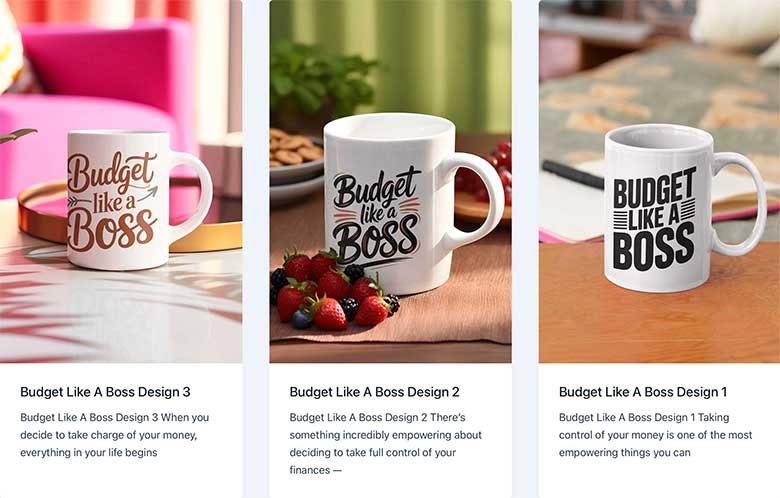
Fill Your Space With Plans You Keep
Premier Print Works makes quality prints, mugs, and shirts for people who keep going. Browse the collection and find what speaks to your journey today.
Visit Premier Print WorksDisclaimer
The content on this page is for informational and inspirational purposes only. It is not professional mental health, medical, or coaching advice of any kind. If you are experiencing persistent low motivation, low mood, or other mental health challenges, please consider seeking support from a qualified professional. If you start a new exercise plan, consult a doctor first if you have health concerns. Results and experiences vary significantly from person to person. The research mentioned in this article relied mostly on participants’ own reports and shows links, not proof of cause, so it may not apply the same way to everyone.
The stories of Amara and Joel are illustrative composite characters created to bring the content to life. They are not real people. Any resemblance to a real person is purely coincidental.
Some links on this page, including links to Premier Print Works and other resources, are affiliate links. If you make a purchase through one of these links, we may earn a small commission at no extra cost to you. We do not own, produce, or control any affiliate products, and we are not responsible for them — we only own and sell the products offered through our own store, Premier Print Works.
All content on A Self Help Hub is the property of Digital Marketing 215 LLC and is protected by copyright law. No part of this page may be copied, reproduced, republished, distributed, or transmitted in any form without prior written permission from the author.