15 Self Worth Quotes That Help You Remember Your Strength
There are days when the weight of self-doubt makes it hard to remember just how much you are truly worth, and those are exactly the days when the right words can bring you back to yourself. Not back to a performance of confidence, but back to the actual, grounded knowing of your own value that doubt temporarily covers.
These 15 self worth quotes speak to the unshakeable value you carry simply by being who you are, covering inner strength, self-respect, and the quiet but powerful truth that your worth has never been determined by your hardest seasons or your loudest critics. Remembering your strength is not arrogance. It is the simple and necessary act of refusing to forget what you are made of.

Free Download: The Self-Care Starter Kit
Your worth is not something you earn through achievement or lose through failure, it is something you were born with and will carry every single day of your life. The free Self-Care Starter Kit gives you simple daily practices for your mind and body to support the relationship you deserve to have with your own worth. Download it free today.
Get the Free Self-Care Starter Kit1. “You yourself, as much as anybody in the entire universe, deserve your love and affection.”
“Your worth is not something you earn through achievement or lose through failure, it is something you were born with and will carry with you every single day of your life.”
This teaching, attributed to the Buddha, is both simple and radical in its implication: the universe of people who deserve love and affection explicitly includes you, as fully and as unconditionally as it includes anyone else. Not after the work is done, not when the goals are met, not when the person you are becoming has arrived. As much as anybody. Right now. In the current imperfect, incomplete, still-becoming version that you are today and will be again tomorrow.
2. “No one can make you feel inferior without your consent.”
Eleanor Roosevelt’s observation places the final authority over self worth where the growth mindset and the self-compassion tradition agree it belongs: within the person rather than in the hands of those who would diminish it. The diminishment that arrives from others is real and can cause genuine harm. But the claim it makes on worth requires an acceptance of its authority that is never compulsory. The consent is always within the person to withhold. Withholding it is not defensive. It is the accurate refusal of an inaccurate verdict.
3. “You are enough just as you are.”
“Remembering your strength is not arrogance, it is the simple and necessary act of refusing to forget what you are made of.”
Meghan Markle offered this observation in a context that makes it specifically meaningful: at a moment of public and personal vulnerability when the external pressure to be more, different, and better was immense. The enough in this quote is not an invitation to stop growing. It is the recognition that the growing person has inherent worth at every stage of the growing, not only at its completion. The enough that exists right now does not prevent the more that will exist later. It simply refuses to wait for the more before claiming the value that is already present.
Visit Premier Print Works
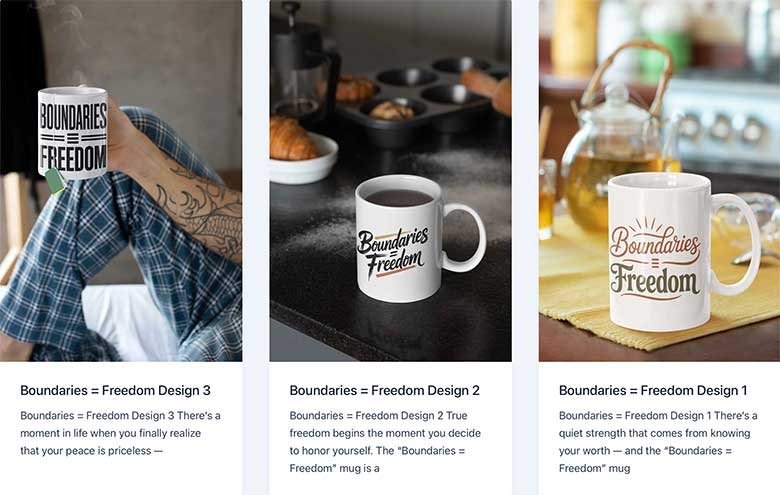
Keep the reminder that remembering your strength is the simple and necessary act of refusing to forget what you are made of, visible on the days when doubt is loudest. Premier Print Works offers prints, mugs, and art for the person remembering their worth and their strength. Visit the shop today.
Visit Premier Print Works4. “To love oneself is the beginning of a lifelong romance.”
Oscar Wilde’s observation reframes self-love from a destination occasionally visited to a lifelong relationship that begins with a decision and develops through the same patient, committed investment that any meaningful relationship requires. The romance with the self is not narcissism. It is the ongoing cultivation of a genuine, honest, caring relationship with the one person who has been present for every moment of your life and who will be present for every moment that follows. That relationship deserves at least as much tending as any other.
5. “Owning our story and loving ourselves through that process is the bravest thing that we will ever do.”
Brené Brown’s observation connects self-worth directly to the courage required to own the full story, including the parts that are painful, imperfect, and difficult to claim. The worth is not located in the polished version of the story that is safe to share publicly. It is located in the full version that includes everything that happened and the full person who experienced it. Owning it, all of it, and extending love to the person who lived it, is described here not as a feel-good exercise but as the bravest available act, which is an accurate description of how it feels to do it.
6. “She was a girl who knew her own mind.”
This simple observation carries the quiet power of self-possession: the knowledge of one’s own mind, values, and preferences as a form of worth that does not depend on external validation. The girl who knows her own mind does not need others to define her worth for her because the definition is already internal, clear, and stable. Knowing your own mind is not the same as having no doubt. It is having a relationship with yourself that is honest enough to tell the difference between your own knowing and the noise of other people’s opinions about who you should be.
How Amara and Joel Each Found the Quote That Named What They Had Been Forgetting
Amara had been in a professional period that had required more of her than she had anticipated and had produced less of the visible success that had felt like the evidence of worth. The gap between the effort and the visible result had been feeding a quiet but persistent narrative that the effort itself was evidence of not being enough, and the narrative had been operating below the level of conscious examination for long enough to start feeling like an accurate assessment.
The Brené Brown quote arrived through a conversation with a friend, and it landed in a specific way. What Amara had been doing in that difficult professional period was owning her story, showing up fully for work that was not rewarding her with easy victories and continuing to bring herself completely to it anyway. The quote reframed what she had been experiencing as exhaustion and inadequacy as an act of ownership and courage. The story had not changed. The frame had, and the new frame had been the accurate one all along.
Joel’s quote was the Eleanor Roosevelt observation about consent. He had been allowing a specific person’s consistently diminishing opinion of him to function as an authoritative assessment of his worth, not consciously or willingly, but through the habit of treating that person’s voice as more reliable than his own. The quote did not make the person’s opinion irrelevant. It made the consent explicit, which meant Joel could notice that he was extending it, and could choose differently. The inferior verdict required his consent to function. He stopped giving it. The verdict lost the only authority it had ever actually had.
7. “You have been criticizing yourself for years and it hasn’t worked. Try approving of yourself and see what happens.”
“Your worth is not something you earn through achievement or lose through failure, it is something you were born with and will carry with you every single day of your life.”
Louise Hay’s observation makes the practical argument for self-worth that all the philosophical arguments ultimately arrive at: self-criticism has been tried, extensively, and its track record as a tool for genuine positive change is poor. Approval of the self as it is, not instead of growth but alongside it, has been tried less thoroughly and consistently produces the motivated self-compassion that self-criticism was supposed to produce and never reliably did. The experiment of self-approval is worth trying, specifically because the experiment of self-criticism has had sufficient time to demonstrate its limitations.
8. “You are allowed to be both a work in progress and worthy of love right now.”
This observation, widely attributed across self-help traditions, holds both truths simultaneously without requiring one to be resolved before the other is permitted. The work in progress is not a reason to defer the love until the progress is complete. The worthiness exists at every stage of the work, including the earliest and messiest stages, the same stages that the inner critic most consistently claims are not yet worthy of the love that the finished version will eventually deserve. The love is available now. The worthiness is present now. The work continues alongside them, not instead of them.
9. “Whatever you are, be a good one.”
This observation, attributed to Abraham Lincoln, invites a different relationship with self-worth: not the comparison of what you are to some external ideal of what you should be, but the investment of full effort and integrity in being an excellent version of what you actually are. The good one you are called to be is the best version of the specific person you are, with the specific circumstances, capabilities, and limitations that are genuinely yours. That version is genuinely worth being, and its worth does not depend on comparison to any other version of any other person.

Free Download: The 9 Daily Habits Checklist
Remembering your strength and worth is supported by the consistent daily habits that keep you showing up for yourself with intention and care. The free 9 Daily Habits Checklist gives you nine proven daily practices to build the daily relationship with your own worth from. Download it free today.
Get the Free Habits Checklist10. “The most powerful relationship you will ever have is the relationship with yourself.”
“Remembering your strength is not arrogance, it is the simple and necessary act of refusing to forget what you are made of.”
Steve Maraboli’s observation is powerful because it is accurate in a specific and verifiable way: the relationship with the self is the one that is most constant, most influential, and most determining of how all other relationships are experienced. The quality of the self-relationship sets the baseline for every other relational experience, because it is the lens through which all other relationships are perceived and navigated. Investing in the relationship with yourself is not selfish or secondary. It is the primary relationship that the quality of all others flows from.
11. “She made broken look beautiful and strong look invincible. She walked with the universe on her shoulders and made it look like a pair of wings.”
Ariana Dancu’s observation reframes the carrying of difficulty as an expression of strength rather than evidence of damage. The broken that looks beautiful is not the pretense that nothing was broken. It is the honest carrying of what was broken in a way that reveals the character, courage, and capacity of the person bearing it. The universe on the shoulders becoming wings is the growth mindset applied to self-worth: the same weight that was crushing becomes the thing that reveals what the person is capable of carrying and that, in the carrying, becomes something like flight.
12. “You are not the darkness you endured. You are the light that refused to surrender.”
This observation speaks directly to the person who has survived something genuinely difficult and is confusing what they endured with what they are. The darkness endured is part of the story. It is not the identity. The light that refused to surrender, the part that kept going, that chose the next day, that maintained even the smallest flame of self against the weight of whatever tried to extinguish it, is the actual definition of who you are. And it is a definition that the darkness itself demonstrated, because the darkness could only reveal it, not remove it.
13. “Daring to set boundaries is about having the courage to love ourselves, even when we risk disappointing others.”
“Your worth is not something you earn through achievement or lose through failure, it is something you were born with and will carry with you every single day of your life.”
Brené Brown’s boundary observation connects the practice of boundary-setting to the deeper truth of self-worth: the willingness to disappoint others in service of genuine self-love is not selfish. It is the specific act of taking one’s own worth seriously enough to protect the conditions necessary for it to be honored. The person whose self-worth is conditional on never disappointing anyone has, in effect, surrendered the authority over their own worth to whoever is closest and most likely to be disappointed. Setting the boundary is taking it back.
14. “The strongest action for a woman is to love herself, be herself and shine amongst those who never believed she could.”
This observation reframes strength away from the conventional markers, power, performance, and recognition, toward the specific courage of self-love and authentic self-expression in the presence of those who doubted its possibility. The shining is not done in spite of the doubt to prove it wrong. It is done as the natural consequence of the love and the being, which produces its own light regardless of whether anyone believed it was available. The strength is in the self-love. The shining is what that love looks like from the outside.
15. “I am not what happened to me. I am what I choose to become.”
“Remembering your strength is not arrogance, it is the simple and necessary act of refusing to forget what you are made of.”
Carl Jung’s observation closes this collection with the most direct statement of self-worth available: the worth of a person is not determined by what has happened to them. It is determined by what they choose to become from whatever starting point the happened-to has produced. The choice of becoming is the most fundamental expression of self-worth available, because it is the assertion that the person contains more than the sum of their circumstances and that the more is available to be expressed through the choices that follow from here. You are not what happened to you. You are what you choose to become. Choose accordingly.
Your Worth Is Real, It Is Unshakeable, and It Has Never Required Anyone’s Permission
You deserve your own love and affection as much as anyone in the universe. No one can make you feel inferior without your consent. You are enough just as you are. To love oneself is the beginning of a lifelong romance. Owning your story and loving yourself through it is the bravest thing you will ever do. Know your own mind. Try approving of yourself after years of criticism and see what happens. You are allowed to be a work in progress and worthy of love right now. Whatever you are, be a good one. The most powerful relationship you will have is the one with yourself. The broken can look beautiful. You are the light that refused to surrender. Daring to set boundaries is loving yourself. Shining amongst those who doubted you is the strongest action available. You are not what happened to you: you are what you choose to become. Fifteen quotes. Your worth is not earned through achievement or lost through failure. It was born with you and will carry with you every single day of your life.

Free Download: The Self-Care Starter Kit
Let these self worth quotes be the reminder you needed today that you are enough, you always have been, and nothing that has happened can ever change that. The free Self-Care Starter Kit gives you simple daily practices for your mind and body to support that knowing. Download it free today.
Get the Free Self-Care Starter KitOur Top Picks for a Better Life
We have gathered our favorite tools, resources, and recommendations for building the self-worth practices and daily habits that help you remember your strength and live from it every single day. Everything we trust enough to share, all in one place.
See Our Top Picks
Self Worth Reminders at Premier Print Works
Keep these self worth reminders visible on the days when doubt is loudest. Visit Premier Print Works for prints, mugs, and art for the person remembering their strength, their worth, and everything they are genuinely made of.
Visit Premier Print WorksDisclaimer
The content on A Self Help Hub is for informational and inspirational purposes only. The self worth quotes and personal stories in this article offer general support for everyday self-compassion and personal wellbeing. They are not professional mental health advice, psychotherapy, medical advice, or any form of clinical treatment.
If you are dealing with significant depression, anxiety, trauma, or persistent low self-worth affecting your daily functioning, please speak with a qualified mental health professional. Self-worth work often benefits greatly from professional support. General self-help content is not a substitute for professional care.
The stories and composite characters in this article, including Amara and Joel, are illustrative. They are based on common experiences and created to make the content relatable. They are not real people. Any resemblance to a specific person is coincidental.
Some links on this site, including links to Premier Print Works, may be affiliate links. A Self Help Hub may earn a small commission at no extra cost to you. We only recommend things we genuinely believe in.
If you are in a mental health crisis or thinking about self-harm, please do not rely on this content for support. Contact emergency services or a crisis helpline right away. You deserve real help and it is available to you now.
All content on A Self Help Hub is copyrighted. You may not copy or republish it without written permission. By reading this article you agree to this disclaimer.