15 Setting Boundaries Quotes That Help You Say No With Confidence
A genuine “no” is frequently treated as though it required a paragraph of justification behind it to actually be acceptable. A complete, honest “no” does not genuinely need that paragraph. The word itself is already a complete, sufficient answer.
The fifteen quotes below are original reflections written specifically around this completeness. Each one supports saying a genuine, confident no, without requiring an accompanying explanation to make it acceptable.

Build the Daily Practice Behind Saying No With Confidence
Download the free Self-Care Starter Kit and get simple, practical tools for building a daily rhythm that supports genuinely confident boundaries.
Get the Free Starter Kit1. “No is genuinely a complete sentence. It does not require a paragraph of justification behind it to actually be acceptable.”
A genuine “no” is sometimes treated as though it required an extensive, justifying paragraph to actually be acceptable, when the word itself, said clearly and honestly, is already a genuinely complete and sufficient answer on its own. This reflection names the completeness a single “no” already, genuinely has.
Sit with this reflection today, and say one genuine no as a complete sentence, without adding a justifying paragraph behind it.
2. “You do not owe anyone a reason that satisfies them. You only genuinely owe yourself an honest answer.”
A reason for declining is sometimes crafted specifically to satisfy the other person’s expectations, when a person genuinely only owes themselves an honest, internal answer, not a reason engineered to please or convince someone else. This reflection redirects the actual obligation toward honesty with oneself, not persuading another person.
Sit with this reflection today, and give yourself one honest answer, rather than crafting a reason to satisfy someone else.

Surround Yourself With What Supports Saying No With Confidence
Premier Print Works creates quality prints, mugs, and shirts for people who are building the daily habits that support genuinely confident boundaries. Find what speaks to your journey today.
Visit Premier Print Works3. “A confident no does not require you to feel entirely calm while saying it. Confidence and nervousness can genuinely coexist.”
A confident “no” is sometimes assumed to require feeling entirely calm and composed while actually saying it, when genuine confidence can actually coexist with real, honest nervousness, without one canceling out the other. This reflection allows confidence and nervousness to exist honestly, together.
Sit with this reflection today, and say a genuine no even while feeling nervous, letting both be honestly true at once.
“A complete, honest no does not genuinely need a paragraph of justification. The word itself is already a complete, sufficient answer.”
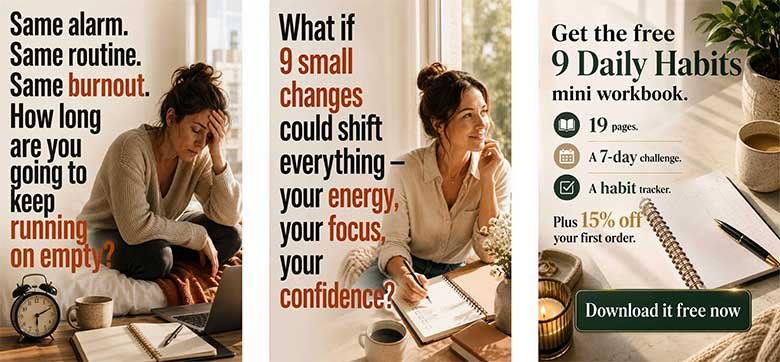
Build the Morning Habits That Support Saying No With Confidence
The free 9 Daily Habits guide gives you nine simple morning practices that build the daily foundation these quotes are meant to support.
Get the Free Guide4. “Someone else’s disappointment in your no is a real feeling of theirs. It is not automatically evidence your no was wrong.”
Another person’s genuine disappointment, in response to a boundary, is sometimes treated as automatic evidence that the boundary itself was wrong, when their disappointment and a genuinely appropriate boundary can actually coexist, without one disproving the other. This reflection separates someone else’s reaction from the actual rightness of your own no.
Sit with this reflection today, and let someone’s disappointment be their own genuine feeling, without it disproving your own no.
5. “A no said clearly the first time protects you from having to defend it a second and third time.”
A no, said unclearly or hesitantly the first time, frequently invites renewed negotiation, requiring it to actually be repeated and defended a second and third time, a repeated burden that a clear, confident first no directly prevents. This reflection names the practical, protective value of genuine clarity the first time.
Say your next no as clearly as possible the first time, protecting yourself from having to repeat and defend it further.
6. “You are allowed to say no to something you have said yes to before. Consistency does not require repeating a choice that no longer fits.”
A pattern of saying yes to something in the past is sometimes treated as an obligation to continue saying yes to it indefinitely, when a person is genuinely allowed to say no to something they have previously agreed to, without this change actually requiring justification as some kind of inconsistency. This reflection allows the pattern to change.
Sit with this reflection today, and say no to something you have said yes to before, without treating the change as inconsistency.
7. “The guilt that shows up after a genuine no is not proof the no was wrong. It is simply an old, familiar habit reacting.”
Guilt, arriving after a genuine, appropriate no, is sometimes treated as reliable evidence the no was actually wrong, when the guilt more accurately reflects an old, familiar habit reacting to something unfamiliar, not an honest verdict on the no itself. This reflection separates the guilt from genuine wrongdoing.
Sit with this reflection today, and notice guilt after a genuine no, without treating it as proof the no was actually wrong.
8. “A no delivered kindly is still genuinely a no. Kindness and firmness are not actually in competition with each other.”
A no is sometimes assumed to require harshness to actually be firm, when a no delivered kindly remains genuinely, fully a no, since kindness and firmness are not actually competing qualities that cancel each other out. This reflection allows a no to be both kind and genuinely firm at once.
Say your next no kindly, trusting that kindness does not actually weaken its genuine firmness.
9. “You do not need to wait until you feel entirely ready to say no. Readiness frequently arrives during the saying itself.”
A genuine no is sometimes delayed until a person feels entirely, fully ready to say it, a readiness that frequently develops during the actual act of saying it, rather than fully forming in advance. This reflection releases the requirement of feeling fully ready before a no is genuinely allowed to happen.
Say your next no without waiting to feel entirely ready first, trusting that readiness may arrive during the saying itself.
10. “A boundary respected only when it is convenient for someone else was never actually a boundary at all.”
A boundary, respected by another person only when it happens to be convenient for them, was never actually functioning as a genuine boundary in the first place, since a real boundary holds regardless of another person’s convenience. This reflection names what a boundary genuinely requires to actually be one.
Notice today whether a specific boundary is genuinely being respected, or only respected when convenient for someone else.
11. “Practicing a smaller no builds the genuine capacity for a harder one later. Confidence with no is genuinely a trainable skill.”
Confidence in saying no is sometimes treated as a fixed trait a person either genuinely has or lacks, when practicing smaller, lower-stakes no’s genuinely builds real capacity for a harder, higher-stakes one later, the same way any other skill develops through deliberate practice. This reflection frames confident no-saying as trainable.
Practice one smaller no today, building genuine capacity for a harder one you may need to say later.
12. “Your own capacity is not obligated to expand simply because someone else’s request has grown. No is allowed to hold the line.”
A person’s own genuine capacity is sometimes expected to expand automatically simply because a specific request has grown larger or more frequent, when a genuine no is fully allowed to hold the original line, regardless of how the request itself has changed. This reflection protects the original, genuine limit.
Sit with this reflection today, and let your own capacity hold its line, even where a specific request has genuinely grown.
13. “A no about your own time and energy is not selfish. It is genuinely accurate information about what you actually have to give.”
A no, given specifically about one’s own time and energy, is sometimes labeled selfish, when the no more accurately provides genuine, accurate information about what a person actually, honestly has available to give at that specific time. This reflection reframes the no as honest information, not selfishness.
Sit with this reflection today, and give one honest no about your own time or energy, without calling it selfish.
14. “You are allowed to change your mind and say no to something you initially agreed to, once you know more.”
An initial agreement, made with less complete information at the time, is sometimes treated as unchangeable once new, relevant information genuinely emerges, when a person is fully allowed to say no and change their mind once they genuinely know more than they did initially. This reflection allows the boundary to update with new, genuine information.
Sit with this reflection today, and change your mind about something you initially agreed to, now that you genuinely know more.
15. Revisit these reflections whenever saying no feels genuinely hard again, since the guilt that makes it hard tends to resurface.
The guilt that makes saying no genuinely hard, loosened at one point, can resurface again in a new relationship or situation, without this return ever being consciously noticed unless deliberately checked against. Revisiting these reflections regularly supports saying no again, as many times as genuinely needed.
Choose one of these fifteen reflections to return to the next time saying no feels genuinely hard again.
Explore Our Top Picks for a Better Life
We have gathered the tools, resources, and products we think are genuinely worth your time — covering mindset, self-care, health, and home. All in one place, hand-picked to support the confidence behind these reflections.
See Our Top PicksReal Stories, Real Results
Amara had always crafted an elaborate, justifying explanation whenever she needed to decline a request, assuming this extensive paragraph was actually required to make her no acceptable to the other person. Sitting with the reflection about no being a genuinely complete sentence, for the first time, let her actually say a simple, direct no without the elaborate justification she had always assumed was necessary. She said her earlier explanations had never actually felt excessive to her at the time. Compared directly against a simple, complete no, though, how unnecessary they had actually been became clear.
Joel had always assumed that guilt after saying no was reliable evidence the no itself had genuinely been wrong, a belief that had led him to reverse several genuine, appropriate boundaries simply because the guilt felt convincing. Sitting with the reflection about guilt being an old habit reacting, not proof of wrongdoing, for the first time, let him separate the guilt from the actual rightness of his own no. He said the guilt itself had never actually gone away entirely. His belief that it had to be right, though, finally did.
A Complete No Needs No Further Explanation
Each reflection in this article treats a genuine no as already complete — the clear first-time no, the honest information about your own capacity, the kind but genuinely firm boundary. None of these require an accompanying paragraph of justification to actually be acceptable.
Choose the two or three reflections that speak most directly to where saying no currently feels hardest for you, and return to them regularly. Download the free Self-Care Starter Kit to give this confidence a consistent daily structure to build from. A complete, honest no does not genuinely need a paragraph of justification. The word itself is already a complete, sufficient answer.

Ready to Build Your Own Practice of Saying No With Confidence?
The free Self-Care Starter Kit gives you simple, practical tools to build a daily rhythm that supports genuinely confident boundaries.
Download Free Now
Fill Your Space With What Supports Saying No With Confidence
Premier Print Works makes quality prints, mugs, and shirts for people building genuine, confident boundaries. Browse the collection and find what speaks to your journey today.
Visit Premier Print WorksDisclaimer
The content on this page is for informational and inspirational purposes only. It is not professional mental health or medical advice of any kind. Results and experiences vary significantly from person to person.
The stories of Amara and Joel are illustrative composite characters created to bring the content to life. They are not real people. Any resemblance to a real person is purely coincidental. The reflections in this article are original content written for A Self Help Hub and are not attributed to any real person.
Some links on this page, including links to Premier Print Works and other resources, are affiliate links. If you make a purchase through one of these links, we may earn a small commission at no extra cost to you. We do not own, produce, or control any affiliate products, and we are not responsible for them — we only own and sell the products offered through our own store, Premier Print Works.
All content on A Self Help Hub is the property of Digital Marketing 215 LLC and is protected by copyright law. No part of this page may be copied, reproduced, republished, distributed, or transmitted in any form without prior written permission from the author.