15 Visualization Tips That Help You Stay Clear on Your Future
Most people have a vague idea of what they want their life to look like. Visualization is the practice of making that idea specific, vivid, and emotionally real — so real that your brain starts treating it as something worth moving toward every day. It is not wishful thinking. It is deliberate mental rehearsal backed by real psychological science.
These 15 tips will help you build a visualization practice that actually works. Not just positive thinking — actionable, grounded clarity about where you are going and who you are becoming. The clearer your vision, the more powerfully your daily choices align with it.

Build the Daily Habits That Keep Your Vision Alive
Download the free 9 Daily Habits guide and build a simple morning routine that includes visualization, gratitude, and the habits that keep you moving toward your future every day.
Get the Free Guide1. Get specific about exactly what you want your life to look like in three to five years in every major area.
Vague visualization produces vague results. The more specific your mental picture, the more useful it is as a guide for your daily choices. Instead of “I want to be successful,” ask yourself what success looks like specifically — where you live, what you do for work, how you spend your time, who is around you, how you feel when you wake up.
Write it all down in present tense as if it is already true. Use details. Make it real enough that you can walk through it in your mind like a movie. That level of specificity is what makes visualization a genuine planning tool rather than just a daydream.
2. Visualize every morning for five minutes before your day begins to prime your brain for aligned action.
Morning is the best time to visualize because your brain is in a relaxed, receptive state just after waking. Before the day fills with noise and reaction, take five minutes to close your eyes and mentally walk through the future you are building. See it. Feel it. Let it be real for those five minutes.
This is not about magical thinking. It is about starting each day with your direction already set before the demands of the world pull you in other directions. Five minutes of clarity every morning adds up to something significant over the course of a year.
“You cannot consistently act in ways that contradict how you see yourself. Build the vision first and the actions follow naturally.”
3. Include how you want to feel in your visualization — not just what you want to have or achieve.
Most people visualize outcomes — the house, the income, the title. But the feeling underneath the outcome is what your brain actually responds to. When you include the emotional texture of your future — the peace, the pride, the freedom, the connection — your visualization becomes far more powerful and motivating.
Ask yourself: how will I feel when I am living this life? What does a Tuesday morning feel like when I am where I want to be? Anchor those feelings into your visualization and your brain begins to associate your daily choices with getting there.
4. Create a vision board with images and words that represent your future and put it somewhere you see every day.
A vision board works because it makes your future visible in your physical environment. When you see the images representing your goals every morning, your brain receives a consistent reminder of what you are working toward. That reminder shapes the small decisions you make throughout the day.
Use physical images cut from magazines, printed photos, or a digital board on your phone wallpaper. Keep it focused — five to ten meaningful images are more powerful than fifty scattered ones. Place it where you will genuinely see it daily, not where it will be ignored after the first week.
5. Write your vision in a journal regularly as if you are already living it to deepen its emotional reality.
Writing your vision in first person present tense — “I wake up feeling energized. I do work I love. I am financially free.” — engages a different part of your brain than simply thinking about it. The act of writing makes the vision more concrete and more emotionally accessible.
Do this two or three times a week. Write for five to ten minutes without stopping. Let yourself feel what you are writing. Do not edit for logic or practicality. Just let the vision exist fully on the page and notice how it feels to write it as if it is already true.
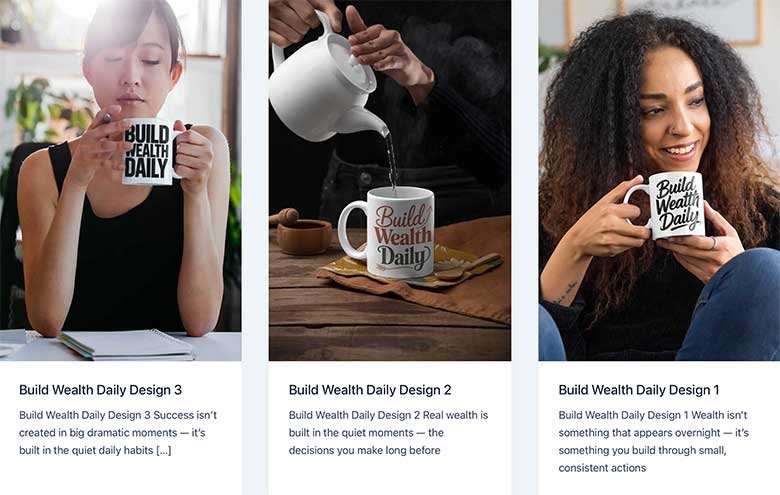
Make Your Vision Visible in Your Space Every Day
Premier Print Works creates quality prints, mugs, and shirts for people who keep their goals in front of them. Find something that brings your future into your present space today.
Visit Premier Print Works6. Visualize the process of achieving your goals — not just the end result — to build realistic belief and momentum.
Research shows that visualizing the process of working toward a goal is more effective than only visualizing the outcome. When you mentally rehearse the steps — the early mornings, the hard conversations, the consistent effort — you build realistic confidence rather than just wishful expectation.
Add process visualization to your practice. See yourself doing the work, handling the obstacles, staying consistent on the hard days. That mental rehearsal makes the actual experience feel more familiar and manageable when you are living it.
7. Read your vision statement out loud every morning to engage both your visual and auditory mind in the practice.
Hearing your vision in your own voice adds a dimension to the practice that silent reading or thinking cannot match. Your brain pays special attention to the sound of your own voice. Speaking your vision out loud engages your auditory processing and makes the message land more deeply.
Keep your vision statement short — five to ten sentences. Read it slowly and with genuine feeling each morning. Let the words register as real statements about your life rather than aspirational wishes. The repetition compounds over time in ways that are hard to measure but easy to feel.
8. Connect your daily tasks to your larger vision so every action feels meaningful rather than routine.
Motivation fades when daily tasks feel disconnected from any larger purpose. Visualization bridges that gap. When you can see how the email you are writing, the habit you are building, or the skill you are developing connects to the life you are working toward, even ordinary tasks carry a sense of meaning.
Before starting your work each day, take 60 seconds to connect what you are about to do to your bigger vision. Ask: how does this move me closer to where I am going? That small act of connection changes how the work feels and how well you do it.
9. Update your vision regularly as you grow because a vision that no longer fits you stops working as a guide.
Your vision is not meant to be fixed forever. As you grow, learn, and experience more of life, what you want and who you want to become will evolve. A vision that made perfect sense at 25 may not fit who you are at 32. That is not failure — it is growth.
Review your vision every three to six months. Ask honestly whether it still reflects what you truly want or whether it is a vision you have already outgrown. Update it accordingly. Your visualization practice stays powerful only when it stays true.
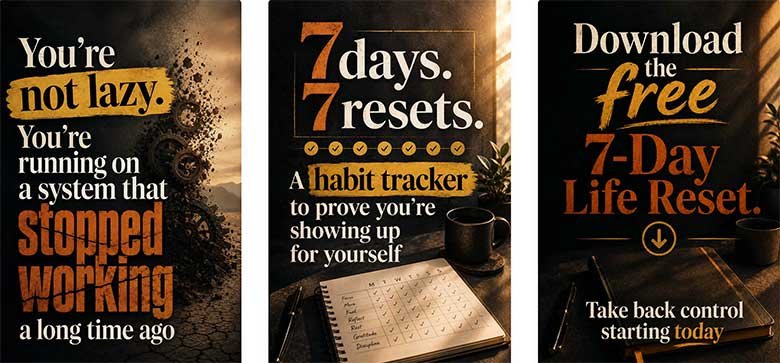
Get Clear on Where You Are Going in Seven Days
The free 7-Day Life Reset gives you a simple daily plan to reconnect with your vision, reset your habits, and start moving toward the future you actually want with real intention.
Get the Free Reset Guide10. Use your phone wallpaper as a micro-vision board by setting it to an image that represents your most important goal.
You look at your phone dozens of times a day. Every glance at your wallpaper is a free repetition of your vision. A single image that represents your most important goal — a place you want to live, a feeling you want to embody, a reminder of what you are working toward — makes your phone a passive visualization tool.
Change your wallpaper today. Pick one image that genuinely represents where you are headed. Every time you pick up your phone you get a brief, automatic reminder of your direction. Small and consistent beats elaborate and occasional every time.
11. Visualize yourself handling obstacles and challenges successfully to build resilience before you need it.
The most useful visualization is not just success — it is successful navigation of difficulty. When you mentally rehearse handling a setback, having a hard conversation, or pushing through a moment of doubt, you are building psychological resources you will actually need.
Include challenge scenarios in your practice. See yourself facing the hard thing calmly and handling it well. See yourself getting back up after a setback. That mental preparation makes real difficulties feel less destabilizing because your brain has already rehearsed getting through them.
12. Share your vision with one trusted person to create accountability and speak it into reality.
Visions kept entirely inside your head have less power than ones spoken out loud to another person. Sharing your vision with someone you trust does two things. It makes it more real — saying it out loud changes your relationship with it. And it creates a form of gentle accountability that helps you act consistently with what you said you wanted.
Choose one person who will listen without judgment and who genuinely wants good things for you. Tell them your vision. Not for their approval — just for the power of hearing yourself say it and of having someone else know it too.
13. Use guided visualization recordings to deepen your practice when your own mental imagery feels flat or hard to sustain.
Some days visualization comes easily. Other days the mind wanders and the images will not hold. On those days a guided visualization recording can carry you through the practice when you cannot do it on your own. There are many free options available through meditation apps and on YouTube.
Find one or two recordings that resonate with your specific goals — confidence, abundance, career growth, health, relationships. Use them on the days when your independent practice feels thin. The external guidance fills the gap and keeps your practice consistent even when your mental energy is low.
14. Place handwritten notes about your vision in places you see throughout the day to keep your future top of mind.
Sticky notes with a single powerful phrase from your vision — on your bathroom mirror, your laptop, your dashboard, your refrigerator — create repeated micro-exposures to your vision throughout the day. Each one takes a second to read and a second to feel. Those seconds add up.
Write five to seven notes with short phrases from your vision. Place them strategically around your environment. Change them every few weeks so they stay fresh and your eyes do not stop seeing them. Physical reminders in your physical space are one of the most underrated visualization tools available.
15. End each day by reviewing one small way you moved toward your vision to build evidence that your actions are working.
Visualization without evidence loses its power over time. Building a daily habit of noticing — even the smallest way you moved toward your future today — creates real evidence that your actions are aligned with your vision. That evidence is what keeps belief alive through the long stretches when progress is not yet visible from the outside.
Before you sleep, ask: what did I do today that moved me even one small step toward the life I am building? Write it down. Let it be evidence. Over months this record becomes a powerful reminder that you are actually doing it — not just dreaming about it.
“Clarity about your future is not a luxury. It is the foundation that every meaningful decision, habit, and action you take is built on. Get clear and stay clear.”
Explore Our Top Picks for a Better Life
We have gathered the best tools, resources, and products to help you stay clear on your vision, build better daily habits, and move toward the future you are working to create. All in one place, hand-picked just for you.
See Our Top PicksReal Stories, Real Results
Kezia had been saying she wanted to start her own business for three years. The goal was always there but always vague — she wanted something different, something hers, something that mattered. Then she sat down and spent an afternoon writing out exactly what that life looked like. She described her workspace, her clients, her daily schedule, and how she felt driving to work on a Monday morning. She put a photo of that kind of morning on her phone wallpaper. She read her vision statement every morning for 90 days. The clarity did not build the business for her. But it made every choice sharper. She stopped saying yes to things that contradicted the vision. She started saying yes to things that pointed toward it. Eighteen months later she was living a version of what she had written. Not perfectly. But unmistakably.
Daniel had always been skeptical of visualization. It felt too soft for someone who prided himself on being practical. Then a mentor challenged him to try it for 30 days with one simple rule — be specific and feel it, do not just think it. He wrote out in detail what his life looked like when he was leading a team and doing work he genuinely cared about. He read it every morning. Within four weeks he noticed something: he was declining things differently. Saying yes to different opportunities. Moving slightly differently through his days. Nothing dramatic. Just consistently more aligned. Six months later he said the practice had not changed his goals — it had changed how seriously he took them.
The Future You Want Becomes Real When You Can See It Clearly
Every tip in this article builds toward the same thing — a vision of your future that is specific enough to guide your choices, vivid enough to motivate your actions, and emotionally real enough to sustain your belief through the hard stretches between where you are and where you are going. Visualization is not magic. It is clarity. And clarity is the most powerful tool you have.
Pick one tip from this list and start it tomorrow morning. Just one. Download the free 9 Daily Habits guide to build a morning routine that includes visualization alongside the other habits that keep you moving forward every day. Your future is already there waiting. Get clear enough to see it and then start walking toward it.

Your Vision Needs Daily Habits to Bring It to Life
The free 9 Daily Habits guide gives you nine simple morning practices to build the clarity, focus, and consistency that turn your vision into your reality one day at a time.
Download Free Now
Keep Your Future Front and Center Every Single Day
Premier Print Works makes quality prints, mugs, and shirts for people who refuse to lose sight of where they are going. Browse the collection and find what keeps your vision alive.
Visit Premier Print WorksDisclaimer
The content on this page is for informational and inspirational purposes only. It is not professional advice of any kind. Results vary from person to person. What works for one person may not work for another. Always use your own judgment and consult a qualified professional when needed.
The stories of Kezia and Daniel are illustrative composite characters created to bring the content to life. They are not real people. Any resemblance to a real person is purely coincidental.
Some links on this page, including links to Premier Print Works and other resources, are affiliate links. If you make a purchase through one of these links, we may earn a small commission at no extra cost to you. We only recommend things we genuinely believe in.
If you are in crisis, please contact emergency services or a crisis helpline in your area immediately. You are not alone and help is available.
All content on A Self Help Hub is protected by copyright. It may not be copied, republished, or distributed without written permission from the author.