17 Emotional Intelligence Habits That Help You Stay Calm Under Pressure
Staying calm under pressure is not a personality trait you are either born with or without. It is a skill built through emotional intelligence habits that train your mind and body to respond instead of react when things get intense, because the response and the reaction are available to the same person, and which one arrives is determined largely by what has been practiced most consistently in the ordinary moments.
These 17 habits cover self-regulation techniques, stress response awareness, and mindful communication practices that help you stay grounded, clear-headed, and in control even when everything around you is demanding more than you feel ready to give. Calm under pressure is not the absence of stress. It is the presence of a practiced mind that knows exactly how to meet it.
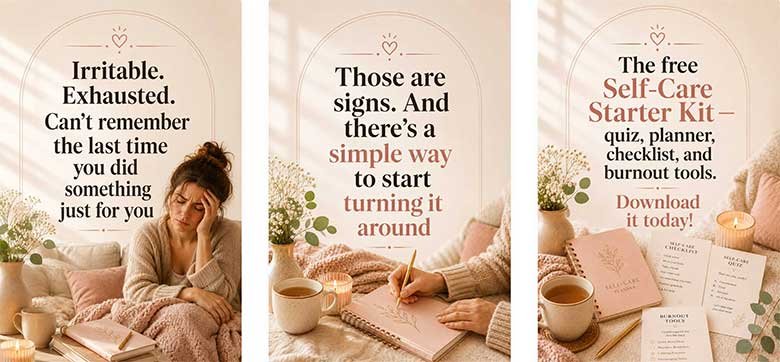
Free Download: The Self-Care Starter Kit
The calmest person in the room has done the inner work to stay steady no matter what arrives, and the right daily self-care is part of that inner work. The free Self-Care Starter Kit gives you simple daily practices for your mind and body to build your calm under pressure from. Download it free today.
Get the Free Self-Care Starter Kit1. Practice Slow Deliberate Breathing as a Daily Habit, Not Only in Crisis
“The calmest person in the room is rarely the one with the least to worry about, they are the one who has done the inner work to stay steady no matter what arrives.”
Deliberate slow breathing with an extended exhale activates the parasympathetic nervous system and reduces physiological stress arousal. The habit is most powerful under pressure when it has been practiced most consistently in ordinary moments. Daily breathing practice outside of stressful situations trains the nervous system to shift from arousal to calm more quickly and reliably when the stressful situation arrives. The five-minute morning breathing practice is not indulgence. It is preparation.
2. Identify Your Personal Stress Signals Before They Escalate
Each person has a specific set of early stress signals, physical sensations and behavioral changes that precede the full stress response, that arrive before the response becomes difficult to manage. Tight shoulders, shallow breathing, shortened sentences, increased irritability, loss of focus. Identifying your specific early signals and building the habit of checking for them regularly provides a warning system that allows for intervention before the stress response has fully mobilized, which is considerably easier than attempting to regulate after it has.
3. Create a Personal Calming Protocol for High-Pressure Moments
“Calm under pressure is not the absence of stress, it is the presence of a practiced mind that knows exactly how to meet it.”
A personal calming protocol, a specific, short sequence of actions that reliably move you from a reactive state toward a regulated one, functions as an emergency kit for high-pressure moments. The protocol might be: three slow breaths, a brief grounding exercise noting five things visible in the environment, and a single quiet repetition of an anchor phrase. Practiced in low-stakes situations until automatic, it becomes available without cognitive effort in the high-stakes ones where cognitive resources are already under pressure.

Visit Premier Print Works
Keep the reminder that calm under pressure is the presence of a practiced mind that knows exactly how to meet it, visible where your daily mindset work happens. Premier Print Works offers prints, mugs, and art for the person building their calm under pressure. Visit the shop today.
Visit Premier Print Works4. Learn to Tolerate Uncertainty Without Requiring Immediate Resolution
A significant portion of pressure-induced distress is not the difficulty of the situation itself but the discomfort of the uncertainty surrounding it. Building a tolerance for uncertainty, the capacity to sit with an unresolved situation without the urgency to immediately resolve it through premature action or catastrophic thinking, is one of the most valuable emotional intelligence habits for anyone who regularly operates in unpredictable environments. Uncertainty tolerated patiently often resolves more cleanly than uncertainty forced to a premature resolution.
5. Develop a Grounding Practice for When the Mind Escalates
Grounding exercises, practices that bring attention back to the immediate physical environment when the mind has moved into anxious projection about what might happen, interrupt the escalation cycle before it gains momentum. Simple grounding techniques, naming five visible things, feeling the texture of an object, pressing the feet into the floor, attend to the present moment rather than the imagined future that anxiety is generating, which is almost always worse than the present reality that grounding reveals.
6. Practice Cognitive Reappraisal of Stressful Situations
Cognitive reappraisal, consciously generating alternative interpretations of a stressful situation before accepting the most alarming one as definitive, is one of the most research-supported emotional regulation strategies available. The stressful event is the same. The interpretation applied to it is a choice, and the choice of interpretation produces different physiological and emotional responses to the same event. A difficult conversation reappraised as an opportunity to understand rather than as a threat to defend against produces a different quality of engagement from the one entered as a threat response.
How Amara and Joel Both Found That Calm Under Pressure Was Built in the Ordinary Moments
Amara and Joel had each been through high-pressure professional periods that had revealed clearly how they performed under sustained stress: well in the first week, adequately in the second, and with increasing difficulty in the third and fourth as the cumulative stress load exceeded what their untrained nervous systems could manage without degradation of judgment, patience, and interpersonal effectiveness.
Both had come to the same conclusion from their different experiences: the problem had not been the pressure itself. It had been the absence of any practiced daily habit of nervous system regulation that could have been drawn on when the pressure arrived. The pressure had simply revealed what was not there.
They each built different daily practices in the months that followed. Amara’s was a morning breathing session. Joel’s was a brief midday grounding practice and a strict workday end time that protected the evening as non-negotiable recovery. Both were small enough to dismiss as insufficient and large enough, practiced consistently, to produce a measurable difference in their next high-pressure periods. The calm they had been wanting in the difficult moments had been built in the ordinary ones, by doing the ordinary daily things that the difficult moments later drew on.
7. Reduce Chronic Stimulant Load During High-Pressure Periods
“The calmest person in the room is rarely the one with the least to worry about, they are the one who has done the inner work to stay steady no matter what arrives.”
High caffeine intake, excessive screen time, chronic sleep deprivation, and irregular eating patterns all elevate baseline cortisol and sympathetic nervous system activity, which means the physiological starting point from which any stressor is encountered is already elevated before the stressor arrives. Managing these inputs during high-pressure periods, particularly sleep and caffeine, gives the nervous system a lower baseline from which to encounter pressure and a greater capacity for the regulation that calm under pressure requires.
8. Regulate Your Tone of Voice Before Your Words
Under pressure, the tone of voice typically changes before the content of what is said does, and the change in tone is often more disruptive to communication than the content itself. Developing the awareness to notice when the tone has shifted to something terse, elevated, or clipped, and deliberately moderating it before speaking, maintains communication quality under pressure in a way that attempting to manage content alone does not. Slow down the speech. Lower the volume slightly. The tone that arrives at the listener changes the conversation regardless of what the words say.
9. Build a Pre-Pressure Routine for Known High-Stakes Situations
For predictable high-pressure situations, a specific pre-situation routine practiced consistently, a sequence of physical, mental, and intentional preparations, trains the nervous system to associate the routine with a regulated, capable starting state. Athletes use this before competition. Performers use it before a show. The same principle applies to a difficult meeting, a challenging presentation, or any other consistently high-pressure situation that can be prepared for in the minutes before it begins.
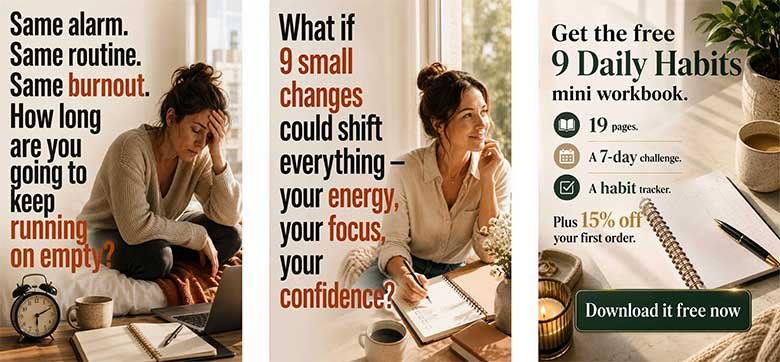
Free Download: The 9 Daily Habits Checklist
Building calm under pressure is supported by the consistent daily habits that train your nervous system to stay regulated when the pressure arrives. The free 9 Daily Habits Checklist gives you nine proven daily practices to build your calm and emotional intelligence from. Download it free today.
Get the Free Habits Checklist10. Use the Wider Perspective Question in Moments of Acute Stress
“Calm under pressure is not the absence of stress, it is the presence of a practiced mind that knows exactly how to meet it.”
In moments of acute stress, asking “will this matter in five years?” does not trivialize the current difficulty. It provides a temporary perspective shift that reduces the perceived magnitude of the stressor relative to the whole of the life it is occurring in. Most situations that feel catastrophic in the moment are not catastrophic in the scope of a full life. The question is not dismissive. It is the access to the wider perspective that pressure consistently narrows.
11. Choose a Specific Word or Phrase That Anchors You Under Pressure
A single word or brief phrase, chosen in advance and practiced consistently in ordinary moments, can function as a rapid nervous system regulation tool in the moment of pressure. “Steady.” “I’ve got this.” “One thing at a time.” The word is not a magic formula. It is a practiced anchor to a regulated state that, through consistent association, becomes a faster and more reliable route back to that state than any more complex technique that requires the cognitive resources the pressure has already compromised.
12. Practice Assertive Rather Than Reactive Communication Under Stress
Under pressure, communication tends to shift toward one of two poles: passive, where the stress is absorbed without expression until it produces an outburst, or reactive, where it comes out in ways that are unfiltered and often more damaging to relationships than the underlying stressor. Assertive communication, stating a need or concern clearly and specifically without aggression or deflection, is the regulated middle that most requires practice to make available when the pressure has arrived. It is trained in low-stakes conversations before it is needed in high-stakes ones.
13. Acknowledge Pressure Openly Rather Than Pretending It Is Not There
Acknowledging pressure, saying to yourself and to relevant others “this is a genuinely demanding situation,” removes the additional stress of maintaining the performance that things are fine when they are not. The acknowledgment does not mean the pressure is unmanageable. It means the energy previously spent performing normalcy is now available for the actual management of the situation. Naming pressure accurately and non-dramatically, as a fact rather than a catastrophe, is itself a self-regulation tool.
How Joel’s Breathing Practice Changed What Was Available in the Most Difficult Week of His Year
Joel had been maintaining a five-minute morning breathing practice for four months when the most professionally demanding week of his year arrived, the kind of week where multiple high-stakes situations overlapped and the margin for error in any of them was small. He had not been thinking of the four months of morning practice as preparation. He had been doing it because it consistently improved the quality of his mornings and had not considered its implications for anything beyond that.
The demanding week arrived and something was different from the previous demanding periods. Not the absence of stress, which was fully present and clearly felt. The quality of his relationship to it. The stress was not producing the narrowing of attention, the shortening of patience, and the degradation of judgment that previous high-pressure periods had reliably generated by the third day. He was remaining more regulated for longer.
He attributed it to the breathing practice only in retrospect, when the week had passed and he was examining what had been different this time. The four months of daily five-minute sessions had trained his nervous system to return to regulation faster after each activation. The practice had not prevented the stress. It had changed the recovery time from each stressful moment and the baseline from which the next one arrived. The calm had not been a gift from a lucky week. It had been built in the ordinary mornings by someone who had not yet known what it was being built for.
14. Rest Proactively Rather Than Reactively During High-Pressure Periods
“The calmest person in the room is rarely the one with the least to worry about, they are the one who has done the inner work to stay steady no matter what arrives.”
The natural response to high-pressure periods is to sacrifice rest in service of output. The physiological reality is the inverse: rest during high-pressure periods is what maintains the cognitive function, emotional regulation, and judgment quality that high-pressure situations require. A deliberately managed sleep schedule and genuine recovery periods during the most demanding weeks protect the capacities that prolonged pressure would otherwise degrade. Proactive rest is not laziness during difficulty. It is the maintenance of the tool the difficulty requires.
15. Process Pressure After It Passes Rather Than Suppressing It
Suppression of the emotional experience of a high-pressure period, continuing to perform well through it and then returning to normal as if nothing significant had occurred, produces a cumulative residue that eventually surfaces in less manageable forms. Deliberate processing after high-pressure periods, through journaling, conversation, movement, or any other form of honest engagement with the emotional experience of the difficulty, completes the stress cycle and prevents the accumulation that chronic suppression produces over time.
16. Build Physical Fitness as a Nervous System Regulation Tool
Regular physical exercise reduces baseline cortisol, improves heart rate variability, and strengthens the nervous system’s capacity to recover from stress activation. The person who exercises regularly is not just physically fitter. Their nervous system is measurably more resilient and returns to baseline more quickly after stress activation than a sedentary nervous system does. Physical fitness built over months provides a physiological foundation for emotional calm under pressure that no technique applied only in the moment of stress can fully replicate.
17. Commit to the Long Practice of Staying Calm as a Craft Worth Developing
“Calm under pressure is not the absence of stress, it is the presence of a practiced mind that knows exactly how to meet it.”
Calm under pressure is a craft. Like every craft, it develops through consistent practice in ordinary conditions that gradually builds the skill available in extraordinary ones. The daily breathing practice, the regular grounding habit, the calming protocol used in low-stakes situations before it is needed in high-stakes ones, these are the training sessions that build the practiced mind that knows how to meet pressure. The commitment is not to a single technique. It is to the long and ordinary practice of building the emotional intelligence that makes calm a realistic and reliable response rather than a lucky one.
The Calm You Need Under Pressure Is Built in the Ordinary Moments Before It Arrives
Practice slow breathing daily, not only in crisis. Identify your personal stress signals early. Create a personal calming protocol. Learn to tolerate uncertainty. Develop a grounding practice. Practice cognitive reappraisal. Reduce chronic stimulant load under pressure. Regulate your tone before your words. Build a pre-pressure routine for known high-stakes situations. Use the wider perspective question in acute stress. Choose an anchor word or phrase. Practice assertive rather than reactive communication. Acknowledge pressure openly rather than hiding it. Rest proactively during high-pressure periods. Process pressure after it passes. Build physical fitness as a regulation tool. Commit to calm as a craft worth developing. Seventeen habits. The calmest person in the room has done the inner work to stay steady, and calm under pressure is the presence of a practiced mind that knows exactly how to meet it.

Free Download: The Self-Care Starter Kit
Start building the emotional intelligence habits that help you stay calm, think clearly, and show up with confidence no matter how much pressure life decides to bring. The free Self-Care Starter Kit gives you simple daily practices for your mind and body to build your calm from. Download it free today.
Get the Free Self-Care Starter KitOur Top Picks for a Better Life
We have gathered our favorite tools, resources, and recommendations for building the emotional intelligence habits and daily practices that help you stay calm, clear, and in control under any amount of pressure. Everything we trust enough to share, all in one place.
See Our Top Picks
Calm Under Pressure Reminders at Premier Print Works
Keep the reminder that calm under pressure is the presence of a practiced mind that knows exactly how to meet it, visible where your daily practice happens. Visit Premier Print Works for prints, mugs, and art for the person building emotional intelligence and calm under pressure.
Visit Premier Print WorksDisclaimer
The content on A Self Help Hub is for informational and inspirational purposes only. The emotional intelligence habits and personal stories in this article offer general support for everyday stress management and personal development. They are not professional mental health advice, medical advice, psychotherapy, or any form of clinical treatment.
If you are dealing with significant anxiety, panic disorders, trauma, burnout, or other conditions affecting your daily functioning and stress response, please speak with a qualified mental health or medical professional. General self-help content is not a substitute for professional care, and some stress responses benefit significantly from clinical support and assessment.
The stories and composite characters in this article, including Amara and Joel, are illustrative. They are based on common experiences and created to make the content relatable. They are not real people. Any resemblance to a specific person is coincidental.
Some links on this site, including links to Premier Print Works, may be affiliate links. A Self Help Hub may earn a small commission at no extra cost to you. We only recommend things we genuinely believe in.
If you are in a mental health crisis or thinking about self-harm, please do not rely on this content for support. Contact emergency services or a crisis helpline right away. You deserve real help and it is available to you now.
All content on A Self Help Hub is copyrighted. You may not copy or republish it without written permission. By reading this article you agree to this disclaimer.