17 Personal Finance Tips That Help You Create Financial Confidence
A great deal of financial anxiety has less to do with the actual numbers and more to do with genuinely not understanding the concepts behind them. Terms like interest, credit, and diversification get used constantly, but rarely get explained plainly enough to actually stick, which leaves a lot of people managing money they do not fully feel like they understand.
The seventeen tips below focus specifically on that underlying literacy. Each one builds a genuine, foundational understanding of a specific personal finance concept, since confidence tends to follow directly from actually understanding what you are working with.

Build the Financial Literacy Behind Genuine Confidence
Download the free Money Reset Workbook and get a simple, step-by-step way to see where your money goes and build real understanding, not just better habits.
Get the Free Workbook1. Understand what interest actually does in both directions, since the same concept works for you in savings and against you in debt.
Interest is frequently understood only vaguely, as a cost attached to a loan, without a genuine understanding of how the same underlying mechanism also works in the opposite direction, growing savings and investments over time. Understanding interest as one concept that cuts both ways, rather than two unrelated ideas, clarifies why paying down high-interest debt and growing interest-bearing savings are both part of the same underlying principle.
Spend a few minutes this week making sure you genuinely understand how interest works, both for debt you owe and savings that grow.
2. Understand what actually makes up a credit score, replacing a vague sense of good or bad credit with genuine, specific knowledge.
Credit scores are frequently treated as an opaque, almost arbitrary number, without genuine understanding of the specific, known factors that actually determine it. Understanding these specific factors — payment history, utilization, length of credit history, among others — replaces vague anxiety about the number with genuine, actionable knowledge about what actually moves it.
Look up the specific factors that make up your credit score this week, replacing any vague understanding with genuine knowledge.
Surround Yourself With What Supports Your Financial Confidence
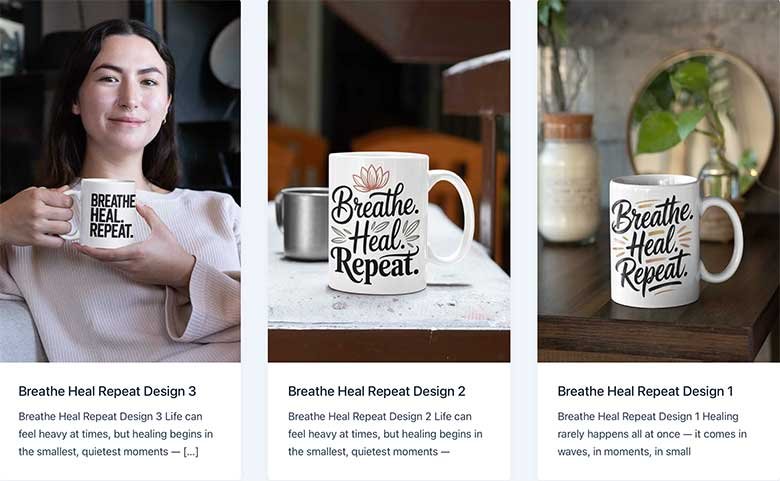
Premier Print Works creates quality prints, mugs, and shirts for people who are building the daily habits that support genuine financial confidence. Find what speaks to your journey today.
Visit Premier Print Works3. Understand the basic difference between an asset and a liability, since this distinction underlies most other financial decisions.
The basic distinction between an asset, which puts money in your pocket over time, and a liability, which takes money out, is frequently assumed rather than genuinely understood, even though this distinction underlies a great deal of other financial decision-making. Genuinely understanding this basic concept provides a foundation that considerably more advanced financial decisions actually build on.
Review a few of your own major financial holdings this week, and classify each one honestly as an asset or a liability.
“Financial confidence rarely comes from having more money. It usually comes from finally understanding the money you already have.”

Get Clear on the Financial Confidence You Are Actually Building
The free 7-Day Life Reset gives you one short prompt a day for a week, helping you get honest about the financial understanding you are actually working to build.
Start the Free Reset4. Understand the basic concept of diversification, since it explains a great deal of common investment advice that otherwise sounds arbitrary.
Common investment advice about not putting all your money in one place can sound like an arbitrary rule of thumb without a genuine understanding of the underlying concept it is based on — reducing risk by spreading exposure across several different, imperfectly correlated holdings. Understanding this underlying concept turns arbitrary-sounding advice into something genuinely reasoned.
Spend a few minutes this week making sure you genuinely understand what diversification actually means and why it reduces risk.
5. Understand the difference between a Roth and a traditional retirement account, since the distinction affects a decision most people eventually face.
The distinction between paying taxes now versus paying them later on retirement contributions is frequently glossed over, even though it directly affects a decision that most working people eventually face. Genuinely understanding this distinction, at least at a basic level, replaces a confusing choice with an informed one.
Spend a few minutes this week making sure you understand the basic tax-timing difference between these two common account types.
6. Understand what inflation actually does to money sitting still, since this explains why saving alone is not the same as growing wealth.
Money that sits entirely still, uninvested, genuinely loses purchasing power over time due to inflation, even though the number on the account statement technically stays the same or grows slightly through minimal interest. Understanding this concept clarifies why simply saving, without any growth strategy, is not actually the same as building wealth over the long term.
Spend a few minutes this week making sure you genuinely understand how inflation affects money that is not earning a return above it.
7. Understand the basic concept of compound growth, since it explains why starting early matters more than most people initially assume.
Compound growth is frequently mentioned without a genuine, concrete understanding of how dramatically it changes outcomes over long time periods, which is precisely why the common advice to start investing early is repeated so consistently. Understanding this concept concretely, even through a simple example, makes the advice feel reasoned rather than arbitrary.
Look up a simple compound growth example this week, and notice how significantly time affects the outcome.
8. Understand what an emergency fund is actually protecting against, since this clarifies why it deserves priority over other financial goals.
An emergency fund is sometimes treated as a generic, somewhat arbitrary recommendation rather than a genuinely understood tool for protecting against a specific, real risk — needing to go into debt during an unexpected disruption. Understanding this specific purpose clarifies why building one deserves genuine priority over other, more exciting financial goals.
Spend a few minutes this week clarifying, in your own words, exactly what your emergency fund is protecting against.
9. Understand the basic difference between good debt and bad debt, since this distinction is more nuanced than “all debt is bad.”
Debt is sometimes treated as uniformly negative, without genuine understanding of the meaningful distinction between debt used to acquire something that appreciates or generates income, and debt used purely for consumption. Understanding this distinction supports more nuanced, genuinely informed financial decisions than a blanket rule allows.
Review your own current debt this week, and classify each one honestly using this more nuanced distinction.
10. Understand what a fiduciary actually is, since this single term clarifies a great deal about who is genuinely obligated to act in your interest.
Financial advice comes from many different sources, not all of which are legally obligated to act in the client’s actual best interest, and understanding the specific term that describes this obligation clarifies a distinction that matters considerably when evaluating financial advice or professionals.
Look up what the term fiduciary actually means this week, and consider it the next time you evaluate financial advice.
11. Understand the basic concept of risk tolerance, since this explains why identical financial advice does not fit every person equally.
Generic financial advice sometimes gets applied uniformly without accounting for a person’s genuine, individual risk tolerance, which explains why identical advice can feel right for one person and genuinely wrong for another. Understanding your own risk tolerance as a real, legitimate factor supports more personally appropriate financial decisions.
Spend some time this month honestly assessing your own genuine risk tolerance, rather than assuming generic advice applies equally to you.
12. Understand the difference between net worth and income, since confusing the two produces a genuinely distorted sense of financial progress.
Income and net worth are sometimes conflated, even though they measure genuinely different things — one measures what comes in, the other measures what has actually accumulated after debts are subtracted — and confusing the two can produce a distorted sense of actual financial progress. Understanding this distinction clarifies which number actually reflects long-term financial health.
Calculate your own net worth this month, distinct from your income, and notice what that calculation actually reveals.
13. Understand what a deductible actually does in an insurance policy, since this term is frequently misunderstood despite appearing constantly.
Insurance deductibles are a term used constantly but frequently misunderstood at a genuine, functional level, which can lead to confusion during exactly the moment a policy is actually needed. Understanding this concept clearly, before it is urgently needed, supports better decisions when choosing or using a policy.
Spend a few minutes this week making sure you genuinely understand how the deductible works on your own insurance policies.
14. Understand the basic tax bracket system, since a common misunderstanding about it leads to genuinely poor financial decisions.
A common misunderstanding holds that earning more can somehow result in less take-home pay due to moving into a higher tax bracket, a misunderstanding based on a genuine misreading of how marginal tax brackets actually work. Correcting this specific misunderstanding prevents financial decisions made from inaccurate information.
Look up how marginal tax brackets actually work this week, and correct any misunderstanding you may be carrying.
15. Understand what liquidity actually means, since this concept explains why not all savings are equally accessible in an emergency.
Money invested in certain accounts or assets is genuinely less accessible in an emergency than money held in a basic savings account, a distinction described by the concept of liquidity, which is easy to overlook until an emergency actually reveals it. Understanding this concept in advance supports better decisions about where different portions of savings should actually be held.
Review your own savings and investments this month, and consider how liquid each one genuinely is.
16. Understand the basic concept of opportunity cost, since it clarifies that every financial choice involves a genuine, if invisible, tradeoff.
A financial choice is sometimes evaluated only on its own merits, without genuine consideration of the opportunity cost — what else that same money could have accomplished instead. Understanding this concept adds a genuinely useful additional dimension to financial decision-making that considering a choice in isolation misses.
The next time you make a significant financial decision, consider its genuine opportunity cost alongside its direct merits.
17. Revisit your own financial literacy periodically, since genuine understanding, like any other skill, can fade or become outdated without continued attention.
Financial concepts genuinely understood at one point can fade from memory or become outdated as personal circumstances and financial products change over time, continuing to be assumed understood even after the actual knowledge has quietly slipped. Periodically revisiting your own financial literacy keeps the underlying confidence genuinely current.
Spend some time this quarter honestly reviewing your own financial literacy, and identify one concept worth revisiting or learning for the first time.
Explore Our Top Picks for a Better Life
We have gathered the tools, resources, and products we think are genuinely worth your money — covering finances, mindset, health, and home. All in one place, hand-picked with the same standard we apply to our own spending.
See Our Top PicksReal Stories, Real Results
Kezia had always felt vaguely anxious about her credit score, checking it occasionally but never genuinely understanding what specifically moved it up or down. Looking up the actual factors behind it for the first time, rather than continuing to guess, replaced that vague anxiety with a specific, actionable understanding she could actually work with. She said the number itself had not changed overnight. Her relationship to it had, once she finally understood what it was actually made of.
Daniel had always believed, incorrectly, that earning more money could sometimes result in a smaller paycheck due to a higher tax bracket, a misunderstanding that had quietly influenced several career decisions over the years. Looking up how marginal tax brackets actually worked corrected a belief he had been carrying, unquestioned, for a long time. He said the correction had not changed his current income. It had changed a decision-making framework he had been unknowingly using incorrectly for years.
Financial Confidence Is Built Concept by Concept, Not Habit by Habit
Each tip in this article builds genuine understanding of a specific financial concept — interest, credit, diversification, opportunity cost. None of these require an existing financial background to learn.
Choose two or three concepts that address where your own financial understanding currently feels least solid, and spend some time learning them this month. Download the free Money Reset Workbook to give this growing literacy a clear, simple structure to build from. Financial confidence follows directly from genuinely understanding the concepts behind the numbers.

Ready to Build Your Own Genuine Financial Literacy?
The free Money Reset Workbook walks you through the same ideas in this article, step by step, with room to write down your own numbers and your own plan.
Download Free Now
Fill Your Space With What Supports Your Financial Confidence
Premier Print Works makes quality prints, mugs, and shirts for people building a genuine, well-understood relationship with their finances. Browse the collection and find what speaks to your journey today.
Visit Premier Print WorksDisclaimer
The content on this page is for informational and educational purposes only. It is not financial, investment, tax, insurance, legal, or estate planning advice, and should not be treated as a recommendation to buy, sell, or hold any product, security, or service. All investments carry risk, including the potential loss of principal, and past performance does not guarantee future results. Please speak with a qualified professional who is licensed in your state before making decisions about budgeting, saving, investing, debt, taxes, insurance, or estate planning. Results and experiences vary significantly from person to person.
The stories of Kezia and Daniel are illustrative composites created to bring the content to life. They are not real people. Any resemblance to a real person is purely coincidental.
Some links on this page, including links to Premier Print Works and other resources, are affiliate links. If you make a purchase through one of these links, we may earn a small commission at no extra cost to you. We do not own, produce, or control any affiliate products, and we are not responsible for them — we only own and sell the products offered through our own store, Premier Print Works.
All content on A Self Help Hub is the property of Digital Marketing 215 LLC and is protected by copyright law. No part of this page may be copied, reproduced, republished, distributed, or transmitted in any form without prior written permission from the author.