17 Self Improvement Habits That Help You Create a More Balanced Life
A more balanced life is not created by doing more. It is created by doing the right things more consistently, protecting what genuinely matters, releasing what does not, and showing up more fully in the areas of life that deserve the most of who you are. Balance is not the equal distribution of time across all domains. It is the honest, intentional alignment of the time and energy available with the people, practices, and purposes that actually make the life feel worth living.
These 17 self improvement habits are built for that kind of balance, the kind that is constructed deliberately from a clear understanding of what matters and what does not, rather than the kind that is hoped for while the default rush of daily obligations claims every available hour. They address the physical, emotional, relational, professional, and inner dimensions of a balanced life, because genuine balance requires attention to all of them rather than the excellence in one at the expense of the others that so much self-improvement culture encourages.

Free Download: The 9 Daily Habits Checklist
A more balanced life is built from the right daily habits practiced consistently across all the dimensions that balance requires. The free 9 Daily Habits Checklist gives you nine proven daily practices that build the structure and consistency a genuinely balanced life requires. Download it free today.
Get the Free Habits Checklist1. Define what balance specifically means for your life, not the generic version.
“A more balanced life is not created by doing more. It is created by the honest, intentional alignment of the time and energy available with the people, practices, and purposes that actually make the life feel worth living.”
The most common reason self-improvement efforts toward balance fail is that they are aimed at the cultural version of balance rather than the specific version that fits the actual person and the actual life. The cultural version often looks like equal portions of health, relationships, career, creativity, finances, and personal growth, maintained simultaneously at a high level. The specific version for any real person is different and is only found by honest examination: what are the two or three domains where the imbalance is most costly to the overall quality of the life, and what would a realistic, sustainable improvement in those specific areas look like? Start with the honest specific version. Build toward that, not toward the generic ideal.
2. Protect sleep as the non-negotiable foundation of everything else.
The first and most physically foundational balance habit is the one most consistently sacrificed in the pursuit of productivity and achievement: consistent, adequate sleep. Sleep is not the reward after the work is done. It is the foundation on which the capacity for all of the work, the relationships, the emotional regulation, the physical health, and the intentional daily presence that a balanced life requires is built. The person who is chronically sleep-deprived is not genuinely available for the balanced life in any of its dimensions. Protect the sleep. Not as an occasional recovery from exceptional busyness. As the consistent daily investment in the capacity for everything that makes the life worth living.
3. Move your body daily as a minimum rather than an achievement.
“Sleep is not the reward after the work is done. It is the foundation on which the capacity for the work, the relationships, the emotional regulation, and the intentional presence that a balanced life requires is built. Protect it as such.”
Daily physical movement is the self-improvement habit that produces the broadest range of balance benefits from a single practice: improved mood, reduced anxiety, better sleep, increased energy, improved cognitive performance, and the identity reinforcement of someone who takes care of their physical self. The movement does not have to be elaborate or intensive to be balance-building. Twenty minutes of walking is adequate as a minimum and is significantly more balance-building than the zero movement produced by the ambitious exercise goal that is never started because the perfect conditions for the full workout never arrive. Make the minimum small enough to be maintained every day without exception. Build from the minimum when the capacity and the desire allow.

Visit Premier Print Works
Keep the reminders of the more balanced, intentional life you are building visible in your daily space. Premier Print Works offers prints, mugs, and art for people who are building balance across all the dimensions of a genuinely good life and want their environment to reflect the intention and direction they are choosing. Visit the shop today.
Visit Premier Print Works4. Build a daily practice that is entirely for the inner life.
The balanced life requires a daily practice for the inner life, some form of deliberate, consistent attention to the interior experience that is neither productive nor social nor achievement-oriented. Journaling. Meditation. Prayer. Time in nature without a device. Whatever specific form fits the person’s temperament and circumstances. The practice does not have to be lengthy to be genuinely restorative. Five to ten minutes of daily inward attention, protected from the demands that crowd out the inner life in the absence of the protection, builds the self-awareness, the emotional literacy, and the interior groundedness that genuine balance depends on. Without the inner life practice, the balance is external architecture without a foundation. Build the practice. Protect it consistently.
5. Invest deliberately in the relationships that most matter.
The relationship dimension of a balanced life is the one most commonly sacrificed to the professional and productivity demands of the modern daily life, because the relationships most worth maintaining are almost always with people who are too patient and too genuine to demand the time the way the inbox and the calendar demand it. Investing deliberately in the relationships that most matter, specifically and proactively rather than reactively and accidentally, requires the same kind of scheduled intentionality that the professional commitments receive. The one-on-one dinner that was put in the calendar rather than hoped for. The phone call made proactively rather than deferred until someone asks if everything is okay. The relationship investment made from the fullness of the daily life rather than from the scraps of it.
6. Practice saying no to the things that consume without genuinely contributing.
“The relationship dimension of a balanced life is most commonly sacrificed to professional demands because the relationships worth maintaining are too patient to demand the time the way the inbox and the calendar demand it. Schedule the investment. Protect it.”
The balanced life requires the specific self-improvement habit of declining what does not genuinely serve the life being built. Not the useful obligation or the genuine priority of another person that the life is in right relationship with. The commitment made from guilt. The obligation accepted from the inability to disappoint. The request agreed to because the asking produced the discomfort of saying no. Each yes to these things is a no to something in the life that genuinely matters, because the time and energy are finite. The practice of saying no to the things that consume without contributing is not selfishness. It is the protection of the limited resources that the balanced life requires for the things it cannot balance without them.
7. Build a financial practice that reduces the stress money produces.
The financial dimension of balance is less often discussed in self-improvement contexts than the health and relationship dimensions, but the chronic financial stress that inadequate financial management produces is one of the most consistent balance-destroyers available. The person carrying the specific anxiety of not knowing where the money stands, of the bill that might not be covered, of the emergency fund that does not exist, is carrying a background noise in the inner life that the balance-building practices cannot fully address because the source is structural rather than attitudinal. A weekly money check-in, a basic budget, an automated savings contribution: these are not glamorous balance habits. They are the specific financial practices that remove the financial anxiety from the background of the daily inner life and create the space for the balance the other practices are building.
8. Limit screen time and build deliberate offline periods into each day.
“Chronic financial stress is one of the most consistent balance-destroyers available. The person carrying the anxiety of not knowing where the money stands is carrying background noise that the balance-building practices cannot address because the source is structural. Address the structure.”
The screen time that has colonized the transitions, the mornings, the evenings, and the meals of the modern daily life has produced a specific kind of balance impairment: the attention is perpetually semi-available, perpetually partially occupied by the incoming stimulation of the device, and genuinely present to nothing. The self-improvement habit of building deliberate offline periods into each day, specific windows where the screen is absent and the full attention is available to whatever is actually happening in the physical, relational, and internal life, restores the presence that genuine balance in those dimensions requires. Not the elimination of screens from the daily life. The deliberate, protected periods where they are absent and the full attention returns to what is actually there.
9. Practice genuine rest rather than digital collapse.
The rest that restores is qualitatively different from the exhausted consumption of screens that occupies the same hours in most people’s evenings. Genuine rest is the recovery of the body and the mind from the day’s demands through activities that reduce rather than sustain the physiological stress response: reading, being in nature, gentle movement, creative activity without performance pressure, genuine conversation, sleep. Digital collapse, the habitual default to screens at the end of a depleting day, produces the feeling of having rested without the actual physiological restoration that makes the next day genuinely available rather than endured. Build genuine rest into the daily routine. Let the evenings produce the actual restoration that the next day’s balance requires.
10. Develop a consistent practice of gratitude and present-moment awareness.
“Genuine rest, the recovery of the body and mind through activities that reduce the stress response, is qualitatively different from digital collapse. The evening that produces actual restoration changes what the next day is genuinely available for.”
The balanced life is the life that is genuinely inhabited rather than endured while waiting for the conditions that would make it more worth having. The gratitude practice, the brief daily acknowledgment of what in the current life is genuinely worth having, and the present-moment awareness practice, the deliberate return to the sensory and relational richness of the actual moment rather than the mental rehearsal of what is coming or the rumination on what has passed, produce the specific quality of engaged daily living that balanced lives are made of. Not the perfect circumstances. The genuine presence in the actual circumstances. That presence is available now. These practices are how it is built.
11. Build the professional boundaries that protect the personal from the professional.
The professional dimension of a balanced life requires boundaries that protect the personal from the professional rather than allowing the professional to expand indefinitely into the time and attention that the rest of the life requires. A consistent end time to the working day. The email that is not checked at dinner. The work phone that is silent during the family evening. The weekend that is genuinely available for the rest of the life rather than for the catching up on what the work week left undone. These boundaries are not the laziness that the productivity culture sometimes names them. They are the specific protections that make the rest of the life genuinely available rather than perpetually deferred to the space that the work has not yet consumed.

Free Download: The Self-Care Starter Kit
A more balanced life is built from the inside out. The free Self-Care Starter Kit gives you simple daily practices for your mind and body that build the inner foundation a genuinely more balanced life requires. Download it free today.
Get the Free Self-Care Starter Kit12. Read and learn regularly in domains outside the professional one.
“Professional boundaries are not laziness. They are the specific protections that make the rest of the life genuinely available rather than perpetually deferred to the space that the work has not yet consumed.”
The balanced life includes an intellectual life that is not entirely organized around the professional domain. The reading that is done for genuine curiosity, the learning pursued for the pleasure of knowing and not for the credential it produces, the intellectual engagement with ideas that have nothing to do with the career and everything to do with the breadth of engagement with the world: these are the habits that build the intellectual and cultural dimension of a balanced life that the purely professionally oriented development practice cannot produce. Read what is genuinely interesting. Learn what is genuinely curious. Let the intellectual life be wider than the work that occupies the professional hours.
13. Practice the daily habit of completing small tasks rather than accumulating them.
The unfinished small tasks that accumulate in the margins of the daily life, the unanswered message, the thing that needed doing for two weeks, the small obligation deferred until the right moment, produce a specific kind of low-grade cognitive load that undermines the inner calm that a balanced life requires. The self-improvement habit of addressing the small tasks at the time they arise, rather than deferring them to an indefinitely deferred later, reduces the background mental noise of the perpetually unfinished and creates the specific mental spaciousness that the balanced life feels like from the inside. The two-minute task done today does not become the two-week obligation tomorrow. The small completions compound into the inner clarity that the large ambitions alone cannot produce.
14. Audit and reduce the commitments that are no longer genuinely chosen.
The balanced life is regularly maintained not only by what is added to it but by what is released from it. Every recurring commitment in the life, the standing obligation, the regular attendance, the ongoing project, the relationship maintained from duty rather than genuine care, deserves a periodic honest reassessment: is this still genuinely chosen, and does it serve the balanced life being built, or is it the accumulated legacy of a previous version of the life that has not been renegotiated? The release of commitments that are no longer genuinely chosen is not abandonment of responsibility. It is the honest reassessment that prevents the life from being permanently defined by the commitments made in a previous season without the awareness that the current season would have chosen differently.
15. Build a creative practice that has nothing to do with productivity.
“The release of commitments no longer genuinely chosen is not abandonment. It is the honest reassessment that prevents the life from being permanently defined by what a previous season committed to without asking whether the current one would choose the same.”
The balanced life includes a creative dimension that is not in service of any outcome: the writing that no one reads, the drawing that has no audience, the music played for the player alone, the gardening tended for the pleasure of the tending. The specific kind of engagement that purely expressive creative practice produces, the intrinsic, nonproductive, unperformed engagement with the making of something, nourishes a dimension of the human self that the achievement-oriented activities cannot reach. Protect the creative practice. Keep it entirely yours. Let it be the dimension of the balanced life that belongs to the genuine self rather than to the performing one.
16. Practice regular disconnection from the news and social comparison.
The curated life of the social media comparison and the urgency of the daily news cycle are two of the most reliable balance-undermining inputs available in the daily information diet. The social comparison that social media produces, the perpetual measurement of the actual life against the curated highlights of everyone else’s, is a documented source of dissatisfaction with the actual life that is genuinely good by any objective measure. The news anxiety that the always-available news cycle produces about events that are mostly beyond the personal sphere of influence consumes the attention and the emotional energy that the close-range life and relationships most need. Both are manageable: specific, limited engagement windows with both, outside of which the attention returns to the actual life that benefits most from being genuinely inhabited.
17. Review the balance quarterly and adjust the habits to reflect the current season.
“Social comparison produces a documented source of dissatisfaction with the actual life that is genuinely good by any objective measure. Limit the exposure. Return the attention to the actual life that benefits most from being genuinely inhabited.”
The balanced life is not a static achievement. It is a dynamic, ongoing practice of adjustment that responds to the changing seasons of the life and the evolving understanding of what balance means within them. The quarterly review, an honest assessment of how the balance habits are working across the key dimensions of the life, which areas have been receiving adequate attention and which have been depleted by the demands of the current season, and what specific adjustments would most improve the balance in the coming months, converts the balance aspiration from a perpetual sense of falling short into the practical, ongoing navigation practice that the genuinely balanced life actually requires. Review quarterly. Adjust honestly. Build from the season the life is actually in.
How Amara and Joel Each Found the Self Improvement Habit That Finally Shifted Their Life Toward More Genuine Balance
Amara had been pursuing balance for years in a way that was organized almost entirely around adding: adding the morning meditation, adding the weekly workout, adding the journaling practice, adding the cooking at home, adding the social time. The life had become more intentional in each individual dimension and more exhausting overall, because the adding had never been accompanied by a corresponding releasing of what no longer genuinely served the life. A coach she worked with made the specific observation that every commitment added to an already full life displaces something unless something is also removed. Amara spent a weekend honestly assessing every recurring commitment in her life, professional and personal, against the question: is this still genuinely chosen, or is it the legacy of a previous season? Three significant recurring commitments did not survive the question. The release of those three freed a quality of time and energy that the adding of new practices had never been able to produce, because the new practices had been crowded into the same overfull schedule rather than built into a space that had been genuinely cleared. The balance that followed the releasing was qualitatively different from anything the adding had produced.
Joel’s self improvement habit for balance was the one about screen time. He had been aware that the evening screen use was not the rest it felt like, that the two hours of digital consumption at the end of each day were leaving him less restored than they should have been for two hours of recovery from the working day. A week of intentional experiment, replacing the first hour of the evening screen time with reading, time outside, or conversation, produced an immediate and noticeable difference in the quality of both the evening and the following morning. The evening felt more restoring. The morning began from a more genuinely rested starting point. The difference was not dramatic. It was consistent and reliable enough across the week to make the adjustment permanent. He did not eliminate the evening screen time. He reduced it to the second hour and filled the first with the genuine rest that the second, however pleasant, had not been providing. The balance the change produced was not the profound transformation of dramatic self-improvement. It was the reliable daily improvement of a life that regularly encountered a more restored version of itself at the end of each evening.
The More Balanced Life Is Built From the Specific Daily Habits That Protect What Matters and Release What Does Not. These 17 Are How You Build It.
Balance is not the perfect distribution of life across equal portions. It is the honest, intentional alignment of the actual life with the actual values: the protection of the physical foundation, the investment in the relationships that matter, the inner life that makes the outer one meaningful, the professional engagement that serves rather than consumes, and the release of what is no longer genuinely chosen.
Build three or four of these habits this month, the ones that most directly address the specific dimension where the imbalance is most costly. Let them produce the difference they are designed to produce. Add more when the first ones are reliable. The more balanced life you are working toward is built from the daily choices to prioritize what genuinely matters across all of its dimensions. These habits are how those choices are made consistently, one ordinary day at a time.
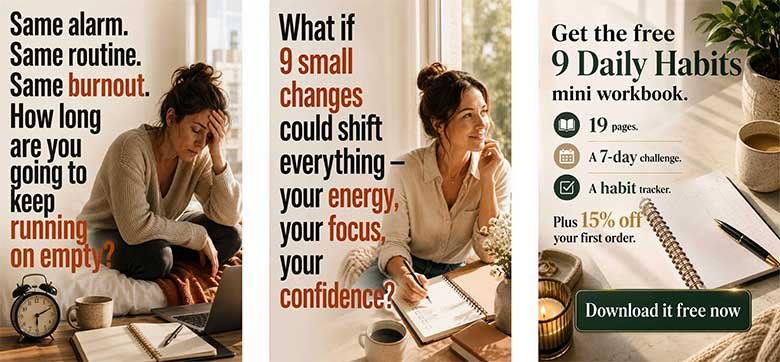
Free Download: The 9 Daily Habits Checklist
Let these self improvement habits be the reminder that a more balanced life is built from the right daily habits practiced consistently across all the dimensions that balance requires. The free 9 Daily Habits Checklist gives you nine daily practices to build the balanced foundation from. Download it free today.
Get the Free Habits ChecklistOur Top Picks for a Better Life
We have gathered our favorite tools, resources, and recommendations for people building more balanced lives, developing the self improvement habits that sustain genuine balance, and creating the daily practices that make a genuinely good life across all its dimensions possible. Everything we trust enough to share, all in one place.
See Our Top Picks
Balanced Life Reminders at Premier Print Works
Keep the reminders of the more balanced, intentional life you are building visible in your daily space. Visit Premier Print Works for prints, mugs, and art for people who are doing the daily self improvement work that creates genuine balance and want their environment to reflect the harmony and intention they are actively building.
Visit Premier Print WorksDisclaimer
The content on A Self Help Hub is for informational and inspirational purposes only. The self improvement habits and personal stories in this article offer general support for everyday personal development, self-care, and intentional living. They are not professional mental health advice, psychotherapy, medical advice, or any form of clinical treatment.
If you are dealing with significant depression, anxiety, burnout, chronic illness, or other conditions affecting your daily functioning and ability to engage with self-improvement work, please speak with a qualified mental health or medical professional. General self-help content is not a substitute for professional care.
The stories and composite characters in this article, including Amara and Joel, are illustrative. They are based on common experiences and created to make the content relatable. They are not real people. Any resemblance to a specific person is coincidental.
Some links on this site, including links to Premier Print Works, may be affiliate links. A Self Help Hub may earn a small commission at no extra cost to you. We only recommend things we genuinely believe in.
If you are in a mental health crisis or thinking about self-harm, please do not rely on this content for support. Contact emergency services or a crisis helpline right away. You deserve real help and it is available to you now.
All content on A Self Help Hub is copyrighted. You may not copy or republish it without written permission. By reading this article you agree to this disclaimer.