17 Strength Quotes That Help You Grow Through What You Go Through
Growing through what you go through is a choice. Not an automatic consequence of surviving difficulty, but a deliberate orientation toward it that asks: what is this building in me? What is this teaching me? What is this asking me to become that I would not have become if it had not arrived? That orientation does not make the hard thing easier. It makes the hard thing meaningful, and meaning is one of the most sustaining things available to a person moving through something genuinely difficult.
These 17 strength quotes are built for that orientation. They are not asking you to be grateful for the pain. They are asking you to consider that the pain might be building something worth having, in the way that only the things that cost something genuinely can. Read them with the difficulty you are currently in, or just behind you, in mind. Let the ones that land stay with you. Return to this list when the next hard season requires them.

Free Download: The 9 Daily Habits Checklist
Growing through what you go through is built from the daily habits that keep you showing up consistently in every season. The free 9 Daily Habits Checklist gives you nine proven daily practices that build the strength and resilience these quotes point toward. Download it free today.
Get the Free Habits Checklist1. “Character cannot be developed in ease and quiet. Only through experience of trial and suffering can the soul be strengthened, vision cleared, ambition inspired, and success achieved.”
“Growing through what you go through is a deliberate orientation, not an automatic consequence. It asks: what is this building? What is this teaching? What is this asking me to become?”
This observation from Helen Keller, who built extraordinary character through extraordinary difficulty, is not a romanticization of suffering. It is an honest description of how the specific qualities most worth having are developed. The vision that comes from having been forced to see clearly when comfortable assumptions were stripped away. The ambition that comes from having discovered what genuinely matters when the superficial was removed. The soul that has been strengthened through trial in a way that the soul maintained in comfort never is. These are real things and they require real trials. If you are in the trial, you are in the development. The strengthening is happening even when it only feels like weight.
2. “You never know how strong you are until being strong is the only choice you have.”
This idea, widely attributed to Bob Marley, captures what almost every person who has moved through genuine adversity eventually discovers: the strength was there before it was needed. It simply had not been tested. The revelation of strength in a crisis is not the creation of new capacity. It is the discovery of existing capacity that comfort had never required. The person who is currently being asked to be strong in a way they have never been asked before is not being asked to become something they are not. They are being asked to discover what they already are. The discovering is uncomfortable. The discovery is often transformative.
3. “What doesn’t kill you makes you stronger.”
“The strength revealed in a crisis is not new capacity being created under pressure. It is existing capacity being discovered for the first time because the circumstances finally required it.”
Nietzsche’s observation, perhaps the most widely quoted strength idea in popular culture, deserves the honest examination it rarely receives. It is not universally true: some things that do not kill you simply damage you, and pretending otherwise is a form of toxic positivity that does real harm. But for the specific category of difficulties that are moved through with genuine engagement, with the orientation toward growth rather than mere survival, the strengthening is real. The person who chooses to grow through what they go through rather than merely to endure it and emerge unchanged is genuinely stronger for the passage. The quote is conditional. The condition is the orientation. Choose the orientation and the quote becomes true.
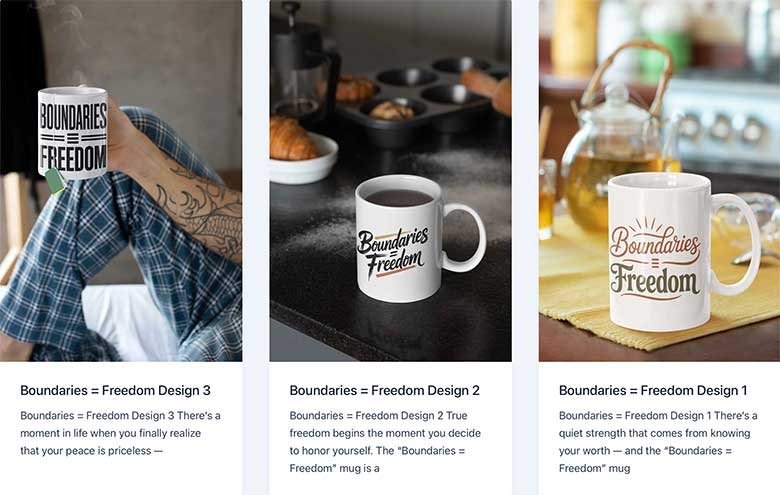
Visit Premier Print Works
Keep the strength that holds you through hard seasons visible in your daily space. Premier Print Works offers prints, mugs, and art for people who are choosing to grow through what they go through and want their environment to reflect the strength they are actively building. Visit the shop today.
Visit Premier Print Works4. “She was never quite ready, but she was brave, and the universe took care of the rest.”
This idea, often attributed to Atticus, speaks to one of the most common forms of growth-blocking: the requirement for readiness before beginning. The readiness rarely arrives before the beginning. It arrives after, as a consequence of beginning. The strength of this quote for anyone in the middle of something difficult is its reframing of brave action as sufficient in the absence of readiness. You do not have to be ready. You have to be brave. The readiness follows the action almost every time for the person who is willing to move without it. And the universe, in the sense of the accumulated consequence of brave, consistent action, does tend to take care of what bravery alone could not foresee.
5. “Sometimes you don’t realize your own strength until you come face to face with your greatest weakness.”
This observation, attributed to Susan Gale, identifies the paradoxical relationship between weakness and strength that every person who has grown through difficulty eventually understands. The weakness is not the opposite of the strength. It is the specific territory through which the path to the strength runs. The person who has never confronted their greatest weakness has never found the specific strength that confronting it develops. The difficulty you are currently in, if it is the kind that requires you to face something genuinely hard about yourself or your situation, is precisely the kind that builds precisely the strength you need. The weakness is the door. The strength is on the other side of it.
6. “The oak fought the wind and was broken. The willow bent when it must and survived.”
“The weakness is not the opposite of the strength. It is the specific territory through which the path to the strength runs. The confrontation is the door. The strength you need is on the other side.”
This idea, from Robert Jordan’s fantasy writing but grounded in ancient wisdom traditions, speaks to the specific kind of strength that is built through flexibility rather than rigidity. The strength that cannot bend eventually breaks. The strength that knows how to yield when yielding is what is required, to adapt, to absorb, to flex without shattering, is the strength that survives the storms that break the things built from pure resistance. Growing through difficulty often requires learning the difference between the resistance that builds genuine fortitude and the rigidity that makes breakage more likely. The willow is not weak. It is strong in the specific way that the storm requires.
7. “I can be changed by what happens to me. But I refuse to be reduced by it.”
This idea, from Maya Angelou, draws the precise distinction that the title of this article is built around. To be changed by what happens is human and inevitable. Difficulty changes people. Loss changes people. Failure changes people. The question is whether the change is toward reduction or toward expansion, toward less than what you were or toward something more. The refusal to be reduced is not the refusal to be changed. It is the deliberate orientation that treats what happens as material for building rather than evidence for diminishing. You will be changed by what you go through. The choice is whether you grow through it or simply survive it.
8. “She made broken look beautiful and strong look invincible. She walked with the universe on her shoulders and made it look like a pair of wings.”
“To be changed by what happens is human and inevitable. The question is whether the change is toward reduction or expansion. The refusal to be reduced is not the refusal to be changed. It is an orientation toward building.”
This idea, attributed to Ariana Dancu, describes something that every person who has grown through genuine difficulty eventually becomes capable of: carrying what is heavy in a way that looks, from the outside, like grace and from the inside, like the hard-won peace of someone who has learned exactly how much they can hold. The universe on the shoulders of someone who has chosen growth rather than mere survival looks different than it does on the shoulders of someone still fighting the weight. The weight is the same. The relationship to it changes as the growing happens. The broken made beautiful is not pretense. It is the genuine transformation of difficulty into depth.
9. “It’s not the load that breaks you down, it’s the way you carry it.”
This idea, attributed to Lou Holtz, places the decisive variable not with the weight but with the carrier. Two people can carry the same difficulty and experience it entirely differently based on how they hold it: whether they carry it with resentment or acceptance, with isolation or support, with the identity of someone being crushed or someone being strengthened. The weight is real. But the way it is carried, the meaning assigned to it, the support sought for it, the orientation brought to it, is where the difference between being broken by it and growing through it is actually decided. The load does not break you. The way you carry it can. And the way you carry it is, to a significant extent, a choice.

Free Download: The Self-Care Starter Kit
Growing through what you go through requires taking care of yourself in every season, not just the easy ones. The free Self-Care Starter Kit gives you simple daily practices for your mind and body that build the foundation genuine growth through difficulty requires. Download it free today.
Get the Free Self-Care Starter Kit10. “A smooth sea never made a skilled sailor.”
“The weight is real. But the way it is carried, the meaning assigned to it, the support sought for it, the orientation brought to it, is where the difference between being broken and growing is actually decided.”
This proverb, attributed to Franklin D. Roosevelt among others, describes with simple accuracy what anyone who has tried to build genuine competence through comfortable conditions has eventually discovered: the competence requires the difficulty. The skilled sailor was not made in calm waters. The skill was made in storms, in navigating unexpected currents, in managing the vessel when conditions removed the possibility of the comfortable autopilot that calm water allows. Whatever difficult conditions you are currently navigating are not obstacles to the development of skill and character. They are the conditions under which real skill and character are formed. The smooth sea produces passengers. The rough sea produces sailors.
11. “Hardship often prepares an ordinary person for an extraordinary destiny.”
This idea, attributed to C.S. Lewis, reframes the experience of hardship from something that happens to a person to something that happens for a purpose. Not that all hardship is purposeful or cosmically designed. But that the person who chooses to engage with their hardship as a preparation, who asks what this is equipping them for rather than only why it is happening to them, experiences the same difficulty with a fundamentally different relationship to its meaning. The ordinary person being prepared for something extraordinary by what they are going through right now may not be able to see the extraordinary from inside the preparation. They rarely can. The preparation and the destiny become visible together from the other side of the hardship.
12. “Turn your wounds into wisdom.”
“The person who engages with hardship as preparation, who asks what this is equipping them for rather than only why it is happening, experiences the same difficulty with a fundamentally different relationship to its meaning.”
This idea, attributed to Oprah Winfrey, describes the specific alchemy that distinguishes growing through difficulty from merely surviving it. The wound and the wisdom are made of the same material. The experience of genuine loss, failure, betrayal, or hardship contains, within it, the specific understanding that only that specific experience can produce. The person who processes their wounds with honesty and intention, who asks what they have learned from what hurt them and how that learning can serve themselves and others, is performing the transformation from wound to wisdom that Winfrey describes. The wound does not automatically become wisdom. It becomes wisdom through the deliberate work of examining it, understanding it, and carrying it forward as something useful rather than only as something painful.
13. “The world breaks everyone, and afterward, some are strong at the broken places.”
Hemingway’s line from A Farewell to Arms is one of the most enduring observations about resilience in the literary tradition, because it acknowledges with unflinching honesty that the world does break people, and then offers the specific truth that the breaking is not the end of the story. The places that were broken and healed are, in the specific way that bone heals stronger at the fracture site, often stronger than the unbroken places. The person who has been genuinely broken and has found their way through the breaking carries a specific quality of strength at those places that is available nowhere else and to no one who has not been through something similar. The broken places are not weaknesses. In the people who grow through what breaks them, they are the strongest places of all.
14. “Be the kind of person you needed when you were going through your hardest time.”
“The places that were broken and healed are often stronger than the unbroken places. The specific quality of strength available at the broken places is available nowhere else and to no one who has not been through something similar.”
This idea, widely circulated in various forms, turns the experience of having needed something and not found it into the specific raw material for becoming what is needed for others. The person who went through something hard and did not have the support, the understanding, the specific kind of presence they needed has been shown, by their own experience, exactly what that support looks like and exactly why it matters. That knowledge is not only memory. It is qualification. The difficulty you moved through without adequate support is precisely what qualifies you to provide adequate support to someone in similar circumstances. Growing through what you go through does not only build the person. It builds the gift the person gives to the world from the place the building happened.
15. “Though she be but little, she is fierce.”
Shakespeare’s line from A Midsummer Night’s Dream has outlasted its original context to speak to something universal: that strength and size are not the same measure, and that the fierceness that matters is the internal kind, the determined, committed, will-not-be-diminished quality that has nothing to do with how large or how powerful a person appears from the outside. The person who keeps going through genuine difficulty, who maintains their dignity and their direction and their capacity for love and growth in the face of whatever is being asked of them, is fierce in exactly this sense. Not visibly. Not dramatically. In the specific, unassailable way of someone who has decided that what they are going through will not determine who they become.
16. “You were given this life because you are strong enough to live it.”
“Strength and size are not the same measure. The fierceness that matters is internal. The person who keeps going, who maintains their direction in the face of what is being asked, is fierce in the most essential sense of the word.”
This idea, widely circulated in various forms, offers the perspective that the specific difficulty of your specific life is not randomly assigned. Whatever the source one believes or does not believe in, the practical truth remains: you are here, you are in this, and the evidence of your history is that you have been equipped to navigate what life has placed before you. Not because it is easy. Not because the strength is always visible or available on demand. But because the pattern of your life is the pattern of someone who has found their way through every season that has arrived, including the ones that seemed impossible from inside them. You were given this life because you are strong enough to live it. The proof is that you are still living it.
17. “I am not what happened to me. I am what I choose to become.”
Carl Jung’s statement is perhaps the clearest and most direct articulation of the central choice that growing through difficulty requires. What happened to you is real. It has shaped you. It is part of who you are. But it is not the sum total of who you are, and it is not the determinant of who you will become unless you allow it to be. The choosing is not a single dramatic declaration. It is made in the daily, ordinary decisions about how to respond to what has happened, what to build from the raw material of the experience, what to carry forward and what to set down, and who to be in the life that continues beyond what tried to define you. I am not what happened to me. I am what I choose to become. Choose today. Then choose again tomorrow.
How Joel and Kezia Each Found the Quote That Changed How They Held What They Were Going Through
Joel had been carrying the experience of a significant professional failure for three years in the specific way that Hemingway’s quote eventually described to him: as an unhealed fracture rather than a healing one. He had survived the failure. He had moved past it, professionally. He had not processed it in any way that allowed the breaking to become the strengthening. A mentor asked him once, directly, what the failure had taught him that nothing else had. He had no ready answer because he had spent three years avoiding the question rather than engaging with it. He wrote for two hours that evening. The list of what the failure had taught him, when honestly compiled, was the most practically useful piece of professional self-knowledge he had ever produced. The breaking had been trying to become wisdom for three years. He had just never asked it to. Once he did, the fracture began to heal in the specific way that fractures heal when they are properly set: stronger than the unbroken bone.
Kezia’s quote was Jung’s final one on the list. She had been in a period of life where what had happened to her was loudest in her own internal narrative, where the experiences of loss and change and transition in the previous two years had come to feel like the defining story of who she was rather than events in a larger ongoing story. Reading the quote for the first time produced a reaction she had not expected: not inspiration, but a kind of quiet argument with it. She was not what had happened to her. She was also significantly shaped by it. She sat with the tension for a week. The resolution she eventually found was the distinction between shaped and defined. The experiences had shaped her. What she became from the shaping was still being decided by her, daily, in the choices about who to be and how to show up and what to build from what she had been given. She was not what had happened to her. She was choosing, actively and continuously, what to become from it. That choosing, once recognized as ongoing rather than settled, changed what the next chapter felt like to be writing.
You Are Growing Through This. The Strength Being Built Here Is Real Even When It Only Feels Like Weight.
Growing through what you go through is not guaranteed. It is chosen. It is the daily decision to orient toward what the difficulty is building rather than only toward what it is costing. To ask what this is teaching rather than only why this is happening. To carry what is heavy in a way that builds rather than in a way that breaks.
The seventeen quotes in this article are seventeen different ways of making that choice and understanding what it means and why it matters. Keep the ones that speak to what you are going through right now. Return to this list when the next hard season arrives. Let the strength being built in you by what you are going through become visible, in time, as the specific and irreplaceable gift that only the things that truly cost something are ever able to give.
You are growing through this. That is the whole point. Keep going.

Free Download: The 9 Daily Habits Checklist
Let these strength quotes be the reminder that growing through what you go through is built from the daily choices that orient you toward growth rather than only survival. The free 9 Daily Habits Checklist gives you nine daily practices to build that orientation from. Download it free today.
Get the Free Habits ChecklistOur Top Picks for a Better Life
We have gathered our favorite tools, resources, and recommendations for people choosing to grow through difficulty, building real strength from hard seasons, and creating a life that reflects what the hardest chapters were building all along. Everything we trust enough to share, all in one place.
See Our Top Picks
Strength and Growth Reminders at Premier Print Works
Keep the reminders of the strength being built in you visible in your daily space. Visit Premier Print Works for prints, mugs, and art for people who are growing through what they go through and want their environment to reflect the strength and depth being built every day they choose to keep going.
Visit Premier Print WorksDisclaimer
The content on A Self Help Hub is for informational and inspirational purposes only. The strength quotes and personal stories in this article offer general emotional support for everyday resilience, personal growth, and intentional living. They are not professional mental health advice, psychotherapy, medical advice, or any form of clinical treatment.
If you are dealing with significant depression, anxiety, grief, trauma, or other conditions affecting your daily functioning and mental health, please speak with a qualified mental health professional. General self-help content is not a substitute for professional care.
The stories and composite characters in this article, including Joel and Kezia, are illustrative. They are based on common experiences and created to make the content relatable. They are not real people. Any resemblance to a specific person is coincidental.
Some links on this site, including links to Premier Print Works, may be affiliate links. A Self Help Hub may earn a small commission at no extra cost to you. We only recommend things we genuinely believe in.
If you are in a mental health crisis or thinking about self-harm, please do not rely on this content for support. Contact emergency services or a crisis helpline right away. You deserve real help and it is available to you now.
All content on A Self Help Hub is copyrighted. You may not copy or republish it without written permission. By reading this article you agree to this disclaimer.