7 Meal Planning Tips That Help You Stop Wasting Food
You open the fridge on Thursday and find a bag of spinach that has turned into green soup.
I have thrown away more food than I like to admit. A tired cucumber here, half a carton of cream there, a container of leftovers that nobody wanted. Wasted food is wasted money, and every time I tossed something, I felt a little twinge. When I looked at why it kept happening, I noticed a pattern. My plans started with what I felt like eating, and not with what was already in my kitchen.
These seven tips flip that around. You build your plan from the inside out. You start with what you have, you plan to use it before it spoils, and you make leftovers part of the plan from the start. None of it needs special skills, and you can start with tonight’s dinner.

See What Food Is Really Costing You Each Month
Download the free Money Reset Workbook and get a simple way to see your food spending, so wasted groceries stop slipping by unnoticed.
Get the Free Workbook1. Look before you plan, so your menu starts with what is already in your kitchen.
Before you write a single meal, take two minutes to look through your fridge, freezer, and pantry. Open the drawers. Check the back of the shelves. Most of us have forgotten something in there.
Write down what needs to be used soon, such as fresh produce, dairy near its date, and leftovers. Also note the staples you have plenty of, like rice, pasta, canned beans, and frozen vegetables. This quick list is the starting point for your plan.
It also makes shopping easier, because you will know what you do not need to buy.
Spend two minutes tonight scanning your fridge, freezer, and pantry, and write down three things that should be used first.
2. Build your first few dinners around the foods that spoil fastest.
Fresh vegetables, leafy greens, berries, and leftovers do not last long. Plan to eat those early in the week, and save the sturdier foods, such as frozen items, canned goods, rice, and root vegetables, for later in the week.
This simple order keeps the most delicate food from sliding to the back of the fridge. It also means your meals get easier to plan as the week goes on, because you can lean on your pantry and freezer.
If you have a lot of one thing, build two meals around it. A bunch of kale might go into a pasta dish on Monday and a soup on Wednesday.
Look at your list of foods to use first, and plan your next two dinners around them.

Keep Your Kitchen Plan Where You Can See It
Premier Print Works creates quality prints, mugs, and shirts for people who love a well-run kitchen. Find a small reminder that a plan saves food and money.
Visit Premier Print Works3. Plan fewer dinners than there are days in the week, so you have room for leftovers and surprises.
It is tempting to plan seven dinners for seven nights. But life rarely cooperates. You might have leftovers, a night out, a rushed evening, or a day when you simply cannot cook.
Try planning four or five dinners, and leave the other nights open for leftovers, pantry meals, or a flexible night. This helps you avoid buying ingredients for meals that never get made.
You can always add a meal if you have the time and energy. Planning less often leads to wasting less.
This week, plan only four or five dinners, and let leftovers or a simple pantry meal cover the rest.
“The cheapest meal is often the one you already have the ingredients for.”
4. Shop with a list that matches your plan, and skip the “just in case” purchases.
Wasted food often begins in the store. We buy things that seem like a good idea, a vegetable we might cook, a sauce we might try, and then they sit in the fridge until they spoil.
Write your list from your plan. For each meal, check what you already have, and add only what you need. If a recipe calls for a small amount of something, think about whether you will use the rest, or whether a smaller package or a frozen version would work better.
Stick to the list as best you can. If you want to try something new, pick one item, and plan when you will use it.
Write your next grocery list straight from your meal plan, and cross off anything you already have at home.
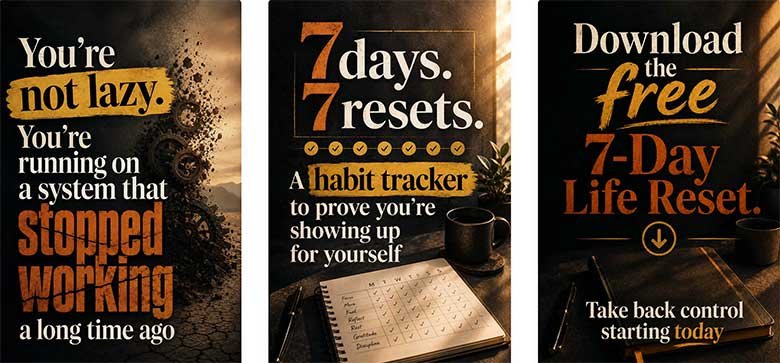
Keep a Steady Weekly Kitchen Routine
The free 7-Day Life Reset gives you a short, simple way to reset your week, which makes a weekly meal plan easier to keep.
Get the Free Reset5. Cook once and eat twice, so leftovers become a planned meal and not a leftover problem.
Leftovers get thrown away when they have no plan. Instead, decide ahead of time how a meal will become another. A roast chicken can become sandwiches or soup. Extra rice can become fried rice. Roasted vegetables can go into a frittata or a wrap.
When you cook, make a little extra on purpose. Store the extra in a clear container, so you can see it. Put it where you will remember it, and label it with the day if that helps.
Leftovers also make easy lunches, which saves money and time.
Choose one dinner this week, and decide now what the leftovers will become.
6. Make a “use it up” meal once a week, so odds and ends do not get thrown out.
Pick one night each week to clear out what is left. Soups, stir-fries, fried rice, frittatas, pasta dishes, and quesadillas are all good at absorbing odds and ends.
Open the fridge, gather whatever needs using, and see what you can make. A few wilted vegetables, the end of a block of cheese, a bit of cooked meat, and some eggs can turn into a surprisingly good dinner.
Do this before your next big shop, so the fridge is clear and you can see what you have.
Choose a night this week for a use-it-up meal, and write it on your calendar.
7. Store food where you will see it, and move the older items to the front.
Out of sight often means out of mind. When food gets hidden behind newer items, it gets forgotten. Try to put older items in front and new ones in back. Keep a clear spot or a small bin for food that needs eating first.
Use clear containers where you can, and label leftovers with the date. In the freezer, a quick label with what it is and when you froze it saves a lot of guessing later.
A tidy fridge makes it easier to plan, and easier to notice what is about to go bad.
Set aside one shelf or bin in your fridge for “eat me first” foods, and put your oldest items there.
Explore Our Top Picks for a Better Life
We have gathered the tools, resources, and products we think are genuinely worth your time, covering mindset, self-care, health, and home. All in one place, hand-picked to support a kitchen that wastes less and feeds you well.
See Our Top PicksReal Stories, Real Results
Let me share two examples I like to use. Kezia and Daniel kept finding forgotten vegetables at the back of the fridge. They began the week with a two-minute look at what they had, and they planned the first few dinners around whatever would spoil soonest. Kezia told me that the first week they threw away almost nothing, and the grocery list got shorter without anyone trying.
Daniel’s change was the use-it-up night. Every Thursday, he cleared out the fridge into a big pan of fried rice or a frittata. He said that his family began to look forward to it, because the meal was different each time. Both of them said the same thing: planning around what was already in the kitchen made wasting food much harder.
A Kitchen That Wastes Less Starts With a Look Before You Plan
Picture opening your fridge on Thursday and seeing food you actually plan to eat. The vegetables are still fresh, the leftovers have a purpose, and the shelves are tidy enough to see. The grocery bill is a little lower, and the trash can is a little lighter.
Choose two or three tips from this list, and begin with the two-minute fridge check. Download the free Money Reset Workbook to see where your food money goes. Small habits in the kitchen add up quickly.
Want Ready-Made Tools to Help You Put This Into Action?
Sometimes the fastest way forward is a tool that someone has already built. Browse our hand-picked resources and downloads, chosen to help you take the next step with less guesswork.
Browse Resources and Downloads
Ready to Stop Throwing Food Away?
The free Money Reset Workbook helps you see your numbers clearly, so every grocery dollar ends up on a plate.
Download Free Now
Fill Your Kitchen With a Plan That Works
Premier Print Works makes quality prints, mugs, and shirts for people who plan their meals with care. Browse the collection and find what speaks to your journey today.
Visit Premier Print WorksDisclaimer
The content on this page is for informational and inspirational purposes only. It is not professional financial, investment, tax, legal, insurance, or estate planning advice, and it is not professional nutrition or medical advice. Food prices, store policies, and food safety guidance vary, so please follow the storage and safety instructions on packaging and from your local health authority. If food looks, smells, or feels off, please do not eat it. Anyone with allergies or special dietary needs should adjust these ideas accordingly. Results vary widely from person to person.
The stories of Kezia and Daniel are illustrative composite characters created to bring the content to life. They are not real people. Any resemblance to a real person is purely coincidental.
Some links on this page, including links to Premier Print Works and other resources, are affiliate links. If you make a purchase through one of these links, we may earn a small commission at no extra cost to you. We do not own, produce, or control any affiliate products, and we are not responsible for them — we only own and sell the products offered through our own store, Premier Print Works.
All content on A Self Help Hub is the property of Digital Marketing 215 LLC and is protected by copyright law. No part of this page may be copied, reproduced, republished, distributed, or transmitted in any form without prior written permission from the author.