7 Personal Finance Tips Young Adults Need Before Life Gets Expensive
Your first apartment, your first car repair, and your first real bill all seem to arrive in the same month.
Early adulthood is a strange mix. You may be earning more than you ever have, and still feel like money disappears faster than it comes in. I have talked with a lot of young people who felt that way, and most of them told me the same thing. Nobody had walked them through the basics, and the basics turn out to be quite learnable once someone does.
These seven tips are the ones I wish every young adult heard before life gets more expensive. They do not need a big income or a finance degree. They need a little honesty and a few steady habits. I am not a financial professional, so please treat this as general education, and talk with a qualified person about your own situation.
Lay Your Money Foundation While Life Is Still Simple
Download the free Money Reset Workbook and get a simple, honest way to see your income and expenses, the first step for any young adult.
Get the Free Workbook1. Find out what you actually earn and spend, since every other money skill starts there.
Many young adults have only a rough idea of their numbers. Take an hour and write down what comes in each month after taxes, and what goes out. Look at your bank and card statements for the last two or three months, and add up rent, utilities, phone, food, transportation, subscriptions, and fun.
Do not worry if the picture is messy. Most people are surprised by something, usually small recurring costs or food spending. Skip the guilt. The point is to know where you stand.
Once you know your numbers, you can make real choices instead of guessing.
Spend one hour this week adding up last month’s income and spending, and write both totals at the top of a page.
2. Save something from every paycheck, even if it is small, so saving becomes a habit before it becomes a burden.
The amount matters less than the habit. If you can only manage $10 or $20 a payday, start there. The point is to build the muscle of putting money aside before you spend it.
Set up an automatic transfer on payday into a separate savings account. When it happens automatically, you do not have to rely on willpower. You can increase the amount whenever you get a raise or cut an expense.
A small habit that lasts is far better than a big plan that fades after two months.
Set up an automatic transfer for your next payday, in any amount you can keep up.

Keep a Reminder That Small Habits Add Up
Premier Print Works creates quality prints, mugs, and shirts for people building their first real money habits. Find a small reminder that early habits pay off.
Visit Premier Print Works3. Build a small cushion for surprises, because a flat tire should not become a crisis.
Life tends to send expenses at the worst times: a car repair, a medical bill, a broken phone, a sudden trip home. Without a cushion, these often end up on a credit card or in a borrowed payment.
Start with a small goal, such as a few hundred dollars, and build from there. Keep it in a separate account that you can reach but will not touch for everyday spending.
Over time, aim for enough to cover a few months of basic expenses. It does not have to happen quickly. Every dollar helps.
Open or label a savings account just for surprises, and make your first deposit this week.
“The best time to start good money habits is before you feel you need them.”
4. Keep your lifestyle from rising every time your income does.
It is natural to want to spend more as you earn more. A better apartment, a nicer car, more takeout. A little improvement is fine, and a lot of it can quietly eat every raise. This is sometimes called lifestyle creep.
A helpful habit is to split each raise. Put part of it toward savings or debt, and let yourself enjoy part of it. That way, your life improves and your future does too.
Notice what you add to your fixed costs. Monthly commitments are harder to undo than one-time purchases.
The next time your income goes up, decide ahead of time how you will split the increase between saving and enjoying.
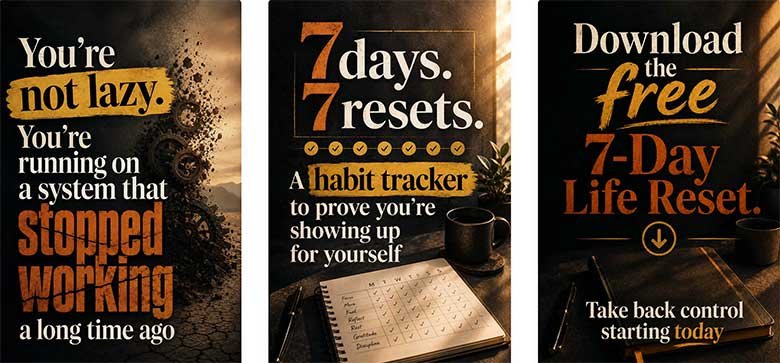
Build Steady Money Habits, Week by Week
The free 7-Day Life Reset gives you a short, simple way to reset your week, which makes small money habits easier to keep.
Get the Free Reset5. Learn the basics of credit early, since it affects things like renting and borrowing.
Credit is a record of how you handle borrowed money. In the United States, it can affect whether you can rent an apartment, how much you pay for a loan, and sometimes even insurance rates. The basics are simple: pay on time, and do not borrow more than you can repay.
If you use a credit card, try to pay the full balance each month so you avoid interest. If you cannot, pay at least the minimum, on time, every time.
Late payments and high balances can hurt your credit, and building good credit takes patience.
Write down the due date and minimum payment of every credit account you have, and set a reminder for each.
6. Take free money when it is offered, such as an employer retirement match.
Some employers offer to contribute to your retirement account when you do. If yours does, learn how it works. A match can be a valuable benefit, and it is one of the few cases where money is truly on the table.
Retirement can feel far away, but early contributions have more time to grow. Even a small amount can be a good start.
Rules and options vary, so read your plan’s information, ask your benefits contact, and consider talking with a qualified professional.
Find out whether your employer offers a retirement plan or a match, and write down what it takes to join.
7. Learn one money skill at a time, and ask for help when you need it.
You do not have to learn everything at once. Pick one topic each month, such as how credit cards work, how taxes affect your paycheck, or how insurance works. Use trustworthy, non-commercial sources, such as government and nonprofit education sites.
Talk to people you trust who have been through it. Most are glad to share what they learned, including their mistakes.
If you feel stuck, a nonprofit credit counselor or a qualified financial professional can help. Asking questions is a strength.
Choose one money topic to learn this month, and ask one trusted person what they wish they had known at your age.
Explore Our Top Picks for a Better Life
We have gathered the tools, resources, and products we think are genuinely worth your time, covering mindset, self-care, health, and home. All in one place, hand-picked to support the money habits you are building.
See Our Top PicksReal Stories, Real Results
Let me share two examples I like to use. Kezia had just started her first full-time job and felt that her paycheck vanished. When she added up three months of statements, she saw that small recurring charges and food took most of the surprise. She set up a $20 automatic transfer and cancelled two subscriptions. She told me the changes were small, but she felt in control for the first time.
Daniel’s lesson was about raises. He got a bump in pay and moved to a pricier apartment right away. Later, he noticed that his savings had not grown at all. When he got his next raise, he split it, half to savings and half to enjoy. Both of them said the same thing: starting with simple habits early made the later, bigger decisions much easier.
Good Money Habits Are Easiest to Start Before Life Gets Expensive
Picture yourself a few years from now with a small cushion, a savings habit that runs on its own, and a clear view of your numbers. Surprises still come, but they do not knock you over. You made a few small choices early, and they have added up.
Choose two or three tips from this list, and begin with knowing your numbers. Download the free Money Reset Workbook to see your income and spending in one place. The habits you start now can make every later stage of life easier.
Want Ready-Made Tools to Help You Put This Into Action?
Sometimes the fastest way forward is a tool that someone has already built. Browse our hand-picked resources and downloads, chosen to help you take the next step with less guesswork.
Browse Resources and Downloads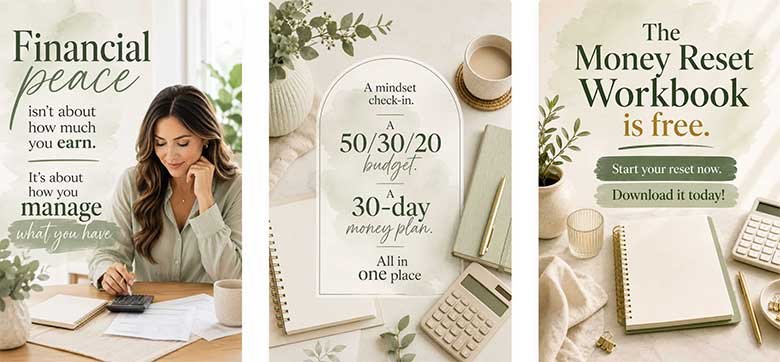
Ready to Get a Head Start With Your Money?
The free Money Reset Workbook helps you see your numbers clearly, so the habits you start now have a solid base.
Download Free Now
Fill Your Space With a Steady Future
Premier Print Works makes quality prints, mugs, and shirts for young adults building a steady future. Browse the collection and find what speaks to your journey today.
Visit Premier Print WorksDisclaimer
The content on this page is for informational and inspirational purposes only. It is not professional financial, investment, tax, legal, insurance, or estate planning advice. Credit, tax, and retirement plan rules vary by country and situation and can change, so please consult a qualified professional before making financial decisions. Results vary widely from person to person.
The stories of Kezia and Daniel are illustrative composite characters created to bring the content to life. They are not real people. Any resemblance to a real person is purely coincidental.
Some links on this page, including links to Premier Print Works and other resources, are affiliate links. If you make a purchase through one of these links, we may earn a small commission at no extra cost to you. We do not own, produce, or control any affiliate products, and we are not responsible for them — we only own and sell the products offered through our own store, Premier Print Works.
All content on A Self Help Hub is the property of Digital Marketing 215 LLC and is protected by copyright law. No part of this page may be copied, reproduced, republished, distributed, or transmitted in any form without prior written permission from the author.