9 Budgeting Ideas That Help You Build a Simple Emergency Fund
For a long time, I believed an emergency fund needed a spreadsheet, a formula, and a free weekend. It turned out to need one number and one account.
That idea got some support from a study I found interesting. Researchers Alejandro Drexler, Greg Fischer, and Antoinette Schoar ran a randomized trial with small business owners in the Dominican Republic, published in 2014. One group got standard accounting training. Another group got a simple training built around easy rules of thumb. The standard training had little effect, while the rules-of-thumb training improved how the owners handled their money. The effect was biggest for people who started with weaker money habits. That study was about business finances in a different country, so I am borrowing the idea, not claiming it proves anything about your household. But it fits what I keep seeing. Simple rules are easier to follow, and a rule you follow beats a perfect plan you skip.
So here are nine budgeting ideas, each one a simple rule you can say out loud in a sentence. Use them to start a small emergency fund, and add more detail later, if you want it.

Start Your Emergency Fund With a Clear Picture
Download the free Money Reset Workbook and get a simple way to see where your money goes, so you know where your first emergency dollars can come from.
Get the Free Workbook1. Pick one starter number you can say in a single sentence, so your goal does not feel like a project.
“Save money for emergencies” is a wish. “Save $500 by March” is a goal. The difference is that a number gives you something to aim at and a finish line to cross. Choose a small starter amount that feels almost too easy, such as one week of groceries, one car payment, or a round number like $300 or $500.
Do not worry about the perfect size yet. Many guides suggest saving three to six months of expenses in the long run, and that is a fine target to grow toward. But a huge number can make a beginner give up before starting. A small first win is worth more than a big plan you never begin.
Say the sentence out loud, and write it somewhere you will see it. A goal that lives only in your head is easy to forget.
Write your starter goal in one sentence with an amount and a date, and put it on your fridge or phone.
2. Pay your fund first, on payday, before anything else gets a chance to take the money.
This rule is easy to remember: save first, spend what is left. When you wait until the end of the month to see what remains, there is usually nothing. Money tends to disappear into small, ordinary spending when it has no job.
Pick a fixed amount and move it the same day you get paid, even if it is just $10. If you can, set up an automatic transfer so you do not have to remember or decide each time. A small amount that happens every time works better than a big amount that happens once.
If your paychecks vary, pick a small base amount for every check, and add extra when a big one arrives.
Set up a recurring transfer for your next payday, even a small one, and let it run for three months before you judge it.
Keep Your Safety Net in Sight
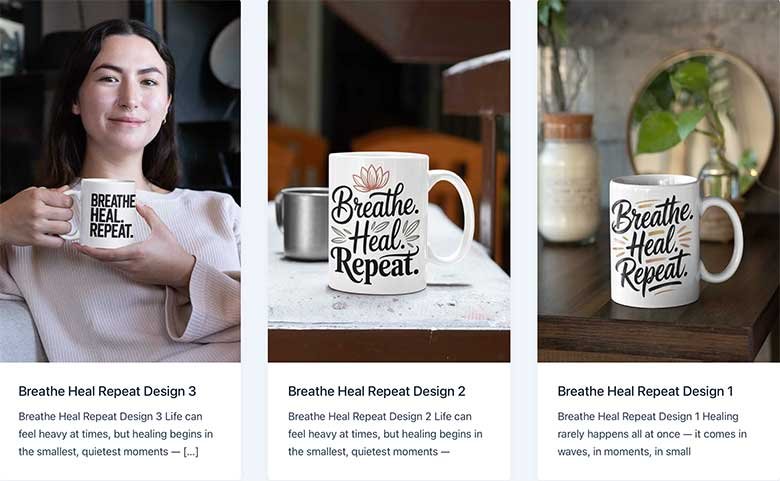
Premier Print Works creates quality prints, mugs, and shirts for people building a steadier money life. Find a small reminder of what you are saving for.
Visit Premier Print Works3. Give the money its own account with a plain name, so it does not blend in with everyday spending.
When emergency money sits in the same account as your daily spending money, it is easy to spend by accident. A separate account creates a little distance. It does not need to be fancy. A basic savings account at your bank, or a high-yield online savings account, is enough.
Name the account something clear, like “Emergency Fund.” Many banks let you rename accounts. A name is a small reminder of what the money is for, and it makes you stop and think before you tap.
Check that the account is insured. In the United States, deposits at an FDIC-insured bank are generally covered up to $250,000 per depositor, per bank, per ownership category. Credit unions have similar protection through the NCUA.
Open or rename a savings account this week, and call it exactly what it is.
“A simple rule you follow beats a perfect plan you never start.”
4. Use a one-line budget: what comes in, minus bills, minus your fund payment, equals what you can spend.
A detailed budget has its place, but you do not need one to begin. Try this one line: take-home pay, minus your fixed bills, minus your emergency fund payment, equals what is left to spend. The leftover is your spending number.
Once you know that number, you can check it weekly. If you have $120 left for the week and you have spent $80, you know you have $40 to go. You do not need to track every coffee. You only need to stay under your number.
I like this rule because it puts the fund in the budget as a bill, right alongside rent and utilities. It stops being the thing you save if there is anything left.
Do the one-line math for this month, and write your spending number on a sticky note.

Keep Your Habits Steady While You Build
The free 7-Day Life Reset gives you a short, simple way to reset your week, which helps when you are adding a new money habit.
Get the Free Reset5. Make a rule for extra money, such as splitting it half and half before you spend any of it.
Extra money, like a refund, a bonus, a gift, or a payment from selling something, tends to vanish quickly if you do not plan for it. A simple rule helps. For example: half goes to the emergency fund, and half is yours to enjoy.
The split keeps things fair. You do not have to feel deprived, and the fund still grows. Pick a split that suits your situation. If your fund is at zero, you might lean more heavily toward it for a while.
Decide this ahead of time, before the money arrives. In the moment, a new pair of shoes always looks like a good idea.
Write down your extra-money rule today, so it is ready the next time some cash shows up.
6. Pick one small spending habit to trim, and send the savings straight to the fund.
You do not need to overhaul your whole budget. Choose one habit that you will not really miss. It might be a subscription you forgot about, a weekly takeout order, or a convenience purchase that happens out of habit.
Then connect the savings to the fund right away. If you cancel a $12 subscription, move $12 into the fund each month. Without that step, the money tends to drift into something else.
A small, clear swap is easier to keep than a long list of cuts. If it feels too tight, change it. The goal is a plan you can live with.
Choose one small spending habit to trim this month, and set up a matching transfer for the same amount.
7. Wait a day before buying anything that is not a need, so impulse purchases do not eat the fund.
A 24-hour rule is simple. If you want something that is not a need, write it down and wait a day. Many wants fade by tomorrow. The ones that stay are easier to fit into your spending number.
You can still buy fun things. The wait simply gives your fund a fair shot. If the item still matters after a day, you can decide with a clearer head.
Put the item on a list with the date. Looking back at the list in a month can be an eye-opener.
Start a “wait list” in your notes app, and add one item to it this week.
8. Decide in advance what counts as an emergency, so you protect the fund when a sale or a temptation shows up.
A fund that gets used for everything stops being a fund. Write a short rule for what counts: car repairs you need to get to work, urgent medical or dental costs, an unexpected bill that cannot wait, or a gap in income. A sale, a vacation, and a new gadget are not on the list.
Keep it short, so you can read it in ten seconds. When you are unsure, ask yourself, “Is this unexpected, necessary, and urgent?” If the answer is yes to all three, the fund is there for you.
It also helps to have a separate place for planned costs you know are coming, like holidays and annual fees. That way, the emergency fund stays for real surprises.
Write a three-line definition of an emergency, and save it in the notes of your banking app or on your phone.
9. Refill first after you use it, because a fund is only helpful when it is full again.
Using the fund for a real emergency means it did its job. The next step matters, though. After the emergency passes, make refilling the fund your first money goal, before extras.
Restart your payday transfer, and give yourself credit for what you have already done. If you only have to rebuild a few hundred dollars, it is less work than starting from zero.
Keep the rule short: use it, thank it, refill it. That is all.
Write your refill rule in one sentence, and keep it with your emergency fund definition.
Explore Our Top Picks for a Better Life
We have gathered the tools, resources, and products we think are genuinely worth your time, covering mindset, self-care, health, and home. All in one place, hand-picked to support a steadier money life.
See Our Top PicksReal Stories, Real Results
Let me share two examples I like to use. Kezia and Daniel had tried to build an emergency fund twice before, each time with a detailed spreadsheet that fell apart after a few weeks. This time they picked one number, $500, and one rule, move $15 each payday into an account named “Safety Net.” That was it. They told me the simplicity was what made it stick.
A few months in, their car needed a repair that cost most of the fund. They paid for it, felt a wave of relief, and followed their refill rule. They did not feel like the fund had failed. They felt like it had finally done what it was built to do. Both of them said they wished they had started with the simple version years earlier.
A Simple Emergency Fund Starts With One Number and One Rule
Picture the next surprise bill arriving, and instead of panic, you feel something closer to steadiness. The money is there, in a place with a clear name, and you know what to do next. It may not cover everything, but it covers enough to change how the moment feels.
Choose just two or three of these ideas, and begin there. Download the free Money Reset Workbook to see where your money goes, and set your starter goal today. A small fund that exists beats a perfect plan that does not.
Want Ready-Made Tools to Help You Put This Into Action?
Sometimes the fastest way forward is a tool that someone has already built. Browse our hand-picked resources and downloads, chosen to help you take the next step with less guesswork.
Browse Resources and Downloads
Ready to Start Your Simple Safety Net?
The free Money Reset Workbook helps you see your numbers clearly, so your first emergency dollars have somewhere to come from.
Download Free Now
Fill Your Space With a More Secure Future
Premier Print Works makes quality prints, mugs, and shirts for people building financial security. Browse the collection and find what speaks to your journey today.
Visit Premier Print WorksDisclaimer
The content on this page is for informational and inspirational purposes only. It is not professional financial, investment, tax, legal, insurance, or estate planning advice. Interest rates, account terms, and insurance coverage vary by institution and situation, so please check the details of any account before opening it and consult a qualified professional before making decisions. Results vary widely from person to person. The research mentioned in this article studied small business owners in another country, and its findings may not apply the same way to personal finances.
The stories of Kezia and Daniel are illustrative composite characters created to bring the content to life. They are not real people. Any resemblance to a real person is purely coincidental.
Some links on this page, including links to Premier Print Works and other resources, are affiliate links. If you make a purchase through one of these links, we may earn a small commission at no extra cost to you. We do not own, produce, or control any affiliate products, and we are not responsible for them — we only own and sell the products offered through our own store, Premier Print Works.
All content on A Self Help Hub is the property of Digital Marketing 215 LLC and is protected by copyright law. No part of this page may be copied, reproduced, republished, distributed, or transmitted in any form without prior written permission from the author.