9 Budgeting Myths That Hold Beginners Back
A friend at lunch says budgets are just diets for your wallet. A coworker says only people with money problems need one. A relative swears that every single penny has to be tracked or it does not count. By the time you get home, starting a budget sounds like a lot of misery.
Budgeting myths like these are surprisingly common, and they can keep people from ever trying. Most of them come from someone’s bad experience or from a very strict style of budgeting. Many simpler, kinder approaches exist.
Below are nine of the most common myths, each with a gentler way to see it. This is general information and ideas to think about, and it is not advice. Read through them and notice which ones you have believed. Letting go of even one can make a first plan feel lighter.

Start a Budget Without the Myths
Download the free Money Reset Workbook for simple pages that help you build a plan that fits your real life.
Get the Free Workbook1. Myth: A budget means saying no to everything
Many people picture a budget as a long list of things they cannot have. In practice, a plan can include room for meals out, hobbies, and small treats.
A budget is really a way of choosing what matters most. When you plan for the things you love, you can often enjoy them with less guilt.
Some people even rename their budget a spending plan, because the word feels more hopeful and less strict.
Some people find that a plan actually helps them say yes more often, because they know what they can afford.
Write one fun thing you would like to keep in your budget.
2. Myth: Budgets are only for people with money trouble
People at every income level use budgets. Some use them to stretch a tight paycheck. Others use them to save for a home, plan a trip, or simply feel organized.
Having a plan can be useful whether money is tight or comfortable. It helps you see where your money goes and steer it toward your goals. For related reading, see budgeting habits for a stronger plan.
There is no shame in budgeting, at any stage of life.
Write one goal a budget could help you reach, money trouble or not.
A Reminder to Do It Your Way
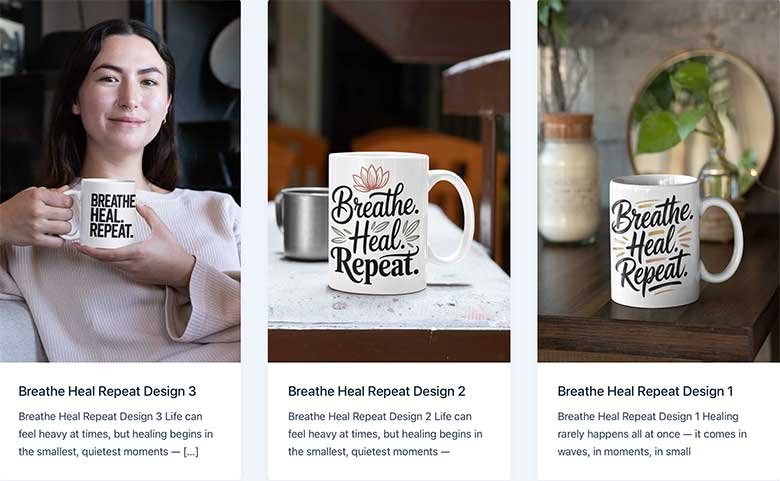
Premier Print Works creates quality prints, mugs, and shirts for people who budget on their own terms. Find a small reminder to keep it simple.
Visit Premier Print Works3. Myth: Every penny has to be tracked
Detailed tracking works well for some people. For many others, it feels exhausting. Simpler methods exist, such as saving first and spending the rest, or watching only a few problem categories.
A plan that covers the big picture can still be very helpful. You can add more detail later, if you ever want it.
The goal is awareness, not perfection.
Pick one or two categories you would most like to watch.
“Most of what keeps people from budgeting is a story, not a fact.”
4. Myth: One slip means the budget failed
Almost everyone goes over budget sometimes. A surprise bill, a tired week, or a forgotten birthday can all throw the numbers off.
A slip simply shows where the plan needs adjusting. Many people find their budget gets more accurate each month, partly because of those slips.
It can help to look at a slip the way a coach looks at a missed shot. What happened, what was learned, and what might work better next time?
Keeping going after a rough month is one of the most useful habits a budgeter can have.
Write one kind sentence to say to yourself after a slip.

Keep Your Plan Simple and Kind
The free Money Reset Workbook gives you a clear page for a budget that includes room for what you love.
Get the Free Workbook5. Myth: Budgeting takes hours every week
Setting up a first plan may take an hour or so. After that, many people spend just ten or fifteen minutes a week checking in.
Automatic bill payments, transfers, and simple tools can cut the time even more. You may also like habits for staying organized.
A short, regular check can be more helpful than a long session once in a while.
Choose a fifteen-minute window each week for a money check-in.
6. Myth: You need a fancy app or special skills
A pencil and paper can work just as well as any app. Basic addition and subtraction are all the math most budgets need.
Apps and spreadsheets can save time for some people. They are helpful tools, but optional ones. If you enjoy technology, they may be fun to explore. If you do not, paper is a perfectly fine place to begin.
Starting with what you already have can remove one more excuse to wait.
Grab a sheet of paper and write your income at the top.
7. Myth: Your budget has to look like everyone else’s
Rules of thumb, like spending a certain share on housing, can be useful starting points. Real lives rarely fit them perfectly. Rent, family size, health needs, and goals all differ.
Your budget can reflect your own values and situation. One person might spend more on travel and less on clothes. Another might do the reverse. For related reading, see ideas for more peace around money.
Comparing your plan to someone else’s can lead to stress that does not help.
Write three things that matter most to you, and look for them in your plan.
8. Myth: Once a budget is made, it stays the same
Life changes, and budgets change with it. A new job, a move, a new baby, or rising prices can all shift your numbers.
Many people review their budget every few months, or after any big change. Updating it keeps it useful.
Prices drift up over time, too. A grocery number that worked well a while ago may feel too small today, and that is a normal reason to update.
Thinking of your budget as a living plan can take away the pressure to get it perfect the first time.
Set a reminder to review your budget in three months.
9. Myth: You can start once things calm down
It can be tempting to wait for a raise, a quieter season, or a fresh month. But there is often another reason to wait just a little longer.
Starting with a rough plan now can teach you more than waiting for the perfect moment. Even a messy first budget gives you real information. Another place to look is making a first monthly budget.
You can always improve it as you go.
Write a rough budget today, even if parts of it are guesses.
Explore Our Top Picks for a Better Life
We have gathered the tools, resources, and products we think are genuinely worth your time, covering mindset, self-care, health, and home. All in one place, hand-picked to support the goals you are working toward.
See Our Top PicksReal Stories, Real Results
Let me share two examples I like to use. Kezia believed that budgeting meant tracking every receipt, so she never started. When she learned she could simply save first and keep an eye on groceries, she gave it a try. She told me that dropping that one myth turned budgeting from a chore into something she actually kept doing.
Daniel thought budgets were only for people in trouble, and he felt embarrassed to need one. Once he saw friends using budgets to plan trips and save for homes, he started his own. He said that thinking of it as a planning tool instead of a punishment changed everything. Both of them said the same thing: letting go of old myths made budgeting feel possible.
A Budget Can Feel Freeing Instead of Strict
Imagine a plan that fits your life, includes the things you enjoy, and takes just a few minutes a week. When something goes wrong, you adjust and move on. Money starts to feel like a tool you control.
That kind of plan often begins by setting aside old myths. Download the free Money Reset Workbook to start a budget that fits you. Your plan can look however you want it to.
Want Ready-Made Tools to Help You Put This Into Action?
Sometimes the fastest way forward is a tool that someone has already built. Browse our hand-picked resources and downloads, chosen to help you take the next step with less guesswork.
Browse Resources and Downloads
Ready to Try Budgeting Your Way?
The free Money Reset Workbook helps you start a flexible, friendly plan today.
Download Free Now
Make Your Space Encouraging
Premier Print Works makes quality prints, mugs, and shirts for people building money confidence. Browse the collection and find what speaks to you today.
Visit Premier Print WorksDisclaimer
The content on this page is for informational and inspirational purposes only. It is not professional financial, investment, tax, legal, insurance, or estate planning advice. The ideas here are general and may not fit every situation. Prices, fees, and account terms vary and change. If money stress feels heavy, a nonprofit credit counselor or 2-1-1 (in the United States) may be able to point you to help. Results vary widely from person to person.
I am not a financial advisor, and I am not a licensed tax, legal, or investment professional. I share this information to help people learn about money and see new options. Please treat it as general information only, and talk with a qualified professional about your own situation before making financial decisions.
The stories of Kezia and Daniel are illustrative composite characters created to bring the content to life. They are not real people. Any resemblance to a real person is purely coincidental.
Some links on this page, including links to Premier Print Works and other resources, are affiliate links. If you make a purchase through one of these links, we may earn a small commission at no extra cost to you. We do not own, produce, or control any affiliate products, and we are not responsible for them — we only own and sell the products offered through our own store, Premier Print Works.
All content on A Self Help Hub is the property of Digital Marketing 215 LLC and is protected by copyright law. No part of this page may be copied, reproduced, republished, distributed, or transmitted in any form without prior written permission from the author.