9 Budgeting Tips for People Who Want to Stop Living Paycheck to Paycheck
Living paycheck to paycheck is stressful, and it often gets blamed on “bad budgeting.” Sometimes that’s fair. But there’s another piece worth knowing about, and it has to do with what happens to money on payday.
Researchers Arna Olafsson and Michaela Pagel studied a large set of real spending and income records from a personal finance app. They found that spending jumps when a paycheck arrives, and this happened for at least half of the people they looked at, across income levels and types of spending. They also found that very few people, under 3 percent, were down to less than a day’s worth of spending in available cash and credit right before payday. In other words, for most people in that study, the trouble wasn’t hitting zero. It was how the money moved through the pay cycle. The researchers suggested many people spend by rule of thumb instead of by a plan.
A few cautions. The data came from people who use a finance app, who may not represent everyone, and it shows a pattern, not a diagnosis. If your income doesn’t cover the basics, no budget can fix that, and I say more about it in the last tip. But if money feels tight all month even though you earn a steady paycheck, these nine tips are a good place to start.

Get a Simple Plan for Every Paycheck
Grab my free Money Reset Workbook. It gives you a place to write your numbers down and plan each pay period.
Get the Free Workbook1. Track your own pay-cycle pattern for one pay period before changing anything
Before you change your habits, find out what they are. For one full pay period, write down what you spend each day. You’re looking for a pattern: do you spend a lot in the first few days after payday, then squeeze through the last week?
A simple notes app or the Money Reset Workbook works fine. Don’t judge what you see. You’re just collecting facts so the next steps fit your real life.
2. Decide what payday money is for before it arrives
If spending on payday often happens by habit, a plan made ahead of time gives you something to follow. The night before payday, write down where each part of the paycheck will go: bills, savings, spending, and anything else that matters to you.
Keep it short enough to fit on a sticky note. When payday comes, you’re following a plan you made on a calm day, not deciding while the money is fresh in your account.
3. Pay yourself first, even if it’s a small amount
Set up an automatic transfer to savings for the day your paycheck lands. Even $10 or $20 counts. The point is to move money before it has a chance to disappear into daily spending.
If the amount feels too small to matter, remember that you’re building a habit as much as a balance. You can raise it later, when you have room.

A Small Reminder for Payday
I make prints, mugs, and shirts at Premier Print Works. Some people like a small reminder where they can see it.
Visit Premier Print Works4. Split your paycheck into a bills bucket and a spending bucket
When bills and everyday spending sit in the same account, the balance looks bigger than what you can actually spend. Money that’s already promised to rent and utilities feels like spending money until the bills hit.
Try a second account or a separate spending card. On payday, move your bill money to one place and your spending money to the other. Whatever is in the spending bucket is truly yours to use.
Spending tends to jump when the paycheck arrives, even for people who aren’t out of cash.
5. Turn your spending money into a weekly allowance
If money goes fast right after payday, a weekly allowance spreads it out. Take the amount in your spending bucket and divide it by the number of weeks until your next paycheck. Move only that week’s amount to the card or cash you use.
When the week’s money is gone, it’s gone until the next Monday. It takes a little discipline at first, but it stops the end-of-cycle squeeze.
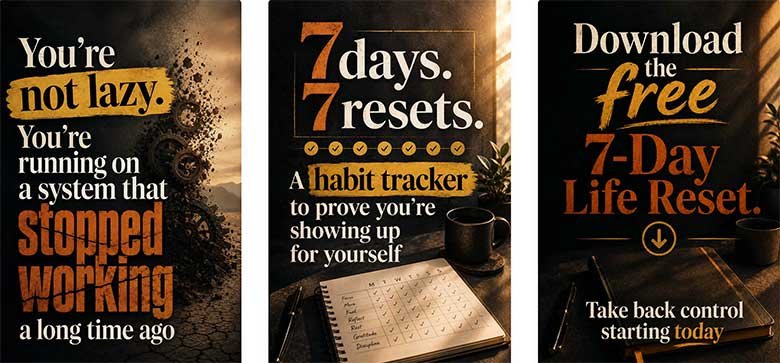
Take One Week to Reset Your Money Habits
My free 7-Day Life Reset gives you one simple prompt a day for a week, a good way to look honestly at how you handle money.
Start the Free Reset6. Move bill due dates closer to payday
Bills that land right before you get paid can drain an account at the worst time. Many companies will let you pick a different due date if you ask, including many credit card issuers and some utilities and insurers.
Call or check your online account for each bill. Ask for a due date a few days after your paycheck arrives. It’s a small change that can smooth out your whole month.
7. Add a 24-hour pause for non-essential purchases right after payday
The days after payday can bring a feeling that you have room to spend. A short waiting rule slows the urge down. If you want something that isn’t a need, put it on a list and wait 24 hours.
You’ll often find you still want it, and can buy it without guilt. Other times the urge passes, and the money stays where you planned it.
8. Build a small buffer, one step at a time
A buffer keeps one surprise from turning into a crisis. Start small, like the cost of a few days of basic expenses, then work toward one full paycheck.
Keep the buffer in a separate savings account so it isn’t part of your everyday balance. Every time you add to it, you’re building breathing room.
9. Look at both sides: fixed costs and income
Budgeting can only work with the money you have. If you’ve tried the tips above and the basics still don’t fit, that isn’t a personal failure. Look at your biggest fixed costs, such as housing, transportation, and insurance, and see if any can be lowered. Then think about ways to raise your income, like asking for a raise, picking up extra hours, or a side project.
If you’re struggling to cover essentials, help may be available. In the U.S., you can dial 211 to be connected with local assistance programs. Asking for help is a smart money move, not a weakness.
Explore Our Top Picks for a Better Life
I put together a list of tools and products I think are worth your money, covering finances, mindset, health, and home.
See Our Top PicksTwo Ways Paychecks Felt Different
I know a woman named Kezia who always felt broke by the third week of the month. When she tracked her spending, she saw that nearly half of it happened in the first five days after payday. She moved her spending money to a separate account and started a weekly allowance. She told me the last week of the month finally stopped feeling like a scramble.
I also think about a guy named Daniel who had three bills due the day before he got paid. He called each company and moved the due dates to just after payday. He said nothing else about his budget changed, yet his checking account stopped hitting zero, and the stress eased with it.
Picture a Paycheck With a Plan
Imagine the night before payday. You already know where each part of the money is going. Bills are covered, a little goes to savings, and your weekly spending is set. The day itself is calm because the decisions are made.
Start with one tip this week. Track your spending, or move one due date. Get the free Money Reset Workbook to plan your next paycheck on paper.
Want to Go Further?
I’m building out some deeper, paid resources for people who want more than a single article can cover. They’re not live yet, but you can see everything I currently have ready for you, free and otherwise, on my Top Picks page.
See What’s Available
Ready to Plan Your Next Paycheck?
My free Money Reset Workbook walks you through the process step by step, with room to write your own numbers.
Download Free Now
A Small Reminder for Payday
Take a look at Premier Print Works for prints, mugs, and shirts made for people who like a small daily reminder.
Visit Premier Print WorksDisclaimer
This page is for information only. It is not financial, tax, legal, insurance, investment, or estate planning advice. Everyone’s finances are different, so consider speaking with a qualified professional, such as a certified financial planner or a nonprofit credit counselor, before making major money decisions. The research referenced here comes from the published work of Arna Olafsson and Michaela Pagel, “The Liquid Hand-to-Mouth: Evidence from Personal Finance Management Software” (Review of Financial Studies, 2018), summarized here in plain language. It used spending and income records from users of a personal finance app, whose liquidity measure includes available credit, so it may not represent everyone and it shows patterns, not guarantees. Results vary from person to person.
Kezia and Daniel are made-up characters used to bring this content to life. They are not real people.
Some links on this page, including links to Premier Print Works, are affiliate links. If you buy something through one, we may earn a small commission at no extra cost to you. We only own and sell products through our own store, Premier Print Works.
All content on A Self Help Hub belongs to Digital Marketing 215 LLC and is protected by copyright law. No part of this page may be copied or reused without written permission.