9 Confidence Tips That Help You Trust Yourself More
The self-trust that produces the genuine confidence is not the bravado that insists nothing is wrong. It is the deep, quiet knowledge that even when things go wrong, the self navigating them is capable of the navigation. That even when the outcome is uncertain, the self making the decision is drawing from something real and worth drawing from. That even when the doubt is loudest, there is something underneath the doubt that knows more than the doubt is crediting it with. This is the self-trust that the nine tips in this article are building toward — not the performance of certainty but the genuine relationship with the inner knowing that has been there all along, often quieted by the accumulated doubt of the hard seasons.
The self-trust is built the same way any trust is built: from the evidence. From the small decisions made and honored. From the inner voice listened to and respected rather than overridden by the louder external voices. From the kept commitments that prove to the self that the self can be counted on. These nine tips are the specific practices that produce that evidence. Find the one most available to the current state of the self-trust. Begin there. The trust is rebuilt from exactly where you are, one deliberate step at a time.

Free Download: The 9 Daily Habits Checklist
Self-trust is built from the consistent daily habits that prove to yourself that you can be counted on. The free 9 Daily Habits Checklist gives you nine proven daily practices to build the daily foundation from which the genuine confidence grows. Download it free today.
Get the Free Habits Checklist1. Start Making Small Decisions Without Asking for Reassurance
“Self trust is the first secret of success — build it deliberately and protect it fiercely.”
The habit of seeking reassurance before every decision is the habit that quietly communicates to the self — through the practice of it — that the self’s own judgment cannot be trusted without external validation. Each reassurance-seeking is a small withdrawal from the self-trust account and a deposit into the belief that the external opinion is more reliable than the internal one. The reassurance-seeking does not produce the self-trust. It substitutes for it. And the substitution, practiced consistently, erodes the very capacity it was supposed to be replacing.
Begin making the small decisions without the reassurance. The restaurant choice. The outfit decision. The word selection in the email that has been re-read four times looking for the confirmation that it is right. The small decisions that the self is genuinely capable of making without external input — make them. From the inner knowing. Without the checking. Each small decision made from the inner knowing and not collapsed by the immediate external validation is a small piece of evidence deposited in the self-trust account. The account grows from these small deposits. The self-trust grows from the account. Start with the smallest available decision. Make it from the inside. Let it stand.
“You already know more than you give yourself credit for — start trusting that.”
2. Listen to the Inner Voice Before the Outer Voices Get There First
“Self trust is the first secret of success — build it deliberately and protect it fiercely.”
The inner voice — the quiet knowing that is present before the external input arrives to shape the thinking — is the most direct available access to the self-trust. The problem is timing: the outer voices almost always arrive before the inner one has had the chance to fully form. The opinion of the first person consulted. The social media comment. The cultural message about what someone in this specific situation should be feeling, doing, or wanting. Each of these arrives quickly and loudly, and the inner voice — which speaks quietly and requires the brief stillness to be heard — is frequently drowned out before it has the chance to contribute its knowing to the decision.
Practice the inner voice first habit. Before the phone is checked, before the first person is consulted, before the external input arrives — take the thirty seconds to check with the inner voice. What do I actually think about this? What am I actually feeling before I know what I am supposed to feel? What does the quiet knowing underneath the noise say before the noise arrives? This habit does not require the inner voice to always be right or always to be followed. It requires only the consistent practice of hearing it before it is overridden — the practice that, over time, strengthens the inner voice and builds the relationship with it that is the self-trust being sought. Hear the voice first. The trusting of it follows from the hearing.
“You already know more than you give yourself credit for — start trusting that.”
3. Stop Over-Explaining Your Decisions — They Do Not Need a Defense
“Self trust is the first secret of success — build it deliberately and protect it fiercely.”
The over-explanation of decisions — the lengthy justification of a personal choice to people who did not ask for one, the preemptive defense of the direction being taken before any challenge has been offered — is the self-trust deficit made visible. The person who trusts their own judgment does not need the extensive external validation of the decision they have made. The person who over-explains is seeking the validation through the explanation rather than finding it in the internal conviction that the decision was sound. The over-explanation is the attempt to convince others in order to convince the self — and it rarely produces the self-conviction it was designed for, because the conviction it generates is dependent on the other person’s agreement rather than rooted in the internal knowing.
Practice the clean decision. The choice stated simply without the lengthy defense. The preference expressed without the apologetic preamble that performs the uncertainty the self does not actually feel. The direction taken without the detailed justification provided to every person who might observe it. The clean decision is the practice of trusting that the decision is good enough to stand without the elaborate supporting argument. Most decisions are. The decisions that need the over-explanation most are often the decisions that need the honest inner examination rather than the additional external defense. Know the difference. Practice the clean statement. Let the decision stand on its own.

Visit Premier Print Works
Keep the reminder that self trust is the first secret of success — build it deliberately and protect it fiercely — visible where the daily confidence-building work happens. Premier Print Works offers prints, mugs, and art for the person building the genuine self-trust from the inside out. Visit the shop today.
Visit Premier Print WorksHow Cressida Rebuilt Her Self-Trust After Years of Outsourcing Every Important Decision to Someone Else
Cressida had not made a significant decision on her own in several years. This was not the dramatic discovery she found disturbing but the quiet one — the realization, arrived at gradually, that every important choice of the previous few years had been made after extensive consultation with at least two other people and that the consultation had not been the gathering of useful input but the outsourcing of the responsibility for the choice entirely. She had been finding the decision-making exhausting because it was not actually happening inside her. It was happening in the opinions of the people she consulted, to which she gave the final word over the inner knowing she was increasingly unable to hear over the volume of everyone else’s certainty.
The consequence of this pattern had been the gradual erosion of the access to her own knowing. She would ask herself what she thought and find the answer slow to arrive — not because the knowing was not there but because it had been so consistently overridden by the external input that the habit of reaching for the external input had become the first response and the internal knowing had gotten quieter from the consistent not-being-asked. The self-trust deficit was not the original condition. It was the product of the practice of not trusting the self.
She started with the smallest available decisions and made them without asking anyone. What she wanted for lunch. What the email said without the fourth revision. What she thought about the professional situation before anyone else’s opinion arrived. The small decisions felt surprisingly difficult at first — not because they were hard but because the habit of reaching for the external validation had become so automatic that the simple decision from the inside felt unfamiliar rather than natural. Over the months of the practice the inner voice became easier to hear again — because it was being asked again, consistently, in the small moments before the external input arrived. The larger decisions gradually followed the same pattern. Not perfectly and not always right. But from the inside, where the self-trust was being rebuilt from the practice of making decisions that felt genuinely hers.
4. Recognize When the Doubt Is Productive and When It Is Just Noise
“You already know more than you give yourself credit for — start trusting that.”
Not all doubt is the self-trust working. Some doubt is the productive signal — the genuine concern about a real risk, the honest assessment of the insufficient preparation, the specific warning that the inner knowing is offering about the direction being considered. This doubt deserves to be heard and engaged with. Other doubt is the noise — the habitual second-guessing that activates from the anxiety rather than from the accurate assessment, the catastrophizing about the outcome that the evidence does not support, the voice that says this probably will not work without any specific reason beyond the general fear. This doubt does not deserve the same hearing. It deserves the recognition that it is the noise, not the signal, and the decision to move forward without being governed by it.
Build the practice of distinguishing the two. When the doubt arrives, ask: is this doubt pointing to something specific that deserves addressing before I proceed? Or is this the habitual doubt that arrives at every decision regardless of its actual risk and quality? The productive doubt names something specific. The noise doubt is general and escalating without new information. The self-trust that uses the productive doubt and moves past the noise doubt is the self-trust that makes better decisions than the self-trust that either ignores all doubt or is paralyzed by all of it. Know the difference. The knowing is itself the act of trusting the self enough to assess the doubt rather than simply being governed by it.
“Self trust is the first secret of success — build it deliberately and protect it fiercely.”
5. Make the Decision and Give It the Chance to Be Right — Most Decisions Are Reversible
“You already know more than you give yourself credit for — start trusting that.”
The indecision that waits for the perfect available information before making the choice is the indecision that waits indefinitely — because the perfect information is almost never available before the decision is made, and the waiting does not produce the certainty it was designed to achieve. The decision that is made from the best available information, given the trust, and allowed the space and the time to reveal whether it was right — that decision produces the result, the learning, and the further evidence for or against the self-trust that the decision required to be made. The undecided perpetual wait produces none of these things.
Make the decision. From the best available information. Trust it enough to give it the chance to be right before assuming it was wrong. Most decisions that turn out to be wrong are correctable — the direction adjusted, the approach revised, the resource reallocated. The very few that are not correctable are the ones that deserve the additional deliberation before they are made. The rest — the many ordinary significant decisions of the daily life — are decisions that deserve the making and the trusting rather than the perpetual second-guessing that never fully commits to any direction and therefore never fully benefits from any one. Make the decision. Give it the chance. The self-trust that the making builds is worth more than the certainty that the waiting was seeking.
“Self trust is the first secret of success — build it deliberately and protect it fiercely.”
6. Separate the Outcome From the Quality of the Decision — Not Every Good Decision Produces a Good Outcome
“You already know more than you give yourself credit for — start trusting that.”
One of the most reliable destroyers of self-trust is the habit of evaluating the quality of the decision by the quality of the outcome — of concluding that the decision was wrong because the outcome was bad, and therefore that the self-trust that made the decision was unjustified. This reasoning is the logical error that the honest self-trust evaluation corrects. A good decision made with the best available information can produce a bad outcome because the world contains factors outside the decision-maker’s knowledge and control. A bad decision can produce a good outcome from the same outside factors working favorably rather than unfavorably. The quality of the decision and the quality of the outcome are not the same thing.
Evaluate the self-trust by the quality of the decision-making process rather than only by the outcome. Was the decision made with genuine attention to the available information? Was the inner knowing consulted alongside the external input? Were the specific risks identified and honestly assessed? If the process was sound and the outcome was nevertheless unfavorable, the self-trust that made the decision was not misplaced. The outcome was unfavorable. The decision was reasonable. The learning is in the specific external factor that produced the unfavorable outcome rather than in the conclusion that the self cannot be trusted with significant decisions. Protect the self-trust from the retrospective revision that the bad outcome invites. Evaluate the decision and the outcome separately. The self-trust that survives this honest evaluation is the self-trust worth protecting.
“Self trust is the first secret of success — build it deliberately and protect it fiercely.”

Free Download: The Self-Care Starter Kit
Building the self-trust that produces genuine confidence requires the daily self-care that keeps you grounded and genuinely connected to the inner knowing the trust is built from. The free Self-Care Starter Kit gives you simple daily practices for your mind, your body, and your inner life. Download it free today.
Get the Free Self-Care Starter Kit7. Learn From the Mistakes Without Using Them as Evidence Against Yourself
“You already know more than you give yourself credit for — start trusting that.”
The mistake used as evidence against the self — as the proof that the self-trust was misplaced and the self-doubt was correct all along — is the mistake that compounds the original loss with the additional cost of the eroded self-trust. The same mistake used as information — as the specific learning about the specific gap in the judgment, the knowledge, or the approach that produced the specific mistake — is the mistake that advances the development without the additional cost. The difference is not in the mistake itself but in what is made of it. The self-trust that learns from mistakes without using them as indictments of the self is the self-trust that becomes more accurate over time rather than more diminished.
After the mistake, ask the learning question before the judgment question. What specifically did I miss or misjudge that produced this result? What would I do differently from the specific insight the mistake has provided? What does this mistake reveal about the gap in knowledge or approach that needs addressing? These questions produce the learning. Then put the mistake away. Not in the pretense that it did not happen but in the honest filing of it as the specific learning it has already provided. Do not carry it forward as the ongoing evidence against the self. The evidence the self-trust needs is not the record of every mistake made — it is the evidence of the improvement made from the learning the mistakes produced. Build that record. The self-trust grows from it.
“Self trust is the first secret of success — build it deliberately and protect it fiercely.”

Rebuilding Self-Trust Through Recovery? This Is for You.
For some people, rebuilding the self-trust these tips describe is one of the most important and ongoing parts of the recovery journey — the daily practice of becoming the person who can be trusted by themselves. If that is where you are, the free Sober Survival Guide offers honest daily support. Download it free.
Get the Free Sober Survival Guide8. Surround Yourself With People Who Amplify Your Own Knowing Rather Than Replace It
“You already know more than you give yourself credit for — start trusting that.”
The social environment shapes the self-trust in ways that are often invisible because they operate through the accumulated effect of the small daily interactions rather than through the single dramatic event. The person who regularly spends time with people who amplify the inner knowing — who ask questions that help it become clearer rather than offering opinions that override it, who acknowledge the judgment of the other person rather than consistently substituting their own — has a self-trust that is regularly reinforced rather than regularly overridden. The person whose social environment consistently produces the opposite experience has a self-trust that requires daily reconstruction against the daily erosion.
Notice the effect that the primary relationships have on the self-trust. Not whether the people in them are smart or well-intentioned — whether their presence and their engagement consistently leave the self-trust in better or worse shape than they found it. The relationship that consistently produces the feeling of knowing less, trusting the self less, and needing the other person’s input more is the relationship that is working against the self-trust being built. This is not always the malicious relationship — it can be the well-meaning one that has simply established a dynamic of dependence rather than amplification. The distinction matters. The self-trust is built in the company of the people who make the inner voice louder rather than quieter. Seek those people. Stay near them. The self-trust built in their company is the more durable kind.
“Self trust is the first secret of success — build it deliberately and protect it fiercely.”
9. Look at the Evidence of What You Have Already Navigated — It Knows More Than the Doubt Does
“You already know more than you give yourself credit for — start trusting that.”
The self-trust is built from the evidence of the self that has already been demonstrated — the navigation of the hard things, the decision made in the difficult circumstance, the continuing through the experience that demanded more than the comfortable version of the self would have been able to offer. This evidence exists in every life that has been lived with any degree of genuine difficulty. It is the most direct available proof that the self navigating the current situation is a self that has navigated comparable situations before and survived them. The doubt does not have access to this evidence. The honest look at the record does.
Make the evidence list. Not the accomplishments list that performs competence for an external audience. The honest list of the specifically hard things already navigated — the situations that required the self to be more capable than the self believed it was before the situation required it. The relationship that ended and was survived. The professional setback that was recovered from. The health challenge that was endured. The grief that was carried and that the life continued through. Each of these is the evidence of a self that knows more about navigating difficulty than the doubt is crediting it with. Read the list. Let it speak to the doubt with the authority that the evidence commands. The self that navigated all of that is the self that is navigating this. That self is more capable than the current doubt suggests. The evidence says so. Trust the evidence.
“You already know more than you give yourself credit for — start trusting that.”
How Lorne Rebuilt His Self-Trust by Doing the One Thing He Had Been Avoiding — Looking at What He Had Already Survived
Lorne had a pattern that he recognized clearly but had not connected to the self-trust problem at its center: when facing new challenges or significant decisions he had a strong pull toward the evidence of his limitations rather than the evidence of his capabilities. His mind, presented with a new situation requiring genuine capability, consistently surfaced the catalog of the times the capability had been insufficient rather than the catalog of the times it had been more than enough. The doubt was not baseless — it drew from real events. It was selective — it drew consistently from the same half of the evidence while ignoring the other half entirely.
A mentor who had been watching this pattern for several years asked him to do an exercise he initially dismissed as too simple to be useful: write down the ten hardest things he had already navigated in his life. Not the accomplishments. The hard things — the situations that had required him to be more capable than he believed he was before they required it. He expected the list to be short. It was not. Ten items filled quickly and there were more he had to leave off not from the absence of the hard things navigated but from the limitation of the space. The partner he had lost and continued through. The professional failure he had rebuilt from. The family health crisis he had navigated while maintaining his own life. The period of genuine financial difficulty he had managed through without collapsing. The creative rejection that had preceded the work he was most proud of.
He had not been accessing this evidence when the doubt arrived about the new situation. He had been accessing the failures and the limitations — which were also real but were only half the record. The record, seen completely, showed a self that had consistently navigated situations requiring genuine capability even when the capability had not felt available before the navigation began. That was not the record of a person whose self-trust was misplaced. That was the record of a person who knew more than the doubt was crediting. He made the list permanent and returned to it when the doubt arrived with the half-evidence that was undermining the trust the full evidence supported. The full evidence changed the internal case the doubt was making. Not immediately or completely. Enough to take the next step from a different starting place than the doubt had been providing.
The Self-Trust That Makes the Confidence Feel Natural Is Already Being Built From Every Tip Practiced
Make the small decisions without the reassurance. Hear the inner voice before the outer voices arrive. Stop over-explaining the decisions that do not need a defense. Know the productive doubt from the noise. Make the decision and give it the chance to be right. Separate the outcome from the quality of the decision. Learn from the mistakes without using them as evidence against the self. Choose the company that amplifies the knowing rather than replaces it. Look at the evidence of what has already been navigated — it knows more than the doubt does. Nine tips. The self-trust being built from these practices is the kind that holds — not because the doubt disappears but because the evidence that answers it is finally being given the same weight. You already know more than you give yourself credit for. Start trusting that. Today.

Free Download: The 9 Daily Habits Checklist
Keep the daily self-trust building consistent with the habits that prove to yourself every day that you can be counted on. The free 9 Daily Habits Checklist gives you the daily structure that makes the genuine confidence feel natural over time. Download it free today.
Get the Free Habits ChecklistOur Top Picks for a Better Life
We have gathered our favorite tools, resources, and recommendations for building genuine self-trust, developing the daily habits that keep the inner knowing accessible and the confidence growing, and creating the inner foundation from which the authentic confidence that does not require the performance grows naturally. Everything we trust enough to share, all in one place.
See Our Top Picks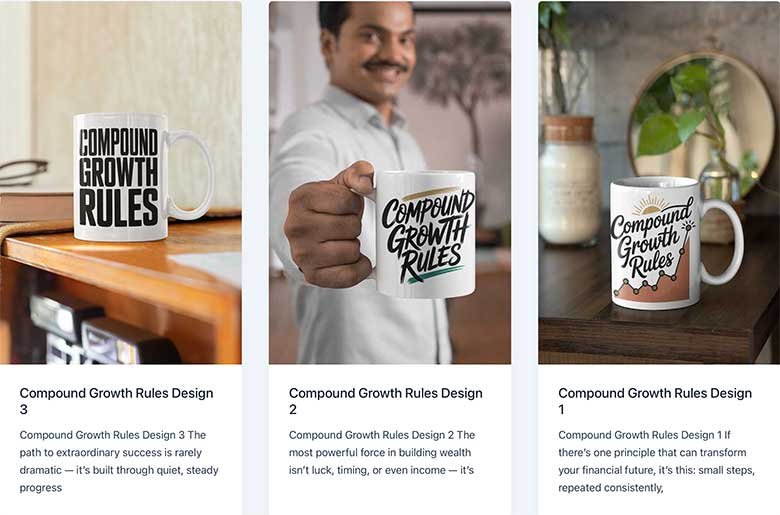
Self-Trust Prints at Premier Print Works
Keep the reminder that you already know more than you give yourself credit for — start trusting that — visible where the daily self-trust building work happens. Visit Premier Print Works for prints, mugs, and art for the person building the genuine confidence from the inside out.
Visit Premier Print WorksDisclaimer
The content on A Self Help Hub is for informational and inspirational purposes only. The confidence and self-trust tips and personal stories in this article offer general support for everyday personal development, inner growth, and self-awareness. They are not professional mental health advice, psychological counseling, trauma therapy, or any form of clinical treatment.
Everyone’s experience with self-trust, confidence, and personal history is deeply individual. If you are dealing with significant anxiety, depression, trauma, the effects of experiences that have damaged your capacity to trust yourself, or other mental health conditions affecting your daily functioning and sense of self, please speak with a qualified mental health professional. General self-help content is not a substitute for professional care. These tips are intended as supportive practices alongside — not in place of — professional support where it is needed. If you are in an unsafe situation, please reach out to a trusted person or professional resource right away. Your safety comes first.
The stories and composite characters in this article, including Cressida and Lorne, are illustrative. They are based on common experiences and created to make the content relatable. They are not real people. Any resemblance to a specific person is coincidental.
Some links on this site, including links to Premier Print Works, may be affiliate links. A Self Help Hub may earn a small commission at no extra cost to you. We only recommend things we genuinely believe in.
The Sober Survival Guide linked in this article is general supportive information only. It is not a substitute for professional addiction treatment or medical care. If you or someone you love is struggling with addiction, please seek help from a qualified professional. Recovery is possible.
If you are in a mental health crisis or thinking about self-harm, please do not rely on this content for support. Contact emergency services or a crisis helpline right away. You deserve real help and it is available to you now.
All content on A Self Help Hub is copyrighted. You may not copy or republish it without written permission. By reading this article you agree to this disclaimer.