9 Daily Positive Affirmations That Help You Overcome Self-Doubt
You are about to start something new, and a small voice says you are not ready.
I know that voice well. For a long time, I tried to shout it down with big, bold affirmations that I did not believe. They sounded fine in a mirror, and they fell apart the moment real doubt arrived. What helped was something quieter. I started using sentences that were honest enough to be partly true, and I saved them for the specific moments when doubt tends to show up.
These nine affirmations are organized that way. Each one pairs with a moment, such as before something new, after a mistake, or late at night. They are original words written for this site. Read each one slowly, keep the ones that feel at least a little true, and pair them with one small action. Words help most when you act on them.

Build the Gentle Daily Care Behind Steady Confidence
Download the free Self-Care Starter Kit and get simple, practical tools for building a daily rhythm that makes kind words easier to believe.
Get the Free Starter Kit1. When you are about to begin something new, remind yourself that readiness comes from starting.
“I may not feel ready yet, and I can begin anyway.”
Many of us wait to feel ready. The trouble is that readiness often arrives after you begin, not before. A new job, a new class, or a new project always includes a stretch of feeling unsure.
This affirmation does not pretend that you feel ready. It names the doubt and points to the next step. Say it slowly before you start, and then take the first small action.
If your doubt is loud, say it twice.
Say this affirmation before your next new beginning, and take the first step within ten minutes.
2. After a mistake, remind yourself that one error gives you information, and it says little about your worth.
“This mistake is information. I can learn from it and keep going.”
Self-doubt tends to grow after a mistake. A single slip can feel like proof of everything we fear about ourselves. A kinder and more accurate view is that a mistake tells you something to adjust.
This affirmation keeps your mistakes the right size. You still own them, and you refuse to let one moment define you.
After you say it, ask yourself what you can learn and what you will do differently next time.
After your next mistake, say this affirmation, and write down one thing you will change.
Keep an Honest Word of Encouragement in View
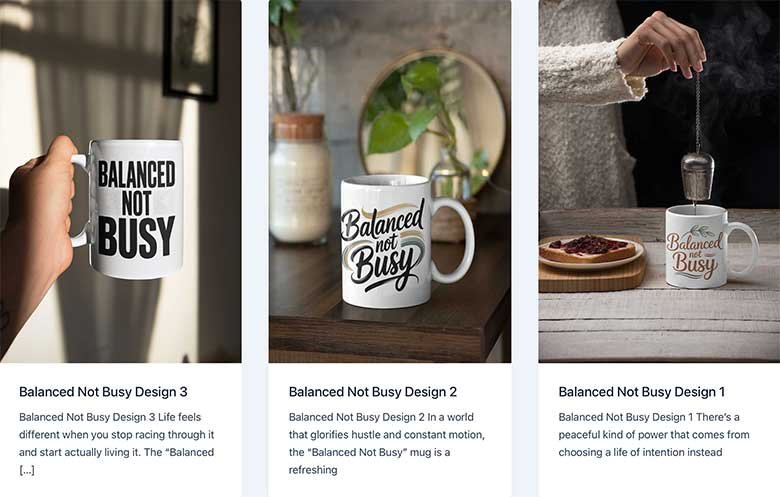
Premier Print Works creates quality prints, mugs, and shirts for people growing in self-trust. Find a believable reminder for the moments doubt shows up.
Visit Premier Print Works3. When you catch yourself comparing, bring your attention back to your own path.
“Other people’s progress does not erase mine. I am on my own path.”
Comparison is one of the most common triggers for self-doubt. It is easy to measure your behind-the-scenes against someone else’s highlights. Other people’s progress can make your own feel small.
This affirmation turns your attention back to your own road. It does not deny that others are ahead. It reminds you that your path has its own timing.
Use it when you scroll, when you hear someone’s good news, or when you feel left behind.
The next time you start comparing, say this affirmation, and then name one thing you have done recently that you are proud of.
4. When someone doubts you, remember that their doubt is not the whole picture.
“Their doubt is one opinion. I can look at the evidence of what I have done.”
Sometimes the doubt comes from other people. A comment, a raised eyebrow, or a lack of encouragement can sink into your own thoughts. It is hard not to take it in.
This affirmation helps you hold the comment at a distance. You can listen to feedback that is useful, and let go of the parts that are not. Their view is one view.
It also reminds you to look at the evidence of what you can do.
When someone doubts you, say this affirmation, and write down three things that show what you are capable of.

Back Your Words Up With Steady Morning Habits
The free 9 Daily Habits guide gives you nine simple morning practices that give your affirmations something real to stand on.
Get the Free Guide5. When you want to quit, remind yourself that wanting to quit is part of hard things.
“Wanting to quit is part of a hard stretch. I can take one more small step.”
Almost every worthwhile effort has a moment when quitting looks attractive. The excitement fades, the work gets heavy, and doubt arrives. That moment does not mean you chose wrong.
This affirmation gives you a gentle way to pause. You do not have to decide forever. You only have to decide what to do next.
Often, resting and then taking one small step is enough to move through the low point.
The next time you want to quit, say this affirmation, rest if you need to, and then do one small thing toward your goal.
6. Before you speak up, remind yourself that your voice is allowed in the room.
“My voice belongs here, even when it shakes.”
Doubt often shows up right before we speak. We wonder whether we have anything worth saying, or whether we will sound foolish. Those thoughts can keep good ideas locked inside.
This affirmation reminds you that you are allowed to contribute. It does not promise that you will be perfect. It simply gives you permission.
Pair it with a short breath, and with one clear sentence prepared in advance.
Before your next meeting or conversation, say this affirmation, take a slow breath, and share one thought.
7. When you feel like a fraud, remind yourself of the real steps that brought you here.
“I got here through real steps, and I can name them.”
Many people secretly worry that they do not deserve their place. They think they have fooled everyone, and that someone will find out. This feeling can show up even in people who are very capable.
A helpful response is to look at the facts. You studied, practiced, worked, and learned. This affirmation points to the real steps behind where you are.
Write down a few of those steps, and read them when the feeling returns.
When you feel like a fraud, say this affirmation, and list five real things you did to get where you are.
8. When you feel behind, remind yourself that timing looks different for everyone.
“I am not late. I am on my own timeline, and I can take the next step.”
Feeling behind is a quiet form of self-doubt. We compare ourselves to some imaginary schedule, such as where we should be by a certain age. It can make good progress feel like failure.
There is no single timeline. People start late, change direction, and take detours. This affirmation reminds you that your own pace is allowed.
Use it to come back to the next step in front of you.
When you feel behind, say this affirmation, and choose one small action for today.
9. At night, when doubts get loud, remind yourself that tomorrow can have a fresh start.
“I did what I could today. I can rest now, and tomorrow can have its turn.”
Doubts often grow louder in the quiet hours. A tired mind tends to replay mistakes and worry about the future. Judging yourself late at night rarely gives a fair view.
This affirmation gives you permission to set the worry down until morning. You can write down anything you need to remember, and let it rest.
Many things look smaller after sleep.
Tonight, say this affirmation, write down any worry for tomorrow, and close the notebook.
Explore Our Top Picks for a Better Life
We have gathered the tools, resources, and products we think are genuinely worth your time, covering mindset, self-care, health, and home. All in one place, hand-picked to support the steady self-trust you are building.
See Our Top PicksReal Stories, Real Results
Let me share two examples I like to use. Kezia used to try big, bright affirmations, and they never stuck. When she switched to honest ones tied to specific moments, like before a presentation and after a mistake, something changed. She told me that saying, “I may not feel ready yet, and I can begin anyway,” felt like the first affirmation that did not argue with her.
Daniel’s doubts hit hardest at night. He began using the evening affirmation and writing his worries on paper before bed. In the morning, the worries looked smaller, and he had a list of actions instead of a swirl of fear. Both of them said the same thing: affirmations helped most when they were honest and tied to a small action.
Honest Words, Used at the Right Moments, Can Soften Self-Doubt
Picture a day when doubt shows up, and you have something kind and true to say back. You name the feeling, say a sentence you believe, and take one small step. The doubt may not vanish. It just stops running the day.
Choose two or three affirmations from this list, and pair each with a moment you know is hard. Download the free Self-Care Starter Kit to give your days a gentle rhythm. Words help most when you back them with small actions.
Want Ready-Made Tools to Help You Put This Into Action?
Sometimes the fastest way forward is a tool that someone has already built. Browse our hand-picked resources and downloads, chosen to help you take the next step with less guesswork.
Browse Resources and Downloads
Ready to Meet Self-Doubt With Kinder, Truer Words?
The free Self-Care Starter Kit gives you simple, practical tools to build a daily rhythm that supports your self-trust.
Download Free Now
Fill Your Space With Words You Can Believe
Premier Print Works makes quality prints, mugs, and shirts for people growing in self-trust. Browse the collection and find what speaks to your journey today.
Visit Premier Print WorksDisclaimer
The content on this page is for informational and inspirational purposes only. It is not professional mental health or medical advice of any kind. The affirmations on this page are original words written for A Self Help Hub and are not attributed to any real person. If you are experiencing persistent self-doubt, low mood, anxiety, or other mental health challenges, please consider seeking support from a qualified mental health professional. Results and experiences vary significantly from person to person.
The stories of Kezia and Daniel are illustrative composite characters created to bring the content to life. They are not real people. Any resemblance to a real person is purely coincidental.
Some links on this page, including links to Premier Print Works and other resources, are affiliate links. If you make a purchase through one of these links, we may earn a small commission at no extra cost to you. We do not own, produce, or control any affiliate products, and we are not responsible for them — we only own and sell the products offered through our own store, Premier Print Works.
All content on A Self Help Hub is the property of Digital Marketing 215 LLC and is protected by copyright law. No part of this page may be copied, reproduced, republished, distributed, or transmitted in any form without prior written permission from the author.