9 Self Care Habits That Help You Feel More Balanced
Balance does not look the way most people imagine it. It is not a perfect schedule where every area of your life gets exactly the right amount of attention and nothing ever tips. That version of balance is a myth and chasing it usually produces more stress than the imbalance it was supposed to solve.
Real balance is simpler. It is the practice of noticing when you have drifted from yourself and coming back. Again and again. Through small daily habits that keep you grounded when life gets heavy on one side. These nine habits are how that returning happens. Not one dramatic reset. Nine small daily practices that add up to a life that feels steady more often than it feels sideways. Start with the one that feels most needed today.

Free Download: The Self-Care Starter Kit
Feeling more balanced starts with the daily self-care practices that keep you grounded. The free Self-Care Starter Kit gives you simple sustainable tools for your mind, your body, and your inner life. Download it free today.
Get the Free Self-Care Starter Kit1. Check In With Yourself Before You Check In With Anyone Else
“Balance is not perfection — it is the ongoing practice of coming back to yourself.”
The habit of checking your phone before you check in with yourself sets a tone for the whole day. You start the day already oriented toward everyone else’s world before you have even found your own footing. And the day built from that starting point often ends with the feeling that you were busy but somehow missed yourself entirely.
Take five minutes before the phone each morning to ask yourself a simple question. How am I actually doing right now? Not how should I be doing. Not how I will need to be doing once the day starts. How am I right now, honestly? That check-in is the beginning of the daily balance practice. You cannot tend to what you have not noticed. Notice yourself first.
“You cannot feel balanced on the outside until you tend to what is unbalanced within.”
2. Protect One Non-Negotiable Rest Period Each Day
“Balance is not perfection — it is the ongoing practice of coming back to yourself.”
A rest period is not the same as scrolling. Scrolling is stimulation wearing the clothes of rest. A real rest period is a window of time where the input stops and the nervous system gets a genuine break from processing. Even fifteen minutes of real rest in the middle of a busy day changes the quality of the hours that follow it significantly.
Pick a time. Protect it. Not sometimes. Every day. Put it in the calendar if you have to. Close the door if you can. Turn the notifications off. Fifteen minutes of actual quiet — eyes closed, phone away, not planning the rest of the day. The nervous system that gets genuine rest in the middle of the day is the nervous system that handles the second half of the day with more capacity and more patience. Build the rest. Protect it like the priority it actually is.
“You cannot feel balanced on the outside until you tend to what is unbalanced within.”
3. Name What Is Actually Off Instead of Pushing Through It
“Balance is not perfection — it is the ongoing practice of coming back to yourself.”
Most people push through the feeling that something is off rather than stopping to name what it is. The pushing through is efficient in the short term. It keeps things moving. But the unnamed off thing does not go away. It accumulates. And the accumulated unnamed things are what turn a manageable week into an overwhelming one.
Build the habit of naming it. Not to fix it immediately. Just to see it clearly. Write it in a journal. Say it out loud to yourself. Text it to a trusted person. Something is off with my energy today and I think it is this. Something feels heavy and it started when this happened. The naming is the first act of tending to yourself honestly. And tending to yourself honestly is the core of the balance practice.

Visit Premier Print Works
Keep the reminder that balance is the ongoing practice of coming back to yourself visible where your daily self-care happens. Premier Print Works offers prints, mugs, and art for the person building a steadier, more balanced daily life. Visit the shop today.
Visit Premier Print WorksHow Cressida Found Balance by Stopping the Search for It and Building the Return Instead
Cressida had been chasing balance for three years. She had tried the elaborate morning routine and the color-coded calendar and the time-blocking system and the apps that were supposed to help her divide her life into the right proportions. Each system worked for about two weeks and then the demands of real life overwhelmed it and she was back to the familiar feeling of being pulled in too many directions at once with no center to return to.
The shift came from a conversation with a friend who had been in therapy for a year. The friend said something that stopped Cressida mid-sentence. She said: I stopped trying to achieve balance and started practicing the return. Not the arrival. The return. Because balance is never a permanent state. It is a direction. And the person who knows how to return to themselves when they drift is the person who feels balanced even in a life that is genuinely full and demanding.
Cressida built three small habits from that conversation. The morning check-in before the phone. The fifteen minutes of real rest in the afternoon. And the nightly question — am I okay and what does tomorrow need? Not a full planning session. Just three honest questions asked and answered before sleep. Within three weeks she had not achieved balance. But she had built the return. And the return was what the balance had been waiting for all along. She stopped feeling like she was failing at a state she could not maintain and started feeling like she was practicing a skill she was genuinely getting better at.
4. Move Your Body Gently Every Day Without Pressure
“You cannot feel balanced on the outside until you tend to what is unbalanced within.”
The body holds the imbalance before the mind names it. Tension in the shoulders. The shallow breathing that arrives without being noticed. The heaviness in the limbs that signals that the nervous system has been working overtime without enough recovery. Gentle daily movement is one of the most direct ways to address the body’s version of being off-center before it becomes the mind’s version.
Twenty minutes of movement that feels kind rather than punishing. A walk outside. Gentle stretching. Yoga. Swimming. Whatever moves the body without adding more stress to a system that is already managing a full load. The key word is gentle. The goal is not performance. It is the restoration of the physical ease that makes everything else slightly more manageable. Move daily. Let it be an act of care rather than an obligation.
“Balance is not perfection — it is the ongoing practice of coming back to yourself.”
5. Set a Clear Ending to the Work Day and Hold It
“You cannot feel balanced on the outside until you tend to what is unbalanced within.”
Work without a clear ending is one of the most reliable producers of imbalance in modern life. When the laptop stays open and the notifications keep coming and the work follows you to dinner and into the evening and all the way to the moment your eyes close, there is no genuine recovery happening. The nervous system cannot tell the work is over. It stays activated. And the activated nervous system cannot produce rest, presence, or the sense of ease that balance requires.
Set an end time for the work day. Write it down. Close the laptop when it arrives. Turn off the work notifications. The email will wait. The message can be answered tomorrow. Your capacity to do good work tomorrow depends on your ability to genuinely stop today. The ending is not laziness. It is the thing that makes the next beginning possible. Hold it.
“Balance is not perfection — it is the ongoing practice of coming back to yourself.”
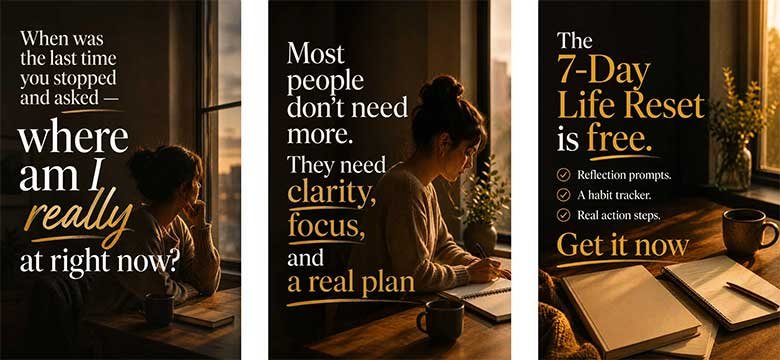
Free Download: The 7-Day Life Reset
Give your balance a clear starting point. The free 7-Day Life Reset gives you seven simple focused days to reset your daily structure and begin building the habits that bring you back to yourself. Download it free today.
Get the Free 7-Day Reset6. Tend to One Relationship That Genuinely Fills You Each Week
“You cannot feel balanced on the outside until you tend to what is unbalanced within.”
Not all social time produces the same result. Some interactions leave you more depleted than before they started. Others fill something. They remind you that you are known and that you matter to someone and that connection is available to you in a real and sustaining way. The balance that comes from genuine human connection is a specific kind that no amount of self-care done in isolation can fully replicate.
Identify one person in your life whose company fills you and make contact with them this week. Not an obligation. The one who actually makes you feel better for having spent time with them. A real conversation. A shared walk. Coffee that goes longer than planned because neither of you wants it to end. Build that connection into your weekly rhythm. The relationship that fills you is as important to your balance as the sleep and the movement and the rest. Protect time for it.
“Balance is not perfection — it is the ongoing practice of coming back to yourself.”

Building Balance Through Recovery? This Is for You.
For some people, building a more balanced life is happening alongside the daily work of sobriety. If that is where you are, the free Sober Survival Guide offers honest support for the person doing both kinds of daily work at once. Download it free.
Get the Free Sober Survival Guide7. Reduce the Input Before Bed So the Mind Can Actually Close the Day
“You cannot feel balanced on the outside until you tend to what is unbalanced within.”
The mind that is still processing stimulation when the body tries to sleep is not resting. It is working. And the mind that works through the night without genuine downtime produces the exhaustion that makes the next day feel harder before it has even started. The loop of poor sleep producing harder days producing worse sleep is one of the most common contributors to the feeling of chronic imbalance.
Reduce the input in the hour before sleep. Phone away. Screen off or dimmed. Something quiet instead — reading a physical book, gentle music, a short walk if the evening is cool. Let the mind come down from the stimulation of the day before it is asked to rest. The wind-down is not a luxury for people with easy schedules. It is the essential transition that allows the night to actually restore what the day used up. Build it. Keep it. Your tomorrow depends on it.
“Balance is not perfection — it is the ongoing practice of coming back to yourself.”
8. Say No to One More Thing This Week Than Feels Comfortable
“You cannot feel balanced on the outside until you tend to what is unbalanced within.”
The imbalanced life is almost always an over-committed one. The yes said to everything leaves no room for the return. The calendar so full that there is no space for the quiet that balance requires. The obligation list so long that getting through it feels like the only available goal and living fully inside the life feels like a luxury reserved for a future season that never quite arrives.
Say no to one more thing this week than you normally would. Not a cold no. An honest one. I am not able to take that on right now. I need to protect some time this week. That is a complete answer. The no that protects the space for the return is one of the most important self-care habits available. It is also one of the hardest because it requires disappointing someone. It is still worth doing. The balance requires the room. The no creates the room.
“Balance is not perfection — it is the ongoing practice of coming back to yourself.”
9. End Each Day With the Question That Keeps You Honest
“You cannot feel balanced on the outside until you tend to what is unbalanced within.”
The nightly question is the daily check-in for the balance practice. Not a long journaling session. Not a full life review. Just the honest answer to one simple question before sleep. Was today mine? Did it contain something that was chosen rather than just happened? Did I tend to myself at least once in some small way?
If the answer is yes, notice what made it true and carry that forward. If the answer is no, ask what one thing tomorrow needs that today did not have. The question is not a judgment. It is the compass. Used daily it keeps the drift from accumulating into weeks and months of days that never quite felt like yours. Three minutes before sleep. One honest question. It is one of the smallest and most powerful balance habits available to you. Start tonight.
“Balance is not perfection — it is the ongoing practice of coming back to yourself.”
How Lorne Found the Balance He Had Been Looking for in the Last Five Minutes of Every Day
Lorne did not think of himself as someone who needed a balance practice. He thought of balance as something women talked about in wellness articles and that did not quite apply to the particular brand of chaos his life had settled into. He was not burning out. He was just tired in a way that felt like the normal state of adult life. Everything was fine. Nothing was particularly good. He could not remember the last time a week had felt like his.
His partner suggested he try one thing. Just one. At the end of each day before he fell asleep he had to name one thing that had been genuinely his that day. Not productive. Not accomplished. His. Something chosen rather than happened. Something that had felt like him rather than just him going through the motions of the schedule. He agreed to try it for two weeks.
The first few nights were harder than he expected. He had to look carefully at the day to find it. Some nights it was small — a ten-minute walk he had taken at lunch that nobody had needed anything from him during. A conversation with a friend that had been real rather than functional. The feeling during one hour of the morning when the work had actually engaged him rather than just occupied him. The searching for the one thing was itself the practice. It trained him to notice throughout the day what was actually his rather than just moving through the day without noticing anything. After two weeks he had not achieved balance. But he had started to notice when he had it. And noticing it turned out to be the beginning of having more of it.
Picture the Life Built From Nine Daily Returns to Balance
A morning that starts with you before it starts with everyone else. A rest built into the middle of the day that actually restores. A work day that ends when you say it ends. A relationship tended each week that fills rather than drains. A night that winds down slowly enough to actually sleep. And at the end of each day the honest question that keeps the compass accurate. That is not a perfect life. It is a balanced one. Built one small daily return at a time by someone who decided that coming back to themselves was worth the daily practice. Start today. The balance is already in motion.
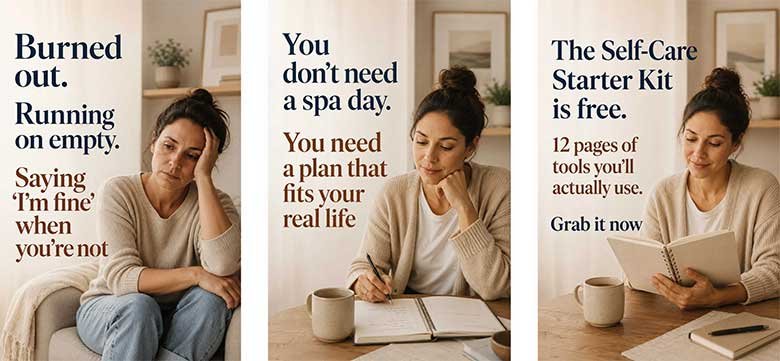
Free Download: The Self-Care Starter Kit
Keep building your balanced life with the daily self-care practices that sustain it. The free Self-Care Starter Kit gives you simple sustainable tools for your mind, your body, and your inner life. Download it free and keep coming back to yourself.
Get the Free Self-Care Starter KitOur Top Picks for a Better Life
We have gathered our favorite tools, resources, and recommendations for self-care, building balance, and creating the daily habits that make life feel steadier and more sustainable. Everything we trust enough to share, all in one place.
See Our Top Picks
Balance and Self-Care Prints at Premier Print Works
Keep the reminder that balance is the ongoing practice of coming back to yourself visible where your daily self-care happens. Visit Premier Print Works for prints, mugs, and art for the person building a steadier more balanced life one small daily habit at a time.
Visit Premier Print WorksDisclaimer
The content on A Self Help Hub is for informational and inspirational purposes only. The self care habits and personal stories in this article offer general support for everyday wellbeing and personal balance. They are not professional mental health advice, medical advice, psychological counseling, or any form of clinical treatment.
Everyone’s experience with balance, stress, and self-care is different. If you are dealing with significant burnout, depression, anxiety, or other mental health conditions affecting your daily functioning, please speak with a qualified healthcare or mental health professional. General self-care content is not a substitute for professional care. If you are in an unsafe situation, please reach out to a trusted person or professional resource right away. Your safety comes first.
The stories and composite characters in this article, including Cressida and Lorne, are illustrative. They are based on common experiences and created to make the content relatable. They are not real people. Any resemblance to a specific person is coincidental.
Some links on this site, including links to Premier Print Works, may be affiliate links. A Self Help Hub may earn a small commission at no extra cost to you. We only recommend things we genuinely believe in.
The Sober Survival Guide linked in this article is general supportive information only. It is not a substitute for professional addiction treatment or medical care. If you or someone you love is struggling with addiction, please seek help from a qualified professional. Recovery is possible.
If you are in a mental health crisis or thinking about self-harm, please do not rely on this content for support. Contact emergency services or a crisis helpline right away. You deserve real help and it is available to you now.
All content on A Self Help Hub is copyrighted. You may not copy or republish it without written permission. By reading this article you agree to this disclaimer.