9 Time Management Life Hacks That Help You Feel More Organized
The kitchen counter holds mail, keys, a half-finished project, and a sticky note from last Tuesday that you meant to act on.
That pile might be telling your body something. In 2010, psychologists Darby Saxbe and Rena Repetti asked 60 dual-income spouses to give a video tour of their homes. They counted words describing clutter and a sense that the home was unfinished, and words describing rest and nature. Then they tracked mood and the stress hormone cortisol over three weekdays. Wives who described their homes in more cluttered, unfinished terms had flatter daily cortisol patterns, a pattern linked to poorer health, and their depressed mood increased over the day. Wives who used more restful language showed the opposite. The effect held after accounting for marital satisfaction and for how prone people were to negative moods. It was a small study, based on how people described their homes, and the pattern showed up for wives and not for husbands, so I would not claim it applies to everyone. But it connected two things I care about: how a space looks, and how unfinished things feel.
To me, feeling organized has little to do with a perfect home or a color-coded calendar. It comes from having fewer open loops and a space that lets you rest. These nine hacks use time and space together, so tidy habits fit into the life you already have.

Build the Daily Habits Behind a More Organized Life
Download the free 9 Daily Habits guide and get nine simple morning practices that make an organized day easier to start.
Get the Free Guide1. Do a ten-minute reset at the same time every day, so mess never gets the chance to pile up.
Pick a time that already exists in your day, like right after dinner or just before bed. Set a timer for ten minutes. Put things back where they belong, clear one surface, and start the dishwasher or the laundry.
The timer matters. It tells you when you are done, which keeps the job from growing into an exhausting project. A daily reset is also much easier than a big weekend cleanup, because there is less to do each time.
I like to put on one song or a podcast while I do it. It turns a chore into a small ritual.
Choose a daily time, set a ten-minute timer, and do your first reset tonight.
2. Give everyday items one home, so you stop hunting and stop piling.
Keys, wallet, mail, glasses, chargers, and bags tend to end up wherever you set them down. Choose one spot for each, ideally near the door or the place you use it. A small tray, hook, or basket works well.
When every item has a home, tidying becomes automatic. You skip the daily decision about where things go, and you stop losing minutes to the morning search.
Keep the spots simple and easy. If it takes effort to put something away, it will not happen.
Choose one spot for your keys, wallet, and phone charger, and use it for a week.

Keep a Calm Reminder in Your Space
Premier Print Works creates quality prints, mugs, and shirts for people building calmer homes and routines. Find a small reminder that a little order goes a long way.
Visit Premier Print Works3. Handle paper and mail once, so it does not turn into a pile of maybe-later.
Mail and papers collect fast. Try a one-touch rule: when you pick something up, decide right then. Act on it, file it, or throw it out. If it needs action later, put it in a single labeled tray.
Keep a recycling bin near where you open mail. Many items can go straight in without being set down at all.
Check your tray once a week during your weekly reset. Small, regular handling prevents a mountain.
Set up one tray for papers that need action, and sort your current mail pile into act, file, or toss.
“Feeling organized comes less from a perfect home and more from fewer open loops.”
4. Finish one thing before starting the next, because unfinished projects add to the feeling of mess.
The researchers counted words about a home feeling unfinished, and those words were part of what the study linked to stress. It makes sense to me. A half-painted wall, a box that never got unpacked, and a repair that sits for months all quietly say, “not done.”
Look around your home and make a short list of unfinished things. Choose the smallest one and finish it this week. Then pick the next. You do not need to clear them all at once.
Try not to start a new project until one open loop is closed. A finished thing gives you more peace than a long list of started ones.
List your three most visible unfinished things, and finish the smallest one this week.
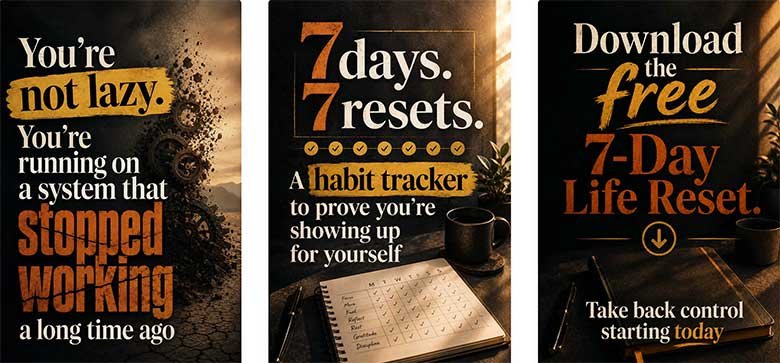
Reset Your Space and Your Week Together
The free 7-Day Life Reset gives you a short, simple way to reset your week, which makes organizing feel like part of a steady routine.
Get the Free Reset5. Keep your list of open projects short, so you carry only what you can finish.
Many of us hold ten or fifteen half-started goals at once. That crowds the calendar and makes everything feel behind. Write down all your open projects, then choose the two or three that matter most right now.
Move the rest to a “later” list. They stay on the list, just out of the active pile. This takes pressure off your time and your mind.
Check the later list every month or two, and decide whether anything has earned a place on the active list.
Write down every open project, and circle the two or three you will focus on this month.
6. Use one visible calendar and one list, so your life stops living in five places.
Scattered notes, apps, and sticky notes make it hard to trust any of them. Choose one calendar for appointments and deadlines, and one list for tasks. If you share a household, make the calendar visible to everyone.
Keep the system simple enough that you will actually use it. A paper planner works as well as an app if you look at it daily.
At the start of each day, spend two minutes looking at both. It takes very little time, and it makes the day feel clear.
Pick one calendar and one list to use for the next month, and move your scattered notes into them.
7. Do a thirty-minute weekly reset that covers both your calendar and your space.
Once a week, spend half an hour on a combined reset. Look ahead at the coming week’s calendar. Tidy the main living areas. Handle your paper tray. Check the fridge and plan a few meals.
A weekly reset catches things before they get out of hand. It also gives you a clear start to the week.
Choose a time you can keep, such as Sunday afternoon. Put on music, and keep it light.
Schedule a weekly thirty-minute reset, and write your short checklist on a card.
8. Prepare the next day the night before, so mornings start with less scrambling.
Spend five minutes in the evening. Look at tomorrow’s schedule. Lay out clothes, pack bags, and put keys and papers by the door. Write your top three tasks for the day.
This small habit takes pressure off the morning. It also helps you see tomorrow clearly, so nothing catches you off guard.
If you share a home, get everyone involved. Kids can pack their own bags and choose clothes.
Tonight, spend five minutes preparing for tomorrow, and notice how the morning feels.
9. Share the load and agree on what “organized enough” means, since homes are shared and feelings differ.
In the study, the link between clutter language and stress showed up for wives and not for husbands. I do not draw big conclusions from that. But it reminds me that people in the same home can feel the same mess very differently.
Talk with the people you live with about what bothers each of you most, and what “good enough” looks like. Divide the tasks fairly, and be specific about who does what and when.
A shared plan can prevent small resentments from building. It also keeps one person from carrying the whole mental load.
Ask each person you live with what one thing would make the home feel calmer, and agree on a shared task for each.
Explore Our Top Picks for a Better Life
We have gathered the tools, resources, and products we think are genuinely worth your time, covering mindset, self-care, health, and home. All in one place, hand-picked to support a calmer, more organized home.
See Our Top PicksReal Stories, Real Results
Let me share two examples I like to use. Kezia and Daniel felt constantly behind at home. Their counters were full, their calendar was spread across three places, and the same chores seemed to return each week. They started a ten-minute reset after dinner, picked one spot for keys and mail, and moved everything into one shared calendar. Kezia told me the house did not turn spotless overnight. But the evening scramble faded, and the place felt more restful.
Daniel’s weak spot was unfinished projects. A half-built shelf sat in the garage for months. He made a short list of open projects, finished the shelf over one weekend, and moved the rest to a later list. He said finishing that one thing made the whole house feel lighter. Both of them said the same thing: fewer open loops made the space easier to live in.
Feeling Organized Means Fewer Open Loops and a Space That Lets You Rest
Picture an evening where the counters are clear, the calendar is set, and tomorrow is already half ready. The house may not be perfect, yet it feels finished enough to relax in. You sit down without a list of undone things pulling at your mind.
Choose two or three hacks from this list, and start with the ten-minute reset. Download the free 9 Daily Habits guide to give your day a steady beginning. A little daily order can make a home feel much calmer.
Want Ready-Made Tools to Help You Put This Into Action?
Sometimes the fastest way forward is a tool that someone has already built. Browse our hand-picked resources and downloads, chosen to help you take the next step with less guesswork.
Browse Resources and Downloads
Ready to Feel More Organized, One Small Hack at a Time?
The free 9 Daily Habits guide gives you simple morning practices that keep order from slipping away.
Download Free Now
Fill Your Space With Calm Order
Premier Print Works makes quality prints, mugs, and shirts for people who like a tidy, steady routine. Browse the collection and find what speaks to your journey today.
Visit Premier Print WorksDisclaimer
The content on this page is for informational and inspirational purposes only. It is not professional mental health, medical, or organizing advice of any kind. If clutter or disorganization is causing significant distress or affecting your health or safety, please consider speaking with a qualified professional. Results and experiences vary significantly from person to person. The research mentioned in this article was a small study of 60 spouses based on how they described their homes, and the stress pattern appeared for wives and not for husbands, so it may not apply the same way to everyone.
The stories of Kezia and Daniel are illustrative composite characters created to bring the content to life. They are not real people. Any resemblance to a real person is purely coincidental.
Some links on this page, including links to Premier Print Works and other resources, are affiliate links. If you make a purchase through one of these links, we may earn a small commission at no extra cost to you. We do not own, produce, or control any affiliate products, and we are not responsible for them — we only own and sell the products offered through our own store, Premier Print Works.
All content on A Self Help Hub is the property of Digital Marketing 215 LLC and is protected by copyright law. No part of this page may be copied, reproduced, republished, distributed, or transmitted in any form without prior written permission from the author.