11 Courage Quotes That Help You Honor Your Value
Honoring your value takes more courage than most people expect. It means setting boundaries when people push against them. Saying no when the pressure is to say yes. Walking away from things that diminish you even when staying is easier. Asking for what you are worth even when the fear of rejection makes silence feel safer. None of that is easy. All of it is necessary.
These 11 ideas about courage are written for the moments when honoring your own value feels harder than it should. Not as a performance of boldness — as a genuine reminder that you matter, that your needs are legitimate, and that the courage to honor your worth is one of the most important things you can develop.

Build the Daily Practice That Supports Your Value Every Day
Download the free Self-Care Starter Kit and build a simple daily routine that supports your self-worth, your boundaries, and your ability to show up courageously for yourself every day.
Get the Free Starter Kit1. “You teach people how to treat you not by what you say about your boundaries but by what you consistently enforce.”
Boundaries that are stated but not enforced are not boundaries — they are preferences that others quickly learn they can ignore. The courage to honor your value is not primarily the courage to say what you will and will not accept. It is the courage to actually hold those lines when they are tested — calmly, consistently, and without requiring the other person’s approval.
Every time you enforce a boundary, you send a clear message about your value. Every time you back down from one, you send the opposite message. Not once in a dramatic moment — consistently, over time, through behavior more than words. That consistency is the foundation your self-respect is built on.
2. “Saying no to something that does not honor your worth is not selfishness — it is self-respect in action.”
Most people have been taught — directly or indirectly — that putting their own needs and boundaries first is selfish. That good people say yes. That refusing something makes you difficult. This belief is not only false but actively harmful, because it trains people to betray their own value in order to be seen as agreeable.
Saying no to things that diminish you, exhaust you, or ask you to compromise what you know you are worth is not selfishness. It is a necessary act of self-preservation and an honest expression of your value. Practice it. It gets easier the more you do it.
“Honoring your value is not arrogance. It is the simple, radical decision to treat yourself the way you deserve to be treated — and to expect others to do the same.”
3. “The discomfort of setting a boundary is temporary. The cost of not setting one accumulates indefinitely.”
Setting a limit with someone feels uncomfortable in the moment — particularly if you are someone who has historically avoided it. The conversation, the potential disapproval, the risk that someone will be upset. That discomfort is real and it is temporary. The alternative — living without the boundary — creates a much larger and longer-lasting cost.
Resentment. Exhaustion. The quiet erosion of your own sense of worth from consistently accepting less than you deserve. That cost compounds over months and years. The discomfort of one honest conversation is almost always far smaller than the damage done by the ongoing pattern it replaces. Set the limit. Sit with the discomfort. Let it pass.
4. “You do not need anyone’s permission to take your own needs seriously.”
One of the most common patterns among people who struggle to honor their value is the habit of waiting for someone else to give them permission — to rest, to ask for help, to say no, to expect better. As if their own needs only become valid when someone else acknowledges them first.
You are the only one who can give yourself permission to take your own needs seriously. No one else will do it for you. And waiting for that permission is a form of abandoning yourself — slowly, continuously, in all the small moments when you silently accept less than you deserve because no one told you that you could ask for more.
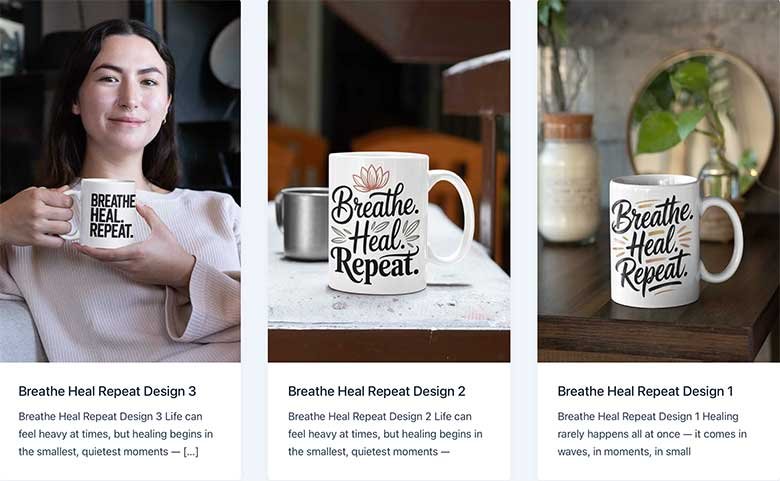
Surround Yourself With Words That Remind You of Your Worth
Premier Print Works creates quality prints, mugs, and shirts for people who are learning to honor their own value. Find something that speaks to your courage and your worth today.
Visit Premier Print Works5. “The people who genuinely value you will not ask you to betray your own worth to keep them comfortable.”
This is one of the clearest tests of a relationship — whether the other person respects your limits or consistently asks you to abandon them. People who genuinely care about you will adjust. They may not always like your boundaries but they will ultimately respect them because they value you more than they value their own comfort in the moment.
The relationships that require you to consistently shrink yourself, silence your needs, or compromise your values to be accepted are telling you something important about the terms you have accepted. You are allowed to renegotiate those terms. You are allowed to expect relationships where your worth is honored, not constantly tested.
6. “Asking for what you deserve is not demanding too much — it is refusing to accept too little.”
Many people frame their own legitimate needs as excessive. They apologize for having them. They minimize them. They ask for less than they need so as not to appear demanding. But there is a crucial difference between demanding too much and refusing to accept too little — and most people who struggle with this are on the wrong side of that line without realizing it.
You are not asking for too much when you expect honesty, respect, fair compensation, or basic consideration. Those are not extravagant demands. They are the floor of what you deserve. Know the difference between the floor and the ceiling — and make sure you are at least at the floor.
7. “Courage to honor your value is not about being loud. It is about being clear — quietly, consistently, and without apology.”
Honoring your value does not require dramatic confrontations or bold declarations. It requires clarity — knowing what you will and will not accept, and communicating that simply, directly, and without the excessive apology that dilutes the message. Quiet courage is still courage. Consistent clarity is more powerful than occasional boldness.
Practice saying what you mean without wrapping it in so many qualifiers that the message disappears. You do not need to be loud to be clear. You do not need to be aggressive to be firm. Calm, clear, and consistent is more than enough to communicate your value — and to protect it.

Build the Morning Habits That Support Your Courage Daily
The free 9 Daily Habits guide gives you nine simple morning practices to strengthen your self-worth, build your daily courage, and start each day connected to the value you carry.
Get the Free Guide8. “Every time you choose yourself over the need for approval you build the kind of self-respect that cannot be taken from you.”
Self-respect built on external validation is fragile. When the approval comes, you feel it. When it is withheld, the self-respect goes with it. But self-respect built on consistently choosing yourself — your values, your needs, your honest assessment of your own worth — is not dependent on anyone else’s input. No one can take it from you because no one gave it to you.
Every time you make a decision based on your own values rather than on what will earn the most approval, you deposit into that account. The deposits are small. They add up to something no external validation can ever build — a stable, unshakeable knowledge of your own worth.
9. “You are not too much. You have just been around people who were not enough for you.”
Many people who have been told — explicitly or implicitly — that they are too much, too sensitive, too demanding, or too intense have internalized a story about themselves that was never true. It was a story that served the people who were unwilling or unable to show up for them. The problem was not their needs. The problem was the match.
Your needs are not too much. Your feelings are not too much. Your expectation of being treated with care and respect is not too much. The right people — the ones who can actually meet you where you are — will not find you too much. They will find you exactly right. Do not shrink yourself to fit people who are not big enough for who you actually are.
10. “Walking away from what does not honor your worth is not giving up — it is making room for what does.”
Leaving something that does not honor your value — a job, a relationship, a dynamic, a pattern of behavior — takes courage because it is rarely clear in the moment what is on the other side. The known feels safer than the unknown even when the known is diminishing you. But what you walk away from creates space for what you walk toward.
You cannot build a life that honors your value while holding onto things that consistently undermine it. The leaving is not the end. It is the clearing. And the clearing is what makes the next thing possible — the thing that actually fits, that actually honors what you are worth, that actually belongs to the version of you that you are building toward.
11. “The most courageous act of self-care is insisting — quietly, daily, without apology — that your value is not negotiable.”
This is not about arrogance. It is not about demanding special treatment or placing yourself above others. It is about the quiet, daily practice of treating yourself as someone whose needs matter, whose time is worth protecting, whose feelings deserve acknowledgment, and whose standards for how they are treated are legitimate and firm.
That insistence — gentle but unmoving — is one of the most important things you can build in yourself. Not because it makes life easier in every moment but because it gradually builds a life that reflects your actual worth rather than the discount version you have been accepting. Your value is not negotiable. Start honoring it like you know that.
“Courage is not the absence of fear. It is the decision — made again and again, in small moments and large ones — to honor your own worth even when everything in you wants to make yourself smaller.”
Explore Our Top Picks for a Better Life
We have gathered the best tools, resources, and products to help you build the courage to honor your value, set stronger boundaries, and create a life that reflects what you are genuinely worth. All in one place, hand-picked just for you.
See Our Top PicksReal Stories, Real Results
Amara had spent years in a work environment that consistently undervalued her contributions, paid her less than her colleagues in equivalent roles, and treated her needs as inconveniences. She had told herself it was fine — that she was being reasonable, that asking for more was risky, that things would improve on their own. Then she read something that stopped her: the cost of not setting a boundary accumulates indefinitely. She counted the years she had spent accepting less than she deserved and the number was not small. She had a conversation she had been avoiding for 18 months. She did not get everything she asked for. But she got more than she had accepted before. More importantly, she stopped accepting the discount as the standard. That shift changed her relationship with her own worth in ways that extended well beyond the job.
Joel had a pattern of over-explaining his no. Every time he set a limit with someone he would wrap it in so many apologies and qualifications that by the end of the conversation the person was not sure whether he had actually said no at all. He started practicing a different approach: one clear sentence, no excessive apology, no extended justification. It felt uncomfortable in a way that surprised him. Then it started to feel like something else — like honesty. People adjusted. A few did not and those relationships revealed themselves clearly for what they were. He said the most surprising thing was not how others responded but how he felt. Quieter. More settled. Like he had finally started telling the truth about what he was worth and how he needed to be treated — and his own nervous system recognized the difference immediately.
Your Value Is Not Something You Have to Prove — It Is Something You Get to Honor
Every idea in this article points toward the same truth — that honoring your value is not a one-time act of boldness. It is a daily practice of small, consistent choices: the limits you hold, the needs you take seriously, the situations you leave, the standards you refuse to drop below. Over time those choices build a life that actually reflects your worth instead of apologizing for it.
Pick the idea from this list that speaks most directly to where you are right now and let it guide one choice today. Download the free Self-Care Starter Kit to build a daily routine that supports your self-worth and keeps you practicing the quiet, daily courage that honoring your value requires. You are worth it. Act accordingly.

Honoring Your Value Gets Easier With a Daily Practice Behind It
The free Self-Care Starter Kit gives you simple, practical tools to build a daily routine that supports your courage, your self-worth, and the quiet daily practice of treating yourself as someone whose value is not negotiable.
Download Free Now
Put Something on Your Wall That Reminds You What You Are Worth
Premier Print Works makes quality prints, mugs, and shirts for people who are choosing to honor their own value every single day. Browse the collection and find what speaks to your courage today.
Visit Premier Print WorksDisclaimer
The content on this page is for informational and inspirational purposes only. It is not professional mental health, medical, relationship, or personal advice of any kind. If you are experiencing significant challenges with self-worth, anxiety, or difficult relationship dynamics, please seek support from a qualified mental health professional. Results and experiences vary from person to person.
The stories of Amara and Joel are illustrative composite characters created to bring the content to life. They are not real people. Any resemblance to a real person is purely coincidental.
Some links on this page, including links to Premier Print Works and other resources, are affiliate links. If you make a purchase through one of these links, we may earn a small commission at no extra cost to you. We only recommend things we genuinely believe in.
If you are in crisis, please contact emergency services or a crisis helpline in your area immediately. You are not alone and help is available.
All content on A Self Help Hub is protected by copyright. It may not be copied, republished, or distributed without written permission from the author.