17 Productive Day Strategies That Help You Move Further in Life
Moving further in life is not the result of occasional extraordinary effort. It is the result of consistently productive ordinary days — days where the most important things actually got done, where the energy was directed toward what matters rather than scattered across what merely demands, and where the cumulative small progress compounds over months and years into something genuinely significant.
These 17 strategies are built for the ordinary day. Not the ideal day — the real one, with its interruptions and its competing demands and its moments when the productive choice requires a little more intention than the reactive one. Apply them consistently and watch the ordinary days carry you further than the occasional heroic ones ever could.

Build the Morning Habits That Make Every Day More Productive
Download the free 9 Daily Habits guide and build a simple morning routine that sets up each day with the intention, energy, and focus that help you make consistent progress toward what matters most in your life.
Get the Free Guide1. Identify your single most important task for the day before anything else demands your attention — and protect time for it before the day has a chance to fill without it.
The most productive days are almost never the ones where you completed everything on your list. They are the ones where you completed the thing that mattered most. That thing — the task that would make the day genuinely worthwhile if nothing else happened — needs to be identified before the day begins its asking, not at the end of it when everything else has already claimed the available time.
Each morning before you open your inbox, write down the single most important thing you could accomplish today. Then schedule time for it — actual protected time in your calendar — before anything else claims that slot. The strategy is simple and it is one of the most consistently effective available. The days where the most important thing gets done first are the days that move you furthest.
2. Use your highest-energy hours for your highest-value work — and protect those hours from low-value tasks that could be done when you have less to give.
Cognitive energy — the capacity for focused, creative, complex thinking — is not equally available throughout the day. Most people have a peak window of two to four hours where their mental performance is significantly better than at other times. Filling that window with email, meetings, and administrative tasks — because they arrive first — is one of the most consistent forms of productivity self-sabotage available.
Identify your peak hours honestly. For most people they are in the morning, but the exact window varies. Protect those hours for the work that requires your best — the strategic thinking, the creative work, the difficult problems, the important conversations. Move the low-value tasks to your off-peak hours where they can be completed on less without significant cost. The reallocation of your peak hours to peak-value work is one of the highest-leverage productivity changes available.
“The productive day is not the one where you did the most. It is the one where you did the most important things — where the best of your time and energy went to what would move you furthest, rather than to what was loudest.”
3. Process your inbox at set times rather than continuously — because constant email monitoring fragments your focus in ways that compound into significant productivity loss.
The cost of constant email monitoring is not the time spent reading each message. It is the cognitive cost of the constant attention switching — the interruption to focused work, the mental state reset required to return to deep work after each diversion, the accumulated fragmentation of the hours that could have been genuinely productive. Research on attention switching consistently shows that the recovery time after an interruption is significantly longer than the interruption itself.
Process email at two or three designated times per day — morning, midday, end of day — and close the application between those times. The response time change for most messages is negligible. The gain in sustained focus during the protected windows between checks is substantial. The strategy requires communicating your new pattern to people who expect immediate responses — and discovering that most of them do not, in practice, require it.
4. Work in focused blocks of 60 to 90 minutes with genuine breaks between them — because sustained attention has a natural rhythm that productivity increases when you work with rather than against.
The brain works in natural cycles of higher and lower alertness across the day. Attempting to maintain peak focus for four or six hours without breaks does not produce more output than working in focused blocks with real recovery between them — it produces lower quality output and greater fatigue. The Pomodoro technique, time-blocking, and similar approaches all work on the same principle: focused effort plus genuine recovery produces more than continuous effort without recovery.
Work in 60 to 90 minute blocks of genuine focus on a single task or type of task. Then take a real break — away from screens, ideally including brief movement. Let the break be a real break rather than a different kind of screen consumption. The rhythm of focus and recovery, maintained across the day, produces significantly more useful work than the same hours spent in continuous fragmented engagement with multiple tasks and constant interruptions.
5. Reduce your daily task list to the three most important items — because a long task list creates the illusion of productivity while often preventing the actual kind.
A task list with twenty items creates a default orientation toward easy completion rather than important completion. The human brain favors completing things over completing the right things — which means a long task list tends to produce a day of checking off low-stakes items while the high-stakes one waits at the bottom. Three items forces prioritization and ensures the most important work gets the attention it deserves rather than the attention that remains after everything else is done.
At the start of each day, identify three tasks — only three — that would make the day genuinely productive if completed. Those are the day’s actual goals. Everything else is available if the three are done, but nothing else takes priority over them. The constraint is uncomfortable for people accustomed to long lists. It also consistently produces more actual progress on what matters than the long list ever did.

Surround Yourself With What Keeps Your Focus Strong and Your Goals Visible
Premier Print Works creates quality prints, mugs, and shirts for people who are building the daily habits and discipline that move them further in life every day. Find what keeps your focus sharp today.
Visit Premier Print Works6. Say no to commitments that do not serve your most important goals — because an overfull schedule is one of the most reliable ways to stay busy without moving forward.
Busyness is not the same as productivity and an overloaded schedule is not a sign of effectiveness. It is a sign that more requests have been accepted than is compatible with doing the most important work well. Every commitment accepted is a commitment of time and energy that is no longer available for the work that would actually move you further. The productive person has learned to say no — not to avoid work, but to protect the capacity for the work that matters most.
Review your commitments this week and identify one that does not genuinely serve your most important goals and could be declined or delegated. Practice the honest, kind refusal. Notice what becomes available in the space the no creates. Build the habit of applying this question to new commitment requests before accepting them: does this serve what I am actually trying to accomplish, or am I saying yes to avoid the discomfort of saying no?
7. Batch similar tasks together rather than switching between different types of work throughout the day — because task-switching has a significant cognitive cost that batching eliminates.
Every time you switch from one type of task to a fundamentally different one — from deep writing to email to a phone call to analysis to a meeting — there is a cognitive transition cost. The brain needs time to shift contexts, and that time is lost from the available productive window. Batching — grouping similar tasks together and completing them in sequence — eliminates most of these transition costs and produces more output per hour than the scattered approach.
Identify the main task types in your day and group them: deep work in the morning peak hours, meetings in a dedicated window, email processing at set times, administrative tasks in the lower-energy afternoon. The day becomes a series of focused batches rather than a constant series of context switches. The productivity gain is measurable and it does not require working more hours — only working the same hours with a different structure.
8. Start the hardest task first — before the easier ones have sapped your willpower and before the day’s challenges have had time to make avoidance feel justified.
Willpower is a finite daily resource. The tasks that require the most of it — the difficult conversation, the complex creative work, the uncomfortable project — are best approached before the day has depleted the supply through a series of smaller decisions and demands. Starting with the hardest task first is not natural for most people — the easier tasks feel more immediately satisfying and the difficult one is easy to justify postponing. But the postponement itself costs willpower, leaving even less available when the task is eventually unavoidable.
Identify the task you are most tempted to avoid today and do it first. The resistance before it almost always exceeds the difficulty of the task itself. Once started, the momentum frequently carries through to completion more easily than the anticipation suggested. And the relief of having done the hardest thing first transforms the rest of the day in ways that starting with the easy things cannot replicate.
9. Plan the following day at the end of the current one — so you begin each morning with a clear direction rather than spending the first thirty minutes figuring out what to do.
The morning is your most valuable cognitive time and spending it deciding what to do wastes the resource that should be used to do the thing. End-of-day planning takes five to ten minutes and converts the next morning’s start from a planning session into an execution session. You arrive at the desk with a clear direction already set, the most important task already identified, and the first action already obvious. The day begins immediately rather than after a planning delay that typically produces diminishing returns from the peak hours.
Spend five to ten minutes at the end of each working day reviewing what happened and setting up the next day: what needs to carry forward, what is the most important task tomorrow, what do the first two hours of the next day look like? Write it down. Close the current day cleanly. The next morning begins as a fresh start rather than a continuation of the previous day’s unresolved planning.
10. Eliminate the distractions that cost you the most focus — by changing your environment rather than by relying on willpower to resist them repeatedly.
Willpower-based approaches to distraction management fail because willpower is finite and distractions are constant. A phone on the desk is a phone that will be checked, regardless of the intention not to check it, because the cue is always present. The more reliable approach is environmental: put the phone in a different room. Block the distracting sites during focus periods. Close the email application during deep work. Remove the cues before the session begins so the willpower is never required to resist them.
Identify your three most significant focus-breaking distractions. For each one, design a simple environmental change that makes the distraction less accessible during your most important work periods. The change does not need to be permanent or absolute — just effective during the hours where focus matters most. Environment beats intention almost every time. Design the environment to support the intention.
11. Take genuine lunch breaks away from your work — because the midday recovery significantly affects the quality of the afternoon’s output.
Working through lunch is one of the most common and least effective productivity strategies available. The marginal gains from the extra thirty minutes of work are consistently outweighed by the reduced quality of the afternoon’s output that results from the missed recovery. A genuine lunch break — away from the screen, involving actual food, ideally including brief movement or daylight — restores the cognitive and emotional resources that the morning work has drawn down. The afternoon that follows is measurably more productive than the afternoon that follows a working lunch.
Protect a genuine lunch break as a non-negotiable feature of your productive day. Build it into your schedule as a commitment rather than an optional break that disappears when the day gets busy. The recovery it provides is an investment in the afternoon’s quality, not a cost to the day’s productivity. Treat it accordingly.

Reset Your Daily Habits and Build More Productive Days Starting This Week
The free 7-Day Life Reset gives you a simple daily plan to break the patterns that are costing you productive time and build the daily habits that help you make consistent forward progress every day.
Get the Free Reset Guide12. Protect your sleep as the foundation of productive days — because no strategy compensates for the cognitive and motivational deficits of chronic under-rest.
Sleep is the single most impactful productivity intervention available and the one most consistently sacrificed in the name of productivity. The irony is direct and well-documented: every hour of sleep sacrificed for work reduces the quality of the work produced in the hours that remain. Decision-making, creative thinking, problem-solving, emotional regulation — all are significantly degraded by sleep deprivation. The extra hour worked on insufficient sleep almost never produces output equivalent to the extra hour of sleep that would have made all the following hours more effective.
Treat sleep as a productivity investment rather than a recovery expense. Protect a consistent bedtime with the same commitment you give to your most important work commitments. The cognitive resources available to a well-rested person — the focus, the creativity, the resilience, the sustained attention — are among the most valuable productivity assets available, and they are only accessible through adequate sleep.
13. Do a weekly review of your progress, your calendar, and your priorities — because the week managed intentionally consistently outperforms the week managed reactively.
The weekly review is the productivity habit that closes the feedback loop between your intentions and your actual behavior. Without it, the gap between what you planned to focus on and what you actually spent your time doing accumulates invisibly until the end of the month reveals that the important work barely moved while the urgent work consumed everything. With it, the gap surfaces each week while there is still time to close it.
Set aside thirty to sixty minutes each week — Sunday evening or Monday morning work well — for a structured review: what did I accomplish this week? What did I intend to accomplish that did not happen? What are the three most important things to move forward next week? What commitments do I need to protect time for? The review does not need to be elaborate. It needs to be honest and it needs to happen every week. The weeks guided by a recent review consistently produce more meaningful progress than the weeks that simply begin.
14. Move your body during the day — not just before or after work — because physical movement during working hours produces measurable improvements in cognitive function.
Physical movement is not just a pre-work or post-work activity. Brief movement during the working day — a ten-minute walk between focus blocks, some stretching during a break, a standing desk used for part of the day — produces measurable improvements in cognitive function, mood, and focus that are available immediately and that the equivalent time spent sitting does not produce. Movement during work hours is a productivity investment, not a productivity cost.
Build movement into your working day deliberately. A brief walk between focus blocks. A standing call. A short walk to get lunch rather than eating at the desk. The movement does not need to be long or intense to be beneficial. It needs to be regular — a consistent pattern of brief physical breaks woven through the working day that keeps the cognitive and physical systems functioning at a higher level than continuous sitting allows.
15. Reduce your decision fatigue by making recurring decisions in advance — what to eat, what to wear, what the weekly routine looks like — so your best decision-making is available for the decisions that actually matter.
Decision fatigue is the gradual degradation of decision quality that occurs as the cumulative number of decisions across a day increases. The decisions made late in a decision-heavy day are consistently worse — more impulsive, less considered, more likely to default to whatever requires least effort — than those made early. Reducing the number of trivial decisions the day requires keeps the decision-making capacity available for the ones where quality actually matters.
Systematize the recurring decisions: meal prep removes the daily dinner decision. A simple capsule wardrobe removes the morning clothing decision. A weekly routine removes the daily schedule decision. These are not limitations on creativity or spontaneity — they are deliberate conservation of cognitive resources for the decisions where the investment of those resources actually produces meaningful returns.
16. Build accountability into your goals — through a partner, a commitment device, or a public declaration — because stated goals with accountability are significantly more likely to be achieved than private intentions.
The research on goal achievement consistently finds that accountability significantly increases follow-through. The mechanism is partly social — we are more likely to honor commitments that exist in relationship with another person — and partly structural: an accountability system provides the external check on progress that internal self-monitoring alone often fails to maintain consistently. The goal shared with a trusted person, or structured with a formal commitment device, is more likely to survive the inevitable motivation dips than the goal kept entirely private.
Identify your most important current goal and add an accountability structure to it. Tell someone you trust and ask them to check in with you weekly. Use a commitment app. Join a group with shared goals. Make the goal exist outside your own head in a way that creates gentle external pressure to maintain progress. The additional structure costs almost nothing and significantly improves the probability of completion.
17. End your workday with a genuine close — a consistent ritual that signals to your brain that work is done — and protect the recovery that makes tomorrow’s productivity possible.
The workday that never officially ends is the workday that never produces genuine recovery. When work bleeds indefinitely into the evening — through checking email after dinner, thinking about projects during time that should belong to rest, never fully disengaging from the day’s demands — the recovery that tomorrow’s productivity requires does not happen. The following day begins at a deficit, requiring more effort to produce less output, and the cycle of diminishing productivity accelerates.
Build a workday closing ritual — something brief and consistent that marks the transition from work to recovery. It might be a five-minute review and list for tomorrow. It might be physically closing the laptop and putting it away. It might be a specific phrase said aloud. Whatever the ritual, do it consistently at a consistent time and let it be the genuine end of the workday. The recovery that follows is not wasted time. It is the investment in tomorrow’s performance that no amount of additional evening work can replicate.
“Moving further in life does not require extraordinary days. It requires ordinary days managed with intention — where the most important things consistently get done, the energy is protected, and the cumulative small progress compounds into something genuinely significant over time.”
Explore Our Top Picks for a Better Life
We have gathered the best tools, resources, and products to help you build more productive days, manage your time and energy more effectively, and make the consistent daily progress that moves you further in life. All in one place, hand-picked just for you.
See Our Top PicksReal Stories, Real Results
Amara had been busy for years without feeling like she was making genuine progress. Her days were full and her evenings were full and she was consistently exhausted but the things that actually mattered to her — the project she had been trying to move forward, the relationships she wanted to invest in more, the learning she kept deferring — were not moving. The busyness was real. The productivity was not. The shift that changed things was identifying her single most important task each morning before anything else reached her. It was a small change. The effect was disproportionate. On the mornings she did it, the most important task almost always got done. On the mornings she did not, the day was absorbed by whatever arrived first and the important task waited again. She said the simplicity of the change was what surprised her most — one daily question, answered in writing before the phone was checked, and the entire character of the day shifted. She had spent years believing productivity required a sophisticated system. What it required was one clearly identified priority and the daily commitment to act on it before anything else did.
Joel had a problem with distraction that willpower had never solved. He knew the phone was taking too much focus. He had tried leaving it face-down, turning notifications off, setting screen-time limits. All of these helped marginally and inconsistently. Then he tried the environmental approach instead: he left the phone in a different room during his two most important focus hours of the morning. The result was immediate and significant. The temptation to check did not disappear — the habit was too well-established for that. But without the physical object present, the temptation had no immediate avenue for expression and the focus window remained intact. He said the change had been almost embarrassingly simple compared to the years of willpower-based approaches that had never worked. The phone in the other room was not a perfect solution. It was a reliably effective one. The distinction between designing the environment to support the intention and trying to override the environment through willpower was, he said, the most useful productivity idea he had encountered in a decade of thinking about productivity.
Productive Days Are Built One Good Strategy at a Time
Every strategy in this article is a tool for converting the ordinary day into something that moves you further. None of them require heroic effort or ideal circumstances. All of them require consistent application — the daily repetition of better habits until they become the natural way you approach time, energy, and attention rather than deliberate choices requiring ongoing effort.
Pick two or three strategies from this list that address your most consistent productivity obstacles and implement them this week. Download the free 9 Daily Habits guide to build the morning routine that gives your productive day a solid foundation before anything else has arrived to complicate it. Movement further in life happens one productive ordinary day at a time. Build the day. The movement follows.

Build the Morning Foundation That Makes Every Day More Productive
The free 9 Daily Habits guide gives you nine simple morning practices that build the daily intention, focus, and energy that make productive days — and the consistent forward progress they produce — genuinely possible.
Download Free Now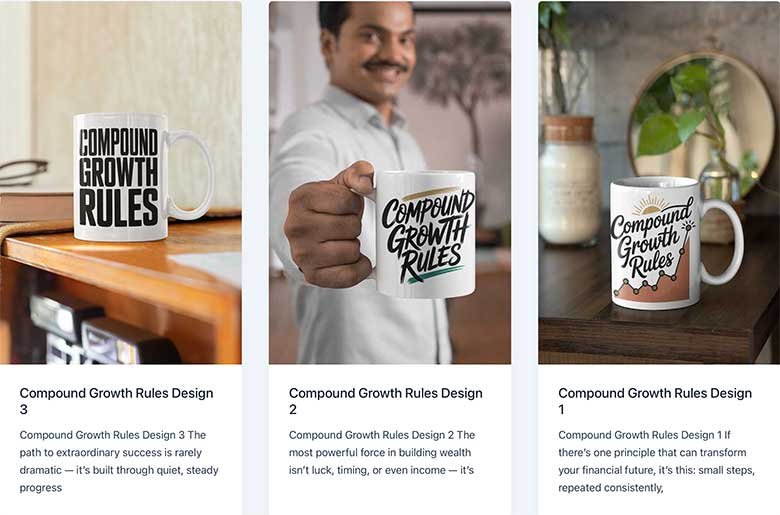
Put What Keeps You Focused Right Where You Can See It Every Day
Premier Print Works makes quality prints, mugs, and shirts for people who are building the productive daily habits that move them further in life. Browse the collection and find what keeps your focus and your momentum strong today.
Visit Premier Print WorksDisclaimer
The content on this page is for informational and inspirational purposes only. It is not professional advice of any kind. Results vary significantly based on individual circumstances, consistency of application, and many other factors. Please use your own judgment when applying any strategy to your specific work situation and lifestyle.
The stories of Amara and Joel are illustrative composite characters created to bring the content to life. They are not real people. Any resemblance to a real person is purely coincidental.
Some links on this page, including links to Premier Print Works and other resources, are affiliate links. If you make a purchase through one of these links, we may earn a small commission at no extra cost to you. We only recommend things we genuinely believe in.
If you are in crisis, please contact emergency services or a crisis helpline in your area immediately. You are not alone and help is available.
All content on A Self Help Hub is protected by copyright. It may not be copied, republished, or distributed without written permission from the author.