7 Mindfulness Activities That Help You Manage Stress Better
Stress is not something to eliminate entirely — a certain amount is a normal, even useful part of a full life. What determines whether stress becomes overwhelming or manageable is not primarily the amount of stress itself, but the tools available for processing it as it arrives. Mindfulness activities are among the most direct and most accessible of these tools, working on the nervous system in ways that purely mental strategies often cannot reach as reliably.
These 7 activities are practical, evidence-supported entry points for managing stress better. None require significant time or special equipment. Try one today and notice the shift in how the same stressful circumstances feel to move through.

Build the Daily Practice That Helps You Manage Stress More Effectively
Download the free Self-Care Starter Kit and build a simple daily routine that calms your nervous system, supports genuine resilience, and gives you the consistent tools to manage stress as it actually arrives in daily life.
Get the Free Starter Kit1. Practice extended exhale breathing during acute stress — a physiological tool that directly signals safety to the nervous system faster than mental reassurance alone.
When stress spikes, the sympathetic nervous system activates the body’s stress response — elevated heart rate, shallow breathing, muscle tension — and this physiological activation does not reliably respond to purely mental reassurance alone. Breathing with an extended exhale, longer than the inhale, directly activates the parasympathetic nervous system, the physiological state associated with calm and safety, producing a measurable shift that mental strategies alone often cannot achieve as quickly.
The next time acute stress arrives, practice breathing with a longer exhale than inhale — four counts in, six or eight counts out, repeated for a minute or two. This is not a metaphorical calming technique. It is a direct physiological intervention that measurably shifts the nervous system’s stress response, available in any moment, requiring nothing beyond your own breath.
2. Practice the five-senses grounding exercise when stress produces a spiraling or overwhelmed feeling — naming what you can see, hear, feel, smell, and taste to anchor attention in the immediate present.
Stress frequently produces a spiraling quality — thoughts racing ahead to worst-case scenarios, attention scattered across multiple worries simultaneously, a feeling of being overwhelmed by the sheer volume of concern. The five-senses grounding exercise interrupts this spiral by deliberately anchoring attention in the immediate, sensory present — a place the spiraling thoughts cannot follow, because it requires direct, concrete attention rather than abstract worry.
When stress produces a spiraling or overwhelmed feeling, name five things you can currently see, four things you can hear, three things you can feel, two things you can smell, and one thing you can taste. The specific, concrete attention required by this exercise reliably interrupts the abstract spiral and returns you to the manageable present moment.
“Managing stress better is not about eliminating stress from your life. It is about having reliable, accessible tools for processing it as it arrives, so it moves through you rather than accumulating and overwhelming your capacity.”
3. Practice a brief body scan to identify and release physical tension before it accumulates into a larger stress response.
Stress accumulates physically as much as it does mentally — the tight shoulders, the clenched jaw, the shallow breath that builds gradually across a stressful day without necessarily being consciously noticed until it has become significant. A brief, regular body scan — checking in with different areas of the body and consciously releasing tension where it is found — catches this accumulation early, before it compounds into the larger physical stress response that is harder to address once fully established.
Practice a two-minute body scan at least once during a stressful day — noticing tension in your shoulders, jaw, hands, and stomach, and consciously releasing what you find. This regular check-in catches and releases physical stress before it has the chance to accumulate into something more significant.
4. Practice mindful movement — a brief walk with full attention to the physical sensation of moving — to discharge stress hormones and interrupt rumination.
Physical movement, particularly when combined with mindful attention to the sensory experience of moving, helps metabolize the stress hormones that accumulate during periods of chronic or acute stress, while simultaneously interrupting the mental rumination that stress often produces. The combination of movement and mindful attention is more effective for stress management than either movement alone, done on autopilot, or stillness alone, without the physical discharge that movement provides.
Take a brief walk during a stressful period, paying full attention to the physical sensations — your feet contacting the ground, the movement of your body, your breath. Let the walk be a mindful practice rather than a mindless one. This combination discharges physical stress and interrupts the mental spiral simultaneously.

Surround Yourself With What Supports Your Calm
Premier Print Works creates quality prints, mugs, and shirts for people who are building the mindfulness practices that help them manage stress with more resilience and calm. Find what speaks to your journey today.
Visit Premier Print Works5. Practice labeling your stress explicitly — naming it out loud or in writing — to reduce its intensity through the measurable effect of affect labeling.
Research on affect labeling consistently demonstrates that naming a stressful emotion explicitly — saying or writing “I am feeling stressed about this deadline” rather than simply experiencing undifferentiated stress — measurably reduces the intensity of the activation in the brain. This is not merely a psychological technique. It has a documented physiological effect, making it one of the more efficient stress management tools available, requiring only the willingness to name what is actually being felt.
The next time stress arises, practice labeling it explicitly and specifically — not just “I’m stressed” but “I’m feeling anxious about whether this project will be finished on time.” The specificity of the labeling appears to matter, producing a greater calming effect than vague or general labeling.
6. Practice a mindful pause before responding to stressful triggers — a brief, deliberate space between the stressor and your reaction to it.
Reactive responses to stress — the immediate, unconsidered reply to a stressful email, the snapped response in a stressful conversation — tend to compound the original stress by adding relational or practical consequences to it. A brief, deliberate pause before responding to a stressful trigger — even just a few seconds of conscious breath — creates the space for a more considered response that does not compound the original stress with additional consequences from a reactive reply.
Practice a mindful pause before responding to your next stressful trigger — a breath, a moment of genuine consideration, before speaking or acting. This pause does not eliminate the stress. It prevents the stress from compounding through a reactive response that adds further difficulty on top of the original stressor.

Reset Your Habits and Build the Tools That Help You Manage Stress Better
The free 7-Day Life Reset gives you a simple daily plan to break the patterns that amplify stress and build the mindfulness habits that support genuine, sustainable resilience through the stress daily life brings.
Get the Free Reset Guide7. Practice a brief daily check-in with your stress levels — a consistent, deliberate assessment that catches accumulating stress before it reaches an unmanageable peak.
Chronic stress often accumulates gradually, below the threshold of conscious awareness, until it reaches a level significant enough to demand attention through a more disruptive symptom — exhaustion, irritability, physical illness. A consistent daily check-in with your own stress level, however brief, catches this accumulation earlier, while it is still at a level where the mindfulness activities in this article can address it effectively, before it has built to the point of requiring more significant intervention.
Build a brief daily check-in into your routine — a simple, honest assessment of your current stress level, perhaps on a scale of one to ten, done at a consistent time each day. This regular awareness catches accumulating stress early and prompts the timely use of the other mindfulness tools in this article, rather than allowing stress to build unnoticed until it becomes significantly harder to manage.
“Managing stress better is a skill, built through consistent practice of accessible, evidence-supported tools — not a personality trait some people simply have and others lack. The tools are available to anyone willing to practice them.”
Explore Our Top Picks for a Better Life
We have gathered the best tools, resources, and products to help you build the daily mindfulness habits that support managing stress better, calming your nervous system, and building genuine resilience through the demands of daily life. All in one place, hand-picked just for you.
See Our Top PicksReal Stories, Real Results
Kezia had a demanding job that produced regular spikes of acute stress — the deadline crisis, the difficult client call, the unexpected complication that required immediate attention. Her default response to these spikes had always been to push through them at full speed, without any deliberate pause, which left the physiological stress activation unaddressed and compounding across the day. She started practicing the extended exhale breath specifically during these acute spikes — a minute of longer exhales than inhales, done at her desk before responding to whatever had triggered the stress. The change in her experience was immediate and noticeable: the same stressful situations felt more navigable, not because the situations themselves had changed, but because her nervous system was no longer compounding the stress of each new trigger on top of an already elevated baseline from the previous one. She said the breathing had not made her job less demanding. It had given her a reliable tool for processing each demand as it arrived, rather than accumulating them unaddressed across the day until she felt completely overwhelmed by evening.
Daniel struggled with a pattern of chronic, accumulating stress that he did not fully register until it reached a breaking point — exhaustion, irritability, and physical tension that seemed to arrive suddenly, though in retrospect had clearly been building for weeks. He started a simple daily practice: a one-to-ten stress check-in each evening, written down, tracked consistently over time. The tracking revealed a pattern he had not previously seen clearly — his stress consistently climbed for about ten days before reaching a level that produced the more disruptive symptoms he associated with being overwhelmed. Once he could see this pattern, he began using the other mindfulness tools proactively, around day five or six of the climb, rather than waiting until day ten when the stress had already reached an unmanageable level. He said the daily check-in had not reduced the amount of stress his life actually contained. It had given him the early information needed to address the stress while it was still manageable, rather than only noticing it once it had already become overwhelming.
Managing Stress Better Is a Skill Built Through Consistent, Accessible Practice
Every activity in this article works directly on the physiological and psychological mechanisms of stress, offering genuine, evidence-supported tools for managing it as it actually arrives in daily life. None of these require eliminating the stressors themselves — most stressors are simply part of a full, engaged life. What changes, with consistent practice, is your capacity to process the stress without it accumulating into something overwhelming.
Choose two or three activities from this list that address the specific ways stress most shows up in your daily life and practice them consistently this week. Download the free Self-Care Starter Kit to build the daily foundation of calm and resilience that supports your ongoing stress management. The stress will keep arriving. Your capacity to manage it well is a skill you can genuinely build.
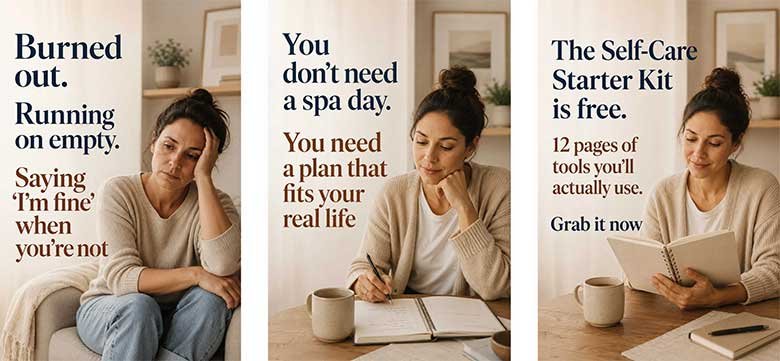
Build the Daily Practice That Helps You Manage Stress With More Ease
The free Self-Care Starter Kit gives you simple, practical tools to build a daily routine that calms your nervous system and supports genuine, sustainable resilience through the stress that daily life consistently brings.
Download Free Now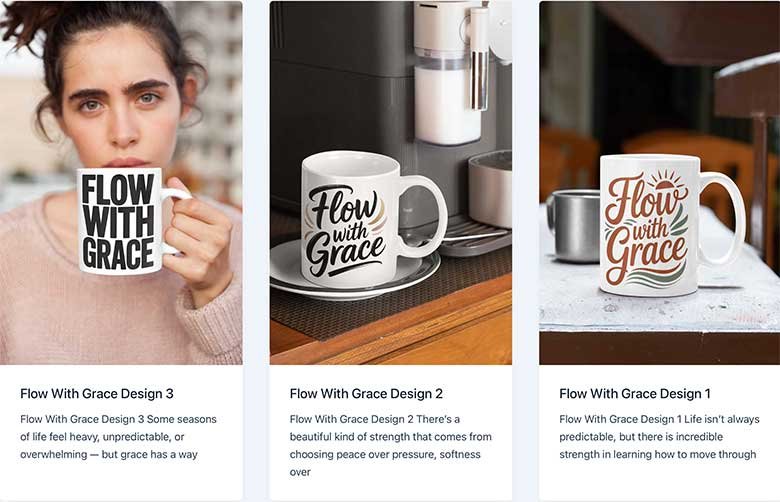
Fill Your Space With What Supports Your Calm and Resilience
Premier Print Works makes quality prints, mugs, and shirts for people who are building the daily mindfulness habits that help them manage stress with more calm and resilience. Browse the collection and find what speaks to your journey today.
Visit Premier Print WorksDisclaimer
The content on this page is for informational and inspirational purposes only. It is not professional mental health, medical, or personal advice of any kind. If you are experiencing significant or persistent stress, anxiety, or other mental health challenges, please consider seeking support from a qualified mental health or medical professional. Results and experiences vary significantly from person to person.
The stories of Kezia and Daniel are illustrative composite characters created to bring the content to life. They are not real people. Any resemblance to a real person is purely coincidental.
Some links on this page, including links to Premier Print Works and other resources, are affiliate links. If you make a purchase through one of these links, we may earn a small commission at no extra cost to you. We only recommend things we genuinely believe in.
If you are in crisis, please contact emergency services or a crisis helpline in your area immediately. You are not alone and help is available.
All content on A Self Help Hub is protected by copyright. It may not be copied, republished, or distributed without written permission from the author.