17 Money Saving Tips That Help You Stop Wasting Cash
Most wasted cash is not spent through a single obvious mistake. It slips out through patterns that rarely get noticed, because noticing them requires a kind of attention most people never actually direct toward their own spending. A specific hack can close a specific leak, but the pattern underneath that leak — the mood that triggers it, the moment it tends to happen — is what actually determines whether a new leak opens up somewhere else once the old one is closed.
The seventeen tips below focus on building that underlying awareness. Each one is a specific, doable practice for actually noticing where and why cash tends to slip away, rather than another list of concrete cuts to make.
Build the Awareness Behind Genuinely Waste-Free Spending
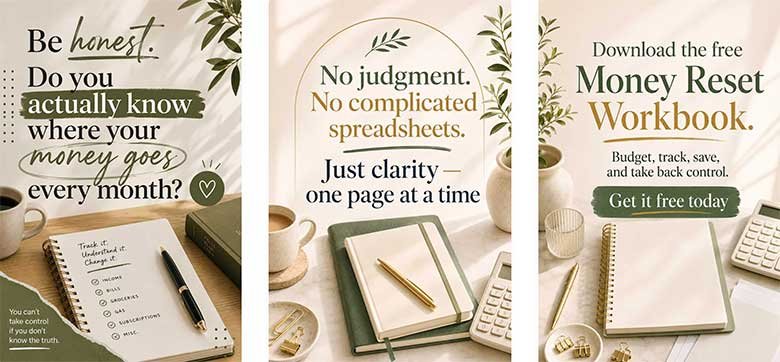
Download the free Money Reset Workbook and get a simple, step-by-step way to see where your money actually goes and notice the patterns behind where it quietly leaks.
Get the Free Workbook1. Notice the emotional state you are in before a wasteful purchase, since spending patterns are frequently tied to a specific, recurring mood.
Wasteful spending is rarely random — it frequently clusters around a specific emotional state, such as stress, boredom, or fatigue, a pattern that stays invisible unless the emotional state is directly noticed and connected to the purchase that followed it. Identifying this pattern directly reveals a genuine, addressable trigger rather than a vague, unexplained tendency to overspend.
The next time you make a wasteful purchase, notice what emotional state you were in beforehand, and start tracking the pattern.
2. Notice where you spend without full attention, since money spent on autopilot is considerably easier to waste than money spent deliberately.
A purchase made on autopilot, without full attention actually present, bypasses the deliberate evaluation that would otherwise catch an unnecessary or wasteful purchase before it happens. Noticing specifically where autopilot spending tends to occur reveals a genuine category worth addressing directly, rather than treating all spending as equally deliberate.
Identify one recurring situation where you tend to spend without full attention, and bring deliberate attention to it this week.
Surround Yourself With What Supports Waste-Free Spending
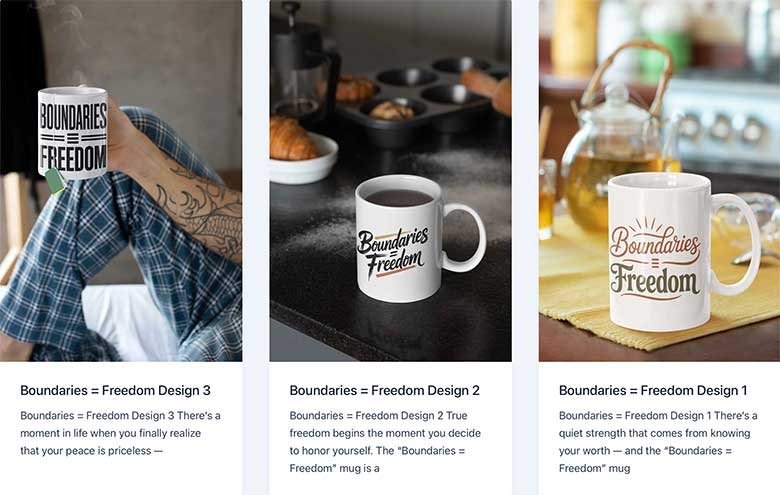
Premier Print Works creates quality prints, mugs, and shirts for people who are building the daily habits that support genuinely intentional, waste-free spending. Find what speaks to your journey today.
Visit Premier Print Works3. Notice the specific time of day your wasteful spending tends to happen, since timing itself is frequently a meaningful, addressable pattern.
Wasteful spending sometimes clusters around a specific time of day — late evening, immediately after work — a pattern connected to a specific energy or willpower state that makes deliberate evaluation considerably harder at that particular time. Noticing this specific timing reveals a genuine window worth building extra awareness around, rather than treating the spending as unpredictable.
Track the time of day your wasteful purchases tend to happen this week, and notice whether a specific window emerges.
“Wasted cash rarely announces itself. It usually just quietly follows the same unnoticed pattern, purchase after purchase.”

Get Clear on the Patterns Behind Where Your Cash Goes
The free 7-Day Life Reset gives you one short prompt a day for a week, helping you get honest about the patterns underneath your own everyday spending.
Start the Free Reset4. Notice the specific apps or environments that tend to prompt unplanned purchases, since certain designed environments encourage this deliberately.
Certain apps and shopping environments are genuinely designed to encourage unplanned, impulsive purchases, through mechanisms such as one-click buying or constant visual prompts, which means the environment itself is frequently a meaningful contributor to wasted cash, not just personal willpower. Identifying which specific environments do this reveals a genuine, addressable factor.
Identify one specific app or environment that reliably prompts unplanned purchases, and build a small barrier to reduce that ease.
5. Ask what a wasted purchase was actually trying to provide emotionally, since the underlying need often has a considerably cheaper solution.
A wasteful purchase is frequently an attempt to meet a genuine emotional need — comfort, distraction, a sense of control — through spending, even though the actual need often has a considerably cheaper, non-purchase solution available once it is honestly identified. Naming this underlying need directly opens up alternatives that a purely financial framing would miss.
The next time you notice a wasteful purchase, ask honestly what emotional need it was actually trying to meet, and consider a cheaper alternative for that need.
6. Notice how a wasted purchase actually felt once the initial excitement wore off, using this honest follow-up to inform future decisions.
The initial excitement of a purchase frequently fades considerably faster than expected, leaving a feeling that rarely matches the anticipation that drove the original decision, yet this honest follow-up feeling is rarely actually checked against the original expectation. Deliberately noticing this gap builds genuine, personal evidence about which purchases are actually worth repeating.
Check in on your last few wasteful purchases, and honestly notice how they actually felt once the initial excitement wore off.
7. Notice which categories of spending you tend to underestimate, since a consistent blind spot is an easily addressable, specific pattern.
Certain spending categories are frequently and consistently underestimated — dining out, small convenience purchases — not from any single dramatic overspend, but from a steady accumulation of individually small amounts that rarely get added up. Noticing this specific blind spot directly reveals a genuine, addressable category rather than a vague sense of overspending.
Identify one spending category you suspect you consistently underestimate, and track it precisely for one week.
8. Notice the specific social situations that tend to prompt spending beyond your actual comfort level, since social pressure is a genuine, common factor.
Spending decisions made in a social context — splitting a bill unevenly, matching a friend’s spending level — are frequently influenced by social pressure in a way that spending made alone is not, which means social situations deserve to be recognized as a genuine, specific category of financial risk. Noticing this pattern allows a deliberate plan for handling it.
Identify one recurring social situation that tends to prompt spending beyond your actual comfort level, and build a specific plan for handling it.
9. Notice the language you use internally around money, since language shapes behavior even when it feels like a harmless habit of speech.
Casual internal language around money — “it’s only a few dollars,” “I deserve this” — can quietly normalize wasteful spending decisions before any genuine evaluation actually happens, even though the language itself feels harmless in the moment it is used. Noticing this specific language reveals a pattern worth examining more closely.
Notice the specific language you use internally to justify a purchase this week, and examine whether that language is actually accurate.
10. Notice what you buy specifically to avoid a different, more uncomfortable task, since avoidance spending is a genuine, specific pattern.
Certain purchases function less as a genuine want and more as a way to avoid a different, more uncomfortable task — buying something new rather than dealing with an unresolved problem — which means the purchase is addressing an avoidance, not an actual need. Recognizing this specific pattern reveals wasted cash that a purely financial lens would miss.
Notice one recent purchase that may have functioned as avoidance of a different, more uncomfortable task, and address that task directly instead.
11. Notice how quickly a “quick errand” tends to turn into extra spending, since this specific pattern is easy to overlook in the moment.
A “quick errand,” entered without a specific list or plan, frequently turns into additional, unplanned spending simply from being physically present in a place designed to prompt purchases, a pattern that rarely feels significant in any single instance but adds up considerably over many repeated errands.
Notice how often your quick errands turn into extra spending this month, and consider whether a specific list would close this gap.
12. Notice which subscriptions you keep out of guilt rather than genuine use, since guilt-based retention is a specific, addressable pattern.
A subscription kept specifically out of guilt — over the sunk cost already paid, or a vague sense it should still be used — represents ongoing waste justified by a feeling rather than genuine, continued value. Noticing this specific guilt-based reasoning, separate from actual use, makes it considerably easier to cancel what no longer serves a real purpose.
Review your subscriptions, and notice which ones you are keeping specifically out of guilt rather than genuine, ongoing use.
13. Notice the specific comparison that tends to trigger a wasteful purchase, since comparison-driven spending is a genuine, common pattern.
A purchase driven by comparison to someone else’s visible spending — a colleague’s upgrade, a friend’s purchase — is frequently less about a genuine personal want and more about an unexamined comparison that happened to trigger it. Noticing this specific comparison directly reveals wasted cash spent chasing someone else’s decision rather than an actual personal priority.
The next time you feel the urge for a comparison-driven purchase, notice the specific comparison behind it before deciding whether to act on it.
14. Notice how often “treating yourself” has quietly become a daily default rather than an occasional, genuine reward.
A “treat” purchase that was originally meant to be occasional can quietly become a daily default without ever being consciously chosen as such, which erodes both its original emotional value and its financial cost-effectiveness at the same time. Noticing this specific drift reveals wasted cash spent on something that no longer functions as the genuine reward it was originally meant to be.
Notice how often your “treat” purchases have become a daily default, and consider deliberately returning them to something more occasional.
15. Notice the specific moment you stop reading a price before adding something to a cart, since this small habit shift is highly addressable.
A habit of no longer actively reading the price before completing a purchase, particularly online, removes one of the more basic moments of deliberate evaluation from the process entirely, which allows wasteful purchases to slip through with considerably less friction than they would otherwise face. Restoring this small habit reintroduces a genuine, low-effort checkpoint.
Practice deliberately reading the price before every purchase this week, and notice whether that small habit changes any decisions.
16. Notice the specific narrative you tell yourself about why you deserve a wasteful purchase, and examine whether it is actually accurate.
A specific internal narrative — “I’ve had a hard week,” “I never treat myself” — frequently precedes a wasteful purchase and functions as a kind of pre-approval that bypasses genuine evaluation, even when the narrative itself, examined honestly, does not fully hold up. Noticing and examining this specific narrative directly interrupts its automatic function.
The next time a specific narrative precedes a purchase, examine honestly whether the narrative actually holds up before proceeding.
17. Revisit your own spending patterns periodically, since a pattern noticed once does not stay noticed automatically as circumstances change.
A spending pattern identified and addressed at one point can quietly re-emerge, or a new pattern can develop, as circumstances genuinely change over time, and this shift is easy to miss without a periodic, deliberate check-in. Revisiting your own patterns regularly keeps this awareness current rather than assuming a single past review remains accurate indefinitely.
Spend some time this quarter honestly reviewing your current spending patterns, and notice whether any new ones have quietly emerged.
Explore Our Top Picks for a Better Life
We have gathered the tools, resources, and products we think are genuinely worth your money — covering finances, mindset, health, and home. All in one place, hand-picked with the same standard we apply to our own spending.
See Our Top PicksReal Stories, Real Results
Kezia had never really connected her wasteful purchases to any specific emotional state, assuming they simply happened at random, until tracking them for a couple of weeks revealed nearly all of them followed a particularly stressful stretch at work. Once she saw the pattern clearly, she was able to build a specific, cheaper response to that particular stress, one that did not involve spending at all. She said the purchases had never actually been about the items themselves. They had been about the stress the whole time.
Daniel had kept a subscription for over a year purely out of guilt, telling himself he should still be using it even though he genuinely had not opened it in months. Noticing that guilt, rather than actual use, was the only thing keeping the subscription alive made canceling it considerably easier than he expected. He said the guilt had cost him more, over that year, than simply admitting he had stopped using it ever would have.
Wasted Cash Is Stopped Pattern by Pattern, Not Hack by Hack
Each tip in this article builds awareness of a specific, common pattern behind wasted cash — the emotional trigger, the guilt-based subscription, the comparison-driven purchase. None of these require a dramatic overhaul of your entire financial life to work.
Choose two or three tips that address where your own spending patterns currently feel least examined, and put them into practice this month. Download the free Money Reset Workbook to give this awareness a clear, simple structure to follow. Wasted cash is stopped by noticing the pattern behind it, not just the purchase itself.

Ready to Notice Your Own Spending Patterns?
The free Money Reset Workbook walks you through the same ideas in this article, step by step, with room to write down your own numbers and your own plan.
Download Free Now
Fill Your Space With What Supports Waste-Free Spending
Premier Print Works makes quality prints, mugs, and shirts for people building a more intentional, waste-free relationship with their money. Browse the collection and find what speaks to your journey today.
Visit Premier Print WorksDisclaimer
The content on this page is for informational and educational purposes only. It is not financial, investment, tax, insurance, legal, or estate planning advice, and should not be treated as a recommendation to buy, sell, or hold any product, security, or service. Please speak with a qualified professional who is licensed in your state before making decisions about budgeting, saving, investing, debt, taxes, insurance, or estate planning. Results and experiences vary significantly from person to person.
The stories of Kezia and Daniel are illustrative composites created to bring the content to life. They are not real people. Any resemblance to a real person is purely coincidental.
Some links on this page, including links to Premier Print Works and other resources, are affiliate links. If you make a purchase through one of these links, we may earn a small commission at no extra cost to you. We do not own, produce, or control any affiliate products, and we are not responsible for them — we only own and sell the products offered through our own store, Premier Print Works.
All content on A Self Help Hub is the property of Digital Marketing 215 LLC and is protected by copyright law. No part of this page may be copied, reproduced, republished, distributed, or transmitted in any form without prior written permission from the author.