13 Emotional Support Habits That Help You Slow Down With Purpose
Slowing down is frequently discussed as though it were simply a matter of doing less, when it more genuinely requires actively supporting yourself through the discomfort that slowing down itself can produce, especially for someone genuinely used to constant motion.
The thirteen habits below are specific, self-supporting practices for that discomfort. Each one is a concrete way to actually support yourself while deliberately slowing down, not simply an instruction to do less.

Build the Daily Practice Behind Genuinely Slowing Down
Download the free Self-Care Starter Kit and get simple, practical tools for building a daily rhythm that supports genuine, deliberate pacing.
Get the Free Starter Kit1. Place one hand over your own chest during a genuinely rushed moment, offering yourself a small, physical act of self-support right in that moment.
A genuinely rushed moment, met with no physical act of self-support, can escalate the internal sense of urgency further, while a small, deliberate gesture — a hand placed over the chest — offers genuine, physical comfort right in that specific moment. This concrete habit supports slowing down through the body, not only through thought.
Place one hand over your own chest the next time you notice a genuinely rushed moment, offering yourself physical support.
2. Say one genuinely kind sentence to yourself out loud when you notice yourself moving too fast, rather than only silently criticizing the pace.
Moving too fast is sometimes met with silent, internal criticism for not already having slowed down, a response that adds further pressure rather than genuine support. Saying one genuinely kind sentence out loud instead offers real, spoken support in that specific moment, interrupting the pattern of silent self-criticism.
Say one genuinely kind sentence to yourself out loud the next time you notice yourself moving too fast.
Surround Yourself With What Supports Slowing Down With Purpose
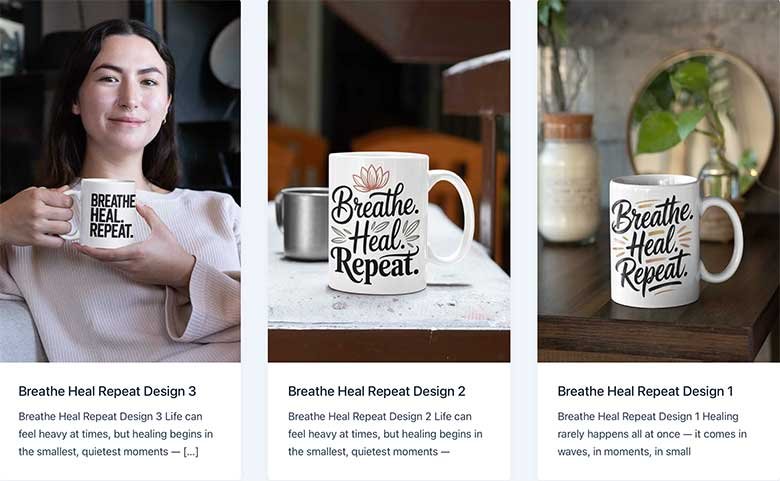
Premier Print Works creates quality prints, mugs, and shirts for people who are building the daily habits that support genuine, deliberate slowing down. Find what speaks to your journey today.
Visit Premier Print Works3. Give yourself explicit, verbal permission to slow down during a specific task today, rather than assuming slowing down requires no permission at all.
Slowing down is sometimes attempted without ever actually granting explicit, internal permission for it, an unspoken absence that can leave the attempt feeling genuinely uncomfortable and unauthorized. Giving yourself this explicit, verbal permission directly supports the slowing down that would otherwise feel like it required justification.
Give yourself explicit, verbal permission today to slow down during one specific task.
“Slowing down more genuinely requires actively supporting yourself through the discomfort that slowing down itself can produce, especially for someone genuinely used to constant motion.”

Build the Morning Habits That Support Slowing Down With Purpose
The free 9 Daily Habits guide gives you nine simple morning practices that build the daily foundation these habits are meant to support.
Get the Free Guide4. Notice the specific physical sensation that arrives when you deliberately slow down, sitting with it supportively rather than rushing past it.
A specific physical sensation — restlessness, a subtle discomfort — that genuinely arrives when deliberately slowing down is sometimes rushed past rather than actually noticed and sat with, a pattern that reinforces speed as the more comfortable, default state. Noticing this specific sensation supportively directly builds tolerance for the discomfort slowing down can produce.
Notice the specific physical sensation that arrives the next time you deliberately slow down, and sit with it supportively.
5. Text or call someone you trust simply to say you are taking a slower moment today, building genuine, external support into the practice.
Slowing down, attempted entirely alone with no genuine, external support, can feel considerably more isolating than the same practice shared with someone trusted, even briefly. Reaching out simply to name the slower moment directly builds genuine, external support into the practice itself.
Text or call someone you trust today, simply to say you are taking a slower moment.
6. Set a specific, gentle reminder partway through a demanding day, prompting a brief, deliberate pause rather than assuming you will remember on your own.
A deliberate pause, relied on being remembered without any specific, external prompt, tends to be forgotten during a genuinely demanding day, while a specific, gentle reminder set in advance directly supports the pause actually happening. This concrete habit removes reliance on remembering alone.
Set a specific, gentle reminder for partway through your next demanding day, prompting a brief, deliberate pause.
7. Name the specific reason you are slowing down today, connecting the practice to a genuine, felt purpose rather than an abstract, general goal.
Slowing down, pursued for a vague, abstract reason, can feel considerably less motivating and less genuinely supported than the same practice connected to a specific, felt purpose actually named directly. This concrete naming supports slowing down with genuine intention, rather than simply as an unattached, general goal.
Name the specific reason you are slowing down today, connecting it to a genuine, felt purpose.
8. Offer yourself the same gentle patience you would genuinely offer a tired friend, specifically during a moment you feel behind or rushed.
Self-directed patience, during a moment of feeling genuinely behind or rushed, is frequently considerably harsher than the patience a person would genuinely offer a tired friend in the same exact situation. Offering yourself this same, borrowed patience directly supports the slowing down that harsh self-judgment otherwise undermines.
Offer yourself the gentle patience you would give a tired friend, the next time you feel genuinely behind or rushed.
9. Build one specific, small comfort ritual into a slower moment — a warm drink, a particular chair — supporting the pace with something genuinely soothing.
A slower moment, held with no specific, comforting ritual attached, can feel emptier or more uncomfortable than the same moment supported by something genuinely soothing — a warm drink, a familiar chair. This concrete habit directly reinforces slowing down as something genuinely supported, not simply endured.
Build one specific, small comfort ritual into your next slower moment today.
10. Acknowledge out loud when a slower pace genuinely feels uncomfortable, rather than pretending the discomfort is not actually there.
Genuine discomfort with a slower pace, left unacknowledged and silently endured, can undermine the practice more than the same discomfort openly, honestly named. Acknowledging this discomfort out loud directly supports moving through it, rather than pretending it does not genuinely exist.
Acknowledge out loud the next time a slower pace genuinely feels uncomfortable to you, rather than pretending otherwise.
11. Celebrate a specific, genuine moment you actually slowed down today, reinforcing the practice explicitly rather than letting it pass unnoticed.
A genuine moment of slowing down, achieved but never explicitly celebrated, denies itself the reinforcement that comes from actually acknowledging real, deliberate progress. Celebrating this specific moment directly reinforces the practice of slowing down as something genuinely worth continuing.
Celebrate one specific, genuine moment you actually slowed down today, acknowledging it explicitly.
12. Ask a trusted person to gently point out when they notice you genuinely rushing, building a genuine, external layer of support into the practice.
A pattern of genuinely rushing, difficult to notice from the inside while it is actually happening, is frequently more visible to someone observing from outside, a perspective a trusted person’s gentle observation can directly provide. Asking for this specific support builds a genuine, external layer that internal awareness alone does not reliably offer.
Ask one trusted person this week to gently point out when they genuinely notice you rushing.
13. Revisit your own current slowing-down habits periodically, since what genuinely supports you can shift as your own life and circumstances evolve.
A specific habit that genuinely supports slowing down at one point can become less effective as circumstances genuinely change over time, which means periodically revisiting your own current habits keeps this practice genuinely aligned with what actually supports you now. This specific, periodic revisiting keeps the practice genuinely current, not simply routine.
Revisit your own current slowing-down habits this month, and consider whether a different one would genuinely support you better now.
Explore Our Top Picks for a Better Life
We have gathered the tools, resources, and products we think are genuinely worth your time — covering mindset, self-care, health, and home. All in one place, hand-picked to support the pace behind these habits.
See Our Top PicksReal Stories, Real Results
Amara had always attempted to slow down through sheer willpower alone, without ever actually offering herself any genuine, supportive gesture during the specific, uncomfortable moment the slowing down itself actually produced. Placing one hand over her own chest for the first time, right in a genuinely rushed moment, revealed a small but genuinely real sense of support that willpower alone had never actually provided. She said her earlier attempts at slowing down had never actually felt unsupported to her at the time. Compared directly against this small, physical gesture, though, how much support had actually been missing became clear.
Joel had always assumed slowing down required no explicit permission, an assumption that had quietly left every attempt feeling genuinely unauthorized and uncomfortable to him. Giving himself explicit, verbal permission for the first time, right before a specific task, revealed how considerably more comfortable the slowing down actually felt once it had genuine, internal authorization attached. He said his earlier discomfort had never actually felt connected to permission to him. Named directly, though, the connection became clear.
Slowing Down Requires Genuine Self-Support, Not Just Less Doing
Each habit in this article offers a specific, concrete form of self-support — the physical gesture, the granted permission, the built comfort ritual. None of these treat slowing down as simply a matter of doing less.
Choose two or three habits that address where your own slowing down currently feels least supported, and build them in this week. Download the free Self-Care Starter Kit to give this pace a consistent daily structure to build from. Slowing down more genuinely requires actively supporting yourself through the discomfort it can produce, especially for someone genuinely used to constant motion.

Ready to Build Your Own Practice of Slowing Down With Purpose?
The free Self-Care Starter Kit gives you simple, practical tools to build a daily rhythm that supports genuine, deliberate pacing.
Download Free Now
Fill Your Space With What Supports Slowing Down With Purpose
Premier Print Works makes quality prints, mugs, and shirts for people building genuine, deliberate, well-supported pacing. Browse the collection and find what speaks to your journey today.
Visit Premier Print WorksDisclaimer
The content on this page is for informational and inspirational purposes only. It is not professional mental health or medical advice of any kind. If you are experiencing significant or persistent stress, anxiety, or other mental health challenges, please consider seeking support from a qualified mental health professional. Results and experiences vary significantly from person to person.
The stories of Amara and Joel are illustrative composite characters created to bring the content to life. They are not real people. Any resemblance to a real person is purely coincidental.
Some links on this page, including links to Premier Print Works and other resources, are affiliate links. If you make a purchase through one of these links, we may earn a small commission at no extra cost to you. We do not own, produce, or control any affiliate products, and we are not responsible for them — we only own and sell the products offered through our own store, Premier Print Works.
All content on A Self Help Hub is the property of Digital Marketing 215 LLC and is protected by copyright law. No part of this page may be copied, reproduced, republished, distributed, or transmitted in any form without prior written permission from the author.