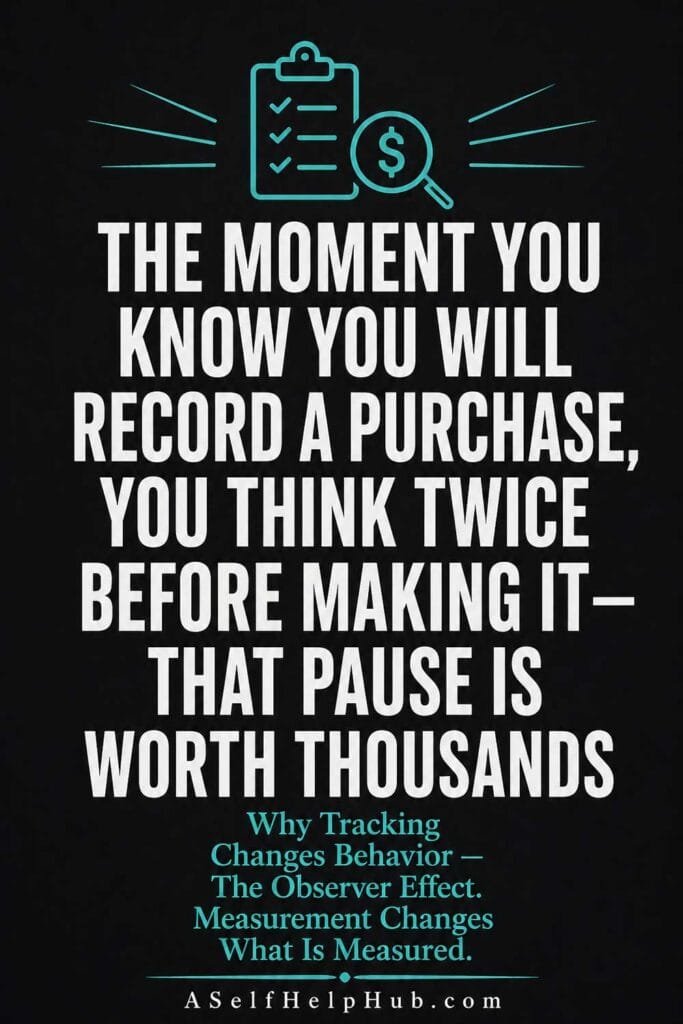
15 Budgeting Tips That Help You Track Your Spending Better
I remember a stretch when I was sure I spent about $300 a month eating out. I said it with total confidence. Then I sat down with a month of statements and added it up. It was closer to $700. I wasn’t hiding anything from myself on purpose. I just never looked.
That gap between what we think we spend and what we actually spend is where a lot of money trouble starts. So I went looking for research on what makes tracking easier, and I found a study that changed how I set things up.
Researchers Bruce Carlin, Arna Olafsson, and Michaela Pagel studied users of a money app in Iceland. The app let people link their checking, savings, and credit card accounts and see all their spending and balances in one place. At one point the company released a mobile version, which made checking much quicker. After that, people logged in more often, and their fees for trying to spend money they didn’t have fell by about 38 percent within two years. The researchers’ leading explanation is that people made fewer mistakes once it was easier to see their own information.
A few cautions. This was one app in one country, so your results may differ. The fees in the study were for purchases that were denied because the account didn’t have enough money. And the research shows that easy access to information helped, not that any one app or method is best. Still, it gave me a simple idea to build on: make your spending easy to see, and you’ll make fewer mistakes.
The 15 tips below follow that idea. The first few come straight from the study. The rest come from my own trial and error, and I’ll say which is which.

Get Your Numbers in Front of You
Grab my free Money Reset Workbook. It’s a good place to start putting your spending on paper.
Get the Free Workbook1. Start by looking at the last 30 days, without judging it
Before you change anything, find out where you are. Pull up the last month of statements and read through every line. Don’t try to fix anything yet. You’re just collecting facts.
My $300 turned into $700 this way. It stung for about a day. After that it was useful, because I finally had a real number to work with.
Try this: Set aside 20 minutes today and read through last month’s spending from top to bottom.
2. Put all your accounts in one place so you can see the whole picture
This one comes from the study. The app in the research let people view checking, savings, and credit cards together. When your money is spread across several logins, it’s easy to miss something.
Many banks and money apps let you link your accounts in one view. You can also do it by hand with a simple list of balances. Use whatever you’ll actually check.
Try this: Write down every account you have, along with where you log in to see it.

A Small Reminder to Check In
I make prints, mugs, and shirts at Premier Print Works. Some people like a reminder where they can see it.
Visit Premier Print Works3. Make checking take seconds, not minutes
Here’s the heart of the study. When the company made it quicker to check account information, people checked more often, and costly mistakes dropped. The lesson I took is that the easier it is to look, the more you look.
So remove the friction. Put your banking app on your phone’s home screen, or bookmark your account page. If logging in takes a minute and three passwords, you’ll skip it.
Try this: Move your banking app to the front of your phone right now.
The easier it is to look at your money, the more often you’ll look.
4. Check your balance on a regular rhythm
The study found that people logged in more often once it got easier, and that went along with fewer mistakes. The exact number of times that works best isn’t something I can tell you from the research. So this part is my own approach.
I look at my balance two or three times a week, on the same days. It takes about a minute. Nothing surprises me at the register anymore.
Try this: Pick two days a week, like Monday and Thursday, and put a reminder on your phone.

Take a Week to Reset Your Routines
My free 7-Day Life Reset is a short week of reflection on your own routines. It’s a good place to start seeing what gets in your way.
Start the Free Reset5. Look before you buy anything big
The fees in the study came from trying to spend money that wasn’t there. A quick check before a large purchase helps you avoid that. It takes ten seconds, and it can save you a fee or an embarrassing moment.
This works for online orders too. Pause, check your balance, and then press the button.
Try this: For the next week, check your balance before any purchase over $50.
6. Sort your spending into five to seven simple categories
Tracking gets heavy when you have 30 categories. Keep it simple. Something like housing, food, transportation, bills, fun, and savings is plenty to start. You can always split a category later.
This is my own rule of thumb, not a finding. I’d rather you track roughly and keep going than track perfectly and quit.
Try this: Write down your five to seven categories and put each of last month’s charges into one.
7. Find the small charges that keep coming back
When I went through my statements, I found three subscriptions I’d forgotten about. None of them was big, but together they added up to more than I expected. They’d been there for months because I never looked at the full list.
Go through your statements and circle anything that repeats. Ask yourself, “Would I sign up for this again today?” If the answer is no, cancel it.
Try this: Circle every repeating charge on last month’s statement.
8. Separate the bills you can’t change from the spending you can
Rent and insurance don’t move much from month to month. Groceries, eating out, and shopping do. When you mix them together, it’s hard to tell where your choices are.
Put your fixed costs in one group and your flexible spending in another. Then watch the flexible group, since that’s where most of your choices live.
Try this: Draw a line through your statement, with fixed bills on one side and flexible spending on the other.
9. Count your cash spending too
Cash is the easiest spending to lose track of. It leaves no trail on your statement. A few coffees and lunches here and there can disappear without a trace.
You don’t need to save every receipt. Just jot down the amount in your phone or on a small notepad when you pay with cash. Or use cash less often so more of your spending shows up automatically.
Try this: For one week, write down every cash purchase, however small.
10. Keep one running number for “spent so far this month”
A long list of transactions is hard to hold in your head. One number is easy. Take your flexible spending total and update it once or twice a week.
I keep mine on a sticky note on my desk. When the number gets close to what I planned, I slow down. It’s a simple tool, and it’s my own method rather than something from a study.
Try this: Write “Spent so far this month” on a sticky note, add your current total, and stick it where you’ll see it.
11. Write one word next to any purchase that surprised you
Some purchases feel fine at the time and odd later. When one bugs you, write a single word next to it: “tired,” “bored,” “sale,” “stressed.” Over a few weeks, you may notice a pattern.
This isn’t about guilt. It’s about information. If most of your surprise purchases happen when you’re tired, that’s useful to know. This one is from my own experience.
Try this: Pick one purchase from last month that surprised you and write down the word that fits.
12. Use a tool you’ll actually open
The best tracking tool is the one you’ll use. For some people that’s an app. For others it’s a spreadsheet, and for others it’s a plain notebook. The study looked at an app, but it doesn’t say an app beats paper.
If you’ve tried a fancy tool and abandoned it, go simpler. A notebook by the kitchen table that you write in twice a week beats a perfect app you delete in two weeks.
Try this: Choose one tool today, and decide you’ll give it a fair two-week try.
13. Set a weekly ten-minute money check
Checking your balance is quick. A weekly check-in is a little deeper. Sit down for ten minutes at the same time each week, look at where your money went, and update your running number.
Put it on your calendar like an appointment. I do mine on Sunday with a cup of coffee. The ritual is my own habit, but it makes the rest of these tips stick.
Try this: Pick a day and time for your weekly check and add it to your calendar now.
14. Use alerts if they help, but don’t rely on them
Many banks let you set a low-balance alert. Some people love them. One summary of the study notes that people in it didn’t need notifications or nudges to benefit. Easier access alone seemed to help.
So try alerts if you like, but don’t depend on them. Looking for yourself is what builds the habit. An alert is just an extra tap on the shoulder.
Try this: Set one low-balance alert at a number that would make you pause.
15. At the end of each month, change one thing
Tracking is only useful if it leads somewhere. At the end of the month, look at your totals and pick one change. Maybe you’ll cancel a subscription, cap eating out, or check your balance more often.
One change is plenty. Next month, look again and pick another. Small changes add up, and they’re far easier to keep than a full overhaul.
Try this: Write down the one change you’ll make next month, and put it on your running-number note.
Explore Our Top Picks for a Better Life
I put together a list of tools and products I think are worth your time, covering mindset, self-care, health, and home.
See Our Top PicksTwo People Who Finally Saw Their Spending
I know a woman named Amara who had money in three different accounts and never felt sure what she had. She linked them into one view and spent an evening reading through the past month. She told me she found two subscriptions she’d forgotten about and a pattern of late-night online orders. She said that one evening cleared up more than a year of worrying.
I also think about a guy named Joel who kept getting hit with fees when a purchase was declined. He started checking his balance every Monday and Thursday and before any big purchase. He told me it took about a minute each time, and the declines stopped.
Picture Knowing Where Your Money Went
Imagine opening your banking app and already knowing roughly what you’ll see. There are no surprises at the register and no sinking feeling when you check your balance. You know your running number, your fixed bills, and the one change you’re working on.
You don’t need all 15 tips today. Start with the first one. Look at the last 30 days, and write down what you find. If you’d like a place to put your numbers, grab my free Money Reset Workbook.
Want to Go Further?
I’m building out some deeper, paid resources for people who want more than a single article can cover. They’re not live yet, but you can see everything I currently have ready for you, free and otherwise, on my Top Picks page.
See What’s Available
Ready to See Where Your Money Goes?
Download my free Money Reset Workbook and start putting your numbers in one place.
Download Free Now
A Small Reminder to Check In
Take a look at Premier Print Works for prints, mugs, and shirts made for people who like a small daily reminder.
Visit Premier Print WorksDisclaimer
This page is for information only. It is not financial, tax, legal, insurance, investment, or estate planning advice. Everyone’s finances are different, so consider speaking with a qualified professional, such as a certified financial planner or a nonprofit credit counselor, before making major money decisions. The research referenced here comes from the published work of Bruce Carlin, Arna Olafsson, and Michaela Pagel, “Mobile Apps and Financial Decision Making” (Review of Finance, 2023), summarized here in plain language. It studied users of one financial app in Iceland, and the fees it measured were for debit purchases denied because of insufficient funds, so the results may not apply to everyone and show a pattern, not a guarantee. The tips labeled as my own are based on my experience, not on research. Results vary from person to person.
Amara and Joel are made-up characters used to bring this content to life. They are not real people.
Some links on this page, including links to Premier Print Works, are affiliate links. If you buy something through one, we may earn a small commission at no extra cost to you. We only own and sell products through our own store, Premier Print Works.
All content on A Self Help Hub belongs to Digital Marketing 215 LLC and is protected by copyright law. No part of this page may be copied or reused without written permission.