9 Monthly Budget Templates That Help You Take Control
There is no single right way to lay out a monthly budget, but the layout you pick shapes how you spend.
That idea comes from a 1996 paper in the Journal of Consumer Research by Chip Heath and Jack Soll. They reported that consumers often set budgets for categories of spending, like entertainment, and then track their expenses against them. The trouble is that budgets can’t predict every opportunity, so people may set aside too much or too little money for a category. In three studies, budgeting seemed to lead to underconsumption, meaning people bought less in a category than they otherwise might have. The effect was stronger for purchases that were very typical of the category, which reduced spending in that category and blocked other typical purchases.
Here’s what I take from it. Your categories matter. A category that’s too tight can block things you’d truly value, and a category that’s too loose stops doing its job. A template is really a set of categories and rules. Two cautions: these were mostly lab studies from the 1990s, and the nine templates below are my own layouts, not findings from the paper. I’ll say where I’m adding my own ideas.

Get Your Monthly Template on Paper
Grab my free Money Reset Workbook. It’s a good place to start laying out your month.
Get the Free Workbook1. The bills-first template
List your fixed bills at the top of the page, and subtract them from your income before you think about anything else. What’s left is your real spending money. It’s the simplest layout, and it’s a good place to start.
The watch-out is what happens to the money that’s left. If you don’t give it a plan, it tends to disappear. Add one more line to say where the rest will go.
Try this: Write your income at the top, subtract your fixed bills, and note what’s left.
2. The zero-based template
In a zero-based budget, every dollar gets a job, and income minus all planned spending equals zero. You give each dollar a category, including savings and debt payments.
The Heath and Soll research fits here: each category you create becomes a mental budget. So choose categories carefully, and keep the list short. This template takes more time to set up, and I find it worth the effort.
Try this: Assign every dollar of this month’s income to a category until nothing is left unplanned.
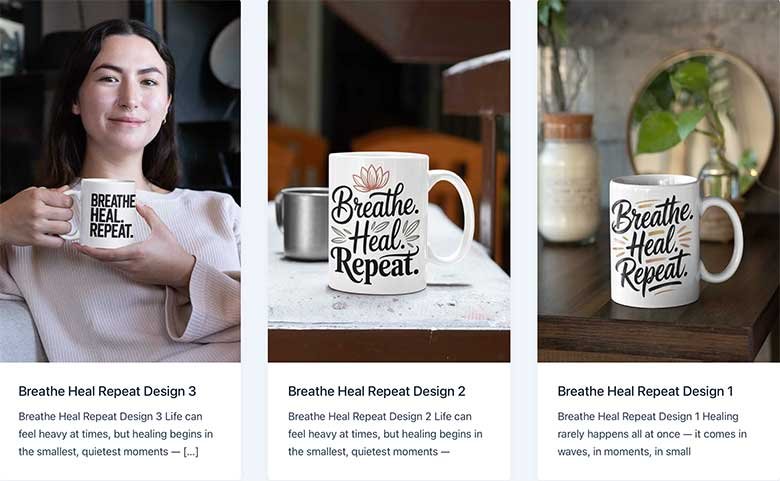
A Small Reminder to Plan Your Month
I make prints, mugs, and shirts at Premier Print Works. Some people like a reminder where they can see it.
Visit Premier Print Works3. The percentage-split template
This one divides your income into a few big buckets, such as needs, wants, and savings. A popular rule of thumb is 50, 30, and 20 percent. That rule isn’t from the study, and you can adjust the numbers to fit your life.
It’s quick, and it’s forgiving if you don’t want to track every line. The watch-out is that it can hide the details. If something feels off, look inside the bucket.
Try this: Choose your three buckets and percentages, and turn them into dollar amounts for this month.
The layout of your budget quietly shapes how you spend.
4. The paycheck-by-paycheck template
Instead of one big monthly plan, this layout gives each paycheck its own page. You list which bills the paycheck will cover and what’s left. It’s helpful when your bills fall at different times of the month.
Early on, I used this when I was paid twice a month. It stopped me from spending the first check on things the second check was supposed to cover. That’s my own experience.
Try this: Make a page for your next paycheck and list the bills it will cover.

Take a Week to Check In With Your Habits
My free 7-Day Life Reset is a short week of reflection on your own routines. It’s a good place to start seeing what gets in your way.
Start the Free Reset5. The category-envelope template
Envelope budgeting puts a set amount in each category, in cash or in a digital version. When the envelope is empty, spending in that category stops. It’s a hands-on way to see your limits.
This is where the research is most relevant. A category with too little can block worthwhile spending, so include a flexible category for things you didn’t see coming. That suggestion is mine.
Try this: Set up three envelopes, like groceries, gas, and fun, and put a flexible envelope next to them.
6. The weekly-allowance template
Take the money you have for everyday spending and divide it by the number of weeks in the month. Each week gets its own number. When the week’s money is gone, you wait.
I like this because it stops spending from bunching up at the start of the month. Weekly pages keep the plan close. That approach is my own.
Try this: Divide your everyday spending money by four, and write each week’s amount on a page.
7. The irregular-income template
If your income changes month to month, plan with a low-but-realistic number. List your bills first, then use any extra income in a planned order: cushion, debt, then spending.
The page should have room to adjust. Good months fill the cushion, and lean months use it. This approach is one I use myself, and it isn’t from the study.
Try this: Write down the lowest income you’d expect, and build a bare-bones budget from that number.
8. The shared template for couples or roommates
When two or more people share money, the template should show whose bills are whose. One page lists shared costs and who pays what. Another lists each person’s own spending money.
Having a separate personal line can prevent arguments. Everyone keeps some freedom, which matters for category budgets too. That’s my own suggestion.
Try this: Sit down together, list the shared bills, and decide on a personal spending amount for each person.
9. The debt-focus template
This layout puts your debt payoff at the top. You list each debt, its minimum, and the extra you’ll add. The rest of the budget is built around that number.
It works well when paying down debt is your main goal. Keep a small line for enjoyment so the plan doesn’t feel like punishment. That tip is mine.
Try this: List your debts, pick the extra amount you’ll pay each month, and build the rest of your budget around it.
Explore Our Top Picks for a Better Life
I put together a list of tools and products I think are worth your time, covering mindset, self-care, health, and home.
See Our Top PicksTwo People Who Found a Layout That Fit
I know a woman named Amara who tried a strict zero-based budget and quit after a month because her fun category was too small. She made it bigger, added a flexible envelope, and started again. She told me the budget finally stopped feeling like a cage.
I also think about a guy named Joel who was paid every other week and kept running short. He switched to a paycheck-by-paycheck template, with each check assigned to specific bills. He told me it was the first time the second check didn’t disappear before the bills did.
Picture a Template That Feels Like Yours
Imagine opening a page that’s laid out the way you think about your money. The categories make sense, there’s room for surprises, and you know what’s left. You’re not following someone else’s system. You built this one.
Pick one of the nine templates and try it for a month. You can always switch. If you’d like a place to set it up, get my free Money Reset Workbook.
Want to Go Further?
I’m building out some deeper, paid resources for people who want more than a single article can cover. They’re not live yet, but you can see everything I currently have ready for you, free and otherwise, on my Top Picks page.
See What’s Available
Ready to Choose Your Template?
Download my free Money Reset Workbook and start planning your month.
Download Free Now
A Small Reminder to Plan Your Month
Take a look at Premier Print Works for prints, mugs, and shirts made for people who like a small daily reminder.
Visit Premier Print WorksDisclaimer
This page is for information only. It is not financial, tax, legal, insurance, investment, or estate planning advice. Everyone’s finances are different, so consider speaking with a qualified professional, such as a certified financial planner or a nonprofit credit counselor, before making major money decisions. The research referenced here comes from the published work of Chip Heath and Jack B. Soll, “Mental Budgeting and Consumer Decisions” (Journal of Consumer Research, 1996), summarized here in plain language. It reported three studies on how people set and track category budgets and found that budgeting may lead to underconsumption, and it did not test the specific templates on this page. The 50/30/20 split is a popular rule of thumb and not from the study. The templates are my own layouts and are based on my experience. Results vary from person to person.
Amara and Joel are made-up characters used to bring this content to life. They are not real people.
Some links on this page, including links to Premier Print Works, are affiliate links. If you buy something through one, we may earn a small commission at no extra cost to you. We only own and sell products through our own store, Premier Print Works.
All content on A Self Help Hub belongs to Digital Marketing 215 LLC and is protected by copyright law. No part of this page may be copied or reused without written permission.