9 Self Improvement Habits That Help You Build a Stronger Mindset
“Fail forward.” “Learn from your mistakes.” “Every failure is a lesson.” We repeat these lines so often that they start to feel like facts. I believed them for years, and I still think there is truth inside them. But there is a catch that took me a long time to see.
Psychologists Lauren Eskreis-Winkler and Ayelet Fishbach ran five studies with 1,674 people, published in Psychological Science in 2019. In each one, people answered questions and were told they got them right or wrong. Later, they were tested on what they had learned. People learned less from being told they were wrong than from being told they were right. The researchers’ explanation is that failure threatens the ego, so people tune out. And when people watched someone else fail, they learned just as much as from someone else’s success. One caution: these were online tasks with simple questions, not real life, and another researcher has since argued that one of the tasks may exaggerate the effect. So I treat this as a helpful idea, not a settled fact.
Here is the part that matters for you. If we tune out when failure feels personal, then a stronger mindset may have less to do with being tougher and more to do with building habits that let you stay in the room and listen while it still stings. These nine habits are my attempt to do exactly that.

Build the Daily Habits Behind a Stronger Mindset
Download the free 9 Daily Habits guide and get nine simple morning practices that build the steady foundation these habits are meant to support.
Get the Free Guide1. Review a setback as if it happened to a friend, so your ego stops guarding the door.
The research suggests that when failure belongs to someone else, we pay attention to it. So borrow that. When something goes wrong, write the story in the third person. “She missed the deadline. Here is what happened. Here is what she could try next.” It sounds silly the first time. It works because it takes a little of the sting out of the details.
Keep it factual. Write what happened, in order, with no adjectives like “stupid” or “pathetic.” You are collecting information, not passing a sentence. Then ask what advice you would give a friend in that spot.
I started doing this after a project of mine went sideways, and I noticed that my notes were much kinder and much more useful than my thoughts at 2 a.m.
The next time something goes wrong, spend five minutes writing it out as if it happened to a friend.
2. Wait before you review a failure, so you are learning from it instead of reliving it.
When a setback is fresh, your ego is loud. That is not the best time to study it. Give yourself a short pause, even a few hours or a night’s sleep, before you sit down to review. I do not mean pushing it away. I mean choosing a time when you can look at it without flinching.
Many people either replay a failure over and over, or avoid thinking about it altogether. Both keep you from learning. A set review time does something better: it gives you permission to feel bad now and think clearly later.
Put the review on your calendar if it helps. A date makes it feel like a routine, not a punishment.
Decide on a pause time for your next setback, whether that is an evening, a day, or a weekend, and keep it.
Keep Your Growth in Plain Sight
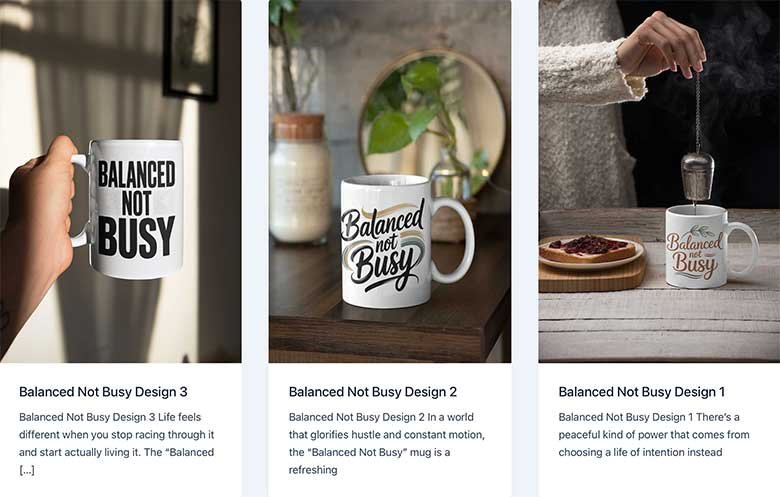
Premier Print Works creates quality prints, mugs, and shirts for people who are working on becoming stronger. Find something that keeps your goal in front of you.
Visit Premier Print Works3. Write one sentence about what the setback taught you, and keep it simple.
You do not need a long essay. In fact, a long one can turn into a spiral. Finish this sentence: “Next time, I will…” That is it. One small, specific change is better than a vague promise to do better.
The point is to move from feeling to learning. A feeling can sit forever and teach you nothing. A sentence you can act on is a lesson you can use.
If you cannot think of a lesson, that is okay too. Write what you still do not understand, and ask someone you trust. Not knowing yet is also a form of learning.
After your next setback, finish the sentence “Next time, I will…” and save it somewhere you can find it.
“You do not have to enjoy failing. You only have to stay in the room long enough to learn something.”
4. Separate what happened from who you are, since a mistake is an event and not an identity.
Ego threat is the thing that makes us tune out. It shows up when a result feels like a ruling on our worth. “I failed” quietly turns into “I am a failure,” and then we stop listening, because who wants to listen to that?
Practice changing the sentence. Instead of “I am bad at this,” try “I did not do this well yet.” Instead of “I ruined it,” try “this part did not work.” It is a small edit, but it keeps the problem about the action, which you can change, and not about you, which feels permanent.
You can still admit that it matters, because it does. You can care a great deal and still refuse to let one result define you.
Write down one thing you are telling yourself about a recent failure, and rewrite it so it describes the event only.

Take a Week to Reset and Reflect
The free 7-Day Life Reset gives you a short, simple way to step back and look at your week, which is exactly where learning from setbacks begins.
Get the Free Reset5. Study other people’s failures on purpose, since that is a gentler way to learn the same lessons.
In the research, people learned just as much from other people’s failures as from their successes. That means you can borrow lessons without paying the full price. Read about a business that closed, a project that fell apart, or a plan that went wrong, and ask what you would watch for.
Stories from people who have been through it are especially good. Listen to a friend or coworker talk honestly about a mistake. Ask what they would do differently. You will often find a lesson that applies to your own life.
This also helps your mindset in a quieter way. Seeing that capable people fail and keep going makes your own setbacks feel less like a private shame.
This week, ask one person you respect to tell you about a mistake that taught them something.
6. Keep a short lessons file, so each setback leaves something behind besides a bad memory.
A lessons file can be a note on your phone, a page in a notebook, or a document on your computer. Each entry has three parts: what happened, what I learned, and what I will try. Keep each part to a line or two.
Why bother? Because memory is unreliable, and ego makes it worse. The study found that people who got failure feedback also remembered fewer of their answers. Writing it down protects the lesson from the part of you that wants to forget.
Once a month, read through the file. You will probably see patterns, and you will definitely see proof that you have been learning. That is a strong foundation for a stronger mindset.
Start the file today with one entry from the last month, even a small one.
7. Share a failure with someone safe, because hidden failures cannot teach anyone anything.
Fishbach has described information about failures as something of a public good, because when people hide them, nobody else gets to learn. It is also true on a personal level. When you tell a safe person about a failure, it often shrinks. You also get another point of view, which can show you something you missed.
Choose someone who will listen and not rush to fix or judge. A friend, a mentor, a partner, or a coworker you trust are all good options. Keep it simple: “Here is what I tried, here is what happened, and here is what I think I learned.”
You might be surprised how often the response is, “Me too.” That is a quiet comfort, and it is part of what keeps us from feeling alone with our mistakes.
Tell one trusted person about a recent stumble, and ask what they see that you might not.
8. Practice small, low-stakes failures, so your mind gets used to missing without panicking.
If you only ever try things you are sure you will do well, your ego never gets any practice with failing. Try something small where the stakes are low, such as a new recipe, a drawing, a language app, or a short run. Expect to be bad at it for a while.
You do not have to enjoy failing. The point is to show your mind that you can miss and still be okay. Each small miss builds a little more tolerance, which helps when the stakes are higher.
Pay attention to your inner voice while you do it. Notice how fast it jumps to criticism, and practice answering it with something calmer.
Choose one small thing you are likely to be bad at, and do it this week on purpose.
9. Balance every review with one honest win, since success teaches too.
It is easy to build a mindset that only looks at what went wrong. The research found that people learned well from success, so do not skip those lessons. After a review, ask what went right and why. What did you do that you want to repeat?
Be specific. “I did a good job” is not very useful. “I asked for help early, and it saved me two days” is something you can use again. A real win with a real reason is worth more than a vague pat on the back.
A stronger mindset stays balanced. You look at both columns, the miss and the hit, and you let both teach you.
Before you close your next review, add one thing that went right and the reason it did.
Explore Our Top Picks for a Better Life
We have gathered the tools, resources, and products we think are genuinely worth your time, covering mindset, self-care, health, and home. All in one place, hand-picked to support the habits behind a stronger mindset.
See Our Top PicksReal Stories, Real Results
Let me share two examples I like to tell, because they handled setbacks so differently. Kezia used to replay every mistake at night and then avoid thinking about it all day. When she started writing short, third-person notes a day after anything went wrong, she noticed her lessons got clearer and her mood got lighter. She kept a small lessons file, and after a few months she could see her own progress on the page.
Daniel’s struggle was hiding. He did not tell anyone about a project that went badly, and he felt worse every day. When he finally told a trusted coworker, she shared a similar story of her own. That one conversation gave him a new idea for the next attempt and took away much of the shame. Both of them said the same thing: the setback itself was not the hardest part. Facing it with some company and some structure was what changed things.
A Stronger Mindset Is Built Habit by Habit, Not All at Once
Picture the next time something goes wrong. You feel the sting, and then you do something different. You pause, write it down, ask what it taught you, and tell someone you trust. The setback still hurts a little, but it no longer runs the day.
Choose two or three habits from this list that feel doable, and start there. Download the free 9 Daily Habits guide to give yourself a steady daily base to build from. Over time, the way you meet failure becomes part of your strength.
Want Ready-Made Tools to Help You Put This Into Action?
Sometimes the fastest way forward is a tool that someone has already built. Browse our hand-picked resources and downloads, chosen to help you take the next step with less guesswork.
Browse Resources and Downloads
Ready to Turn Setbacks Into Strength?
The free 9 Daily Habits guide gives you simple morning practices that make steady growth feel doable.
Download Free Now
Fill Your Space With Reminders of Your Progress
Premier Print Works makes quality prints, mugs, and shirts for people building a stronger mindset. Browse the collection and find what speaks to your journey today.
Visit Premier Print WorksDisclaimer
The content on this page is for informational and inspirational purposes only. It is not professional mental health or medical advice of any kind. If you are experiencing ongoing distress, anxiety, or low mood, please consider seeking support from a qualified mental health professional. Results and experiences vary significantly from person to person. The research mentioned in this article used simple online tasks and may not apply the same way to every real-life situation.
The stories of Kezia and Daniel are illustrative composite characters created to bring the content to life. They are not real people. Any resemblance to a real person is purely coincidental.
Some links on this page, including links to Premier Print Works and other resources, are affiliate links. If you make a purchase through one of these links, we may earn a small commission at no extra cost to you. We do not own, produce, or control any affiliate products, and we are not responsible for them — we only own and sell the products offered through our own store, Premier Print Works.
All content on A Self Help Hub is the property of Digital Marketing 215 LLC and is protected by copyright law. No part of this page may be copied, reproduced, republished, distributed, or transmitted in any form without prior written permission from the author.