17 Self Awareness Questions That Help You Build a More Honest Life
Most of us are fairly sure we are fair. We are the reasonable one, the one who sees both sides, the one who is not biased.
In 2002, psychologist Emily Pronin and her colleagues published three studies on this exact belief. They found that people rated themselves as less subject to a list of common biases than the average American, their classmates, or fellow airport travelers. In one follow-up, people who showed a better-than-average bias kept insisting their self-assessments were accurate and objective, even after reading a description of how they might have been affected by that very bias. In another, people called a peer’s self-serving explanation for a test result biased, while describing their own similar explanation as free of bias. Later researchers repeated the basic finding with larger samples, which is reassuring.
The lesson I take from this is that honesty with ourselves takes more than good intentions, because the blind spot is built in. Honest self-awareness needs questions, and often outside views. These seventeen questions are designed to help you see more of what you might be missing. Approach them with curiosity, not harshness. The goal is a more honest life, not a more guilty one.
Build the Daily Habits Behind an Honest Life
Download the free 9 Daily Habits guide and get nine simple morning practices that make regular, honest self-checks easier to keep.
Get the Free Guide1. Where might I be less objective than I believe I am?
Start with the blind spot itself. Think of an area where you feel very sure you are being fair, such as how you treat your family, how you handle money, or how you judge a coworker. Ask whether you might be less objective there than you think.
The research suggests most of us rate ourselves as less biased than others. That does not mean you are biased in every area. It means that if you assume you are not, you might not check.
Write about one area honestly. You might be right. The point is to look.
Write down one area where you feel completely fair, and one reason you could be wrong.
2. What feedback did I dismiss quickly, and what if there was something true in it?
Think of a piece of criticism you brushed off. Maybe it came from a person you did not like, or at a bad moment, or in a harsh tone. We often reject feedback because of the messenger, and lose the message.
Write down what was said, as exactly as you can remember. Then ask: if even ten percent of this were true, what would it be?
You do not have to agree with all of it. But a small piece of truth can be valuable.
Write the feedback you dismissed, and name the small part that might be true.

Keep an Honest Reminder in Your Space
Premier Print Works creates quality prints, mugs, and shirts for people living with honest self-awareness. Find a reminder that truth and kindness can go together.
Visit Premier Print Works3. When I feel certain, what would it take to change my mind?
Strong certainty can feel like clarity, but it can also close the door. Pick a belief you hold firmly, such as an opinion about a person, a decision, or a situation. Ask what evidence would change your mind.
If you cannot think of anything, that is worth noticing. A belief that nothing could change is closer to a wall than to a view.
Write down what would count as evidence against it. Then look for it, gently.
Choose one strong opinion, and write what evidence would change your mind.
“The hardest person to see clearly is the one looking out from behind your own eyes.”
4. Who sees this differently than I do, and what might they be noticing?
Think of someone who disagrees with you about something that matters. Instead of asking why they are wrong, ask what they might see that you do not. What are they worried about? What experiences might shape their view?
Listening this way widens your picture without asking you to give in. Most disagreements have more than one side that contains some truth.
Write the other person’s view in a way that they would say, “Yes, that is what I mean.”
Write the other side’s view so well that they would nod, and see what you learn.
Take a Week to Look at Your Life Honestly
The free 7-Day Life Reset gives you a short, simple way to step back and see your week as it really is, which is where honest self-awareness starts.
Get the Free Reset5. What am I saying yes to, when I really mean no?
A lot of dishonesty is quiet. We say we are fine when we are not. We agree to things we resent. We nod along to avoid an awkward moment. Over time, those small yeses can pile up.
List the last few times you said yes but meant no. What were you afraid would happen if you said what you really thought?
Seeing the pattern is the first step. You can start with small, kind ways to say no or to say “I need to think about it.”
List three recent times you said yes but meant no, and write what you feared.
6. Where do my words and my actions not match?
We all have gaps between what we say we value and what we do. You might say family comes first, but work eats your evenings. You might say you want to be healthy, but your habits say otherwise.
Look at how you spent your last week, in time and money. What do those choices say you value? Compare that with what you say you value.
No need to judge the gap. It is information about where you want to make changes, or where you may want to adjust what you say.
Write what you say you value, then write what your last week’s choices suggest you value.
7. What truth am I avoiding admitting to myself?
Most of us have at least one truth we steer around. It might be that a relationship is not working, a job is wrong, a habit is hurting us, or a dream has changed. Avoiding it takes energy.
Write the sentence you are afraid to write. Start with, “The truth I have been avoiding is…” You can write it in pencil and keep it private.
Often, the relief of naming it is bigger than the fear of it. If it is heavy, share it with a trusted person or a counselor.
Finish this sentence privately: “The truth I have been avoiding is…”
8. How do I explain my mistakes, and how do I explain other people’s?
In one of Pronin’s studies, people saw their peer’s self-serving explanations as biased, while seeing their own as fair. A common version of this is how we explain mistakes. When we mess up, we point to circumstances. When others mess up, we point to character.
Think of a recent mistake of yours and a recent mistake of someone else. How did you explain each one? Was it the same standard?
Try applying the same generosity to others that you give yourself, and the same honesty to yourself that you give others.
Write about one mistake of yours and one of someone else’s, and compare how you explained each.
9. How do I describe other people’s motives, compared with my own?
We tend to know our own good intentions from the inside, and we guess at other people’s from the outside. That can lead us to assume the worst about them and the best about ourselves.
Think of a recent conflict. What did you assume about the other person’s motives? What did you know about your own? Could you have been wrong about theirs?
A simple rule can help: try to find a generous explanation for their behavior as well as your own.
Write about a recent conflict, and offer a generous explanation for the other person’s actions.
10. What do I want that I pretend not to want?
Sometimes we hide wants from ourselves because they feel selfish, impractical, or embarrassing. We might want recognition, rest, more money, a different career, or more closeness.
Ask yourself what you wish for when nobody is watching. Write it without judging it. A want can sit there without being a promise to act or a flaw.
Honest wants help you build an honest life. You can decide later what to do with them.
Write three things you want that you rarely say out loud.
11. Where do I perform in public in a way that does not match who I am?
Almost everyone puts on a version of themselves in some settings. That is normal. But if the gap is large, it can be exhausting.
Think about where you feel most like a performance. At work? Online? With family? What are you hiding or exaggerating? What are you afraid would happen if you showed more of yourself?
You may not want to change anything. But knowing the gap helps you choose where to be more real.
Write about one setting where you perform, and one small way you could be more genuine there.
12. Whom could I trust to tell me the truth, and what would I ask?
Because of the blind spot, outside views are valuable. Think of someone who knows you well, cares about you, and is honest. Maybe it is a friend, a mentor, or a partner.
Write down a specific question you could ask them, such as “What is something I do that gets in my own way?” or “What do you see me avoiding?” Make it easy for them to be honest.
Listen without defending. You can think about it later and decide what rings true.
Choose one person, write a specific question for them, and plan when you will ask it.
13. What would feel like a relief to say out loud?
Sometimes the truest thing is the thing that would feel like a weight lifted. It might be an apology, a confession, a request, or a boundary. Ask yourself what you are holding in that you would feel lighter saying.
Write it down first. You may find that it does not need to be said to anyone. You may find that it does.
If saying it could cause harm or is complicated, talk it over with a trusted person or a counselor first.
Write down something that would feel like a relief to say, and decide whether and to whom you would say it.
14. What would an honest week look like for me?
Imagine a week in which your words and actions lined up more closely. You say what you mean, kindly. You say no when you need to. You do what you said you would do. What would that week include?
Write about it in specific terms. Which conversations would you have? What would you stop doing? What would you start?
A picture of an honest week can help you decide where to begin.
Write a short description of an honest week, and pick one piece to try this week.
15. What am I proud of, for real reasons?
Self-awareness also means seeing your strengths accurately, not only your faults. Write about things you are proud of, and the true reasons behind each. Not what you think you should be proud of, but what truly matters to you.
Be specific. “I am kind” is less useful than “I showed up for my friend when it was inconvenient.” Real evidence builds real confidence.
An honest life includes honest credit.
List three things you are proud of, and write the specific reason behind each.
16. How can I be honest with myself and kind at the same time?
Some people avoid honesty because it feels harsh. But honesty and kindness work well together. You can look at your faults with the same warmth you would give a friend.
Notice your tone when you review your own behavior. Is it curious, or cruel? Try rewriting a harsh thought in a gentler voice that is still true.
Self-honesty works best when it feels safe. If it feels like an attack, you will avoid it.
Rewrite one harsh thought about yourself in a voice that is both truthful and kind.
17. What is one small honest step I can take today?
Big changes often start with small honest acts. It might be telling someone you are tired, correcting a small exaggeration, asking a question you were afraid to ask, or admitting you do not know something.
Choose one small, safe step. Do it today. Notice how it feels afterward.
A more honest life is built a bit at a time, with kindness and with practice.
Choose one small honest act for today, and write down how it went tonight.
Explore Our Top Picks for a Better Life
We have gathered the tools, resources, and products we think are genuinely worth your time, covering mindset, self-care, health, and home. All in one place, hand-picked to support an honest, aware life.
See Our Top PicksReal Stories, Real Results
Let me share two examples I like to use. Amara considered herself a very fair person, especially at work. When she tried the question about explaining mistakes, she noticed she blamed circumstances for her own slips and character for other people’s. It was uncomfortable, but it changed how she responded to a coworker’s error that same week. She told me she did not feel worse about herself. She felt more accurate.
Joel asked a trusted friend, “What do you see me avoiding?” The friend said, gently, that Joel tended to say yes to everything and then quietly resent it. Joel had never put it that way, but it fit. He started practicing small, kind ways to say no. Both of them said the same thing: honest feedback from someone who cared showed them what they could not see alone.
A More Honest Life Starts With Better Questions and Kinder Eyes
Picture a life in which your words and actions line up a little more each month. You see your strengths and your blind spots with the same steady gaze, and you can ask a trusted friend for the truth without flinching. It may not be a perfect life, but it is a more honest one, and that tends to feel lighter.
Choose two or three of these questions, and answer them this week. Download the free 9 Daily Habits guide to give your self-awareness a steady daily base. Honesty with yourself is a skill, and it grows with gentle practice.
Want Ready-Made Tools to Help You Put This Into Action?
Sometimes the fastest way forward is a tool that someone has already built. Browse our hand-picked resources and downloads, chosen to help you take the next step with less guesswork.
Browse Resources and Downloads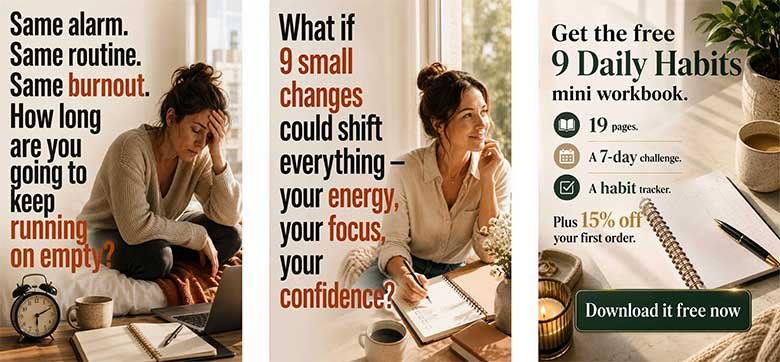
Ready to Look at Your Life With Honest, Kind Eyes?
The free 9 Daily Habits guide gives you simple morning practices that make steady self-awareness feel doable.
Download Free Now
Fill Your Space With Honest Intentions
Premier Print Works makes quality prints, mugs, and shirts for people building a more honest life. Browse the collection and find what speaks to your journey today.
Visit Premier Print WorksDisclaimer
The content on this page is for informational and inspirational purposes only. It is not professional mental health or medical advice of any kind. If you are experiencing significant distress, shame, or difficulty in your relationships, please consider seeking support from a qualified mental health professional. Results and experiences vary significantly from person to person. The research mentioned in this article was based on surveys and experiments with participants who rated themselves and others, and its findings may not apply the same way to every situation.
The stories of Amara and Joel are illustrative composite characters created to bring the content to life. They are not real people. Any resemblance to a real person is purely coincidental.
Some links on this page, including links to Premier Print Works and other resources, are affiliate links. If you make a purchase through one of these links, we may earn a small commission at no extra cost to you. We do not own, produce, or control any affiliate products, and we are not responsible for them — we only own and sell the products offered through our own store, Premier Print Works.
All content on A Self Help Hub is the property of Digital Marketing 215 LLC and is protected by copyright law. No part of this page may be copied, reproduced, republished, distributed, or transmitted in any form without prior written permission from the author.