15 Personal Growth Quotes That Help You Rise After Setbacks
The email arrives, and the news is not what you hoped for.
Maybe it is a rejection, a failed plan, a lost job, or a mistake that cannot be undone. In the first hours, it can feel as though the whole floor has dropped. I have had those moments, and what stays with me most is how quiet and heavy the room felt afterward. What helped, in time, was not a pep talk. It was a handful of plain thoughts that let me take the next small step.
The fifteen quotes below are original reflections written for this site, with a short thought and a small action for each. They are about rising gently after a setback, and not about pretending it did not hurt. Take what helps. If your setback has left you feeling hopeless or unsafe, please reach out to a doctor, a counselor, or a crisis line in your area.

Rise Again With Gentle, Practical Support
Download the free Self-Care Starter Kit and get simple, practical tools for caring for yourself while you recover from a setback.
Get the Free Starter Kit1. You are allowed to be disappointed before you try to be positive.
“I can be disappointed first, and hopeful later.”
After a setback, many of us feel pressure to bounce back right away. But disappointment is real, and it deserves a little room. Pushing it away often makes it louder.
Give yourself some time to feel what you feel. Take a day, a weekend, or whatever you need. Then, when you are ready, you can look toward the next step.
Honest feelings are a stronger starting point than forced cheer.
Give yourself permission to be disappointed today, and write down what you feel.
2. A setback is one chapter, with the rest of the book still unwritten.
“This is one chapter, and I am still writing the book.”
In the middle of a hard moment, it can feel like everything is ruined. But your life is long, and this is one part of it. Chapters end, and new ones begin.
Try describing the setback as one chapter in a longer story. What might come next? What would you like the next chapter to hold?
Zoom out a little, and give yourself some room.
Write one sentence that begins, “This is one chapter, and the next one could be…”
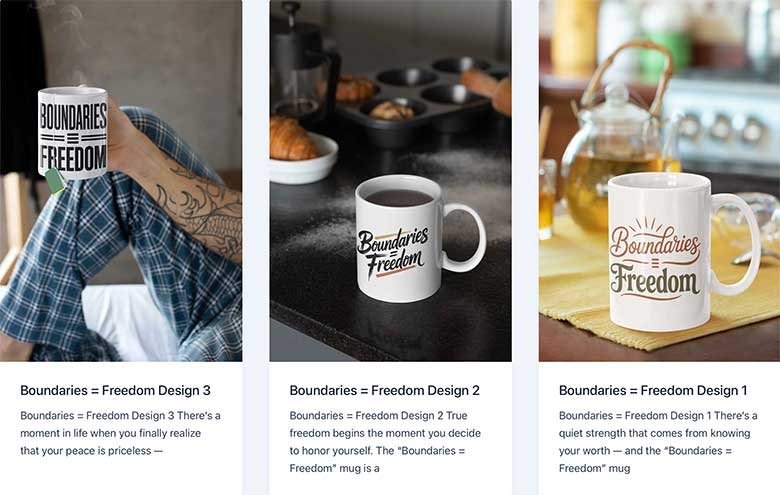
Keep a Reminder That You Can Rise Again
Premier Print Works creates quality prints, mugs, and shirts for people rising after setbacks. Find a small reminder that a setback is only one part of your story.
Visit Premier Print Works3. Rising can start as small as getting out of bed.
“Rising can begin with something as small as getting out of bed.”
After a setback, big plans can feel impossible. Start with something tiny. Get up, wash your face, drink water, step outside. These small acts tell your mind that you are still here and still trying.
You do not have to feel ready. You only have to do the next small thing.
Many comebacks begin this quietly.
Choose one very small action to take today, and do it before noon.
4. What went wrong does not decide who you are.
“What went wrong is something that happened, and it stays separate from who I am.”
It is easy to slide from “this went badly” to “I am a failure.” But an event and an identity are different things. You can fail at something and still be capable, kind, and worthy.
Try describing what happened in plain terms. What did I do? What happened? What can I do next?
Keep the facts separate from your worth.
Write down what happened in three plain sentences, with no labels about yourself.

Build Steady Habits After a Setback
The free 9 Daily Habits guide gives you nine simple morning practices that help you find your footing again.
Get the Free Guide5. You can learn from a setback without punishing yourself for it.
“I can learn from this without punishing myself for it.”
Learning and self-blame are different. Learning asks, “What can I take from this?” Blame asks, “What is wrong with me?” The first helps you grow. The second tends to keep you stuck.
When you are ready, look at the setback with curiosity. What worked? What did not? What would you do differently?
Be gentle with yourself while you learn.
When you are ready, write down two things you learned from the setback.
6. Asking for support is part of rising, and it shows strength.
“Asking for help is part of how I rise.”
Many people try to recover alone. But support can make the road much easier. A friend, a mentor, a family member, a counselor. Someone to listen, to help you think, or simply to sit with you.
Reach out, and say what you need. Most people are glad to help.
Rising is often a shared effort.
Reach out to one person today, and tell them you could use some support.
7. Rest after a setback is part of the recovery.
“Rest is part of my recovery, and I can take it without guilt.”
It is tempting to jump straight into fixing things. But your mind and body may be depleted. A little rest can help you think more clearly and feel steadier.
Plan some downtime. Sleep, take a walk, do something soothing. Return to the problem when you have more energy.
Rest is part of getting back up.
Schedule a real rest period this week, and protect it.
8. You do not have to do the whole comeback today.
“I only have to do today’s piece of the comeback.”
A big comeback can feel overwhelming. But you only have to do today’s part. A call, an application, a conversation, a small habit. The rest can wait.
Break the road back into small pieces. Choose one for today, and let the others come later.
Slow comebacks are still comebacks.
Choose one piece of your comeback to do today, and leave the rest for later.
9. Your next attempt can be different, because you know more now.
“My next attempt can be wiser because of this one.”
A setback gives you information that you did not have before. You know what did not work, what surprised you, and what you might change. That knowledge is valuable.
Before you try again, take a little time to apply what you learned. Adjust your approach, even a little.
The next attempt starts from a stronger place.
Write one thing you will do differently the next time, based on what you learned.
10. Comparing your lowest moment to someone else’s highlight makes rising harder.
“I will not measure my hardest day against someone else’s best one.”
After a setback, it is tempting to look at other people’s successes and feel worse. But you are seeing their best moments, and you are living your worst. The comparison was never fair.
Limit what you take in when you are tender. Focus on your own road.
Your path has its own pace.
Take a break from one source of comparison this week, and spend the time on your own next step.
11. Small wins after a setback deserve to be noticed.
“Every small win after a setback is a sign that I am rising.”
When you are recovering, small victories matter a lot. A day you got up on time. A conversation you had. A task you finished. They show that you are moving.
Keep a short list of these wins. Read it when you feel stuck.
A string of small wins can turn into momentum.
Start a list of small wins, and add one entry today.
12. Failing at something leaves room to keep caring about it.
“A setback can change my path without changing what I care about.”
Sometimes a setback tempts us to shut the door on a dream. But disappointment does not always mean the dream is wrong. It may mean the path needs adjusting.
Give yourself time before you decide. Ask what you still care about, and whether a different route could work.
You can choose to keep going, change direction, or let go. Take your time.
Write down what you still care about in this area, and one different way you might approach it.
13. You are stronger than your hardest day makes you feel.
“I am stronger than my hardest day makes me feel.”
On the worst days, we feel weak and small. But strength often shows in the way we keep going after those days. You have handled hard things before, and you may be handling one now.
Remind yourself of past times you got through something difficult. They are proof of strength you already have.
Your hardest day is one page in a longer story.
Write down three hard times you have already gotten through.
14. Rising is more about direction than speed.
“What matters is the direction I face, and I can rise at my own speed.”
After a setback, you might feel pressure to move quickly. But what matters most is that you are facing in a good direction. A slow step toward something you care about beats a fast step in the wrong direction.
Ask yourself where you want to head. Take a small step that way.
Let the pace be your own.
Decide which direction you want to head, and take one small step that way today.
15. One day, you may look back and see that this setback taught you something you needed.
“With time, a hard chapter may teach me something I needed, and I do not have to rush to find it.”
I want to be careful here. Not every hard thing hides a gift, and nobody requires you to find one. But sometimes, with time, we notice that a painful chapter changed us in useful ways. A new strength, a clearer priority, a kinder heart.
If that happens for you, welcome it. If it does not, that is fine, too.
You can simply keep walking.
If it feels right, write down one way you have changed since the setback. If not, skip this and rest.
Explore Our Top Picks for a Better Life
We have gathered the tools, resources, and products we think are genuinely worth your time, covering mindset, self-care, health, and home. All in one place, hand-picked to support your gentle comeback.
See Our Top PicksReal Stories, Real Results
Let me share two examples I like to use. Amara lost an opportunity she had worked hard for, and she felt flattened. She let herself be disappointed for a few days, then picked one quote, about doing today’s piece of the comeback. She wrote down one small action each morning. She told me that a month later, she was surprised to find herself back in motion.
Joel’s setback was a mistake at work that embarrassed him. He leaned on a friend, wrote down what he learned in plain sentences, and kept the facts separate from his worth. He said that talking it out and writing it down made the mistake feel smaller and more useful. Both of them said the same thing: rising began with honesty and one small step.
Rising After a Setback Starts With Honesty and One Small Step
Picture the day after a setback, and the day a few weeks later. You allowed yourself to feel it, you took small steps, and you leaned on people who care. The setback is part of your story, and it is no longer the whole of it.
Choose one or two quotes from this list, and keep them where you will see them. Download the free Self-Care Starter Kit to give your days a gentle rhythm. You can rise at your own pace, and you do not have to do it alone.
Want Ready-Made Tools to Help You Put This Into Action?
Sometimes the fastest way forward is a tool that someone has already built. Browse our hand-picked resources and downloads, chosen to help you take the next step with less guesswork.
Browse Resources and Downloads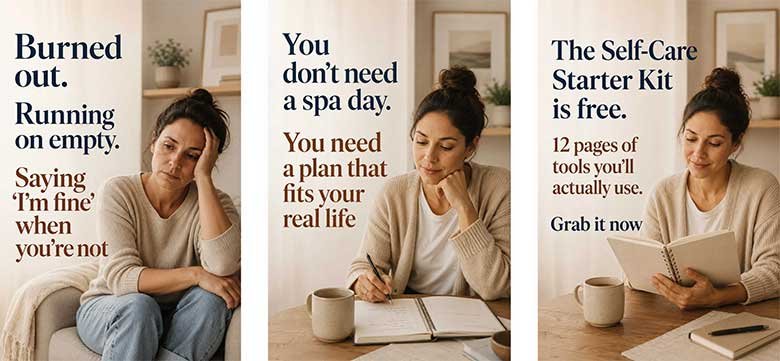
Ready to Rise Again, One Gentle Step at a Time?
The free Self-Care Starter Kit gives you simple, practical tools to build a daily rhythm that supports your comeback.
Download Free Now
Fill Your Space With Gentle Comebacks
Premier Print Works makes quality prints, mugs, and shirts for people who get back up. Browse the collection and find what speaks to your journey today.
Visit Premier Print WorksDisclaimer
The content on this page is for informational and inspirational purposes only. It is not professional mental health or medical advice of any kind, and it is not a substitute for professional care. The quotes on this page are original reflections written for A Self Help Hub and are not attributed to any real person. If you are experiencing hopelessness, persistent sadness, or thoughts of harming yourself, please reach out to a qualified healthcare or mental health professional, or contact a crisis line or emergency services in your area right away. Results and experiences vary significantly from person to person.
The stories of Amara and Joel are illustrative composite characters created to bring the content to life. They are not real people. Any resemblance to a real person is purely coincidental.
Some links on this page, including links to Premier Print Works and other resources, are affiliate links. If you make a purchase through one of these links, we may earn a small commission at no extra cost to you. We do not own, produce, or control any affiliate products, and we are not responsible for them — we only own and sell the products offered through our own store, Premier Print Works.
All content on A Self Help Hub is the property of Digital Marketing 215 LLC and is protected by copyright law. No part of this page may be copied, reproduced, republished, distributed, or transmitted in any form without prior written permission from the author.