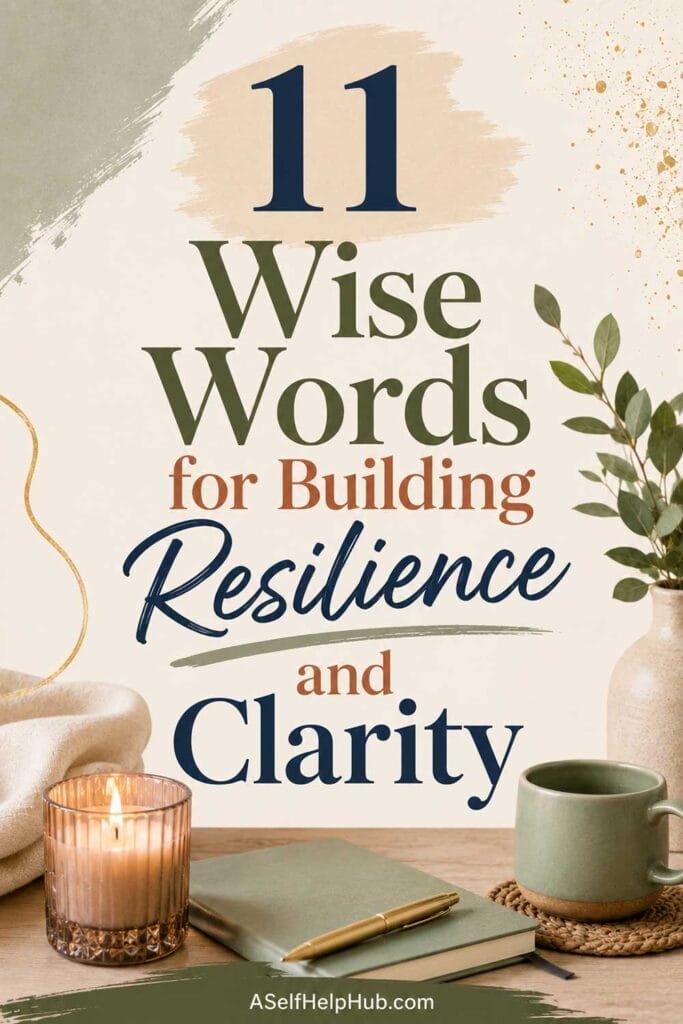
13 Resilience Quotes That Help You Keep Standing Through Challenges
My neighbor’s old fence has leaned in the wind for thirty years, and it is still standing.
It leans, creaks, and settles back. Every few years someone repairs a post or replaces a board. It was never the strongest fence on the street, and it has outlasted several that looked sturdier. I think about that fence when I think about resilience. It does not mean never being pushed. It means having ways to hold, repair, and come back.
The thirteen quotes below are original reflections written for this site, about the practical side of resilience: support, routines, repair, and rest. Each comes with a short thought and one small action. If you are going through something very heavy, please reach out to a doctor, a counselor, or a crisis line in your area. Resilience is something we build with others.

Build Resilience With Steady Daily Care
Download the free Self-Care Starter Kit and get simple, practical tools for the daily care that makes it easier to keep standing.
Get the Free Starter Kit1. Resilience includes leaning on the people who care about you.
“Resilience grows when I let people hold some of the weight.”
Many people picture resilience as standing alone. In truth, most resilient people have others who help them. A friend who listens, a family member who steps in, a neighbor who brings dinner.
Leaning on others is part of being resilient. Think about who you can lean on, and who leans on you.
Strong support is a structure, and you can build it.
Write down three people you can lean on, and reach out to one this week.
2. Routines can hold you steady when everything else shifts.
“A small routine can be a handrail when everything else is moving.”
When life becomes unpredictable, small routines give you something stable. A regular wake time, a morning drink, a short walk, a standard bedtime. They do not solve the problem, and they keep you anchored.
Choose two or three simple routines to keep, whatever else is happening.
A steady routine is a steady handrail.
Choose two small routines you will keep during any hard stretch, and write them down.

Keep a Resilience Reminder Where You Can See It
Premier Print Works creates quality prints, mugs, and shirts for people who keep standing. Find a small reminder that you have what it takes to continue.
Visit Premier Print Works3. Bending a little is part of lasting.
“Bending a little is part of how I last.”
A tree that cannot move in the wind may snap. One that bends tends to last. In life, too, some flexibility helps. Plans change, and so can you. Adjusting your approach can be a strength.
Notice where you are rigid, and ask where you could bend a little.
Flexibility is a form of resilience.
Think of one plan or expectation that is causing stress, and write one way to adjust it.
4. Repair is a normal part of resilience.
“Repair is a normal part of how things last, including me.”
Things get damaged, whether it is a plan, a relationship, or a mood. Resilient people repair. They apologize, rebuild, regroup, and try again. Repair is how things last.
Look for something that needs a little repair, and take a small step.
Repairing keeps things standing.
Choose one thing in your life that needs a small repair, and take one step toward it.
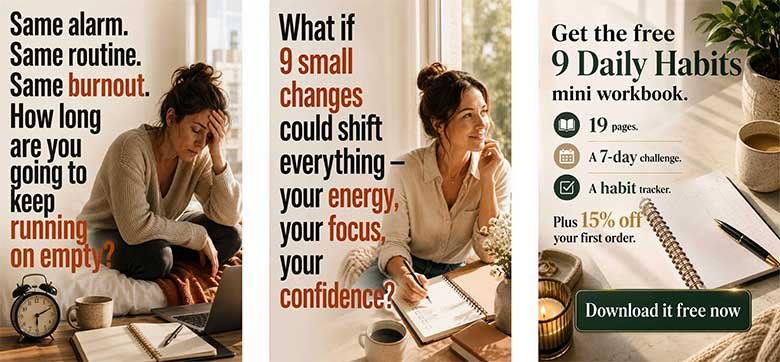
Build Resilience Through Small Habits
The free 9 Daily Habits guide gives you nine simple morning practices that give you steadier footing when challenges arrive.
Get the Free Guide5. Rest is part of recovering from hard things.
“Rest is part of how I recover and keep standing.”
After a challenge, your body and mind need time to recover. Many people push on without pause, and then wonder why they feel flat. Rest, sleep, and quiet are part of recovery.
Plan your rest, and treat it as part of your response to the challenge.
A rested person can stand longer.
Schedule one real recovery period this week, and keep it.
6. You can recover at your own pace.
“I can recover at my own pace, and my pace is allowed.”
Some people bounce back quickly. Others need more time. Neither pace is better. Recovery depends on many things, including the size of the challenge and the support available.
Avoid comparing your pace to anyone else’s. Trust what you need.
Your pace is allowed.
Write down one thing you need to recover at your own pace, and make room for it.
7. Small acts of care keep you going.
“Small acts of care are the quiet engine of resilience.”
In hard times, big solutions can feel out of reach. Small acts of care are within reach: a glass of water, a warm meal, a short walk, a shower, a kind word. They keep your body and mind supported.
Choose a few, and repeat them daily.
Care is the quiet engine of resilience.
Choose three small acts of care, and do them every day for the next week.
8. Remembering what you have survived can strengthen you.
“What I have survived before is a resource I can return to.”
When a new challenge arrives, it can feel as though you have never faced anything like it. Your history says otherwise. You have gotten through difficult times before. Those experiences taught you things.
Write down what you have survived, and what helped.
That list is a resource you can return to.
Write down three challenges you have survived, and what helped you in each.
9. Naming what you feel helps you keep your footing.
“Naming what I feel helps me keep my footing.”
Unnamed feelings can swirl and knock us off balance. Naming them gives some distance. “I feel scared.” “I feel angry.” “I feel exhausted.” You do not have to fix the feeling. You are simply noticing it.
Use a few words, and say them quietly or write them down.
Naming is a small, steadying act.
Name what you are feeling three times today, in a single word each time.
10. Limits protect resilience.
“Knowing my limits helps me keep going longer.”
Trying to do everything is a fast way to wear down. Setting limits protects your energy. Say no to extra demands. Delegate when you can. Ask for deadlines to be moved.
Limits are how you save strength for what matters.
A person who knows their limits can keep going longer.
Set one limit this week that protects your energy, and communicate it kindly.
11. Hope can be small and still useful.
“Small hopes can keep me moving, one day at a time.”
In hard times, big hope can feel too far away. Small hope is enough. Hope for a better hour, a good meal, a kind call, or a night of sleep. These small hopes give you something to move toward.
Let your hope be realistic and gentle. It is part of what keeps people standing.
Small hopes can add up.
Write down one small thing to hope for today.
12. Learning from a challenge can make you steadier next time.
“Each challenge can add something to my toolkit.”
Once you have some distance, ask what the challenge taught you. What helped? What did you wish you had? What will you do differently? These lessons can prepare you for the future.
Do this when you are ready, and not in the heat of the moment.
Each challenge can add to your toolkit.
When you are ready, write down two things a recent challenge taught you.
13. Resilience is built over time, and not all at once.
“Resilience is built slowly, from many small, supported choices.”
No one becomes resilient in a day. It grows through many small choices, supportive relationships, and experiences. Each time you handle something hard, your capacity grows a little.
Be patient with yourself, and keep building. Support is part of it, too.
If you are struggling, please reach out for help.
Choose one habit that builds your resilience, and commit to it for a month.
Explore Our Top Picks for a Better Life
We have gathered the tools, resources, and products we think are genuinely worth your time, covering mindset, self-care, health, and home. All in one place, hand-picked to support the resilience you are building.
See Our Top PicksReal Stories, Real Results
Let me share two examples I like to use. Kezia was going through a long stretch of caring for a family member, and she felt stretched thin. She leaned on a friend, kept a few daily routines, and set one limit each week. She told me that none of it made the situation easier, and it made her feel less likely to snap.
Daniel’s hardest challenge was a job loss. He kept a morning routine, rested on purpose, and wrote down what he had survived before. He said that the list of past hard times reminded him that he knew how to get through. Both of them said the same thing: resilience was built from support, routines, and rest, and not from toughness alone.
Resilience Is Built From Support, Routines, Repair, and Rest
Picture a hard season, and the structures that hold you through it. A friend who calls, a morning routine you keep, a limit you set, a rest you protect. You still feel the wind. You have ways to hold, repair, and come back.
Choose one or two quotes from this list, and place them where you will see them. Download the free Self-Care Starter Kit to give your days a gentle rhythm. You can keep standing, and you do not have to do it alone.
Want Ready-Made Tools to Help You Put This Into Action?
Sometimes the fastest way forward is a tool that someone has already built. Browse our hand-picked resources and downloads, chosen to help you take the next step with less guesswork.
Browse Resources and Downloads
Ready to Keep Standing, One Steady Step at a Time?
The free Self-Care Starter Kit gives you simple, practical tools to build a daily rhythm that supports your resilience.
Download Free Now
Fill Your Space With Quiet Resilience
Premier Print Works makes quality prints, mugs, and shirts for resilient people. Browse the collection and find what speaks to your journey today.
Visit Premier Print WorksDisclaimer
The content on this page is for informational and inspirational purposes only. It is not professional mental health or medical advice of any kind, and it is not a substitute for professional care. The quotes on this page are original reflections written for A Self Help Hub and are not attributed to any real person. If you are experiencing a crisis, hopelessness, or thoughts of harming yourself, please reach out to a qualified healthcare or mental health professional, or contact a crisis line or emergency services in your area right away. Results and experiences vary significantly from person to person.
The stories of Kezia and Daniel are illustrative composite characters created to bring the content to life. They are not real people. Any resemblance to a real person is purely coincidental.
Some links on this page, including links to Premier Print Works and other resources, are affiliate links. If you make a purchase through one of these links, we may earn a small commission at no extra cost to you. We do not own, produce, or control any affiliate products, and we are not responsible for them — we only own and sell the products offered through our own store, Premier Print Works.
All content on A Self Help Hub is the property of Digital Marketing 215 LLC and is protected by copyright law. No part of this page may be copied, reproduced, republished, distributed, or transmitted in any form without prior written permission from the author.