9 Self Healing Quotes That Help You Release What Hurts
Some hurts need to be set down more than they need to be solved.
For a long time, I believed that I had to understand every painful thing completely before I could move on from it. Why it happened, whose fault it was, what it meant. Sometimes that work matters. Other times, the loop of analysis simply keeps the hurt close. Releasing something can begin when you decide that you can carry it more lightly, even before every question is answered.
The nine quotes below are original reflections written for this site, about releasing what hurts at your own pace. Each comes with a short thought and one small action. Letting go cannot be rushed, and nothing here asks you to forget or excuse harm. If your pain is heavy or connected to trauma or abuse, please reach out to a counselor or a local support service.

Release What Hurts With Gentle, Practical Support
Download the free Self-Care Starter Kit and get simple, practical tools for caring for yourself while you set down what you have been carrying.
Get the Free Starter Kit1. Releasing something hurtful can happen in small pieces.
“I can release what hurts in small pieces, and each piece counts.”
Many people think letting go must happen all at once, like flipping a switch. More often, it happens in small pieces over time. You set down a little today, a little more next month.
Notice any small loosening, however slight. A day you thought of it less. A moment you felt a little lighter.
Small releases count.
Write down one small way the hurt feels lighter than it did a few months ago, if you can find one.
2. You can set something down without pretending it did not matter.
“I can set something down without pretending it did not matter.”
Letting go is often mistaken for saying it was nothing. But your pain was real. You can honor what happened and still choose to carry it more lightly. Acknowledging the hurt can make releasing it easier.
Say, in your own words, what it cost you.
Then notice what you are ready to put down.
Write a few lines about what the hurt cost you, and read them with compassion.
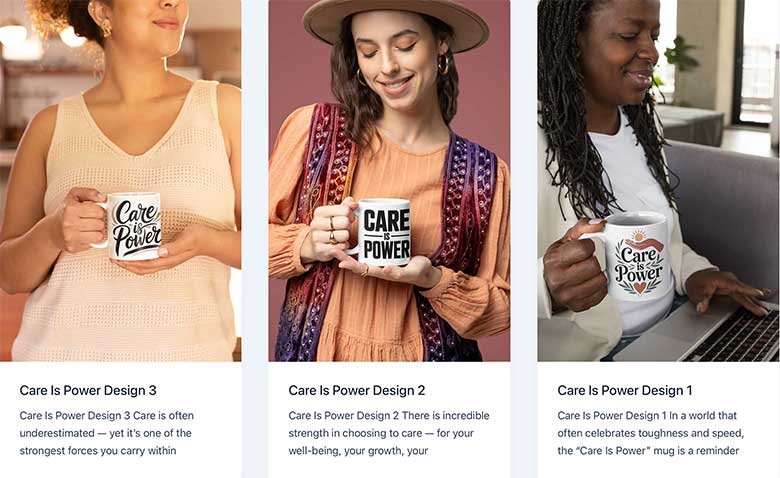
Keep a Gentle Word of Release Where You Can See It
Premier Print Works creates quality prints, mugs, and shirts with gentle words for healing. Find a small reminder that you are allowed to set things down.
Visit Premier Print Works3. Tears can be a way of letting go.
“Tears can be a way of letting go, and I do not need to hold them back.”
Many of us hold back tears because we fear they will not stop, or that they signal weakness. Often, crying brings relief. It can move something that words cannot.
If you feel tears coming, and you are in a safe place, let them. Have a tissue and a warm drink nearby.
If crying feels overwhelming, please reach out to someone you trust.
Give yourself a safe, quiet space to cry or simply sit with your feelings this week, if you need to.
4. Writing it out can give a hurt somewhere else to live.
“When I write it out, my hurt has somewhere else to live.”
When pain stays in your head, it circles. On paper, it has an edge. Write about what hurts, without editing. Say what you could not say aloud. Later, you can keep the pages, or tear them up.
Many people feel a little lighter after writing. If the writing stirs up too much, stop and take a break.
The page can hold what you cannot.
Write for ten minutes about what hurts, without stopping to edit, and then rest.

Build Gentle Habits While You Heal
The free 9 Daily Habits guide gives you nine simple morning practices that give your healing a steady, kind rhythm.
Get the Free Guide5. Forgiveness can be slow, and it can be for your own peace.
“I can forgive slowly, and I can do it for my own peace.”
Forgiveness is often misunderstood. It does not mean reconciling, excusing harm, or staying in an unsafe situation. It can mean loosening the grip that resentment has on your own heart. It may take a long time, and it may come in stages.
You do not need to forgive on anyone else’s schedule. Choose your own pace.
If this feels difficult, a counselor can help.
Write down one thing you are not ready to forgive yet, and give yourself permission to wait.
6. Forgiving yourself can be the hardest release of all.
“I can take responsibility and still be merciful with myself.”
Many of us carry guilt for things we did or did not do. Self-forgiveness can feel undeserved. But holding yourself in constant blame rarely helps anyone. You can take responsibility, make amends where possible, and still treat yourself with some mercy.
Speak to yourself as you would to a friend who had made the same mistake.
Mercy and accountability can go together.
Write a short note to yourself about something you regret, in the voice of a kind friend.
7. Boundaries help you stop reopening the wound.
“A boundary can help me stop reopening the wound.”
Sometimes releasing pain means protecting yourself from what keeps causing it. That might be limiting contact, avoiding certain topics, or stepping back from a situation. A boundary can be a quiet act of healing.
Use simple, kind words. You do not owe long explanations.
If a situation is unsafe or abusive, please reach out to a trusted person or a local support service.
Choose one small boundary that would protect your peace, and write the words you would use.
8. Making space inside yourself helps new things in.
“As I release what hurts, I make space for gentler things.”
Pain can fill a lot of room. As you release it, even a little, space opens up. You may notice room for rest, curiosity, small pleasures, or new connections. Let yourself fill that space with something gentle.
Choose one small thing to welcome. A walk, a favorite song, a call to a friend.
Space invites light.
Choose one gentle thing to welcome into your life this week, and make a plan to do it.
9. You can release what hurts and still carry what it taught you.
“I can set down the hurt and keep what it taught me.”
Letting go of the pain does not require letting go of the lessons. You may keep a clearer sense of your needs, a deeper kindness, or a stronger boundary. You can set down the weight and keep the wisdom.
Write down what you want to keep.
If you are ready, let the rest go.
Write down one thing you want to carry forward from a painful experience, and one thing you are ready to release.
Explore Our Top Picks for a Better Life
We have gathered the tools, resources, and products we think are genuinely worth your time, covering mindset, self-care, health, and home. All in one place, hand-picked to support you as you release what hurts.
See Our Top PicksReal Stories, Real Results
Let me share two examples I like to use. Amara had been replaying a painful ending for months, trying to figure out every detail. When she wrote about what it cost her, and let herself cry, something loosened. She told me that she did not stop thinking about it, and she stopped feeling that she had to solve it before she could rest.
Joel’s weight was guilt over something he had said. He wrote a short note to himself in the voice of a kind friend, apologized to the person he had hurt, and then gave himself permission to move on. He said that mercy and accountability together made it possible to lighten the load. Both of them said the same thing: they released what hurt in small pieces and in their own time.
Releasing What Hurts Happens in Small Pieces and at Your Own Pace
Picture carrying a heavy bag, and slowly setting down one item at a time. You keep what you need, and you leave what no longer serves you. The bag is lighter, and you can walk a little more freely.
Choose one or two quotes from this list, and place them where you will see them. Download the free Self-Care Starter Kit to give your days a gentle rhythm. You are allowed to set things down.
Want Ready-Made Tools to Help You Put This Into Action?
Sometimes the fastest way forward is a tool that someone has already built. Browse our hand-picked resources and downloads, chosen to help you take the next step with less guesswork.
Browse Resources and Downloads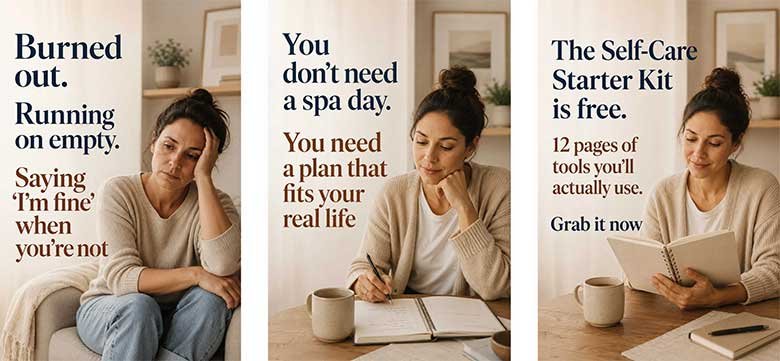
Ready to Set Down What You Have Been Carrying?
The free Self-Care Starter Kit gives you simple, practical tools to build a daily rhythm that supports your healing.
Download Free Now
Fill Your Space With Gentle Healing
Premier Print Works makes quality prints, mugs, and shirts for people setting down what hurts. Browse the collection and find what speaks to your journey today.
Visit Premier Print WorksDisclaimer
The content on this page is for informational and inspirational purposes only. It is not professional mental health or medical advice of any kind, and it is not a substitute for professional care. The quotes on this page are original reflections written for A Self Help Hub and are not attributed to any real person. If you are experiencing grief, trauma, abuse, persistent sadness, hopelessness, or thoughts of harming yourself, please reach out to a qualified healthcare or mental health professional, or contact a crisis line or emergency services in your area right away. Results and experiences vary significantly from person to person.
The stories of Amara and Joel are illustrative composite characters created to bring the content to life. They are not real people. Any resemblance to a real person is purely coincidental.
Some links on this page, including links to Premier Print Works and other resources, are affiliate links. If you make a purchase through one of these links, we may earn a small commission at no extra cost to you. We do not own, produce, or control any affiliate products, and we are not responsible for them — we only own and sell the products offered through our own store, Premier Print Works.
All content on A Self Help Hub is the property of Digital Marketing 215 LLC and is protected by copyright law. No part of this page may be copied, reproduced, republished, distributed, or transmitted in any form without prior written permission from the author.