13 Self Care Quotes That Help You Build a Kinder Mindset
The way you speak to yourself shapes everything from how you handle setbacks to how much joy you allow yourself to feel, and a kinder mindset starts with choosing gentler words for the person you spend the most time with. Most people who would never speak harshly to a struggling friend speak to themselves in exactly that way without noticing, and without questioning whether the voice has ever been accurate or fair.
These 13 self care quotes speak to the power of self-compassion, inner kindness, and the quiet but profound shift that happens when you decide to treat yourself with the same grace you so freely give to everyone else. The most transformative act of self care you will ever practice is learning to speak to yourself the way you would speak to someone you truly love.

Free Download: The Self-Care Starter Kit
A kinder mindset is not built by pretending everything is fine, it is built by choosing to be gentle with yourself even when things are not. The free Self-Care Starter Kit gives you simple daily practices for your mind and body to support the kinder relationship you deserve to have with yourself. Download it free today.
Get the Free Self-Care Starter Kit1. “You are allowed to be both a work in progress and a masterpiece at the same time.”
“A kinder mindset is not built by pretending everything is fine, it is built by choosing to be gentle with yourself even when things are not.”
This quote addresses one of the most persistent sources of self-harshness: the belief that the current imperfect version of yourself is less valid, less worthy, or less deserving of care than the finished version that is still becoming. Both are true simultaneously. You are incomplete and you are also already something remarkable. The work in progress does not have to earn the right to be treated with kindness by reaching a state of completion that is always receding. The masterpiece is already present in the ongoing becoming.
2. “Be gentle with yourself. You are a child of the universe, no less than the trees and the stars.”
This reminder, drawn from one of the most-loved pieces of reflective writing in the English language, places individual struggle in a context of belonging to something vastly larger than the difficulty of the moment. The gentleness asked for here is not the gentleness of low standards or avoidance of growth. It is the gentleness of remembering that you have an inherent place in the world that is not contingent on performance, on productivity, or on being at your best. You belong here. That belonging is not earned and cannot be revoked.
3. “Talk to yourself like you would to someone you love.”
“The most transformative act of self care you will ever practice is learning to speak to yourself the way you would speak to someone you truly love.”
This is the foundational self-compassion practice stated as simply as it can be. The gap between how most people speak to themselves and how they would speak to someone they genuinely loved and cared for, facing the same difficulty, is often enormous. The gentleness, the patience, the acknowledgment of effort, the reassurance of capability, the forgiveness of failure, all of it is freely available for others and withheld from the self. This quote is the invitation to close that gap, one internal conversation at a time.
Visit Premier Print Works
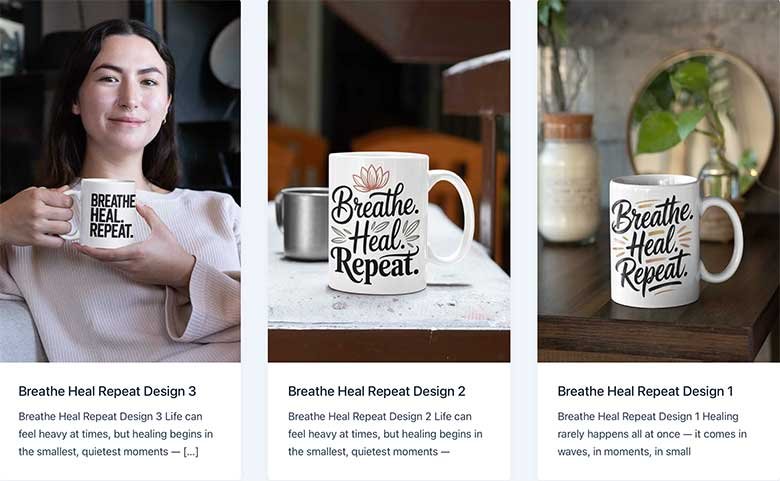
Keep the reminder that the most transformative self-care is learning to speak to yourself the way you would speak to someone you truly love, visible where your daily self-care practice happens. Premier Print Works offers prints, mugs, and art for the person building a kinder mindset. Visit the shop today.
Visit Premier Print Works4. “You yourself, as much as anybody in the entire universe, deserve your love and affection.”
This teaching, attributed to Buddhist tradition, makes explicit what self-compassion practice consistently finds to be absent in many people: the extension to the self of the same love and care extended to others. The word “deserve” is important here. Not “might also benefit from” or “would probably appreciate” but deserve, as in it is owed, as in it is appropriate, as in there is no reason the universe’s most constant recipient of your care should be the one person excluded from what you offer freely to everyone else.
5. “Nourishing yourself in a way that helps you blossom in the direction you want to go is attainable, and you are worth the effort.”
This quote pairs the permission to be nourished with the specific observation that you are worth the effort of providing it, addressing both of the most common barriers to genuine self-care: the belief that the nourishment is unavailable and the belief that the person requiring it is not worth the investment. Both beliefs are false, and this quote declines both of them in a single sentence. The blossoming is possible. You are worth the effort to make it so.
6. “Rest and self-care are so important. When you take time to replenish your spirit, it allows you to serve others from the overflow rather than from the emptiness.”
This quote addresses the specific person who resists self-care on the grounds that others need them: the caregiver, the provider, the person who has organized their sense of worth around being reliably available to everyone else. The argument is clear and practical: self-care is not selfish because a person caring for others from a state of depletion is giving what they do not have. The overflow serves everyone better than the emptiness ever can.
How Kezia and Daniel Both Found the Quote That Changed How They Spoke to Themselves
Kezia had been a deeply committed caregiver, at work and at home, for long enough that the habit of putting everyone else first had stopped feeling like a choice and had become simply the texture of how she moved through each day. She had not noticed, until a conversation with Daniel, that the language she used toward herself in the moments between the caring was qualitatively different from any language she would have directed at anyone she was caring for. The difference was not subtle. It was stark.
The quote that landed for her was the one about the overflow: the recognition that what she had been giving from the emptiness had not been her best, could not have been her best, and that caring for herself was not a departure from caring for others but the precondition for the quality of care she actually wanted to provide. She had been resisting the self-care as indulgence. The quote reframed it as preparation, and the reframe had been what she had needed to actually start.
Daniel’s quote was different. His was the simple one about speaking to yourself like someone you love. He had read it at a moment when the internal critic had been particularly loud about a recent failure, and the question it raised had stopped the criticism in its tracks: would I say any of this to someone I loved who had just failed in the same way? The answer was immediate and entirely clear. He would not. He had not been holding himself to a higher standard. He had been holding himself to no standard at all, letting the critic speak in a way that would have been immediately stopped if directed at anyone else. The quote had drawn the line.
7. “An empty lantern provides no light. Self care is the fuel that allows your light to shine brightly.”
“A kinder mindset is not built by pretending everything is fine, it is built by choosing to be gentle with yourself even when things are not.”
The lantern metaphor addresses the same truth as the overflow quote through a different image: you cannot give what you do not have, and you cannot shine without fuel. Self-care is not optional equipment in a life lived well. It is the fuel. A person who consistently runs on empty, who treats their own needs as the last item on every list, eventually finds that the light has gone out, not because they were not committed to shining but because they did not fuel the thing that made shining possible. Fill the lantern first. The light follows from that.
8. “You can’t pour from an empty cup. Take care of yourself first.”
The cup is perhaps the most widely shared self-care image in circulation, and it has remained in circulation because it captures something true with such economy. The person who refuses to fill their own cup before pouring for others is not serving at the highest level. They are serving at whatever level an empty cup can sustain, which is never the level they wish they could offer. The instruction is not selfish. It is the prerequisite. Fill the cup. Then pour. In that order, every time.
9. “Almost everything will work again if you unplug it for a few minutes, including you.”
This quote, attributed to Anne Lamott, makes a simple and enormously practical observation: the rest that resets the human mind and body works in the same way that the rest that resets electronic devices works. It is not metaphorical. It is physiological. Sleep, rest, genuine breaks from stimulation and demand, allow the system to complete its maintenance processes and return to baseline function. The person who never unplugs does not avoid this need. They accumulate it until the reset happens without their permission, usually at the worst possible moment.

Free Download: The 9 Daily Habits Checklist
Building a kinder mindset is supported by the consistent daily habits that keep you showing up for yourself with the same care you show everyone else. The free 9 Daily Habits Checklist gives you nine proven daily practices to build your kinder relationship with yourself from. Download it free today.
Get the Free Habits Checklist10. “Self compassion is simply giving the same kindness to ourselves that we would give to others.”
“The most transformative act of self care you will ever practice is learning to speak to yourself the way you would speak to someone you truly love.”
This definition of self-compassion, by author Christopher Germer, is useful precisely because of its simplicity. It does not require the development of new skills. It requires the extension of skills already possessed to a recipient that has been excluded from them. The kindness already available and freely given in the direction of others is the same kindness that self-compassion practice directs inward. No new capacity required. Only a new direction for the one already present.
11. “You owe yourself the love that you so freely give to other people.”
Owe is a strong word, and it is the right one here. This is not an aspiration or a gentle suggestion. It is a statement of a debt that has been building throughout every instance of love freely extended to others while the self waited at the back of the line. The debt is real and the repayment begins with the recognition that the love extended so readily to others is not more deserved by them than it is by the person extending it. You owe it to yourself. It is time to pay.
12. “Be the love you never received.”
This is perhaps the most challenging self-compassion invitation of the thirteen because it does not merely ask you to extend kindness to yourself. It asks you to become the source of the specific care you most needed and did not always receive, rather than continuing to wait for it to arrive from outside. The love not received in childhood or in difficult relationships is not gone from the world. It is available to be given by the only person who has been present for every single moment of your life and who knows exactly what you needed most and when you needed it. Become that source. It is available.
13. “Caring for myself is not self-indulgence, it is self-preservation, and that is an act of political warfare.”
“A kinder mindset is not built by pretending everything is fine, it is built by choosing to be gentle with yourself even when things are not.”
This quote from Audre Lorde reframes self-care from a personal luxury to an act of resistance against the cultural messages that tell certain people their needs are less valid, their wellbeing less important, and their self-care more suspect than others’. For anyone who has been conditioned to believe that self-care is indulgence or that taking care of themselves takes something from someone more deserving, this quote offers a direct counter: self-preservation is not selfish. It is necessary. And for some people in some circumstances, it is the most radical thing they can do.
A Kinder Mindset Begins With the Decision to Speak to Yourself With Love
You are allowed to be both a work in progress and a masterpiece. Be gentle with yourself. Talk to yourself like you would to someone you love. You deserve your own love and affection. You are worth the effort of your own nourishment. Rest and self-care allow you to serve from overflow rather than emptiness. An empty lantern provides no light. You cannot pour from an empty cup. Almost everything works again if you unplug it for a few minutes, including you. Self-compassion is simply giving yourself the same kindness you give others. You owe yourself the love you so freely give to other people. Be the love you never received. Caring for yourself is not self-indulgence, it is self-preservation. Thirteen quotes. A kinder mindset is built by choosing to be gentle with yourself even when things are not fine, and the most transformative self-care is learning to speak to yourself the way you would speak to someone you truly love.

Free Download: The Self-Care Starter Kit
Let these self care quotes be the beginning of the kinder and more compassionate relationship you deserve to have with yourself every single day. The free Self-Care Starter Kit gives you simple daily practices for your mind and body to support that relationship. Download it free today.
Get the Free Self-Care Starter KitOur Top Picks for a Better Life
We have gathered our favorite tools, resources, and recommendations for building the self-care habits and compassionate mindset practices that help you treat yourself with the kindness you genuinely deserve. Everything we trust enough to share, all in one place.
See Our Top Picks
Kinder Mindset Reminders at Premier Print Works
Keep these self care reminders visible where your daily practice happens. Visit Premier Print Works for prints, mugs, and art for the person building a kinder and more compassionate relationship with themselves every single day.
Visit Premier Print WorksDisclaimer
The content on A Self Help Hub is for informational and inspirational purposes only. The self care quotes and personal stories in this article offer general support for everyday self-compassion and personal wellbeing. They are not professional mental health advice, psychotherapy, medical advice, or any form of clinical treatment.
If you are dealing with significant depression, anxiety, trauma, low self-worth, or other conditions affecting your daily functioning and relationship with yourself, please speak with a qualified mental health professional. Self-compassion practices can be a valuable complement to professional support but are not a substitute for it. General self-help content is not a substitute for professional care.
The stories and composite characters in this article, including Kezia and Daniel, are illustrative. They are based on common experiences and created to make the content relatable. They are not real people. Any resemblance to a specific person is coincidental.
Some links on this site, including links to Premier Print Works, may be affiliate links. A Self Help Hub may earn a small commission at no extra cost to you. We only recommend things we genuinely believe in.
If you are in a mental health crisis or thinking about self-harm, please do not rely on this content for support. Contact emergency services or a crisis helpline right away. You deserve real help and it is available to you now.
All content on A Self Help Hub is copyrighted. You may not copy or republish it without written permission. By reading this article you agree to this disclaimer.