11 Daily Habits That Support Personal Growth and Self Discipline
Personal growth and self discipline are not things you either have or you do not. They are not personality traits handed out unevenly at birth. They are things that are built, quietly and without fanfare, through the daily choices you make about how you spend your time and energy. The person who seems naturally disciplined is almost always just the person who built better habits earlier and has been practicing them long enough that they no longer feel like effort.
These 11 daily habits are for people who want to build that kind of consistency for themselves. Not through willpower alone, which is unreliable, but through structure and practice, which compound over time in ways that willpower never can. These habits are practical, honest, and designed to work on the ordinary days, not just the ones when you feel motivated. Because most days are ordinary. And the ordinary days are where everything is actually built.

Free Download: The 9 Daily Habits Checklist
Self discipline is built through what you do every single day, especially on the days you do not feel like doing it. The free 9 Daily Habits Checklist gives you nine proven daily practices that build the personal growth foundation you have been looking for. Download it free today.
Get the Free Habits Checklist1. Wake up at a consistent time every day.
“The person who seems naturally disciplined is almost always just the person who built better habits earlier and has been practicing them long enough that they no longer feel like effort.”
Consistency of sleep and wake time is one of the most foundational habits for everything else on this list. Your body operates on a circadian rhythm that responds powerfully to regularity. When your wake time is consistent, your sleep quality improves, your energy is more stable across the day, and the morning becomes a reliable anchor rather than something that happens to you differently each day. You do not have to wake up at five in the morning. You have to wake up at the same time, whatever time that is, with enough consistency that your body knows what to expect. That predictability is the foundation that every other habit is built on.
2. Do the hardest task first.
Mark Twain is credited with the advice to eat a live frog first thing in the morning, meaning tackle the thing you are most tempted to avoid before you do anything else. The science behind this is straightforward. Willpower and cognitive energy are finite resources that deplete across the day. The task that requires the most of you deserves the best of you, and the best of you is available in the first part of the day before the demands and decisions of ordinary life have spent it. Identify the one task each day that you most want to avoid. Do that one first. Everything after it is easier by comparison.
3. Move your body before you check your phone.
“Willpower and cognitive energy are finite resources that deplete across the day. The task that requires the most of you deserves the best of you, and the best of you is available first.”
The order matters here. Most people wake up and immediately hand their attention to their phone, which means handing the first moments of the day to other people’s priorities, news, notifications, and demands before they have even fully arrived in their own morning. Moving your body first, even a short walk, ten minutes of stretching, a brief workout, creates a buffer of intentional time between waking and the world’s demands. It also releases the neurochemicals that improve mood, sharpen focus, and reduce anxiety, making everything that follows more manageable. Move first. Check the phone after.

Visit Premier Print Works
The reminders that keep you showing up for your own growth are worth having close. Premier Print Works offers prints, mugs, and art for people who are building better daily habits and the self discipline to keep them. Visit the shop today.
Visit Premier Print Works4. Set three clear priorities for the day, not ten.
A to-do list with ten items is not a plan. It is a source of low-level anxiety that makes it easy to spend the whole day busy without moving anything significant forward. Three clear priorities, chosen the night before or first thing in the morning, give the day a spine. Not everything that feels urgent is important. Not everything important feels urgent. The discipline of choosing three things and protecting them from the gravitational pull of the merely urgent is one of the most practical productivity habits available. Three things done well beats ten things started and none completed every single time.
5. Read for at least twenty minutes every day.
Reading is one of the most consistently reliable personal growth habits that exists, and it is one of the first things people drop when life gets busy. Twenty minutes a day of deliberate reading, books over social media, non-fiction that challenges you or fiction that deepens your empathy, compounds over a year into an amount of learning that most people do not come close to through any other daily habit. It also trains sustained attention, which is becoming genuinely scarce in an environment designed to fragment it. Twenty minutes. A real book or something substantial. Every day.
6. Keep a brief daily journal.
“Twenty minutes of deliberate reading every day compounds over a year into an amount of learning that most people do not come close to through any other single daily habit.”
Journaling does not have to be long or literary to be useful. Five to ten minutes of honest daily writing serves several purposes simultaneously. It externalizes the mental noise that clutters clear thinking. It builds self-awareness over time as patterns in your own thinking and behavior become visible across entries. It creates a record of your own progress that is available on the days when progress is impossible to feel from the inside. And it gives you a daily practice of honesty with yourself that strengthens the kind of self-knowledge that self discipline requires. Brief, honest, consistent. That is the whole instruction.
7. Protect at least one hour of deep, uninterrupted work daily.
Most people spend their working hours in a state of constant partial attention, never fully in one task because another is always pulling at the edge of their awareness. Deep work, the kind of focused, uninterrupted concentration that produces the best thinking and the most meaningful output, requires protection. Block at least one hour each day where your phone is away, notifications are off, and you are doing one thing with your full attention. That one hour of deep work will frequently produce more than the remaining hours of fragmented effort combined. Protect it like the resource it actually is.
8. Limit decisions in low-stakes areas to preserve energy for high-stakes ones.
“One hour of deep, focused, uninterrupted work will frequently produce more than the remaining hours of fragmented, distracted effort combined. Protect it.”
Decision fatigue is real and measurable. The more choices you make across a day, the lower the quality of each subsequent choice. Self discipline is not just about making good decisions. It is about preserving the cognitive energy required to make them. Simplify the decisions that do not matter much. Eat similar breakfasts. Have a default answer for recurring low-stakes questions. Reduce the number of choices you make before you reach the ones that actually count. The discipline you protect in the small decisions is available to you in the large ones. That is where it belongs.
How Kezia and Joel Each Built the Habit That Changed Everything Else
Kezia had tried to build a morning routine more times than she could count. Each attempt had started with ambition and collapsed within two weeks when life got complicated and the routine did not survive contact with an ordinary difficult week. What changed her approach was shrinking the habit until it was impossible to fail at. She stopped trying to build a full morning routine and started with one thing: wake up at the same time every day, including weekends. Just that. Nothing else attached to it. She did it for three weeks before she added anything. By the time she added the second habit, the consistent wake time was already automatic, which meant she was not spending willpower on it. The rest of the routine built on top of that foundation habit by habit over several months. A year later she had a morning practice that was genuinely hers and genuinely consistent. She had built it so slowly that she almost did not notice it was happening. That was exactly the point.
Joel’s turning point was the three priorities habit. He had been someone who started every day with a long list and ended most days feeling like he had been busy without having accomplished the things that actually mattered. The discipline of choosing three things the night before and treating everything else as secondary felt almost too simple to make a real difference. Within two weeks it was clearly making a real difference. The three things were getting done. The sense of forward movement was replacing the sense of spinning. He had not become more disciplined in any dramatic sense. He had just gotten honest about the difference between the work that mattered and the activity that kept him feeling busy without moving anything forward. Three things. Every day. That was the whole change.
9. Say no to one thing each day that does not serve your priorities.
Self discipline is as much about what you stop doing as what you start. Every yes to something that does not serve your growth is an implicit no to something that does. The habit of saying no once a day, to a distraction, to an obligation that belongs to someone else, to a time-waster you keep defaulting to, builds a different relationship with your own time and energy. It does not have to be a dramatic refusal. It can be a quiet internal no to the impulse to check social media for the fourth time, or a gentle external no to a request that someone else could handle. One no a day. Practice it until it becomes as natural as the yes used to be.
10. Reflect briefly on the day before it ends.
“Self discipline is as much about what you stop doing as what you start. Every yes to something that does not serve your growth is an implicit no to something that does.”
A brief end-of-day reflection, five minutes maximum, answers three questions. What went well today? What would I do differently? What is the one most important thing for tomorrow? This practice closes the day with intention rather than letting it dissolve into evening distraction, and it opens the next day with clarity rather than having to reconstruct your priorities from scratch each morning. It also builds the self-awareness over time that makes personal growth self-sustaining rather than dependent on external accountability. Five minutes. Three questions. Every night.
11. Go to bed at a consistent time.
The list begins with a consistent wake time and ends with a consistent sleep time because sleep is the non-negotiable foundation of every other habit on this list. A person who is chronically under-slept does not have the cognitive clarity to prioritize well, the emotional regulation to manage difficulty gracefully, or the physical energy to do the movement and deep work that growth requires. Self discipline is significantly harder when your brain is running on insufficient sleep. Protect your sleep time with the same seriousness you protect your most important work. It is not a luxury. It is the infrastructure everything else runs on.
You Do Not Need More Willpower. You Need Better Daily Structure.
Self discipline is not a character trait that some people have and others lack. It is the natural output of a daily structure that reduces the number of decisions you have to make, protects the energy you have, and channels it consistently toward what actually matters. The people who appear most disciplined are not exercising more willpower than you. They have built habits that make the right choices automatic enough that willpower rarely has to enter the conversation.
You do not have to build all eleven of these habits at once. Pick one. Build it until it is solid enough to be a foundation. Then add the next one on top of it. Habit by habit, day by day, the structure builds itself. And what grows inside that structure is a version of yourself that is more capable, more focused, and more genuinely in charge of where your life is going.
That person is already in you. The daily habits are just how you let them out.
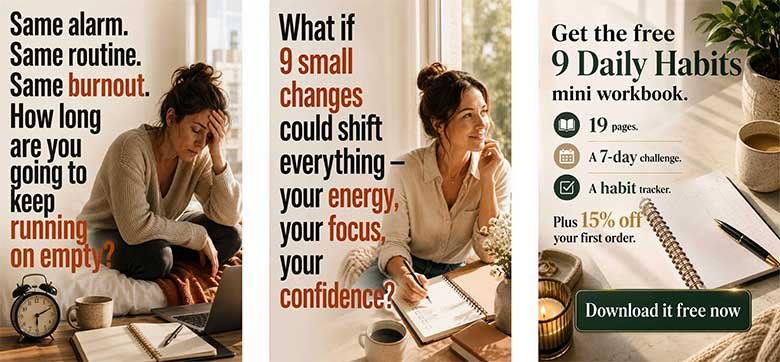
Free Download: The 9 Daily Habits Checklist
Let these daily habits be the reminder that personal growth and self discipline are built one ordinary day at a time. The free 9 Daily Habits Checklist gives you nine daily practices to start with today, even if today feels like just another ordinary day. Download it free today.
Get the Free Habits ChecklistOur Top Picks for a Better Life
We have gathered our favorite tools, resources, and recommendations for building better daily habits, stronger self discipline, and the personal growth practices that compound over time into a life you are genuinely proud of. Everything we trust enough to share, all in one place.
See Our Top Picks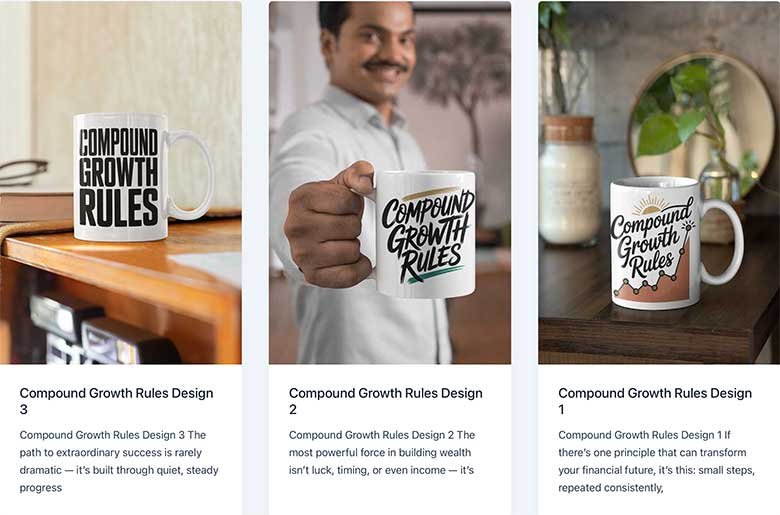
Personal Growth Reminders at Premier Print Works
Keep the reminders of what you are building visible on the days when the habits feel like effort. Visit Premier Print Works for prints, mugs, and art for people who are committed to their own growth and showing up for it every single ordinary day.
Visit Premier Print WorksDisclaimer
The content on A Self Help Hub is for informational and inspirational purposes only. The daily habits and personal stories in this article offer general support for personal development, self discipline, and intentional living. They are not professional mental health advice, psychotherapy, medical advice, or any form of clinical treatment.
If you are dealing with significant depression, anxiety, ADHD, or other conditions affecting your ability to build and maintain daily habits, please speak with a qualified mental health or medical professional. General self-help content is not a substitute for professional care.
The stories and composite characters in this article, including Kezia and Joel, are illustrative. They are based on common experiences and created to make the content relatable. They are not real people. Any resemblance to a specific person is coincidental.
Some links on this site, including links to Premier Print Works, may be affiliate links. A Self Help Hub may earn a small commission at no extra cost to you. We only recommend things we genuinely believe in.
If you are in a mental health crisis or thinking about self-harm, please do not rely on this content for support. Contact emergency services or a crisis helpline right away. You deserve real help and it is available to you now.
All content on A Self Help Hub is copyrighted. You may not copy or republish it without written permission. By reading this article you agree to this disclaimer.