7 Emotional Intelligence Habits That Help You Respond With More Peace
Emotional intelligence is not about feeling less. It is not about performing calm while your insides are doing something else entirely. Real emotional intelligence is the ability to feel what you feel, understand where it is coming from, and then choose your response rather than just having one. That gap between feeling and response is where the peace lives. Building wider, more reliable access to that gap is what these habits are for.
These 7 emotional intelligence habits are honest about what the work actually involves. It is not comfortable and it is not linear. Some days the habits hold and the response is the one you are proud of. Some days they do not and you have to repair something. Both of those days are part of building emotional intelligence. What changes over time is the ratio, and what changes the ratio is daily practice. These seven habits are that practice.

Free Download: The Self-Care Starter Kit
Responding with more peace requires taking care of the person doing the responding. The free Self-Care Starter Kit gives you simple daily practices for your mind and body that build the emotional foundation genuine emotional intelligence grows from. Download it free today.
Get the Free Self-Care Starter Kit1. Name the emotion accurately before you respond to the situation.
“The gap between feeling and response is where the peace lives. Building wider, more reliable access to that gap is what emotional intelligence habits are for.”
Psychologists call it emotional granularity: the ability to identify emotions with precision rather than collapsing everything into broad categories like upset, bad, or fine. The person who can name I am feeling overlooked right now, which is producing a low-grade anger that I need to acknowledge before I speak, is in a fundamentally different position than the person who is just angry and responding from that unexamined anger. Naming the emotion accurately does not require journaling in the moment. It requires the brief habit of pausing before you respond and asking yourself honestly what you are actually feeling and why. The naming gives you information. The information changes what you do with it.
2. Build a pause before responding to anything that produces a strong reaction.
Viktor Frankl described the space between stimulus and response as the location of human freedom, the place where choice lives rather than reaction. Most emotionally reactive responses happen in the absence of that space, when the stimulus and the response are separated by almost nothing. Building the habit of a deliberate pause, three deep breaths, a count of ten, a brief physical movement before responding to anything that produces a strong reaction, does not suppress the feeling. It creates the space in which you can choose the response rather than simply having it. The pause does not change how you feel. It changes what you do with what you feel, which is the entirety of the difference between a reactive life and a responsive one.
3. Distinguish between what happened and the story you told about what happened.
“The pause does not change how you feel. It changes what you do with what you feel. That is the entirety of the difference between a reactive life and a responsive one.”
Most of the emotional distress people carry is not caused directly by events. It is caused by the interpretation of events, the story the mind immediately and often inaccurately constructs about what the event means. Someone did not respond to your message. That is the event. The story is that they are ignoring you, that you said something wrong, that the relationship is in trouble. The story is often wrong. The emotional response to the story is as intense as if the story were confirmed fact. The emotional intelligence habit of separating the observable event from the interpretive story is one of the most practically powerful things you can build, because it gives you the ability to respond to what actually happened rather than to a narrative that may have no basis in reality.
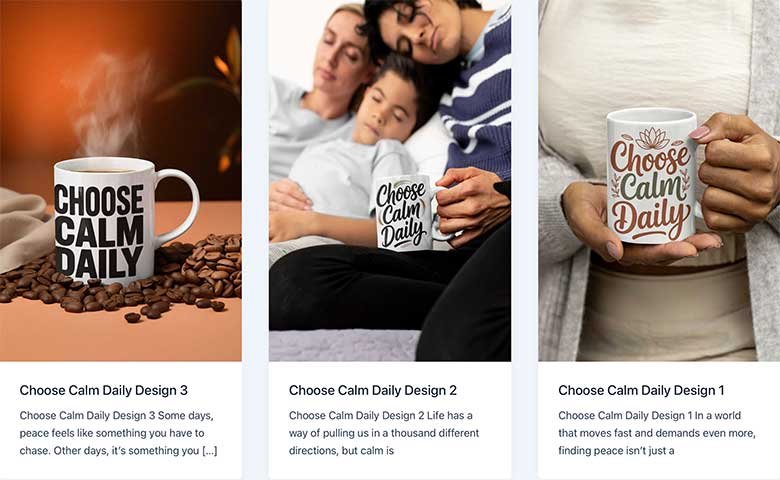
Visit Premier Print Works
The reminders that keep you responding from your values rather than your reactions are worth having close. Premier Print Works offers prints, mugs, and art for people who are building emotional intelligence and want their daily space to reflect the peace they are working to practice. Visit the shop today.
Visit Premier Print Works4. Practice listening to understand rather than to respond.
Most people listen to conversations with a significant portion of their attention directed toward formulating their own response rather than fully receiving what is being said. The result is that they hear the words without fully understanding the meaning, and the other person can almost always feel the difference. The emotional intelligence habit of listening to understand, of giving the conversation your complete attention until the other person has finished, and only then beginning to formulate a response, changes the quality of the exchange for both people. It also produces responses that are more accurate, more empathetic, and more likely to move the conversation toward something useful rather than just exchanging positions without genuine contact between them.
5. Take responsibility for your emotional state without blaming others for it.
Emotional responsibility is one of the most difficult and most important emotional intelligence habits to develop. It is the practice of acknowledging that your emotional state, however much it was triggered by someone else’s behavior, is ultimately your responsibility to manage. You made me feel this way is a statement of emotional dependency. I feel this way in response to what happened and I am responsible for what I do with it is a statement of emotional agency. The second statement is harder to inhabit. It is also more honest, more empowering, and more conducive to the kind of peace that does not depend on other people behaving differently before it is available to you.
6. Repair quickly when you respond from reaction rather than intention.
“Your emotional state, however much it was triggered by someone else’s behavior, is ultimately your responsibility to manage. Emotional agency is what makes peace that is genuinely yours possible.”
Even with consistent emotional intelligence practice, there will be moments when the reaction is faster than the habit and the response is one you regret. The emotional intelligence habit that matters most in those moments is not self-punishment. It is repair. Acknowledging quickly that the response did not reflect how you wanted to show up. Apologizing to the person affected without over-explaining or over-justifying. Returning to the values and the practice as soon as possible. The speed of the repair matters more than the quality of the apology speech. A fast, honest acknowledgment does more for the relationship and for your own emotional self-respect than a lengthy explanation that keeps the wound open longer than it needs to stay.
7. End each day by reviewing your emotional responses honestly.
A brief daily review of how you responded emotionally during the day, not a harsh self-evaluation but an honest one, is one of the most effective ways to build emotional intelligence over time. What triggered the strongest reactions today? Were those reactions proportionate to what actually happened? Were there moments you responded from your values and moments you responded from something else? What would you do differently tomorrow? Five minutes of that kind of honest reflection, practiced consistently over months, builds a level of self-awareness that is genuinely rare and genuinely transformative. You cannot improve a pattern you cannot see. The daily review makes the patterns visible in a way that produces real and lasting change.
How Amara and Joel Each Found the Habit That Changed How They Showed Up for Difficult Moments
Amara had a pattern in difficult conversations that she was not fully conscious of until a close friend named it directly: she would go quiet, withdraw, and then bring something back up days later in a way that had more heat than the original situation warranted. The friend was kind about it. She was also accurate. Amara thought about it for several days. What she realized was that she had never developed the habit of naming the emotion in the moment, so what happened instead was that the unnamed feeling went underground and emerged later, louder, in a context that the other person rarely understood. She started practicing the naming, just internally, not always out loud. I am feeling dismissed right now. I am feeling anxious about where this is going. The naming gave her something to work with before the withdrawal happened. The conversations changed in a way she had not expected. Not because she performed differently but because she understood herself more clearly in the moment she most needed to.
Joel’s habit was the event-versus-story distinction. He had spent years treating his interpretations of other people’s behavior as reliable facts rather than as one possible reading among several. A colleague’s brief email became evidence of hostility. A friend’s delayed reply became evidence of fading interest. His partner’s tiredness became evidence of something he had done wrong. Each of these stories produced real emotional responses that shaped how he acted toward the people in them, and his acting from the story often made the story more likely to come true. Learning to stop at the event and examine the story before acting on it was uncomfortable at first because it required tolerating the uncertainty of not knowing what something meant. Over time the tolerance for uncertainty became easier. The stories became less automatic. The responses became more accurate to what was actually happening rather than to the worst version of what might be.
The Peace You Are Building Is Not the Absence of Difficult Feelings. It Is the Ability to Move Through Them Without Losing Yourself.
Emotional intelligence does not promise a life without difficulty, conflict, or strong feeling. It promises something more useful: a relationship with your own emotional experience that is grounded enough that you can move through the difficult moments without the response making everything worse.
The seven habits in this article are not a cure for being human. They are a set of daily practices that, accumulated over time, change the ratio of reactive responses to chosen ones in ways that genuinely improve your relationships, your self-respect, and the quality of peace available to you in the ordinary moments of an ordinary life. Build one. Let it change you. Then build another.
The gap between feeling and response is where you live when you are living well. These habits are how you make it wider.

Free Download: The Self-Care Starter Kit
Let these emotional intelligence habits be the reminder that responding with more peace is a practice built from the inside out. The free Self-Care Starter Kit gives you the daily practices that build the emotional foundation genuine peace grows from. Download it free today.
Get the Free Self-Care Starter KitOur Top Picks for a Better Life
We have gathered our favorite tools, resources, and recommendations for building emotional intelligence, deeper self-awareness, and the daily habits that help you respond with more peace and less regret. Everything we trust enough to share, all in one place.
See Our Top Picks
Emotional Intelligence Reminders at Premier Print Works
Keep the reminders of how you want to show up visible on the days when the reaction comes faster than the intention. Visit Premier Print Works for prints, mugs, and art for people who are building emotional intelligence and the daily peace that comes from responding from their values.
Visit Premier Print WorksDisclaimer
The content on A Self Help Hub is for informational and inspirational purposes only. The emotional intelligence habits and personal stories in this article offer general support for everyday self-awareness, emotional regulation, and intentional living. They are not professional mental health advice, psychotherapy, medical advice, or any form of clinical treatment.
If you are dealing with significant anxiety, depression, trauma, personality disorders, or persistent difficulty managing emotional responses that is affecting your daily functioning and relationships, please speak with a qualified mental health professional. General self-help content is not a substitute for professional care.
The stories and composite characters in this article, including Amara and Joel, are illustrative. They are based on common experiences and created to make the content relatable. They are not real people. Any resemblance to a specific person is coincidental.
Some links on this site, including links to Premier Print Works, may be affiliate links. A Self Help Hub may earn a small commission at no extra cost to you. We only recommend things we genuinely believe in.
If you are in a mental health crisis or thinking about self-harm, please do not rely on this content for support. Contact emergency services or a crisis helpline right away. You deserve real help and it is available to you now.
All content on A Self Help Hub is copyrighted. You may not copy or republish it without written permission. By reading this article you agree to this disclaimer.