13 Personal Growth Habits That Help You Build More Confidence
Confidence is not a personality trait you either have or do not have. It is not the feeling of certainty about every outcome or the absence of self-doubt in any form. It is the earned byproduct of specific personal growth habits that build self-trust, expand capability, and produce the accumulated evidence that you can be relied upon by yourself: that when you commit to something, you follow through; that when you face something difficult, you find the resources; and that when you fail, you return rather than collapse.
These 13 personal growth habits are the specific practices that build the confidence that holds up under the real conditions of the real life. They are not the confidence performance techniques of the surface. They are the inner confidence building practices that produce the specific self-regard that the genuine, durable confidence is made from.

Free Download: The 9 Daily Habits Checklist
Confidence is built from the right daily habits practiced consistently. The free 9 Daily Habits Checklist gives you nine proven daily practices that build the structure and self-trust the genuine confidence these habits are designed to produce requires. Download it free today.
Get the Free Habits Checklist1. Keep the commitments you make to yourself with the same reliability you keep them to others.
“Confidence is not the feeling of certainty about every outcome. It is the earned byproduct of the specific habits that build self-trust, expand capability, and produce the accumulated evidence that you can be relied upon by yourself.”
The most foundational confidence-building personal growth habit available is the one about the kept commitment: the workout planned and done, the early wake time committed to and honored, the personal project scheduled and opened. Each kept commitment to the self is a piece of evidence that the self can be trusted, and the accumulated evidence of the kept commitments is the self-trust that genuine confidence is built from. Each unkept commitment is the opposite evidence: the message to the self that its own agreements are less binding than those made to others. The confidence habit is the consistent keeping of the commitments made to the self, starting with commitments small enough to be reliably kept and building the record from there. The record is the confidence.
2. Do the difficult thing regularly, in progressively larger versions.
The confidence that holds up under the genuinely difficult conditions is not built from the comfortable situations. It is built from the deliberate, progressive exposure to the difficult ones: the public speaking fear addressed by raising the hand in the meeting, then by presenting in the small group, then by speaking at the larger venue. The new skill attempted badly before it is attempted well. The uncomfortable conversation had in the small version before the large one is required. Each doing of the difficult thing builds the specific evidence that the difficult thing is survivable, and the accumulated evidence of the survivable difficult things is the confidence that the next difficult thing requires. Build the progressively larger versions of the difficult thing deliberately. Let the doing be the building.
3. Speak about yourself and your work with accurate language rather than with deflection or inflation.
“The confidence that holds under genuinely difficult conditions is built from the deliberate, progressive exposure to difficult ones. Each doing of the difficult thing builds the specific evidence that it is survivable. The accumulated evidence of survivable difficult things is the confidence the next one requires.”
The language used about the self and the work is one of the most consistent and most overlooked confidence-building personal growth habits available. The person who habitually deflects the genuine accomplishment, who minimizes the real quality of the work, who qualifies the honest opinion beyond recognition, is training the self in a specific direction: toward the belief that the accurate, direct claim is too much, that the self requires the reduction before it is acceptable. The habit of using accurate language, the simple claim of the genuine accomplishment, the direct statement of the genuine opinion, the specific description of the work’s actual quality, trains the self in the opposite direction. Practice the accurate language. Let it build the relationship to the self that the deflection was preventing.

Visit Premier Print Works
Keep the reminders of the confidence you are building through personal growth visible in your daily space. Premier Print Works offers prints, mugs, and art for people who are doing the daily work of becoming genuinely more confident and want their environment to reflect the strength and direction they are actively building. Visit the shop today.
Visit Premier Print Works4. Invest consistently in the skills that matter to you.
One of the most reliable sources of genuine confidence available is the competence that the sustained investment in a skill produces over time. The person who has spent a thousand hours developing a genuine capability has a different relationship to the confidence in that domain than the person who has not. The confidence is the earned byproduct of the competence, and the competence is the earned byproduct of the consistent investment. Build the personal growth habit of deliberate, regular practice in the domain where the confidence matters most. The investment is the confidence-building practice. The competence it produces is the confidence it earns. Both are the direct results of the consistent daily or weekly investment in the skill that matters.
5. Develop the practice of staying in your own lane on the comparison.
The confidence that is most consistently undermined by comparison is not the shallow confidence of the social performance. It is the genuine, earned confidence of the person who has been building something real and then measures the building against someone else’s different building at a different stage with different resources and different starting conditions. The personal growth habit of returning, specifically and regularly, from the comparison to the internal compass, the specific measurement of the current position against the personal trajectory rather than against the other person’s different trajectory, protects the confidence from the specific corrosion that the unfavorable comparison produces. Stay in your own lane. The race is against the previous version of you. The comparison to the other lane is always unfair and always unhelpful.
6. Practice the physical habits that produce the physiological confidence state.
“The race the confidence is built from is against the previous version of you, not against the other person’s different trajectory at a different stage with different resources. Stay in your own lane. The comparison to the other lane is always unfair and always unhelpful.”
The body and the confidence have a bidirectional relationship: the confident bearing produces the confidence experience and the confidence experience produces the confident bearing. The physical personal growth habits that most support the confidence are the ones that produce the physiological state associated with it: the regular physical exercise that elevates mood-regulating neurochemicals, the adequate sleep that restores the regulatory capacity the confidence requires, the upright physical bearing that the research on embodied cognition consistently shows produces the felt sense of confidence in the person adopting it. Build the physical habits. Move the body. Protect the sleep. Carry the posture of the confidence you are building. Let the body support the building.
7. Learn from the failure rather than collapsing under it.
The personal growth habit most directly relevant to the building of durable confidence is the one about the response to the failure: the specific practice of treating the failure as the information it genuinely is rather than the verdict it feels like. The person whose confidence collapses at the first significant failure had a confidence built on the uninterrupted success record, which is the most fragile available foundation for confidence because the failure will arrive in any sustained effort. The person whose confidence survives the failure has built the habit of the extraction, the specific practice of asking what this specific failure reveals about what to do differently, and returning from the extraction to the next attempt. The habit is the extraction and the returning. Both are the building. Let the failure be the information and the return be the confidence.
8. Build the morning practice that sets the inner tone before the outer day claims it.
“The person whose confidence collapses at the first significant failure had a confidence built on the uninterrupted success record, the most fragile available foundation. The person whose confidence survives the failure built the habit of the extraction and the return. That habit is the building of the durable confidence.”
The quality of the self-directed inner tone established in the morning practice, before the reactive demands of the day have arrived to set the tone from the outside in, is one of the most consistent contributors to the daily experience of the confidence the personal growth habits are building. The morning that belongs to the person who lives it, with its brief period of physical movement, quiet, intentional reflection, and the setting of the day’s direction from the inside, produces a different quality of grounded self-presence than the morning surrendered immediately to the phone and the inbox. The morning practice is the daily confidence-building habit that sets the inner foundation before the outer conditions have had the opportunity to undermine it. Protect it consistently.
9. Accept the compliment rather than deflecting it.
The specific personal growth habit of receiving the genuine compliment directly, with the simple acknowledgment rather than the immediate deflection, is a habit that builds both the accuracy of the self-assessment and the quality of the relationship with the person giving the compliment. The deflection of the compliment communicates the specific self-regard available in that moment and trains the self to continue undermining the accurate positive information the compliment carries. The direct receipt of the compliment, thank you, I worked hard on that, or simply thank you, builds the capacity to hold the accurate positive information without the defensive reduction that the deflection was producing. Practice receiving the compliment. Let the receiving build the relationship to the accurate self-estimate that the deflection was preventing.
10. Develop a consistent learning practice in a domain that challenges the current capability.
“The deflection of the genuine compliment trains the self to continue undermining the accurate positive information it carries. Receiving the compliment directly builds the capacity to hold accurate positive information without the defensive reduction. Practice receiving it. Thank you is enough.”
The personal growth habit of consistent learning, the regular engagement with material that challenges the current level of understanding and requires the genuine cognitive effort of the new, builds confidence through two simultaneous mechanisms: the expanding of the capability, which produces the competence-based confidence, and the habituation to the uncomfortable feeling of not-yet-knowing, which builds the tolerance for the uncertainty and the imperfection that the confidence in new domains requires. The learner who is regularly in the position of the not-yet-competent and who consistently moves from there to the more-competent builds the specific kind of confidence that the person who stays in the comfort of the already-known does not: the confidence that comes from knowing how the not-knowing gets navigated.
11. Practice the boundary that protects the time and energy for what genuinely matters.
The personal growth habit of building and maintaining the limits that protect the time and energy for the work and the relationships and the practices that genuinely matter builds confidence through the specific self-respect that the honored limit produces. Each time the limit is set and maintained, the message to the self is the message of genuine self-regard: that the things that matter to this person are worth the protection the limit provides. Each time the limit is abandoned under the pressure of the approval-seeking or the conflict avoidance, the message is the opposite. Build the limits that protect what matters. Let the honoring of them build the self-respect that the genuine confidence requires as its foundation.
12. Invest in the relationships that reflect the best of who you are becoming.
“Each time the limit is set and maintained, the message to the self is the message of genuine self-regard: that the things that matter are worth the protection. Each time the limit is abandoned under approval-seeking pressure, the message is the opposite. Honor the limit. Let it build the self-respect.”
The social environment is one of the most powerful shapers of the confidence available in it. The relationships that most consistently reflect the capable, valuable, worthy version of the person in them are the relationships that most consistently build the confidence of the person being reflected. The personal growth habit of investing in the specific relationships where the genuine self is seen accurately and reflected accurately, and of reducing the time in the relationships where the reflection is consistently diminishing, is the relational confidence-building habit that shapes the most ambient and the most consistent input the self-regard receives. Spend more time with the people in whose presence you feel more genuinely yourself. The reflection they provide is building the confidence as it is received.
13. Acknowledge the growth you have made from the specific starting point of the specific you.
The personal growth habit that most directly builds the confidence for the next season of the growth journey is the honest, specific acknowledgment of the growth that has already happened from the specific starting point the specific person began from. Not the comparison of the current position against the destination or against someone else’s position. The comparison of the current position against the specific starting point from which the specific journey began. The gap between those two points is the specific, real, undeniable evidence of the specific, real, undeniable growth that has occurred. Acknowledge it specifically. Let the acknowledgment build the confidence that the same amount of growth over the next equivalent period is available from here. It is. The confidence in the future growth is built from the honest acknowledgment of the past growth. Make that acknowledgment specific and regular. Let it be the evidence the confidence grows from.
How Kezia and Joel Each Found the Personal Growth Habit That Finally Built the Confidence That Held Under Pressure
Kezia had been working on building confidence for years with approaches that had produced the surface-level performance of confidence without the inner experience of it that she was actually looking for. She could appear confident. She could not yet feel it as a reliable inner state rather than a performed outer one. The personal growth habit that finally changed the inner experience was the kept commitment. She had been making small commitments to herself and breaking them with the same reliability that had been producing the specific self-trust deficit the performance was compensating for. A coach she worked with made the connection explicit: the confidence she was working toward was the downstream consequence of the self-trust, and the self-trust was the downstream consequence of the kept commitments. Not the large ambitions. The small, specific, daily ones. She started with one specific daily commitment small enough to be reliably kept. She kept it every day for two weeks. Then she added a second. The accumulation of the specific, small, kept commitments over four months produced a change in the inner experience that no amount of confidence performance had been able to reach: the specific, quiet, earned sense of the self that showed up and did what it said it would do. That sense was the beginning of the genuine confidence. It had always been available from the kept commitment. The commitment had always been the beginning. She had simply not been making it reliably enough or small enough to make the reliability sustainable before.
Joel’s confidence-building personal growth habit was the deliberate progressive exposure to the difficult thing. He had a specific and longstanding fear of the high-visibility professional context, the kind where his work would be seen and evaluated by people whose judgment he respected. The fear had been organizing the avoidance: the smaller venues chosen over the larger ones, the positions of less visibility chosen over the ones that would have advanced the work more significantly. A mentor he trusted made the connection between the avoidance and the confidence that the avoidance was preventing from being built: the confidence that the high-visibility context required was available only from the experience of the high-visibility context, and the avoidance was perpetually deferring the very experience that would produce the confidence it required. He began the progressive exposure deliberately: first the small team presentation, then the larger internal one, then the external professional audience. The fear did not disappear at any stage. The evidence accumulated. The evidence was the doing-despite-the-fear, which built the specific confidence that the doing-despite-the-fear produces. He has spoken in higher-visibility contexts since. The fear is present at each one. The confidence is present alongside it in a way it was not before the progressive exposure built it. The confidence is not the absence of the fear. It is the product of the accumulated evidence of having moved through it.
The Confidence These 13 Habits Are Building Is the Genuine Kind: Earned From the Inside, Evidenced From the Doing, and Durable Because It Is Built From the Self-Trust the Doing Produces.
The confidence being built from these 13 personal growth habits is not the performance of certainty or the pretense of invulnerability. It is the genuine, earned self-trust of the person who keeps the commitments made to themselves, does the difficult thing despite the fear, learns from the failure rather than collapsing under it, and acknowledges honestly the growth that has already been built from the specific starting point they began from. That confidence holds under the conditions the performing kind does not.
Build two or three of these habits this month. Let the building produce the evidence. Let the evidence produce the self-trust. Let the self-trust produce the confidence that is genuinely yours because you genuinely built it. That is the only confidence worth building. These habits are how it is built.
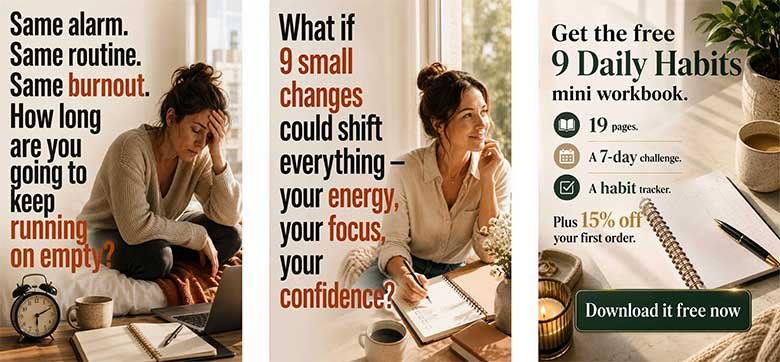
Free Download: The 9 Daily Habits Checklist
Let these personal growth habits be the reminder that genuine confidence is built from the right daily habits consistently practiced. The free 9 Daily Habits Checklist gives you nine daily practices that build the structure and self-trust the genuine confidence these habits produce requires. Download it free today.
Get the Free Habits ChecklistOur Top Picks for a Better Life
We have gathered our favorite tools, resources, and recommendations for people building genuine confidence through personal growth, developing the daily habits that produce the self-trust confidence requires, and creating the inner foundation from which the capable, grounded, confident self grows. Everything we trust enough to share, all in one place.
See Our Top Picks
Confidence Building Reminders at Premier Print Works
Keep the reminders of the genuine confidence you are building through personal growth visible in your daily space. Visit Premier Print Works for prints, mugs, and art for people doing the daily work of becoming genuinely more confident and wanting their environment to reflect the strength and direction they are actively building toward.
Visit Premier Print WorksDisclaimer
The content on A Self Help Hub is for informational and inspirational purposes only. The personal growth habits and personal stories in this article offer general support for everyday confidence building, personal development, and intentional living. They are not professional mental health advice, psychotherapy, medical advice, or any form of clinical treatment.
If you are dealing with significant anxiety, social anxiety, depression, trauma, or other conditions affecting your daily functioning and sense of confidence, please speak with a qualified mental health professional. General self-help content is not a substitute for professional care.
The stories and composite characters in this article, including Kezia and Joel, are illustrative. They are based on common experiences and created to make the content relatable. They are not real people. Any resemblance to a specific person is coincidental.
Some links on this site, including links to Premier Print Works, may be affiliate links. A Self Help Hub may earn a small commission at no extra cost to you. We only recommend things we genuinely believe in.
If you are in a mental health crisis or thinking about self-harm, please do not rely on this content for support. Contact emergency services or a crisis helpline right away. You deserve real help and it is available to you now.
All content on A Self Help Hub is copyrighted. You may not copy or republish it without written permission. By reading this article you agree to this disclaimer.