How to Pick a Credit Card Without Chasing Rewards
Credit card ads love big promises. Bonus points, travel perks, and cash back splashed in bright colors across the screen. Those offers can be fun to read about, yet they rarely tell the whole story. When you pick a credit card, the plain details in the fine print often matter far more than the rewards.
Many people pick a credit card based on the shiniest perk and later find the costs outweigh the benefits. Interest charges, yearly fees, and spending more to earn points can quietly erase any reward. Looking at the basics first can lead to a calmer, clearer choice.
This guide shares general information to think about. It is not advice and not a recommendation of any card or company. This guide is written with the United States in mind, and card terms vary widely and change often. We will cover simple money words, your own habits, fees, and a few warning signs. Take it one step at a time.

Put Your Credit Card Choices on Paper
Download the free Money Reset Workbook and get simple pages to list your debts, compare fees, and see your real spending habits.
Get the Free WorkbookStart with why you want a card at all
Before comparing cards, it can help to ask what you want a card to do for you. Some people want to build a credit history. Others want a safer way to pay online, or a backup for true emergencies. Some simply like having one card for monthly bills.
Your reason shapes what matters most. Someone building credit may care about low fees and simple terms. Someone who carries a balance may care most about the interest rate. A clear reason keeps the flashy extras in their place.
Writing your reason in one sentence can be a helpful anchor. If an offer does not fit that sentence, it may be easier to pass it by.
Write one sentence that explains why you want a credit card and what you hope it will do.
Understand APR in plain words
APR stands for annual percentage rate. In simple terms, it is the yearly cost of borrowing on the card, shown as a percent. If you leave part of your balance unpaid after the due date, interest is usually charged based on this rate.
Many cards have more than one APR. There may be one rate for purchases, another for cash advances, and another that can apply after a late payment. Some cards offer a low starting rate for a set time, and then the rate goes up. The card’s terms list each rate and when it applies.
For anyone who may carry a balance from month to month, the APR can matter much more than any reward. A card’s rewards rarely make up for interest charges that keep growing.
Find the purchase APR on any card you are thinking about and write it down next to the card’s name.
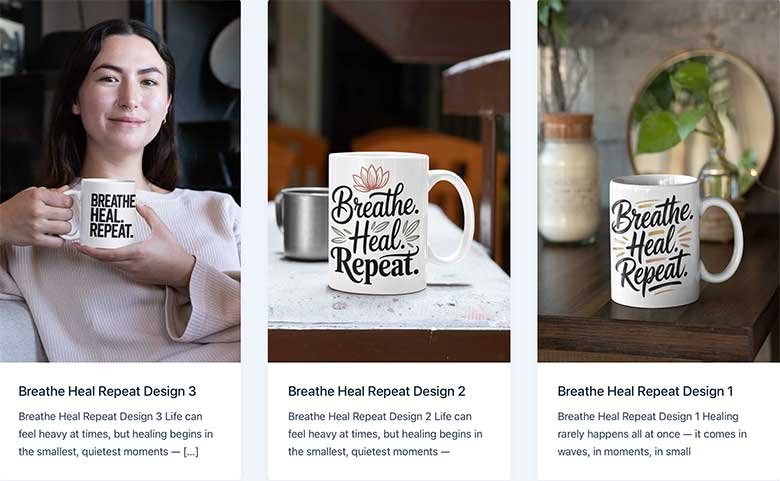
Keep a Reminder of Your Calm Money Goals
Premier Print Works creates quality prints, mugs, and shirts for people who make thoughtful money choices. Find a small reminder to read the fine print.
Visit Premier Print WorksLearn what a grace period means
A grace period is the time between the end of your billing cycle and your payment due date. On many cards, if you pay the full statement balance by the due date, you may not be charged interest on new purchases. Rules differ from card to card, so the terms are worth reading closely.
Grace periods usually apply to purchases only. Cash advances and balance transfers often start charging interest right away. Carrying a balance can also remove the grace period on new purchases until the balance is paid in full, depending on the card.
If anything about the grace period feels unclear, you can call the card issuer and ask them to explain it in plain words.
Look for the words grace period in a card’s terms and write down how it works for that card.
“The quiet details on a credit card often matter more than the loud rewards.”
Look closely at fees
Fees can turn a so-called free card into a costly one. An annual fee is a yearly charge just for having the card. Some cards have none, and others charge a fee that can be large. A card with an annual fee may only make sense for some people, depending on how they use it.
Other fees to look for include late payment fees, foreign transaction fees for purchases made outside the country, balance transfer fees, and cash advance fees. The card’s terms list these, often in a table near the start.
Adding up the fees you might really pay in a typical year can give a clearer picture than the ad does. If the fees outweigh what you would actually use, the card may not fit your needs.
List every fee a card charges and circle the ones you would likely pay based on your habits.

Compare Cards With a Clear Head
The free Money Reset Workbook gives you a clear page to write down APRs, fees, and your own habits, so the right fit is easier to see.
Get the Free WorkbookSee how rewards really add up
Some people truly enjoy rewards, and that is fine. The trouble starts when rewards push you to spend more than you planned. Here is an example with made-up numbers. Say a card gives 2 percent back on purchases. Spending $500 earns $10 in rewards. If carrying that $500 for a month leads to an interest charge of $8, most of the reward is gone.
Now picture the same spending with an annual fee of $95. To break even on the fee alone at 2 percent, it would take $4,750 in spending over a year, because 2 percent of $4,750 is $95. That math holds even before any interest.
Many people find that the simplest card is the one they can pay in full and forget about. Rewards can be a small bonus, not the main reason to choose.
Do the made-up math for any rewards card you are considering, including fees and possible interest.
Check your credit report before you apply
Card issuers look at your credit history when you apply. Knowing what is on your report first can help you avoid surprises. In the United States, you can get free copies of your credit reports from the three main credit bureaus through the official free report site.
Look for accounts you do not recognize, wrong balances, or late payments that seem incorrect. For related reading, see reading your credit report step by step.
If you find a mistake, it may be worth fixing before you apply. You may also like disputing a credit report error.
Request your free credit reports and set aside a quiet hour to read them line by line.
Think about how each application can affect your credit
Applying for a card usually leads to a hard inquiry on your credit report. One inquiry often has a small effect, but many in a short time may add up. Opening several cards at once can also make it harder to keep track of payments.
Some issuers offer a prequalification check that does not affect your credit. It can give you an idea of your chances, though it does not promise approval. The details of these checks vary.
Young adults and people new to credit may find simple, low-fee options easier to manage at first. Another place to look is credit building tips for young adults.
Choose one card to look into at a time and avoid applying for several in the same month.
Match the card to your real habits
The card that fits you depends on how you actually use money. Some people pay the full balance every month. Others sometimes carry a balance. Some travel often, while others rarely leave town. Being honest about your habits can point you to what matters.
If you tend to carry a balance, a lower APR may be the main thing to compare. If you always pay in full, low or no fees may matter more. If you travel outside the country, foreign transaction fees might be worth a look.
Looking at the last few months of your spending can show your real patterns, not the ones you hope for.
Look at your last three months of spending and write down whether you would pay in full or carry a balance.
Know your current debts before adding a new card
A new card adds one more payment to track. Before applying, it can help to see the full picture of what you already owe. That includes other cards, car loans, student loans, and any personal loans.
Writing it all down in one place can make the next choice clearer. For related reading, see a list of every debt you owe.
If debt already feels heavy, a nonprofit credit counselor can talk through options. Legal aid groups may help with debt collection problems, and 2-1-1 can connect you with local help. Payday loans and cash advance offers often carry very high costs, so many people try other options first.
Write down every debt you have, including the balance, the monthly payment, and the due date.
Watch for warning signs and scams
Some offers sound too good to be true. Be cautious of anyone who asks for an upfront fee to get you a card, promises approval no matter what, or pressures you to decide right away. Checking who you are dealing with before sharing any details can protect you.
Scammers may also call, text, or email pretending to be from a bank. One option is to hang up and call the number on the back of your card or on the issuer’s official website. Never share your full card number or passwords with someone who contacted you first.
Taking your time is one of the strongest protections. A good choice can wait a day while you read the terms.
Save the customer service number from any card you have, so you can call it directly if something seems off.
Explore Our Top Picks for a Better Life
We have gathered the tools, resources, and products we think are genuinely worth your time, covering mindset, self-care, health, and home. All in one place, hand-picked to support calm, clear choices about money.
See Our Top PicksReal Stories, Real Results
Let me share two examples I like to use. Amara signed up for a travel rewards card because the ad looked exciting. After a few months, the annual fee and interest added up to more than her points were worth. She told me that switching her focus to a simple, low-fee card made her feel more in control.
Joel wanted to start building credit and felt lost among all the offers. He checked his credit report, wrote down why he wanted a card, and compared only the APR and fees. He chose a plain card and set up a payment reminder. Both of them said the same thing: looking past the rewards made the choice simpler and less stressful.
A Card That Fits Your Life Can Feel Simple
Imagine opening your statement and seeing exactly what you expected. No surprise fees, no growing interest, just a balance you know how to handle. The card in your wallet works for you, not the other way around.
You can start by writing down why you want a card and what you already owe. Download the free Money Reset Workbook to keep your numbers in one place. Calm, clear choices often lead to a calmer money life.
Want Ready-Made Tools to Help You Put This Into Action?
Sometimes the fastest way forward is a tool that someone has already built. Browse our hand-picked resources and downloads, chosen to help you take the next step with less guesswork.
Browse Resources and Downloads
Ready to Choose a Card With Confidence?
The free Money Reset Workbook helps you see your numbers clearly, so every credit choice rests on real information.
Download Free Now
Surround Yourself With Steady Reminders
Premier Print Works makes quality prints, mugs, and shirts for people who keep money simple. Browse the collection and find what speaks to you today.
Visit Premier Print WorksDisclaimer
The content on this page is for informational and inspirational purposes only. It is not professional financial, investment, tax, legal, insurance, or estate planning advice, and it is not a recommendation of any credit card, issuer, or company. This page is written with the United States in mind. Interest rates, prices, fees, and account terms vary and change, and every card has its own terms, so please read them closely and ask the issuer if anything is unclear. The numbers in the examples are made up to show how the math works. Results vary widely from person to person. If debt feels overwhelming, a nonprofit credit counselor, a legal aid office, or 2-1-1 in the United States may help you find support, and please be careful of scams and costly shortcuts like payday loans.
I am not a financial advisor, and I am not a licensed tax, legal, or investment professional. I share this information to help people learn about money and see new options. Please treat it as general information only, and talk with a qualified professional about your own situation before making financial decisions.
The stories of Amara and Joel are illustrative composite characters created to bring the content to life. They are not real people. Any resemblance to a real person is purely coincidental.
Some links on this page, including links to Premier Print Works and other resources, are affiliate links. If you make a purchase through one of these links, we may earn a small commission at no extra cost to you. We do not own, produce, or control any affiliate products, and we are not responsible for them — we only own and sell the products offered through our own store, Premier Print Works.
All content on A Self Help Hub is the property of Digital Marketing 215 LLC and is protected by copyright law. No part of this page may be copied, reproduced, republished, distributed, or transmitted in any form without prior written permission from the author.