How to Stop Spending Money on Things You Barely Use
A bread maker sits on the top shelf of the pantry, still in its box. Next to it is a yoga mat with the tag on and a craft kit that never got opened. Each one seemed like a great idea in the store.
Most homes have a shelf like that. The items are not bad, and the hopes behind them were real. Still, the money is gone, and the space is full. If you want to stop wasting money on stuff that sits unused, it can help to look at why it happens before looking at what to buy.
This guide covers why unused things pile up, a few ways to pause before buying, and how to get more use from what you already own. These are general ideas to think about, and they are not advice or rules. Try one idea at a time and notice what feels right for your home.

See Where Your Money Is Going
Download the free Money Reset Workbook and get simple pages to notice what you buy and what you truly use.
Get the Free WorkbookNotice when you are shopping for a someday version of yourself
Many unused items are bought for the person we hope to become. The runner, the baker, the painter, the early riser. Buying the gear can feel like a first step, even when the habit never starts.
There is nothing wrong with hoping. It can help to try the habit for a few weeks with what you already have. Walk before buying running shoes. Bake with a regular pan before buying a stand mixer.
If the habit sticks, the purchase will likely get used. If it fades, the money stays in your pocket.
Name one someday purchase you have been eyeing and try the habit for two weeks without it.
Take a calm look at what already sits unused
Before changing how you shop, it can help to see what is already in your home. Walk through one room and notice things that have not been touched in months. For related reading, see making a home inventory.
Try to look with curiosity, not guilt. You might spot patterns. Maybe kitchen gadgets pile up, or clothes with tags still on them, or hobby supplies.
Those patterns can point to the kind of buying that tends to go unused for you. That knowledge is useful the next time you shop.
Walk through one room and write down three items you have not used in the past few months.
Choose Things You Will Love for Years
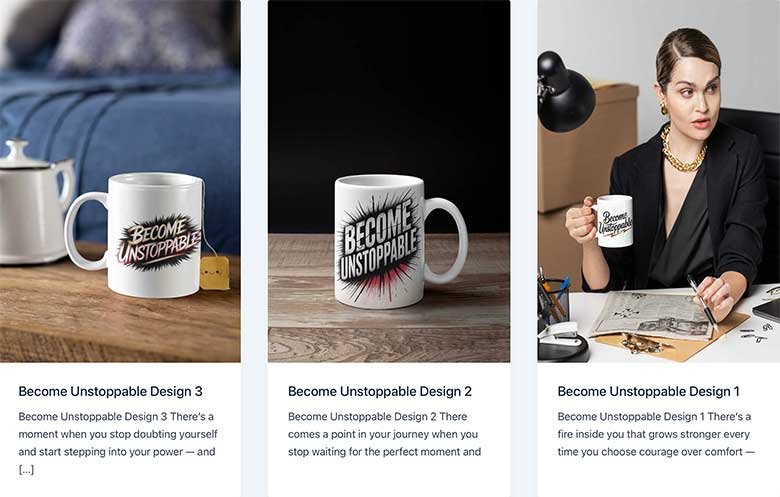
Premier Print Works creates quality prints, mugs, and shirts for people who buy with care. Find a small reminder to keep only what you use.
Visit Premier Print WorksAsk where the item will live and when you will use it next
Two quick questions can slow down a purchase. Where will this go in my home? When is the next time I will use it? If neither answer comes easily, that may be a sign to wait.
An item with no home often ends up in a pile or a closet. Out of sight, it is easy to forget, and easy to buy again later by mistake.
Some people even picture the exact shelf or drawer before they buy. If the spot is already full, they think twice.
Before your next purchase, say out loud where the item will be stored.
“The things we truly use rarely need to be talked into our cart.”
Think about how often something will really get used
Price is only one part of the picture. How often you use something can matter just as much. Here is an example with made-up numbers. A $60 blender used three times works out to $20 per use. The same blender used sixty times comes to $1 per use.
This little bit of math can make a costly item look like a good deal and a cheap item look like a waste. A $10 gadget used once costs $10 for that one use.
Being honest about your real habits helps here. Think about how you live now, not how you plan to live someday.
Pick one thing you want to buy and guess how many times you would use it in a month.

Track What You Buy and What You Use
The free Money Reset Workbook gives you a clear page to list purchases and spot the ones that end up on the shelf.
Get the Free WorkbookTry it out before you own it
Borrowing, renting, or testing can show whether you will really use something. A friend may lend you a tent for one camping trip. A class may supply the tools for a new craft.
Some people start with a small, simple version. A basic set of paints, a used bike, or a single pan can show whether the interest lasts.
If you end up loving it, you can upgrade later with much more confidence. If not, you have spent far less to find out.
Ask a friend or neighbor if you can borrow something you were thinking of buying.
Skip the full kit when one piece will do
Stores often sell things in sets and bundles. A 20-piece tool kit, a full skin care line, or a complete starter pack can feel like better value. Often, only one or two pieces get used.
One idea is to buy just the piece you need today. You can add more later if the need comes up. This keeps the extras from crowding drawers.
Bundles can be a good deal when every piece fits your life. It can help to go through the list and count how many items you would truly use.
Next time you see a bundle, count the pieces you would use in the next month.
Use what you have in a new way first
The urge to buy can come from boredom with what you already have. Moving things around, mixing outfits, or pulling out a forgotten item can scratch that itch for free. You may also like refreshing a room without new furniture.
Some people run a use it first week. Before buying anything new in a category, they use what is already in the closet or pantry.
This can bring back a little joy in things you forgot you liked. It may also show what is truly missing.
Choose one category, like candles or scarves, and use only what you own for one week.
Keep a short list of things that ended up unused
Memory tends to forget the misses. A short list of items you bought and barely used can be a gentle teacher. Write the item, about what it cost, and why it went unused. Another place to look is budgeting habits for tracking spending.
Over time, the reasons often repeat. Too hard to clean. Wrong size. Bought on impulse at night. Seeing the pattern on paper can make it easier to pause next time.
This list is for learning only. There is no need to feel bad about it.
Start a note on your phone called Barely Used and add one item tonight.
Give your money a plan before you go shopping
When money has no plan, it tends to drift toward whatever catches the eye. Many people find that a simple spending plan makes it easier to say not now to extras. For related reading, see budgeting when you are not sure where money goes.
A plan can be very simple. Some people choose a small fun money amount each month. Anything outside that amount waits until next month.
This keeps room for treats while gently limiting the purchases that end up on the shelf.
Choose a small fun money amount for the month and write it down.
Be kind to yourself about past purchases
Most people have bought things they barely used. Feeling guilty about it can sometimes lead to more shopping, because buying something new can feel like a fix.
It can help to treat past purchases as lessons. Some items can still be used, lent, or given to someone who will enjoy them.
Each pause before buying is a small win. Progress tends to come from many small choices, not from being perfect.
Pick one unused item and decide whether to use it, lend it, or give it away this week.
Explore Our Top Picks for a Better Life
We have gathered the tools, resources, and products we think are genuinely worth your time, covering mindset, self-care, health, and home. All in one place, hand-picked to support a home filled with things you truly use.
See Our Top PicksReal Stories, Real Results
Let me share two examples I like to use. Kezia had three kitchen gadgets in a cabinet that she had used only once. She began asking herself where a new item would live before she bought it. She told me that she skipped two gadgets in one month and felt proud each time she closed the cabinet.
Daniel bought a full set of fishing gear before ever going fishing. Most of it stayed in the garage. The next time he wanted to try a hobby, he borrowed gear from a cousin first. He said that the borrowing saved him money and showed him which hobbies he truly enjoyed. Both of them said the same thing: a short pause before buying made a big difference.
A Home Full of Things You Actually Use
Picture opening a closet and seeing only things you reach for. Your shelves have breathing room, and your money goes toward what fits your life now.
Start with one pause, one question, or one room. Download the free Money Reset Workbook to write down what you notice. Small steps can add up to a calmer home and budget.
Want Ready-Made Tools to Help You Put This Into Action?
Sometimes the fastest way forward is a tool that someone has already built. Browse our hand-picked resources and downloads, chosen to help you take the next step with less guesswork.
Browse Resources and Downloads
Ready to Spend on What You Truly Use?
The free Money Reset Workbook helps you see your spending clearly, so more of your money goes toward what fits your life.
Download Free Now
Fill Your Space With Things That Matter
Premier Print Works makes quality prints, mugs, and shirts for people who keep only what they love. Browse the collection and find what speaks to you today.
Visit Premier Print WorksDisclaimer
The content on this page is for informational and inspirational purposes only. It is not professional financial, investment, tax, legal, insurance, or estate planning advice. The numbers in the example are made up to show how the math works. Prices, fees, and account terms vary and change, and store policies on returns differ, so please check the details. When borrowing or using tools, gear, or appliances, please follow the manufacturer instructions and basic safety. Results vary widely from person to person.
I am not a financial advisor, and I am not a licensed tax, legal, or investment professional. I share this information to help people learn about money and see new options. Please treat it as general information only, and talk with a qualified professional about your own situation before making financial decisions.
The stories of Kezia and Daniel are illustrative composite characters created to bring the content to life. They are not real people. Any resemblance to a real person is purely coincidental.
Some links on this page, including links to Premier Print Works and other resources, are affiliate links. If you make a purchase through one of these links, we may earn a small commission at no extra cost to you. We do not own, produce, or control any affiliate products, and we are not responsible for them — we only own and sell the products offered through our own store, Premier Print Works.
All content on A Self Help Hub is the property of Digital Marketing 215 LLC and is protected by copyright law. No part of this page may be copied, reproduced, republished, distributed, or transmitted in any form without prior written permission from the author.