20 Frugal Living Reflection Prompts to Help You Think About Spending
A blank page and a pen can be a quiet place to think about money. No app, no chart, just a few honest questions and a few minutes of your time.
That is the idea behind these spending reflection prompts. Each one is a short question to write about in a notebook, on your phone, or on the back of an envelope. Spending reflection prompts can help you notice patterns, feelings, and values that numbers alone might miss. There are no right answers, and nobody else needs to see what you write.
Below are 20 prompts, grouped loosely from everyday habits to bigger hopes. This guide shares general ideas to think about, and it is not advice. Pick one prompt a day or a few a week, and let your answers be as short or as long as feels right.

Pair Your Reflections With a Simple Plan
Download the free Money Reset Workbook and use it alongside these prompts to see your feelings and your numbers side by side.
Get the Free Workbook1. What did I buy this week that I truly enjoyed?
Starting with joy keeps the practice kind. Writing about a purchase that felt good can show what kinds of spending add real value.
The answer might be small, like a fresh loaf of bread or a bus ticket to see a friend.
Write down one purchase from this week that made you smile and why.
2. What did I buy that I already regret?
Regret is useful information, not a reason for shame. Noticing a purchase that did not feel good can help the next choice.
It may help to note what was going on at the time. Were you tired, rushed, or bored?
Write about one purchase you regret and what led up to it.

Keep a Thoughtful Reminder Near Your Notebook
Premier Print Works creates quality prints, mugs, and shirts for people who think about money with care.
Visit Premier Print Works3. When do I tend to spend without thinking?
Many people have certain times when spending happens on autopilot. Late at night, on payday, or after a hard day are common.
Seeing the pattern can make it easier to plan around it. For related reading, see budgeting when you do not know where money goes.
List the times of day or week when you notice the most spending.
“A few honest words on a page can show you more than a year of receipts.”
4. How do I feel right before I shop?
Feelings and spending are often linked. Stress, sadness, excitement, and boredom can all lead to a cart.
Writing about the feeling, without judging it, can bring a little space between the feeling and the purchase.
Next time you want to buy something, write one word for how you feel.

Write Down What You Notice
The free Money Reset Workbook gives you a page to record patterns, wins, and small next steps.
Get the Free Workbook5. What does enough look like for me?
Enough is a personal idea. For one person, it is a full pantry. For another, it is a little money left at the end of the month.
Putting it into words can make it easier to notice when you already have it.
Describe in three sentences what having enough looks like in your life.
6. Which costs bring me peace?
Some spending brings a calm feeling, like paying a bill on time or buying good shoes for work. These costs often feel worth it.
Naming them can help protect them when trimming other areas.
List three costs that bring you a sense of peace or safety.
7. Which costs drain me?
Other costs can feel heavy. A subscription you forget, a payment that stings, or a fee you did not expect.
Writing about them can show where changes might bring relief. Another place to look is everyday expenses you can cut.
Write down two costs that feel heavy and one idea for each.
8. What did I learn about money growing up?
Early lessons often shape how adults spend and save. Some people grew up hearing that money was tight. Others learned that money should be spent quickly.
Reflecting on those lessons can help you decide which ones to keep.
Write down one money lesson you learned as a child.
9. What would I buy if no one was watching?
Some purchases are made to impress others or to fit in. Thinking about what you would buy if no one ever saw it can show what you value for yourself.
The answer might be surprising.
List three things you would still buy if no one ever knew.
10. What do I own that I never use?
A quick look around the home can turn up items that sit untouched. Clothes with tags, gadgets in boxes, or tools that were used once.
Noticing them can make the next similar purchase feel less tempting.
Find three items you have not used in a long time and write about why.
11. What small habit could save me money without much effort?
Not every change has to be hard. A small habit, like making coffee at home or packing a snack, can add up.
Writing it down can make it feel more real and doable.
Choose one easy habit and write how you will start it.
12. What is the difference between my needs and wants right now?
Needs and wants can shift over time. A car may be a need for one season of life and a want in another.
Sorting them for your life today can bring clarity. You may also like budgeting for needs before wants.
Make two short lists, one for current needs and one for current wants.
13. Who influences my spending the most?
Friends, family, coworkers, and social media can all shape what we buy. Some influence is helpful. Some is not.
Naming the main voices can help you choose which ones to listen to.
Write down three people or places that shape your spending.
14. What would I do with an extra hundred dollars?
This prompt can reveal priorities. Would it go to savings, a bill, a treat, or a gift?
There is no wrong answer. It simply shows what matters to you right now.
Write how you would use a surprise hundred dollars and why.
15. What is one money worry I keep carrying?
Worries can feel lighter when they are written down. Naming one can be the first step toward a plan.
If the worry feels big, a trusted friend or a nonprofit credit counselor can be a good person to talk with.
Write down one money worry and one small step that might ease it.
16. What spending am I proud of?
Pride matters. Maybe you paid off a bill, saved for a trip, or bought something that helped your family.
Remembering these moments can build confidence.
Write about one money choice you feel proud of.
17. How does clutter make me feel?
Clutter can be a quiet sign of past spending. It can also bring stress.
Writing about how your space feels can help guide future choices. See also decluttering without more storage products.
Pick one cluttered spot and write how it makes you feel.
18. What free things brought me joy recently?
Joy often comes without a price tag. A walk, a talk, a good book, or a sunny afternoon.
Listing free joys can remind you that a good life does not always cost money.
List five free things that made you happy this month.
19. What do I want my money to do for me in the future?
Money can be a tool for peace, freedom, or giving. Thinking about the future can make daily choices feel more meaningful.
The answer might be a home, a trip, a cushion, or simply less stress.
Write a short note to yourself about what you hope money can do for you someday.
20. What is one thing I want to remember from this practice?
Ending with a takeaway can tie it all together. It might be a habit, a feeling, or a new way of seeing money.
Coming back to this note later can show how far you have come.
Write one sentence you want to remember about your money and your life.
Explore Our Top Picks for a Better Life
We have gathered the tools, resources, and products we think are genuinely worth your time, covering mindset, self-care, health, and home. All in one place, hand-picked to support the goals you are working toward.
See Our Top PicksReal Stories, Real Results
Let me share two examples I like to use. Amara started writing about one prompt each night before bed. After a few weeks, she noticed that most of her extra spending happened when she felt lonely. She told me that seeing it on paper helped her call a friend instead of opening a shopping app.
Joel thought reflection was not his style, but he tried the prompt about what enough looks like. He wrote a short list and realized he already had most of it. He said that the feeling of enough made him want to spend less without trying. Both of them said the same thing: a few quiet minutes of writing changed how they felt about money.
A Few Quiet Questions Can Bring a Clearer Mind
Picture a calm evening with a cup of tea and a notebook. You write a few lines, notice a pattern, and feel a little lighter.
Choose one prompt from this list and try it today. Download the free Money Reset Workbook to pair your reflections with simple numbers. Small moments of thought can lead to big shifts in how money feels.
Want Ready-Made Tools to Help You Put This Into Action?
Sometimes the fastest way forward is a tool that someone has already built. Browse our hand-picked resources and downloads, chosen to help you take the next step with less guesswork.
Browse Resources and Downloads
Ready to Turn Reflection Into Calm?
The free Money Reset Workbook helps you see your money clearly, so your reflections can lead to gentle change.
Download Free Now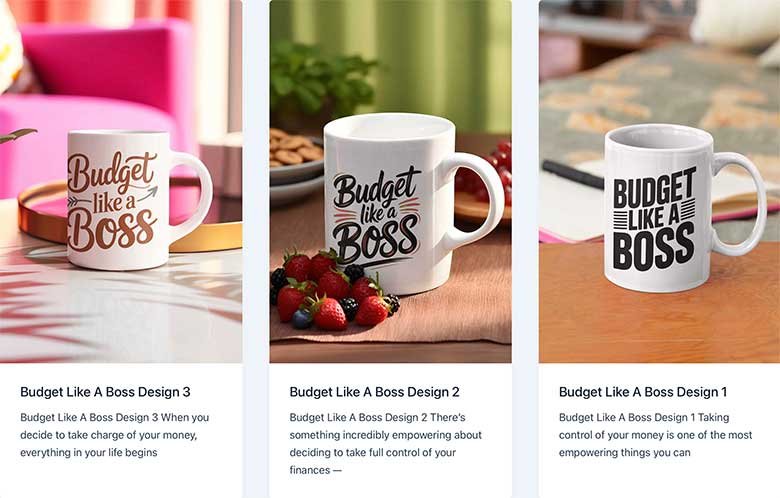
A Quiet Reminder for Calm Money Moments
Premier Print Works makes quality prints, mugs, and shirts for thoughtful, thrifty people. Browse the collection today.
Visit Premier Print WorksDisclaimer
The content on this page is for informational and inspirational purposes only. It is not professional financial, investment, tax, legal, insurance, or estate planning advice, and it is not a substitute for mental health care. Prices, fees, and account terms vary and change, and results vary widely from person to person. If money worries feel heavy, a nonprofit credit counselor or 2-1-1 in the United States can point you toward help, and a doctor or counselor can support your well-being.
I am not a financial advisor, and I am not a licensed tax, legal, or investment professional. I share this information to help people learn about money and see new options. Please treat it as general information only, and talk with a qualified professional about your own situation before making financial decisions.
The stories of Amara and Joel are illustrative composite characters created to bring the content to life. They are not real people. Any resemblance to a real person is purely coincidental.
Some links on this page, including links to Premier Print Works and other resources, are affiliate links. If you make a purchase through one of these links, we may earn a small commission at no extra cost to you. We do not own, produce, or control any affiliate products, and we are not responsible for them — we only own and sell the products offered through our own store, Premier Print Works.
All content on A Self Help Hub is the property of Digital Marketing 215 LLC and is protected by copyright law. No part of this page may be copied, reproduced, republished, distributed, or transmitted in any form without prior written permission from the author.