What Happens to Investments When the Market Falls? A Calm Look at Downturns
Your phone buzzes with a news alert in red letters. You open your account and see a balance smaller than it was last week. It is your first stock market downturn as an investor, and your heart starts to race.
If that scene feels familiar, please take a slow breath. A stock market downturn can feel personal and urgent, even when nothing has to happen today. This guide shares general information to help you understand what is going on. It is not advice, and it does not tell you what to do with your money.
We will look at what a drop means, why it feels so heavy, and the kinds of choices people think about. No one can say what markets will do next, and this guide will not try. It is written with the United States in mind. Read it slowly, one part at a time.

Write Down Your Goals Before the Next Headline
Download the free Money Reset Workbook and get simple pages to list your goals, timelines, and questions, so a market drop feels less overwhelming.
Get the Free WorkbookWhat a downturn means in plain words
The stock market is a place where people buy and sell small pieces of companies, called shares or stocks. Prices change all day as buyers and sellers react to news, fears, and hopes. A downturn is a stretch of time when prices fall across much of the market.
Some drops are short and small. Others are deeper and last longer, and people sometimes call those bear markets. The names matter less than the feeling, which is often worry.
Many types of investments can move during a downturn. Some may fall a lot, some a little, and some may hold steady or rise.
Write down the words that confuse you most about market drops, so you can look them up calmly.
A lower balance and a sale are two different things
Here is an example with made-up numbers. Say an account holds $10,000 in investments. The market falls, and the value drops by 15 percent. The account now shows $8,500, which is $1,500 less.
If nothing was sold, that $1,500 drop is often called a paper loss. The investments are still owned, and their value can keep changing in either direction. If the investments are sold at the lower price, the loss becomes realized, or locked in.
Knowing this difference does not make a drop painless. It can help you see that a number on a screen and a decision to sell are separate moments.
Look at your account and note whether any recent change came from a price move or from a sale.
Keep a Reminder to Breathe Before You Act
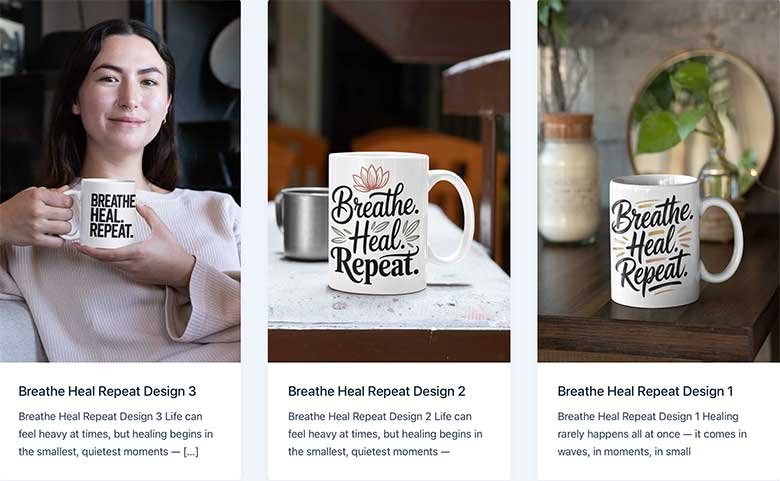
Premier Print Works creates quality prints, mugs, and shirts for people who choose calm. Find a small reminder to slow down on hard days.
Visit Premier Print WorksUps and downs are part of how markets behave
Prices rise and fall over time. That movement is called volatility, which simply means how much and how fast prices swing. Downturns are one part of that pattern, and they have happened many times before.
Past patterns are not a promise, though. No one knows how deep a drop will go or how long it will last. Some investments may take a long time to regain value, and some may never do so.
Holding both truths at once can bring a steadier mind. Drops are common, and the future is still uncertain.
Write one calm sentence you can read to yourself the next time prices fall.
“A falling number on a screen is a moment, and you get to choose how you meet it.”
Why a falling balance feels so heavy
Many people find that losing money feels stronger than gaining the same amount. A drop can stir up memories of hard times, fears about the future, or a sense of having made a mistake.
Those feelings are human. They also tend to push people toward fast choices. Taking a pause before acting can give your thinking brain a chance to catch up with your worried brain.
Some people find it helps to talk with a calm friend or to go for a walk before making any money move. For related reading, see the psychology of money.
Choose a waiting period for yourself before making any money choice during a scary week.

Keep Your Money Plan in One Calm Place
The free Money Reset Workbook gives you a clear spot to sort money by timeline and note your questions, so you can think instead of react.
Get the Free WorkbookWhen you need the money can shape how a drop affects you
Time horizon is how long until you plan to use the money. Money meant for a goal many years away has a very different job from money needed next month.
A drop can feel the same on the screen either way. Yet the impact can be quite different. Someone who plans to use the money soon may feel more pressure than someone with a long road ahead.
Many people find it helpful to sort their money by when they expect to use it. This can make it clearer which parts are most affected by a drop.
Make three short lists: money needed soon, money needed in a few years, and money for the long term.
A cash cushion can lower the pressure
An emergency fund is money set aside for surprise costs, often kept in a savings account. It is separate from investments. When surprises hit during a downturn, having cash can mean not selling investments at a low point to pay a bill.
This cushion will not change what the market does. It can change how much stress a drop puts on your daily life. You may also like what an emergency fund is.
Many people build this cushion slowly, a little at a time. Any amount can add some breathing room.
Write down how many weeks of basic bills your current savings could cover.
Spreading money out can soften the swings
Diversification means spreading money across different kinds of investments. The idea is that when one part falls, another part might fall less or even rise. For related reading, see diversification for beginner investors.
It does not prevent losses. In some downturns, many kinds of investments fall at the same time. It can still lower the chance that one single investment drags everything down.
Some people look at how their money is spread out after a drop. Others leave it alone and check again later.
List the different kinds of investments you hold, as best you know them.
The choices people weigh during a downturn
People respond to downturns in many ways. Some keep investing on their usual schedule. Some pause new investing for a while. Some leave everything untouched. Some sell part or all of their investments.
Each choice has trade-offs. Selling can bring relief and lock in a loss at the same time. Holding keeps the chance of later gains and the chance of further losses. Buying more during a drop also carries risk, since prices can keep falling.
There is no single right answer for everyone. The choice depends on your goals, your timeline, your needs, and your comfort with risk. Another place to look is long-term investment strategies.
Write down your main money goal and its timeline before you think about any changes.
Turning down the noise
During a downturn, news and social media can feel like an alarm that never stops. Big headlines are made to grab attention. Checking your account many times a day can add worry without adding new information.
Some people choose to check their accounts less often during rough stretches. Others turn off market alerts or set a time limit for money news.
Staying informed is useful. Staying flooded is a different thing, and it can wear you down.
Pick one news habit to soften this week, such as turning off market alerts on your phone.
Getting calm, trusted help
Scary times can bring out scammers. Watch for anyone promising sure gains, secret methods, or a way to get back losses quickly. Real investing always carries risk, and no honest person can promise results.
A fiduciary financial planner is required to act in your best interest. Talking with one can help you think through your own situation without pressure. If taxes come into a decision, a tax professional can also explain what applies.
Bringing your goals, your account list, and your questions can make that talk more useful.
Write three questions you would like to ask a fiduciary financial planner.
Explore Our Top Picks for a Better Life
We have gathered the tools, resources, and products we think are genuinely worth your time, covering mindset, self-care, health, and home. All in one place, hand-picked to support the goals you are working toward.
See Our Top PicksReal Stories, Real Results
Let me share two examples I like to use. Kezia saw her balance drop and almost sold everything that same night. She waited two days, talked with a friend, and wrote down her goals and timeline. She told me that the pause helped her make a choice she felt at peace with.
Daniel checked his account every hour during a rough month and barely slept. He turned off his alerts and set one day a week to look. He also started building a small cash cushion. Both of them said the same thing: slowing down gave them room to think instead of react.
Picture Meeting a Market Drop With a Steadier Mind
Imagine the next scary headline. You notice the knot in your stomach, and you take a breath. You remember your goals, your timeline, and your cash cushion. You may still feel uneasy, and you also feel more in charge of your next step.
Pick a calm moment, write your goals down, and list your questions. Download the free Money Reset Workbook to keep your plans and notes in one place. Calm can be practiced, one small step at a time.
Want Ready-Made Tools to Help You Put This Into Action?
Sometimes the fastest way forward is a tool that someone has already built. Browse our hand-picked resources and downloads, chosen to help you take the next step with less guesswork.
Browse Resources and Downloads
Ready to Feel Steadier When Markets Swing?
The free Money Reset Workbook helps you see your goals clearly, so a scary week does not have to steer every choice.
Download Free Now
Fill Your Space With Steady, Gentle Reminders
Premier Print Works makes quality prints, mugs, and shirts for people who meet hard moments with calm. Browse the collection and find what speaks to you.
Visit Premier Print WorksDisclaimer
The content on this page is for informational and inspirational purposes only. It is not professional financial, investment, tax, legal, insurance, or estate planning advice, and it is not a recommendation to buy or sell any investment. This guide makes no predictions about markets and does not promise that any investment will regain value. All investing involves risk, including the possible loss of principal. Past results do not guarantee future results. Prices, fees, and account terms vary and change. The numbers in the example are made up to show how the math works. This guide is written with the United States in mind. Please talk with a fiduciary financial planner or other qualified professional about your own situation. Results vary widely from person to person.
I am not a financial advisor, and I am not a licensed tax, legal, or investment professional. I share this information to help people learn about money and see new options. Please treat it as general information only, and talk with a qualified professional about your own situation before making financial decisions.
The stories of Kezia and Daniel are illustrative composite characters created to bring the content to life. They are not real people. Any resemblance to a real person is purely coincidental.
Some links on this page, including links to Premier Print Works and other resources, are affiliate links. If you make a purchase through one of these links, we may earn a small commission at no extra cost to you. We do not own, produce, or control any affiliate products, and we are not responsible for them — we only own and sell the products offered through our own store, Premier Print Works.
All content on A Self Help Hub is the property of Digital Marketing 215 LLC and is protected by copyright law. No part of this page may be copied, reproduced, republished, distributed, or transmitted in any form without prior written permission from the author.