Questions to Ask Before Paying for an AI Course or Program
Your cursor hovers over the buy button. The course page says it will teach you everything about earning with AI tools, and the price is lower than yesterday. A small voice wonders if this is a smart step or an expensive one.
Paying for an AI course can be a fair choice for some people, and a costly mistake for others. Many good classes exist, and so do many weak ones with big promises. Asking a few plain questions first can help you see which kind you are looking at.
This guide lists questions to think about, as general ideas and not advice. It does not tell you whether to buy any course. Go through the questions at your own pace, and let your answers help you decide.

See What Your Budget Allows for Learning
Download the free Money Reset Workbook and get simple pages to plan any learning costs alongside your bills and savings.
Get the Free WorkbookWhat exactly do I hope to learn?
Before looking at any course, it can help to write down what you want to know. Maybe it is how to use an AI tool to draft emails, or how to check AI work for errors. A clear goal makes it easier to judge whether a course fits.
Vague goals like getting rich or making money online are hard to measure. A course that promises to fix a vague goal can be hard to judge too.
If you cannot name what you want to learn, you may want to explore free material first.
Write one sentence that names a specific skill you would like to learn.
Can I learn the basics for free first?
Many AI tools come with free help pages, guides, or practice modes. Libraries, community colleges, and community groups sometimes offer free or low-cost classes too. Trying free options first can show whether the topic even interests you.
Some people spend a few weeks practicing with free material before thinking about paying. That way, a paid class builds on real interest. For related reading, see earning extra money without buying a course.
If free options cover what you need, that is a fine outcome too.
Look up whether your local library or community college lists any free tech classes.
Keep a Small Reminder in Plain Sight
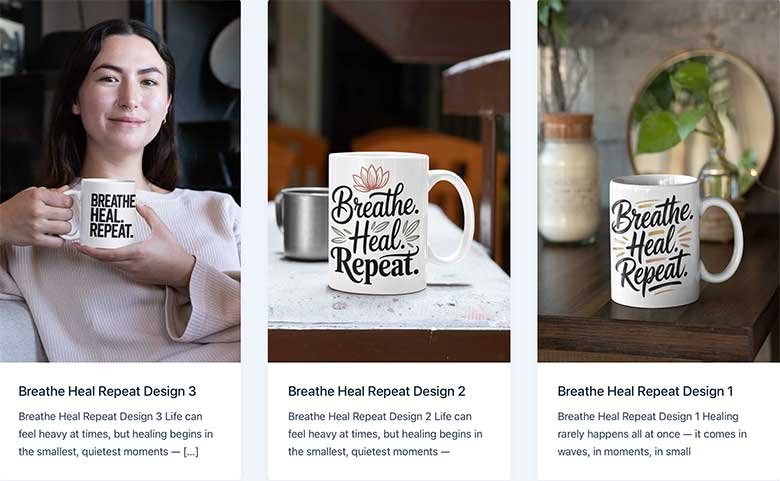
Premier Print Works creates quality prints, mugs, and shirts for thoughtful, thrifty people. Find a small reminder of what you are working toward.
Visit Premier Print WorksWho is teaching, and what have they really done?
It can help to look for a teacher who does the work they teach, not only a person who sells courses about it. Look for plain details about their background and the kind of work they do.
Be careful with photos of luxury items or claims of huge earnings. These say little about teaching skill. A calm, clear teacher who admits limits can be a better sign.
If you cannot find any real information about the teacher, that is worth noticing.
Write down what you can confirm about the teacher, and what you cannot.
“A good class is happy to answer your questions before it takes your money.”
What is the full cost, including every extra?
The first price is not always the final price. Some programs add coaching, special tools, private groups, or advanced levels. Ask for the full cost of everything before paying.
Here is an example with made-up numbers. A course costs $97, a required tool costs $20 a month for 6 months, and a coaching add-on costs $150. That comes to $97 plus $120 plus $150, or $367 in total.
Seeing the whole number at once can make the choice clearer. See also reasons to track every expense.
Add up every cost you can find for one course, including monthly fees, and write the total.

Plan Learning Costs in One Place
The free Money Reset Workbook gives you a clear page to note course costs and monthly fees, so nothing sneaks up on you.
Get the Free WorkbookIs there a clear refund policy in writing?
A fair course usually explains its refund rules in plain words. Look for how many days a buyer has to ask, what steps it asks for, and any conditions. Save a copy of the policy if you buy.
Watch for refund rules that are hard to find or full of hoops. Some programs promise a refund only if you finish every task and show proof of effort. That can make a refund almost impossible.
If the refund rules are unclear, it is fine to ask questions before paying, or to walk away.
Find the refund policy for one course and summarize it in your own words.
Does the course promise income?
No course can promise you will earn money. Results depend on your skills, your time, customers, and many outside factors. A promise of a set income is a strong warning sign.
An honest course talks about what you will learn, not what you will earn. It may share examples, and it should say that results vary.
If a course leans heavily on income promises, you may want to look for one that focuses on skills.
Read the course page and circle every line that promises money instead of skills.
Is there pressure to buy right away?
Countdown timers, flash sales, and limited seats are designed to rush you. A good course will usually still be there next week. Some people set a waiting rule before buying any course over a certain amount.
Taking time lets you read reviews, compare options, and check your budget. It also lets the excitement settle. Another place to look is ideas for stopping impulse spending.
If the deal disappears while you think, that is often a sign it was more about pressure than value.
Set a personal waiting period before buying any online course.
How current and honest is the material?
AI tools change often, and so do their prices and rules. A course recorded long ago may describe features that no longer exist. Look for signs the material is kept up to date.
Also check whether the course talks honestly about AI mistakes. A good one explains that tools can produce made-up facts and wrong numbers, and it teaches careful checking.
A course that says AI work needs no review is missing an important piece.
Check whether the course mentions reviewing AI work for errors, and note what it says.
Does this fit my budget without strain?
Even a good course is not worth paying for if it stretches your money too thin. Bills, groceries, and savings come first for many people. Some choose to save up for a class instead of using credit.
Paying for a course with money set aside for basics can turn a learning step into stress. Looking at your monthly budget first can help. You may also like a monthly skill challenge.
Learning is a fine goal, and it can happen at a pace your budget allows.
Look at your monthly budget and write how much, if anything, you feel comfortable spending on learning.
Explore Our Top Picks for a Better Life
We have gathered the tools, resources, and products we think are genuinely worth your time, covering mindset, self-care, health, and home. All in one place, hand-picked to support the goals you are working toward.
See Our Top PicksReal Stories, Real Results
Let me share two examples I like to use. Amara almost bought a course with a countdown timer on the page. She waited a week and found free practice guides at her library instead. She told me that the free material taught her enough to know what she really wanted to learn next.
Joel chose to pay for a short class after checking the teacher, the refund policy, and the full cost. He said knowing the total ahead of time made him feel calm about the choice. Both of them said the same thing: a few honest questions made the decision feel like their own.
Choosing to Learn on Your Own Terms
Picture yourself looking at a course page with calm eyes. You know your goal, your budget, and your questions. Whether you buy or walk away, you feel good about the choice.
Write down your questions and keep them handy. Download the free Money Reset Workbook to see what your budget allows. Learning works best when it fits your real life.
Want Ready-Made Tools to Help You Put This Into Action?
Sometimes the fastest way forward is a tool that someone has already built. Browse our hand-picked resources and downloads, chosen to help you take the next step with less guesswork.
Browse Resources and Downloads
Ready to Decide With Clear Numbers?
The free Money Reset Workbook helps you see your money clearly, so any learning choice fits your real budget.
Download Free Now
Fill Your Space With Things You Love
Premier Print Works makes quality prints, mugs, and shirts for people who plan ahead. Browse the collection and find what speaks to you today.
Visit Premier Print WorksDisclaimer
The content on this page is for informational and inspirational purposes only. It is not professional financial, investment, tax, legal, insurance, or estate planning advice. It does not recommend for or against any course or program. Income is not guaranteed from any class. The cost example uses made-up numbers. AI tools can make mistakes, and tools, prices, fees, refund policies, and account terms vary and change, so please check current information before you pay for anything. Results vary widely from person to person.
I am not a financial advisor, and I am not a licensed tax, legal, or investment professional. I share this information to help people learn about money and see new options. Please treat it as general information only, and talk with a qualified professional about your own situation before making financial decisions.
The stories of Amara and Joel are illustrative composite characters created to bring the content to life. They are not real people. Any resemblance to a real person is purely coincidental.
Some links on this page, including links to Premier Print Works and other resources, are affiliate links. If you make a purchase through one of these links, we may earn a small commission at no extra cost to you. We do not own, produce, or control any affiliate products, and we are not responsible for them — we only own and sell the products offered through our own store, Premier Print Works.
All content on A Self Help Hub is the property of Digital Marketing 215 LLC and is protected by copyright law. No part of this page may be copied, reproduced, republished, distributed, or transmitted in any form without prior written permission from the author.