17 Saving Money Habits That Help You Build a More Secure Lifestyle
Saving money is not about being cheap. It is about making choices that give you more freedom and less stress over time. Most people want to save more but do not know where to start. The good news is that small habits add up fast.
This article gives you 17 saving money habits you can start using right now. You do not need a big income to make them work. You just need to pick a few and stick with them. Your future self will thank you.
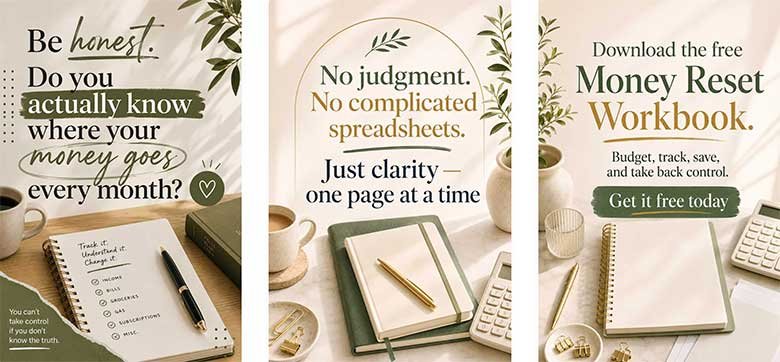
Get Your Money Under Control Today
Download the free Money Reset Workbook and build a simple plan to save more every single month.
Get the Free Workbook1. Pay yourself first by saving a set amount before you spend anything else.
Most people save whatever is left at the end of the month. There is usually nothing left. Flip that around. Move money into savings the moment you get paid. Treat it like a bill you must pay.
Even $25 a week adds up to $1,300 a year. Start small if you need to. The habit matters more than the amount at the beginning.
2. Set up automatic transfers so saving happens without thinking about it.
Willpower runs out. Automation does not. Set up an automatic transfer from your checking to your savings account on every payday. You will not miss money you never see in your spending account.
Most banks let you set this up in minutes online. Schedule it for the same day your paycheck arrives and leave it alone.
3. Track every dollar you spend for one full month to see where your money really goes.
Most people are shocked when they see their actual spending. You might think you spend $200 a month eating out. Your bank statement might say $480. Tracking creates awareness and awareness creates change.
Use a free app like Mint or YNAB, or just write it down in a notebook. Do it for 30 days. Then look at the numbers honestly.
“A budget is not a cage. It is a map that shows you where your money is going so you can decide if that is where you want it.”
4. Cancel subscriptions you forgot you had and put that money to work instead.
The average person has more than a dozen subscriptions. Many of them go unused for months. Log into your bank account and go through every recurring charge. Cancel anything you have not used in the last 30 days.
Even canceling three small subscriptions can free up $30 to $60 a month. That is $360 to $720 a year back in your pocket.
5. Use the 24-hour rule before making any unplanned purchase over $30.
Impulse buying is one of the biggest savings killers. Before you buy something that is not on your plan, wait 24 hours. Most of the time the urge fades and you realize you did not really need it.
This one habit can save hundreds of dollars a year with almost no effort. Put the item in your cart and walk away. If you still want it tomorrow, then decide.

Surround Yourself With What Inspires You
Premier Print Works has beautiful prints made for people who are building a better life. Add something meaningful to your space today.
Visit Premier Print Works6. Meal plan every week to cut your grocery bill without cutting out the foods you love.
Food is one of the biggest budget leaks for most families. Planning your meals before you shop helps you buy only what you need. It also cuts down on food waste, which is like throwing money in the trash.
Spend 15 minutes on Sunday planning the week. Make a list and stick to it at the store. This simple habit can save $100 to $200 a month for a family of four.
7. Build a starter emergency fund of one month of expenses before anything else.
An emergency fund is the foundation of financial security. Without one, every unexpected expense goes on a credit card and costs you even more. Start with one month of basic expenses as your first goal.
Keep this money in a separate savings account so it is not easy to spend. Once you hit one month, work toward three to six months over time.
8. Shop with a list every single time you enter a store or open a shopping app.
Stores are designed to make you spend more than you planned. So are apps. A list keeps you focused on what you actually need. It removes the temptation to browse and buy things you did not intend to get.
This works for grocery shopping, online shopping, and even hardware stores. Make the list before you go. Buy what is on it. Leave.
“Financial security is not built in a day. It is built in small decisions made consistently over time.”
9. Compare prices before every major purchase and never pay full price if you do not have to.
Price comparison takes five minutes and can save you serious money. Before buying anything over $50, check two or three other options. Look for coupon codes, cashback apps, or sales that are already running.
Apps like Honey or Rakuten find coupon codes automatically at checkout. Cashback sites like Rakuten give you a percentage of your purchase back. These small steps add up over a full year.
10. Lower your utility bills by making a few small changes around your home.
Small changes to how you use energy at home can cut your monthly bills. Turn off lights when you leave a room. Lower your thermostat by two degrees in winter and raise it by two in summer. Unplug devices that draw power even when off.
These changes cost nothing to make and can save $30 to $100 a month depending on your home size and location.

Reset Your Habits. Reset Your Life.
The free 7-Day Life Reset helps you break old patterns and build the daily habits that lead to real change.
Get the Free Reset Guide11. Pack your lunch at least three times a week instead of buying it every day.
Buying lunch every workday adds up fast. At $12 a meal, five days a week, that is $240 a month and nearly $3,000 a year. Packing lunch even a few days a week makes a real dent in that number.
You do not have to be fancy about it. Leftovers from dinner work great. A simple sandwich and some fruit gets the job done. Start with three days a week and go from there.
12. Negotiate your bills once a year to make sure you are getting the best rate available.
Most people never ask for a lower rate on their bills. Most companies will give you one if you ask. Call your internet provider, insurance company, and phone carrier once a year. Ask if there are any promotions or lower plans available.
A single phone call can save $20 to $50 a month on one bill alone. That is money you keep forever once the rate drops.
13. Avoid using credit cards for everyday spending unless you pay the full balance every month.
Credit card interest is one of the fastest ways to undo your savings progress. If you carry a balance, you are paying 20% or more in interest every year. That turns a $500 purchase into $600 or more over time.
If you use credit cards, pay them off in full every single month. If that is not possible right now, switch to your debit card for daily spending until the balance is cleared.
“Discipline with money today is freedom with money tomorrow. Every small choice adds up to something real.”
14. Use cash for categories where you tend to overspend the most.
Spending cash feels more real than swiping a card. When the cash is gone, it is gone. Pick one or two categories where you tend to overspend — like dining out or clothing — and use only cash for those areas.
Take out the budgeted amount at the start of the week or month. When the cash runs out, you stop spending in that category. Simple and effective.
15. Avoid lifestyle inflation when your income goes up by saving the difference instead.
When most people earn more, they spend more. This is called lifestyle inflation and it keeps people stuck. When you get a raise or extra income, resist the urge to upgrade your lifestyle right away.
Instead, put most of that new income straight into savings or investments. Let your lifestyle grow slowly and intentionally. Your bank account will grow a lot faster.
16. Shop secondhand first before buying new for clothing, furniture, and household items.
Secondhand stores, Facebook Marketplace, and apps like ThredUp offer great quality items at a fraction of the retail price. You can find name-brand clothing, furniture, and home goods for 50% to 90% less than buying new.
Make it a habit to check secondhand options first for anything that is not a necessity. You will be surprised what you find and how much you save.
17. Review your budget every month and adjust it based on what actually happened.
A budget that never gets reviewed stops working fast. Life changes. Expenses shift. A monthly review takes 15 to 20 minutes and keeps you on track. Look at what you planned versus what you actually spent. Then adjust the next month’s budget based on reality.
This one habit keeps your savings plan alive and working. It also helps you catch small problems before they become big ones.
Real Stories, Real Results
Kezia was spending over $400 a month on things she could not even name when she looked back at her bank statement. She started tracking her spending for one month and was genuinely shocked by what she saw. She canceled four subscriptions, started packing lunch three days a week, and set up a $50 automatic transfer every payday. By the end of six months she had saved over $1,800 without feeling deprived. She did not change her income. She changed her habits.
Daniel had tried to budget before but always gave up by the second week. This time he tried something different. He took out cash for groceries and dining out at the start of each month. When the cash ran out, he stopped spending in those categories. It felt uncomfortable at first. But after 90 days he had paid off one credit card completely and had his first real emergency fund. He said the cash method was the only thing that had ever actually worked for him.
Financial Security Is Built One Habit at a Time
Every habit in this article moves you in the same direction — toward less stress, more choices, and a life where unexpected expenses do not knock you off track. You do not need to do all 17 at once. You just need to start somewhere and keep going. Small steps taken consistently build something real over time.
Pick one habit from this list and start it today. Just one. Download the free Money Reset Workbook to help you track your spending and build a savings plan that fits your real life. The secure lifestyle you want is closer than you think. It starts with the next choice you make.

Your Money Plan Starts Here
The free Money Reset Workbook gives you a clear, simple system to budget smarter and start saving more every month.
Download Free NowExplore Our Top Picks for a Better Life
We have gathered the best tools, resources, and products to help you build better money habits, grow your mindset, and live with more confidence. Everything in one place, hand-picked for you.
See Our Top Picks
Put Something Inspiring on Your Walls
Premier Print Works creates quality prints for people who are working toward something better. Find the perfect piece for your home or office.
Visit Premier Print WorksDisclaimer
The content on this page is for informational and inspirational purposes only. It is not professional financial, legal, or personal advice of any kind. Results vary significantly from person to person. Content is not personalized financial advice. Every financial situation is different. Consult a qualified financial professional before making major financial decisions.
The stories of Kezia and Daniel are illustrative composite characters created to bring the content to life. They are not real people. Any resemblance to a real person is purely coincidental.
Some links on this page, including links to Premier Print Works and other resources, are affiliate links. If you make a purchase through one of these links, we may earn a small commission at no extra cost to you. We only recommend things we genuinely believe in.
If you are in crisis, please contact emergency services or a crisis helpline in your area immediately. You are not alone and help is available.
All content on A Self Help Hub is protected by copyright. It may not be copied, republished, or distributed without written permission from the author.